Shop on Lazada
AMD products
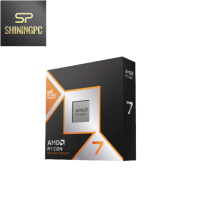
AMD Ryzen™ 7 Ryzen 7 9800X3D Desktop Processor Ryzen 9000 series 8 core 16 threads am5 GAMING CPU
$659.00
Buy on Lazada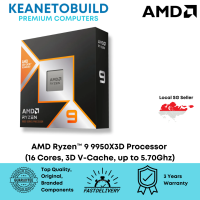
AMD Ryzen™ 9 9950X3D Processor (16 Cores 3D V-Cache up to 5.70Ghz)
$1,060.79$1,272.95
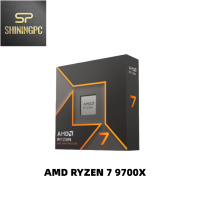
AMD Ryzen 7 9700X - Ryzen 7 9000 Series Granite Ridge (Zen 5) 8-Core 3.8 GHz - Socket AM5 65W - Radeon Graphics Processor - 100-100001404WOF
$378.00
Buy on Lazada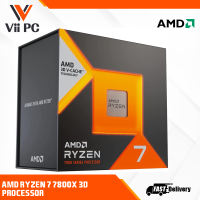
AMD Ryzen 7 7800X3D 7800X 3D - TRAY OR BOX Ryzen 7 7000 Series 8-Core Socket AM5 120W AMD Radeon Graphics Desktop Processor - Local 4 Years Warranty
$505.00
Buy on Lazada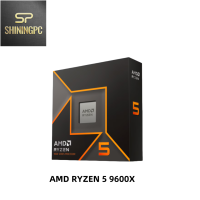
AMD Ryzen 5 9600X 6 Cores 5.4 Ghz Enthusiast AM5 Desktop Processor 100-100001405WOF
$329.90
Buy on Lazada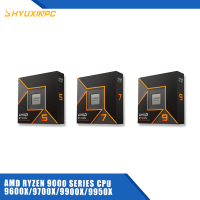
AMD Ryzen 9000 series CPU 9600X/9600 Tray/9700X/9900X/9950X 3 Years Warranty
$1,130.58$1,142.00
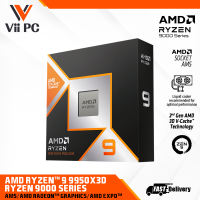
AMD Ryzen™ 9 9950X3D / 9950X3D Ryzen 9000 Series Desktops Processor 16CORE 32 THREAD GAMING PROCESSOR
$1,109.00
Buy on Lazada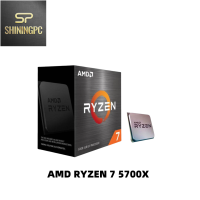
AMD Ryzen 7 5700X 3.4GHz Desktop Processor with 8 Cores and 16 Threads (Max. Boost 4.6GHz)
$239.90
Buy on LazadaAbout AMD
AMD (Advanced Micro Devices, Inc.) is an American multinational semiconductor corporation that designs high-performance processors, graphics cards, adaptive computing devices, and AI accelerators. Established in 1969, AMD has grown into one of the world’s leading technology firms, competing directly with Intel in the CPU market and NVIDIA in the GPU and AI computing sectors 1. Its products are integral to personal computers, gaming consoles, servers, supercomputers, embedded systems, and artificial intelligence infrastructure. The company’s stated mission is to create technologies that accelerate next-generation computing experiences 1.
Basic Information
| Category | Details |
|---|---|
| Full Name | Advanced Micro Devices, Inc. |
| Abbreviation | AMD |
| Founded | May 1, 1969 |
| Headquarters | Santa Clara, California, United States |
| Industry | Semiconductors |
| Stock Exchange | NASDAQ: AMD |
| CEO | Dr. Lisa Su |
| Employees | Approximately 28,000 (2024) |
| Website | amd.com |
History
AMD was founded on May 1, 1969, by Jerry Sanders and seven former Fairchild Semiconductor employees in Silicon Valley 2. Initially, the company manufactured logic chips and memory components before expanding into microprocessors during the 1970s and 1980s, eventually becoming a second-source manufacturer for IBM-compatible processors 2.
Key milestones in the company’s history include:
- 1969 – AMD founded.
- 1972 – Company becomes publicly traded.
- 1982 – Supplies processors compatible with IBM PCs.
- 1991 – Launches the Am386 processor.
- 1999 – Releases the original Athlon processor.
- 2000 – Introduces the world’s first commercially available 1 GHz PC processor 4.
- 2003 – Launches the Athlon 64, introducing 64-bit desktop computing.
- 2006 – Acquires ATI Technologies, entering the graphics market.
- 2014 – Dr. Lisa Su becomes CEO.
- 2017 – Launches Ryzen processors based on the Zen architecture.
- 2019 – Introduces 7 nm Ryzen and EPYC processors.
- 2022 – Completes acquisition of Xilinx.
- Today – Expands aggressively into AI accelerators and data-centre computing 2.
Products
CPUs
AMD is best known for its x86 processors, which serve various market segments.
Ryzen
Designed for consumer desktops and laptops, the Ryzen series includes:
- Ryzen 3
- Ryzen 5
- Ryzen 7
- Ryzen 9
- Ryzen AI
These processors target gaming, productivity, content creation, and AI PC markets.
Threadripper
Threadripper represents AMD’s high-end desktop (HEDT) line, featuring massive core counts, large cache sizes, and professional workstation performance. These processors are typically used for 3D rendering, video editing, and scientific workloads.
EPYC
EPYC processors are designed for enterprise environments, including servers, cloud computing, supercomputers, and AI infrastructure. They compete directly with Intel Xeon in the data-centre market.
Graphics Cards
Following the acquisition of ATI Technologies in 2006, AMD markets its graphics products under the Radeon brand. Major product families include:
- Radeon RX
- Radeon Pro
- Radeon Instinct (earlier data-centre products)
These GPUs are utilised in gaming, CAD, AI development, video production, and visualisation workflows.
AI Products
AMD has established itself as a significant player in artificial intelligence hardware. Its AI portfolio comprises:
- Instinct AI accelerators
- Ryzen AI processors
- EPYC AI servers
- Adaptive computing solutions from Xilinx
The company aims to compete with NVIDIA in both AI training and inference markets.
Gaming
AMD hardware powers millions of gaming devices globally.
PCs
The combination of Ryzen CPUs and Radeon GPUs remains popular among PC gamers and system builders.
Consoles
AMD supplies custom silicon for major current-generation consoles:
- Sony PlayStation 5
- Microsoft Xbox Series X
- Microsoft Xbox Series S
Each console uses a custom AMD APU that combines Zen CPU cores with Radeon graphics architecture.
Technologies
AMD has introduced numerous architectural innovations, including:
- Zen CPU architecture
- Infinity Fabric
- Smart Access Memory (SAM)
- FidelityFX Super Resolution (FSR)
- RDNA graphics architecture
- CDNA data-centre GPU architecture
- 3D V-Cache
- Chiplet processor design
Market Segments
AMD serves four primary market segments 1:
Consumer Computing
- Laptops
- Desktops
Gaming
- GPUs
- Gaming PCs
- Consoles
Data Centres
- Cloud servers
- AI
- Enterprise computing
Embedded
- Automotive
- Aerospace
- Telecommunications
- Medical devices
- Industrial systems
Competitors
AMD competes with several major technology companies across different product categories:
| Company | Primary Competition |
|---|---|
| Intel | CPUs |
| NVIDIA | GPUs and AI accelerators |
| Qualcomm | Laptop and mobile processors |
| Apple | Custom silicon for Macs |
| Arm ecosystem companies | Energy-efficient processors |
Business Strategy
AMD operates under a fabless semiconductor model, meaning it designs chips but outsources manufacturing to external foundries. This approach allows the company to focus resources on architecture, engineering, and product development while leveraging advanced manufacturing partners 3.
Corporate Vision
According to AMD, its corporate guiding principles are:
Vision
High-performance and adaptive computing is transforming our lives.
Mission
Build great products that accelerate next-generation computing experiences.
Leadership
Dr. Lisa Su
Dr. Lisa Su became AMD’s CEO in 2014. Under her leadership, the company rebuilt its CPU lineup with the Zen architecture, returned to competitiveness in desktop and server processors, expanded into AI and adaptive computing, and grew into one of the semiconductor industry’s leading companies.
Major Acquisitions
| Year | Acquisition | Purpose |
|---|---|---|
| 2006 | ATI Technologies | Graphics and GPU business |
| 2022 | Xilinx | Adaptive computing and FPGAs |
| 2024 | Silo AI | AI software capabilities |
| 2025 | ZT Systems | AI infrastructure expertise |
Notable Achievements
- Founded in 1969.
- Pioneer of 64-bit desktop computing.
- First company to release a commercial 1 GHz PC processor 4.
- Creator of the Zen CPU architecture.
- Supplier of processors for PlayStation 5 and Xbox Series X/S.
- One of the world’s leading providers of CPUs, GPUs, and AI accelerators.
- Major supplier for cloud computing and supercomputing systems.
See Also
- Intel
- NVIDIA
- TSMC
- Ryzen
- Radeon
- EPYC
- Xilinx
- Zen architecture
Summary
Advanced Micro Devices (AMD) has evolved from a small Silicon Valley semiconductor startup into a global leader in high-performance computing 2. Its product portfolio spans Ryzen processors for consumers, EPYC processors for data centres, Radeon graphics for gaming and professional use, and AI accelerators for modern computing workloads. Through innovations such as the Zen architecture, chiplet design, and strategic acquisitions like ATI Technologies and Xilinx, AMD has established itself as one of the semiconductor industry’s most influential companies and a key competitor in CPUs, GPUs, and AI computing 2.
References
- About AMD
- Everything you need to know about AMD
- February 5, 2025 – 10-K: Annual report pursuant to Section 13 and 15(d) | Advanced Micro Devices, Inc. (AMD)
- PC processors entered the Gigahertz era today in the year 2000 with AMD’s Athlon – AMD hit marketing gold with its 1 GHz Athlon, beat Intel by a nose