Shop on Lazada
AMII products
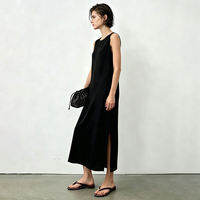
AMII | Round Neck Flared Dress Chiffon Shirt Long Pants Set For Women
$125.18$300.79
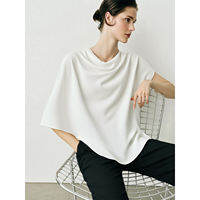
AMII | Asymmetrical Drape Collar Chiffon Top Women
$80.16$166.81
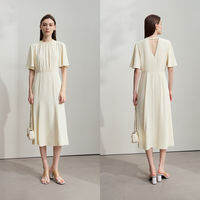
AMII | Elegant Vacation Style Wooden Ear Lace Up Waist Bell Sleeves Backless Summer Dress
$72.10$184.79
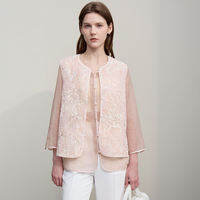
AMII | Elegant and Stylish Chinese Style Embroidered Vest
$112.04$250.69
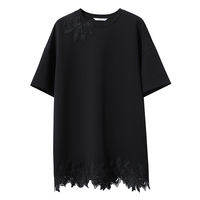
AMII | Lace Trimmed Loose T-shirt
$79.03$129.63
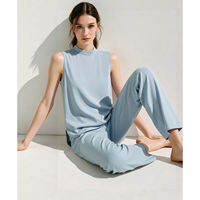
AMII | Sleeveless Asymmetrical Satin Blouse
$75.20$151.96
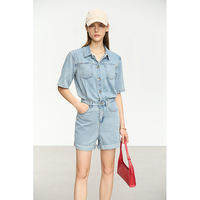
AMII | Vintage Distressed Cotton Lapel Shoulder Dropping Womens Romper
$93.51$326.25
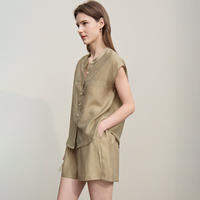
AMII | Linen Lyocell Summer Casual Simple Comfort Shirt Shorts Set
$112.33$275.74
About AMII
AMII (Chinese: 艾米) is a Chinese fashion brand best known for women’s clothing and a design philosophy centred on modernist minimalism. Founded in the late 2000s in Foshan, Guangdong, AMII developed from an early e-commerce clothing business into a fashion and design-oriented brand with an international-facing online presence. The brand describes itself as one of China’s early original designer brands to advocate a modernist minimalist aesthetic.1
Note on dates: AMII’s current official website gives 2008 as the brand’s establishment year. Contemporary reporting says the founders began their online clothing business in 2007, then formally registered AMII as a brand in 2008. Thus, 2007 is best understood as the beginning of the business, while 2008 is the brand’s commonly stated founding year.2
Quick facts
| Field | Information |
|---|---|
| Brand | AMII / 艾米 |
| Industry | Fashion / Women’s clothing |
| Origin | Foshan, Guangdong, China |
| Founded | 2008 |
| Business roots | Online fashion/e-commerce |
| Original focus | Women’s fashion |
| Core aesthetic | Modernist minimalism |
| Brand philosophy | “Less is More, with a Touch More” |
| Target consumer | Contemporary, independent women |
| Current positioning | Minimalist women’s fashion with artistic, lifestyle and sustainability elements |
| Official website | AMII.com |
History
Origins
AMII emerged from China’s rapidly developing online fashion market in the late 2000s. According to National Business Daily, founder Shi Song (石松) and his wife initially operated an online women’s clothing business after purchasing clothing from wholesale markets in Beijing. Their business began around 2007, before AMII itself was formally established as a brand in 2008.4
The founders eventually moved their operation from Beijing to Foshan, a major manufacturing centre in Guangdong. The move allowed the company to work more closely with garment manufacturers and build its own supply chain. In 2008, AMII was established as a distinct fashion brand.5
The early AMII business was therefore unusual compared with a traditional fashion label: it was essentially born from e-commerce rather than from a conventional chain of physical boutiques.
From online seller to fashion brand
In its early years, AMII relied heavily on its own product photography, online merchandising and distinctive street-style presentation. The brand gained visibility on Taobao without initially depending heavily on conventional advertising.6
As competition increased, however, the founders faced a familiar problem in Chinese online fashion: competitors could imitate successful products and compete primarily on price. AMII responded by strengthening its own brand identity, design language and product development, rather than remaining simply an online clothing retailer.7
Founders and early management
The key figure associated with AMII’s development is Shi Song (石松), who served as chairman of the company behind the brand. Public profiles describe him as having studied printmaking at the Guangzhou Academy of Fine Arts before working in interior decoration and commercial-space design. His background helps explain AMII’s unusually strong emphasis on visual identity and aesthetics.8
His wife, commonly identified as AMY, was involved in fashion design. Together, they developed the business from online clothing sales towards a more design-led fashion brand.9
There are some inconsistencies among third-party databases concerning corporate entities and individual founders, so the safest description is that Shi Song and his wife were the central founders of the AMII business, while AMII’s current official site presents the brand at the group level rather than providing a detailed current executive biography.10
Brand philosophy
AMII’s defining characteristic is its interpretation of minimalism.
The brand uses the phrase:
“Modernist Minimalist Aesthetic”
and describes its philosophy as:
“Less is More, with a Touch More.”
That second part is important. AMII does not present minimalism simply as plain, basic or utilitarian clothing. Its philosophy is to start with simplicity and then add subtle layers of thought, meaning and personality. The brand summarises this as:
- A Touch of Thought
- A Touch of Meaning
- A Touch of Fun11
This gives AMII a somewhat different position from purely functional minimalist brands.
“Minimalism with Interest”
AMII currently describes its aesthetic as “Minimalist-with-Interest.” The idea is that clothing should look restrained at first glance while still containing interesting details in its silhouette, construction, fabric, texture or styling.12
In practical terms, this often means:
- relatively clean silhouettes;
- restrained decoration;
- attention to tailoring and proportions;
- neutral or sophisticated colour palettes;
- subtle asymmetry or structural details;
- mixing classic garments with contemporary elements;
- using texture and fabric to create visual interest.
The philosophy can therefore be summarised as minimalism without becoming boring.
Design identity
AMII’s design language has historically been built around the idea of making fashion simpler in appearance but richer in taste and thought.
Its official description essentially divides the concept into two layers:
Simple appearance + sophisticated taste and thinking.13
This makes AMII closer to a contemporary lifestyle/design brand than to a purely trend-driven fast-fashion label.
The brand also connects fashion with other visual disciplines, including:
- architecture;
- art;
- design;
- photography;
- contemporary lifestyle.
That cross-disciplinary approach is consistent with the founder’s art/design background and with AMII’s emphasis on creating a recognisable visual world around its clothing.14
Product range
AMII is primarily a women’s fashion brand.
Its current international store organises products into categories including:
Tops
- T-shirts
- Blouses
- Tank tops
- Sweatshirts and hoodies
Knitwear
- Sweaters
- Cardigans
Bottoms
- Pants
- Jeans
- Skirts
- Shorts
Dresses
- Casual and tailored dresses
- Lace/detail-oriented dresses
- Slim silhouettes
- Draped and asymmetric designs
Outerwear
- Wool coats
- Coats and padded outerwear
- Jackets
- Blazers
- Vests
The current collection therefore covers most of a woman’s everyday wardrobe rather than specialising in one particular garment category.15
Target customer
Historically, AMII has been associated with urban professional women and white-collar consumers. Third-party Chinese brand profiles describe its original market as white-collar women’s fashion.16
Its current official positioning is broader and more lifestyle-oriented. AMII describes its customer as a contemporary independent woman who values:
- individuality;
- intellectualism;
- relaxed sophistication;
- artistic expression;
- fashion without excessive ornamentation;
- a balance between aesthetics and practicality.17
In other words, AMII is not primarily trying to dress the customer in the most conspicuous trend of the season. Its proposition is closer to:
“Look sophisticated without looking like you tried too hard.”
AMII and e-commerce
One of the most important parts of AMII’s history is its connection to China’s Taobao/Tmall e-commerce ecosystem.
Unlike many established fashion companies that later moved online, AMII was essentially an internet-native fashion brand. Its founders initially sold clothing online, handled product photography themselves and built their customer base through e-commerce.18
This gave AMII an important competitive advantage during the early growth of Chinese online fashion.
Data-driven fashion
Around 2014, AMII began making extensive use of data from Tmall’s platform to inform its operating and merchandising strategy. According to National Business Daily, the company used platform data to develop a more systematic approach to production and sales.19
This was significant because AMII combined two approaches:
creative design + e-commerce data
rather than treating fashion purely as an artistic exercise.
Commercial growth
AMII experienced considerable growth during its first decade.
According to National Business Daily, the company grew from reported annual sales of approximately RMB 300,000 in its early period to RMB 470 million in after-tax sales revenue in 2017. The same report described AMII as one of the prominent clothing brands on Tmall at the time.20
The important point is not simply the sales figure but the business model behind the growth:
- online-first distribution;
- distinctive visual identity;
- original product development;
- use of consumer/e-commerce data;
- increasingly sophisticated supply-chain management;
- later expansion into physical retail.
This made AMII an often-cited example of China’s “淘品牌” (Taobao-born brand) phenomenon.
From online to offline
AMII eventually began expanding beyond its original online model.
By the late 2010s, the company was exploring physical stores and new retail, reflecting a broader shift in Chinese fashion towards integrating online and offline channels. Contemporary reporting described the strategy as connecting e-commerce with physical retail rather than treating the two as separate businesses.21
This transition was important for AMII’s evolution from an online clothing seller into a more conventional fashion brand with:
- physical retail;
- brand spaces;
- visual merchandising;
- broader lifestyle branding.
Art and fashion collaborations
AMII has attempted to build cultural credibility through collaborations beyond conventional clothing production.
One notable example was its 2017 collaboration with emerging designers from Central Saint Martins. The project, described by AMII as the “City Projection” series, connected the brand with young international design talent.22
The brand has also highlighted relationships and collaborations involving international creative and commercial names. These activities fit its broader attempt to position AMII at the intersection of fashion, art, design and contemporary culture, rather than as merely an apparel retailer.23
Fashion Week
AMII has also increased its presence in formal fashion-industry events.
Its current brand history highlights an upgraded brand-image presentation at Guangdong Fashion Week, including an opening show titled “#SALUTE TO DREAM.” The collection explored a retro-futurist aesthetic, combining historical references with contemporary silhouettes and styling.24
This is significant because it demonstrates a shift in AMII’s public identity:
Early AMII:
online minimalist women’s clothing brand
Later AMII:
fashion/design brand with a broader cultural and visual identity
Retro-futurism
One of AMII’s more recent creative directions is “Future Retro” or retro-futurism.
Rather than treating minimalism as permanently monochromatic or purely modern, the brand has experimented with combining:
- retro tailoring;
- modern construction;
- futuristic references;
- gentleman-inspired elements;
- nostalgic styling.
AMII describes this as an attempt to connect the aesthetics of previous eras with ideas of the future.25
This gives the brand greater creative flexibility than a strict interpretation of minimalist fashion.
Sustainability
Sustainability has become increasingly visible in AMII’s current brand positioning.
The company says it aims to balance aesthetics and ecological sustainability, including:
- use of more environmentally friendly fabrics;
- reducing material waste;
- more sustainable production methods;
- encouraging longer-term wardrobe thinking.26
This is particularly compatible with AMII’s minimalist philosophy: if a garment is designed to be less dependent on short-lived trends, it can theoretically occupy a longer-lasting role in a wardrobe.
It is worth distinguishing, however, between brand positioning and independently verified sustainability performance. AMII’s official website clearly promotes sustainability as part of its philosophy, but the available sources do not provide enough independent data to rank AMII against specialist sustainable-fashion companies.
Current international positioning
AMII now operates an international-facing e-commerce website with localised versions for multiple markets/languages. Its current website presents the brand explicitly as “Modernist Minimalist Womenswear.”27
The current assortment includes dresses, blouses, knitwear, pants, jeans, skirts, jackets, blazers, coats and other women’s apparel. Current listed products span roughly the US$30–100+ range for many individual pieces, although prices vary by product and promotion.28
This places its direct-to-consumer international offering in an accessible contemporary-fashion segment rather than in traditional luxury fashion.
Brand architecture today
AMII’s current official site states that the brand is under the Ports Group and describes its development as having moved beyond a single women’s fashion label towards a broader platform covering fashion, design and creativity.13
The company describes an integrated business chain involving:
brand building → product design → content → marketing → customer service → supply chain → warehousing/logistics
This suggests that the contemporary AMII organisation is intended to function as more than a standalone clothing label.
Brand positioning
A useful way to understand AMII is to place it between several categories:
| Category | AMII’s relationship |
|---|---|
| Fast fashion | More design-led and less trend-dependent |
| Mass-market fashion | More emphasis on aesthetics and brand identity |
| Contemporary fashion | Strong overlap |
| Minimalist fashion | Core positioning |
| Designer fashion | Uses designer-brand language and collaborations, but generally at a more accessible price |
| Luxury | Not positioned as a traditional luxury house |
| Sustainable fashion | Sustainability is part of its current philosophy, but not its sole identity |
| E-commerce fashion | One of its defining historical characteristics |
What makes AMII distinctive?
There are five major characteristics that explain AMII’s identity.
1. It was born online
AMII’s origins in Chinese e-commerce are fundamental to its story. It was not a traditional department-store fashion label that later adopted digital commerce.15
2. Minimalism is the core brand asset
Many fashion companies use minimalism as a seasonal aesthetic. AMII has made it the central long-term brand philosophy.
3. It combines commercial data with design
The company’s development illustrates an early Chinese model in which consumer/e-commerce data could directly influence product planning and production.18
4. It treats fashion as part of a broader visual culture
Architecture, art, photography, design and fashion all appear in AMII’s brand world.14
5. Its current philosophy is “minimalism plus personality”
The phrase “Less is More, with a Touch More” captures the brand particularly well: AMII wants clothing to remain clean and restrained while avoiding the sterility that can sometimes accompany extreme minimalism.14
Brand timeline
2007 — Founders begin their online clothing/e-commerce business.15
2008 — AMII is established/registered as a fashion brand; the business moves its base to Foshan, Guangdong.16
Late 2000s — AMII develops a distinctive minimalist women’s-fashion identity and becomes increasingly visible on Chinese e-commerce platforms.17
2014 — The company makes greater use of Tmall data to inform its operating and product strategy.18
2017 — AMII collaborates with emerging Central Saint Martins designers on the “City Projection” project.19
2017 — Reported after-tax sales revenue reaches approximately RMB 470 million.20
Late 2010s — The company expands its offline/new-retail presence alongside its established online business.21
Recent years — AMII develops a broader cultural/design positioning, including fashion-week presentations, retro-futurist collections and sustainability-oriented messaging.22
2025–2026 — AMII operates an international-facing direct-to-consumer website and presents itself as a modernist minimalist women’s-wear brand.23
Overall assessment
AMII is best understood as a Chinese contemporary women’s fashion brand that grew out of the country’s early e-commerce boom and subsequently evolved into a design-driven minimalist fashion label.
Its historical importance comes partly from its internet-native business model: AMII demonstrated how a small online clothing operation could use distinctive aesthetics, digital merchandising and platform data to build a substantial fashion business.24
Its present identity is more sophisticated. Rather than simply selling “minimalist clothes,” AMII is trying to create a complete modernist lifestyle aesthetic built around:
Minimalism + contemporary art/design + individuality + relaxed sophistication + selective sustainability.
That evolution—from Taobao clothing seller → minimalist e-commerce brand → contemporary fashion/design platform—is arguably the most interesting part of AMII’s story.
References
- About Us – AMII.com
- 互联网服装品牌AMII的实践样本:新金融带来的巨变_中国经济网——国家经济门户
- AMII | Modernist Minimalist Womenswear – AMII.com
- AMII品牌介绍-艾米女装_亲子装-买购APP
- AMII简介-艾米职业女装-十大品牌网CNPP
- AMII品牌介绍-艾米女装_亲子装-买购APP
- AMII | Modernist Minimalist Womenswear – AMII.com
- 互联网服装品牌AMII的实践样本:新金融带来的巨变 | 每经网
- AMII | Modernist Minimalist Womenswear – AMII.com
- 急成長「amii.」ブランドをEyenerd株式会社が埼玉・北関東エリアで展開開始 ― KENJEグループ54年の歴史で初の外部FC提携。業界革新・全国100店舗展開へ新たな挑戦。 | Eyenerd株式会社のプレスリリース
- AMII卖家故事简介
- 乘风破浪的姐姐们都在穿的中国原创设计,爆红海内外!-卖家之家
- 从淘宝到天猫再到速卖通:女装品牌AMII走出国门的突围战!-卖家之家
- AMII Trademark of FOSHAN KIVU CLOTHING CO., LIMITED – Registration Number 5015878 – Serial Number 86681319 :: Justia Trademarks
- Introduction – AMII.com
- Introduction – AMII.com
- AMII | Modernist Minimalist Womenswear – AMII.com
- AMII | Modernist Minimalist Womenswear – AMII.com
- AMII | Modernist Minimalist Womenswear – AMII.com
- AMII | Modernist Minimalist Womenswear – AMII.com
- Stretchy Slim Fit Dress – AMII.com
- BEST SELLERS-AMII.com
- Terms of Service – AMII.com
- 概要 | Amii
- AMII艾米品牌_艾米女装怎么样 – 品牌之家
- AMII时尚女装品牌设计 – 广州0708时尚品牌定位设计公司
- AMII | 项目信息-36氪
- 艾米品牌介绍_艾米是哪个公司品牌?-百强排行网