Shop on Lazada
Bobdog products
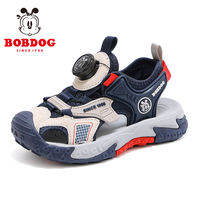
Bobdog | Boys Girls Summer Closed-Toe Sandals
$28.52$40.96
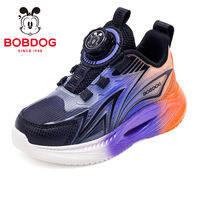
Bobdog | Childrens Running Shoes Boys Spring Sports Shoes
$28.42$36.26
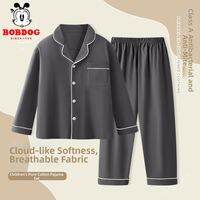
Bobdog | Cotton A-Class Boys Sleepwear Set Autumn Spring
$29.70
Buy on Lazada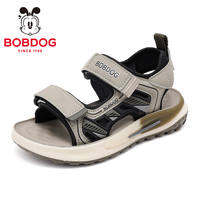
Bobdog | Boys Summer New Sporty Open-Toe Sandals
$31.03$39.40
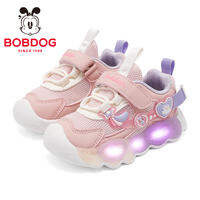
Bobdog | Light-Up Learning Shoes For Toddler Girls Autumn New
$30.49$38.86
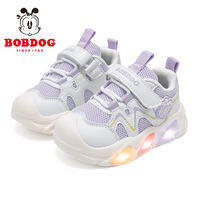
Bobdog | Light-up Toddler Shoes
$28.02$35.85
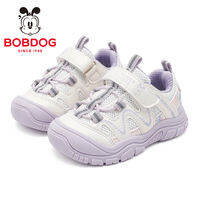
Bobdog | Breathable Toddler and Baby Learning to Walk Shoes
$28.00$35.83
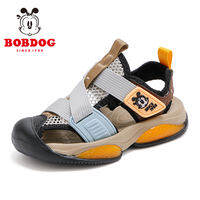
Bobdog | Non-slip Sports Kids Shoes
$31.20$39.58
About Bobdog
Bobdog (Chinese: 巴布豆) is a children’s consumer brand and licensed intellectual property (IP) centred on a cartoon Dalmatian character. Originally created in Japan on 6 March 1988 by Takako Nagai, the brand entered the Taiwan market in 1991 and expanded into mainland China in 1994 123. Over three decades, Bobdog has evolved from a traditional children’s product manufacturer into an asset-light company specialising in IP licensing, integrated digital marketing, and cross-category brand collaborations 14. The Chinese operating entity, Bodbog (China) Children’s Products Co., Ltd., is headquartered in Minhang District, Shanghai 4.
Brand origins and character design
Unlike conventional children’s apparel brands, Bobdog was conceived primarily as a cartoon character and IP rather than a clothing label 12. According to official brand history, creator Takako Nagai designed the character on 6 March 1988 using black ink lines to depict a Dalmatian with distinctive features including large expressive eyes, upright ears, slightly raised eyebrows, and a puffed mouth conveying mild surprise 7. The character embodies traits described as mischievous, sunny, romantic, playful, and possessing a strong sense of justice 7. This visual identity was established as the brand’s core asset, enabling subsequent expansion across diverse product categories beyond stationery and apparel 3.
Early commercial development
Bobdog adopted a character-licensing business model early in its history. In 1989, just one year after the character’s creation, Bobdog served as a promotional mascot for several Japanese enterprises, including Shizuoka Bank, Musashino Bank, Niigata Prefecture Credit Union, and Hitachi fluorescent lighting 1. This trajectory established a commercial pattern of leveraging the cartoon image for brand partnerships, licensed merchandise, and mass-market recognition, positioning Bobdog as a character IP rather than solely a children’s goods manufacturer 3.
Expansion into Greater China
Entry into Taiwan and mainland China
Bobdog entered the Taiwan market in 1991, marking its first expansion outside Japan 23. The brand subsequently launched in mainland China in 1994, initially offering stationery and other children’s products 23. Shanghai became the operational hub for Chinese activities; the entity originally established as Shanghai Babudou Children’s Products Co., Ltd. in the 1990s was later renamed Bodbog (China) Children’s Products Co., Ltd. 4.
Regional retail presence
In Singapore, Bobdog products have been retailed through department store chains such as OG, indicating the brand’s distribution reach within Southeast Asian markets 5.
Character universe
The Bobdog IP encompasses an ensemble cast beyond the titular character, each with defined personality profiles that support storytelling and merchandising.
Bobdog
The protagonist is characterised as a third-grade boy with a mischievous, competitive, sunny, and adventurous personality. Official profiles list his birthday as 6 March, zodiac sign as Pisces, blood type as B, and hobbies as reading, sports, and inventing 7. These attributes establish him as a relatable child persona rather than merely a decorative motif.
Cherry
Cherry serves as the primary female character and is depicted as Bobdog’s girlfriend. She is characterised as fond of aesthetics, skilled in arts and grooming, and nurturing towards others 8. Her role provides companionship and gender balance within the character universe.
Rita
Rita is Bobdog’s younger sister, portrayed as intelligent, imaginative, gentle, calm, and interested in travel, exploration, and dressing up. Her personality contrasts with Bobdog’s boisterousness, appealing to different audience segments.
Jino
Jino is a unique supporting character depicted as a “flying duck” who was originally an angel transformed by accident. He functions as a comedic sidekick who frequently accompanies Bobdog.
Product categories and licensing scope
Bobdog’s licensing portfolio spans multiple children’s and family consumption categories. Current authorised product ranges include:
| Category | Products |
|---|---|
| Apparel & Footwear | Children’s clothing, footwear, infant underwear |
| Education & Entertainment | Stationery, school bags, toys, games, children’s books |
| Infant & Maternity | Strollers, baby care products, maternity goods, bedding |
| Daily Living | Household items, accessories, gifts |
The brand’s licensing scope covers all major children’s product categories, and the company actively seeks cross-sector collaboration opportunities 6. This breadth distinguishes Bobdog from single-category children’s brands, functioning instead as an IP platform applicable to diverse retail and lifestyle contexts.
Business model transformation
A significant strategic shift occurred as Bobdog transitioned from a vertically integrated manufacturer to an IP-focused licensing operator. Historically, the company handled research, development, production, and sales internally. The current model positions Bodbog (China) as an asset-light enterprise specialising in integrated digital marketing and comprehensive IP management 14. Under this framework, Bobdog functions as a licensor that partners with manufacturers and retailers for product development and distribution, rather than producing goods directly. This IP licensing approach aligns with contemporary character-brand economics, where value derives from intellectual property rights rather than manufacturing capacity.
Key milestones
| Year | Event |
|---|---|
| 1988 | Bobdog cartoon character created in Japan |
| 1989 | Commenced corporate image partnerships in Japan |
| 1991 | Entered Taiwan market |
| 1994 | Officially launched in mainland China |
| 2000 | Published inaugural Bobdog newsletter; launched junior reporter programme |
| 2009 | Claimed global copyright and trademark ownership (subject to verification via registration records and judicial rulings) |
| 2013 | Animated series premiered on CCTV; broadcast in Taiwan and Thailand |
| 2017 | Pivoted towards brand culture communication and IP operations |
| 2018 | Held 30th anniversary celebrations with touring exhibitions in Beijing, Hangzhou, and Shanghai |
| 2023 | Marked 35th anniversary; expanded into recreation, interactive experiences, and lifestyle sectors |
| 2024 | Comprehensive upgrade of visual identity system and brand imagery |
| 2025 | Exhibited at Licensing Expo China (LEC) in Shanghai |
| 2026 | Released 38th anniversary commemorative content |
Visual identity
Bobdog’s most recognisable element is its black-and-white cartoon Dalmatian, distinguished by large eyes, erect ears, exaggerated mouth shape, and breed-specific spotting patterns. This design achieves high visual recognition without reliance on logotype, allowing consumers familiar with the brand to identify the character independently of text. Such visual autonomy underpins the brand’s suitability for extensive product licensing across varied media and merchandise formats.
Animation and content strategy
Beyond merchandise, Bobdog has pursued content-driven IP development. The animated television series premiered on China Central Television (CCTV) in 2013, with subsequent broadcasts in Taiwan and Thailand 3. This progression—from static character to merchandise, children’s media, animation, and finally cross-category licensing—mirrors the development arc of established global children’s IPs.
Brand positioning and tonality
Bobdog occupies the intersection of children’s consumption, cartoon IP, family spending, and brand licensing. Its value proposition extends beyond functional product attributes to encompass character identification, emotional resonance, and nostalgic memory. Core brand tonalities include:
- Sunny: Emphasising positivity, joy, and youthful energy.
- Mischievous: Portraying an imperfect, slightly rebellious child archetype rather than an idealised figure.
- Adventurous: Encouraging exploration and curiosity.
- Just: Reinforcing moral integrity and fairness.
- Companionship: Building emotional connection through an ensemble cast.
These attributes collectively define Bobdog as a playful, principled childhood companion rather than merely a product endorsement vehicle.
Trademark disputes in China
The Bobdog brand has been involved in protracted intellectual property disputes in the Chinese market, particularly concerning entities using similar names such as “BABUDOG” (巴布狗). These conflicts have encompassed trademark rights, copyrights, trade name registrations, domain names, bad-faith filings, unfair competition, and marketplace confusion. Judicial rulings have addressed these issues; for instance, the Beijing High People’s Court invalidated certain “BABUDOG” trademarks obtained through improper means. Separately, the Henan High People’s Court upheld civil judgments ordering cessation of infringing activities, discontinuation of related enterprise names and domains, and payment of RMB 5 million in damages. Consequently, “Bobdog” (巴布豆) and “BABUDOG” (巴布狗) represent distinct entities with separate legal histories. Stakeholders conducting due diligence should verify specific trademark registrants, classification categories, authorisation chains, manufacturers, and IP provenance rather than relying solely on Chinese nomenclature.
Generational appeal and longevity
As of 2026, Bobdog has existed for 38 years since its 1988 inception 3. This longevity confers a generational advantage uncommon among newer IPs: consumers who encountered Bobdog products during their own childhoods in the 1980s and 1990s may now engage with the brand as parents. This cross-generational recognition positions Bobdog as a heritage children’s IP with nostalgic resonance alongside contemporary licensing relevance.
Corporate information
The Chinese operating entity is Bodbog (China) Children’s Products Co., Ltd., located at Building H, Maikejiang Cultural Creative Park, No. 389 Lianming Road, Qibao Town, Minhang District, Shanghai 4. Contact details published on the official website include telephone numbers +86-21-64214188 and +86-21-64213688, and email address bobdog-china@bobdog.com.cn 8. The company continues to participate in international licensing trade events, including the 2025 Licensing Expo China in Shanghai, affirming its ongoing commitment to IP licensing and cross-category partnerships as central growth strategies 6.