Shop on Lazada
BVLGARI products
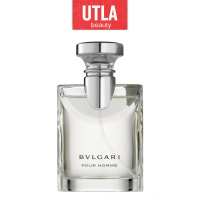
Bvlgari Pour Homme EDT For Men 100Ml Original Perfume
$37.00$255.00
![[Unboxed] Bvlgari Man In Black EDP 100ml TESTER (100% Authentic from Acebela)](https://sg-live.slatic.net/p/b8c9e8494ec311ba526f4b6127dda31f.png_200x200q80.jpg)
[Unboxed] Bvlgari Man In Black EDP 100ml TESTER (100% Authentic from Acebela)
$80.00$162.00
![(Unboxed) [Bvlgari] Omnia Crystalline EDT 100ml For Women TESTER [Perfume / Fragrance] (100% Authentic from Acebela)](https://filebroker-cdn.lazada.sg/kf/Sb1cf7b9d48e6439cacaec15b06ecb0849.png_200x200q80.jpg)
(Unboxed) [Bvlgari] Omnia Crystalline EDT 100ml For Women TESTER [Perfume / Fragrance] (100% Authentic from Acebela)
$74.78$248.00
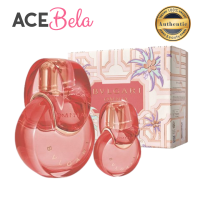
Bvlgari Omnia Coral EDT (100ml+15ml) Xmas Gift Set (100% Authentic from Acebela)
$106.27$259.00
![Bvlgari Man Wood Essence Eau De Parfum Spray 100ml [TESTER PACKAGING] - Eclat Parfum](https://sg-live.slatic.net/p/1b26103c29fd55a0a88f516754cda222.jpg_200x200q80.jpg)
Bvlgari Man Wood Essence Eau De Parfum Spray 100ml [TESTER PACKAGING] - Eclat Parfum
$99.00$227.00
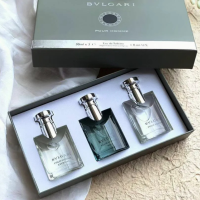
Bvlgari Pour Homme Perfume Gift Set ( 30mlx3)
$37.80$588.00
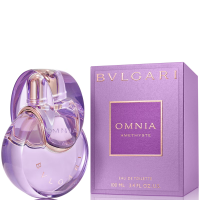
Bvlgari Omnia Amethyste Eau de Toilette 100ml
$38.76$150.00
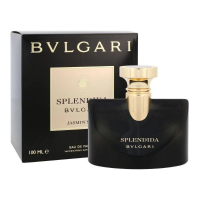
bvlgari splendida JASMIN NOIR perfume EDP 100ml
$40.50$265.00
About BVLGARI
BVLGARI (stylised with the classical Latin V in place of ‘U’) is an Italian luxury maison best known for high jewellery, watches, fragrances, leather goods, accessories and luxury hospitality. Founded in Rome in 1884 by Greek silversmith Sotirio Bulgari, the house developed a distinctive identity by combining Roman cultural references, Mediterranean colour, bold geometric forms and exceptional craftsmanship. Today, BVLGARI is part of the French luxury group LVMH.1
Basic information
| Official name | Bulgari S.p.A. |
| Brand name | BVLGARI |
| Founded | 1884 |
| Founder | Sotirio Bulgari |
| Birthplace | Rome, Italy |
| Founder’s origin | Greece |
| Headquarters | Rome, Italy |
| Parent company | LVMH |
| Industry | Luxury goods |
| Main categories | Jewellery, watches, fragrances, accessories, leather goods, hospitality |
| Brand positioning | Luxury / High Jewellery / Haute Horlogerie |
| Current CEO | Jean-Christophe Babin |
| Global presence | 320+ boutiques, according to LVMH |
| Employees | 6,000+, according to LVMH |
LVMH describes BVLGARI as a Roman high-jewellery maison that has expanded into watches, accessories, perfumes, boutiques and hotels.2
The name: why “BVLGARI”?
One of the most recognisable characteristics of the brand is its spelling, BVLGARI, rather than the conventional Italian spelling Bulgari. The reason is both historical and aesthetic. The house uses the Latin letter V in place of U, creating the inscription BVLGARI inspired by classical Roman tradition. This distinctive logo reinforces one of the central ideas behind the maison: modern luxury rooted in ancient Rome.3 Roman antiquity remains one of the foundations of BVLGARI’s visual identity.
Foundation: 1884
BVLGARI’s story begins in 1884, when Sotirio Bulgari, a Greek silversmith, opened his first shop at Via Sistina 85 in Rome. Born in Greece, Sotirio brought a Greek and Mediterranean artistic heritage with him to Italy. His early business focused primarily on silver ornaments, precious objects and antiques.4 Rome proved to be an ideal environment for the young entrepreneur, providing an extraordinary combination of ancient Roman architecture, classical sculpture, Renaissance art, Italian craftsmanship, international tourism and Mediterranean culture. These influences eventually became fundamental to the BVLGARI aesthetic. During the late 19th century, Sotirio expanded beyond Rome, establishing shops in destinations including Sanremo, Naples, Bellagio, Sorrento and St. Moritz.5
From silversmith to jeweller
The early BVLGARI business was not initially the global jewellery empire known today. Sotirio began primarily as a silversmith. As his sons Giorgio and Costantino Bulgari became involved in the family business, the company increasingly concentrated on fine jewellery. This transition from silver craftsmanship towards high jewellery laid the foundation for BVLGARI’s later identity. A particularly important moment came in 1905, when the family established the famous Via Condotti location in Rome. Via Condotti would eventually become synonymous with the BVLGARI name and with Rome’s luxury-shopping culture.6
BVLGARI and Rome
If there is one city that defines BVLGARI, it is Rome. Unlike many luxury maisons whose identities are closely associated with Paris, London or Switzerland, BVLGARI’s design language is fundamentally Roman. The brand repeatedly draws inspiration from the Colosseum, Roman architecture, ancient coins, classical sculpture, Roman mosaics, Italian gardens, Renaissance and Baroque architecture, Mediterranean landscapes and the colours of Rome. LVMH describes Rome as the birthplace of BVLGARI and emphasises that the city’s forms, colours, magnificence and timelessness continue to influence its creations. This produces a very different aesthetic from the traditionally restrained style associated with some other European jewellery houses. BVLGARI tends to be dramatic, colourful, architectural and sensual.
Design philosophy
BVLGARI’s design philosophy can broadly be understood through several key characteristics.
Colour
Colour is perhaps the most immediately recognisable element. BVLGARI is famous for combining gemstones such as emeralds, sapphires, rubies, amethysts, turquoise, citrine, diamonds and tourmalines. Rather than treating diamonds as the only ultimate expression of luxury, BVLGARI historically embraced vivid combinations of precious and semi-precious stones. This emphasis on colour became one of the defining differences between BVLGARI and more traditionally restrained European jewellery styles.
Volume
BVLGARI jewellery frequently uses large, sculptural volumes. The pieces can appear almost architectural rather than delicate.
Geometry
Circles, spirals, coils, modular structures and repeated motifs are fundamental to the house.
Roman symbolism
Ancient Roman coins, architectural forms and classical motifs are repeatedly transformed into contemporary jewellery.
Boldness
BVLGARI has historically positioned itself as a maison willing to break conventional jewellery rules. Its official history describes its style through vibrant colour combinations, balanced volumes and distinctive motifs connected to its Roman roots.7
The Dolce Vita era
The 1950s and 1960s were crucial to BVLGARI’s international image. This was the era of La Dolce Vita, the glamorous period when Rome became associated with cinema, fashion, celebrities, nightlife and sophisticated Italian living. BVLGARI became closely associated with the international film world. Stars including Elizabeth Taylor, Sophia Loren and Audrey Hepburn were linked with BVLGARI jewellery.8 Elizabeth Taylor’s connection with BVLGARI became particularly famous; her jewellery collection and association with the maison helped establish the brand as an emblem of Hollywood glamour and Roman sophistication. The relationship between BVLGARI and cinema remains an important part of its cultural identity.
The iconic Serpenti
Serpenti is arguably BVLGARI’s most famous design icon. The serpent motif became an important part of BVLGARI’s vocabulary during the 20th century and eventually evolved into jewellery, watches, handbags and other products. The snake carries numerous symbolic meanings, including wisdom, power, transformation, rebirth, seduction and eternity. BVLGARI itself identifies the serpent as a recurring symbol representing wisdom, power and rebirth. The Serpenti design is particularly recognisable because jewellery can literally wrap around the body like a snake, making it one of the defining symbols of modern BVLGARI.
Other major icons
BVLGARI has developed several collections that have become recognisable beyond the jewellery industry.
Serpenti
The snake-inspired icon associated with transformation, sensuality and power.
B.zero1
A contemporary architectural collection inspired by Rome and the Colosseum. Its circular construction and spiral design have made it one of BVLGARI’s most recognisable modern collections.
Diva’s Dream
A collection inspired by feminine elegance and the fan-like forms of Roman mosaics and architecture.
BVLGARI BVLGARI
A collection distinguished by the BVLGARI BVLGARI inscription. Its design references ancient Roman coins and reinforces the maison’s connection with classical Rome.
Octo
One of BVLGARI’s most important watch families. Octo combines geometric forms inspired by architecture with sophisticated Swiss mechanical watchmaking.
Tubogas
A flexible, coiled construction associated particularly with BVLGARI bracelets and watches. The technique has become one of the maison’s signatures.
Watches
Although BVLGARI began as a jewellery house, watches eventually became a major part of the business. The brand’s watchmaking identity combines Italian design with Swiss mechanical watchmaking. This combination is particularly evident in collections such as Octo, Octo Finissimo, Serpenti, BVLGARI BVLGARI, Divas’ Dream and Aluminium. BVLGARI’s watchmaking is notable because the company does not simply treat watches as jewellery accessories. It has developed serious expertise in ultra-thin mechanical movements and high complications. The Octo Finissimo, in particular, became famous in contemporary watchmaking for its extremely thin architecture and minimalist geometric case.
Fragrances
BVLGARI expanded into fragrances as another expression of its luxury identity. Major fragrance families have included Eau Parfumée, Omnia, Man, Aqva, Rose Goldea, Le Gemme, Splendida and Allegra. The concept is consistent with the jewellery business: fragrance is presented not merely as perfume but as another form of luxury storytelling. BVLGARI’s official description emphasises the connection between fragrances and gemstones, nature and precious materials.
Leather goods and accessories
BVLGARI also produces handbags, wallets, belts, sunglasses, silk accessories and small leather goods. These products often incorporate the maison’s established visual codes, particularly Serpenti, geometric forms and jewellery-inspired hardware. The intention is essentially to translate the BVLGARI jewellery language into everyday luxury objects.
BVLGARI Hotels & Resorts
The brand eventually expanded beyond physical luxury products into hospitality. BVLGARI Hotels & Resorts creates luxury hotels in major international destinations. The concept is to extend the BVLGARI experience from jewellery to fashion and accessories, then to lifestyle and finally to hospitality. This is strategically important because modern luxury houses increasingly sell not just products but complete lifestyles and experiences. LVMH describes BVLGARI as having developed an extended network of boutiques and hotels alongside its jewellery, watches, accessories and fragrances.
Acquisition by LVMH
A major turning point occurred in 2011, when BVLGARI became part of LVMH Moët Hennessy Louis Vuitton. The transaction brought the Bulgari family together with the world’s largest luxury-goods group. LVMH’s historical record identifies 2011 as the year of BVLGARI’s acquisition, while its transaction documentation records the transfer of the Bulgari shares and subsequent delisting of Bulgari from the Italian stock exchange. Today, BVLGARI sits within LVMH’s Watches & Jewelry division alongside other major maisons. The acquisition gave BVLGARI access to the enormous global infrastructure and resources of LVMH while allowing it to retain its distinctive Roman-Italian identity.
BVLGARI today
BVLGARI has evolved from a small Roman silversmith’s shop into a global luxury group. According to LVMH, the maison currently has over 320 boutiques worldwide, more than 6,000 employees and six production sites. Its business spans jewellery, watches, accessories, fragrances and hospitality. BVLGARI is no longer simply a jewellery company; it is better understood as a global luxury maison built around jewellery as its cultural and creative foundation.
Major product categories
High Jewellery
The pinnacle of the brand, featuring exceptional gemstones, rare materials and one-of-a-kind or extremely limited creations.
Fine Jewellery
More commercially available jewellery collections such as Serpenti, B.zero1 and Diva’s Dream.
Watches
From jewellery watches to serious Swiss mechanical watches such as Octo Finissimo.
Fragrances
A broad fragrance portfolio for women and men.
Accessories
Handbags, sunglasses, leather goods and other fashion accessories.
Hospitality
BVLGARI Hotels & Resorts.
Market positioning
BVLGARI occupies a distinctive position within the luxury market.
| Maison | Strongest traditional identity |
|---|---|
| Cartier | French jewellery, elegance, heritage |
| Van Cleef & Arpels | Poetry, nature, refined jewellery |
| Tiffany & Co. | American jewellery, diamonds, modern heritage |
| Chopard | Jewellery + Swiss watchmaking |
| Graff | Exceptional diamonds and high jewellery |
| Boucheron | French high jewellery, creativity |
| BVLGARI | Roman architecture, colour, boldness and Italian glamour |
BVLGARI does not primarily compete by being the most understated. Its appeal is often the opposite: bold, colourful, sensual, architectural and unmistakably Roman.
Visual identity
The BVLGARI aesthetic can be summarised through several recurring ideas:
- Romanity: Ancient Rome as a source of inspiration.
- Colour: Vibrant gemstones and unexpected combinations.
- Geometry: Circles, spirals, coils and architectural structures.
- Volume: Substantial, sculptural jewellery.
- Sensuality: Particularly through Serpenti.
- Italian glamour: The spirit of La Dolce Vita.
- Craftsmanship: Highly skilled jewellery and watchmaking.
- Innovation: Historical motifs repeatedly reinterpreted in contemporary forms.
This mixture gives BVLGARI a particularly recognisable visual language.
Cultural significance
BVLGARI is significant not merely because it is expensive or prestigious, but because it represents an important development in the history of Italian luxury. For much of the 20th century, Paris dominated the international perception of high fashion and jewellery. BVLGARI helped establish a different model of European luxury rooted in Rome, Italy, Mediterranean culture, colour and classical antiquity. The brand effectively transformed Roman heritage into a modern luxury language, which is why its jewellery can look simultaneously ancient and futuristic.
Brand philosophy
If Cartier can often be associated with French elegance, and Van Cleef & Arpels with poetic refinement, BVLGARI can be understood as the luxury of Rome translated into bold contemporary jewellery. Its core creative formula is essentially: Ancient Rome + Italian craftsmanship + Mediterranean colour + architectural design + modern luxury.
Timeline
| Year | Milestone |
|---|---|
| 1884 | Sotirio Bulgari opens his first shop in Rome |
| Late 19th century | Business expands to Italian and European resort destinations |
| Early 20th century | Family moves increasingly toward fine jewellery |
| 1905 | Major Via Condotti presence established |
| 1950s–60s | BVLGARI becomes associated with La Dolce Vita and international cinema |
| 1960s–70s | Serpenti and other signature motifs become increasingly important |
| 1970s | BVLGARI BVLGARI logo/collection emerges |
| 1980s–90s | Modular jewellery and unconventional materials expand the design vocabulary |
| 1990s–2000s | Global expansion into watches, fragrances and accessories |
| 2011 | BVLGARI joins LVMH |
| 2010s | Major development of high-end watchmaking, particularly Octo |
| 2020s | Continued expansion across jewellery, watches, hospitality and global luxury |
BVLGARI’s own historical archive provides a timeline spanning the 1884 founding through the 20th and 21st centuries.
Place in LVMH
Today, BVLGARI belongs to the LVMH Watches & Jewelry portfolio, placing it within one of the world’s most influential luxury groups. However, BVLGARI is unusual within LVMH because its identity remains strongly tied to one city: Rome. Its international scale is therefore built around a very specific cultural origin rather than around a deliberately generic global luxury aesthetic. LVMH itself describes the maison as a Roman high jeweller and icon of Italian art of living.
Sustainability and philanthropy
Modern BVLGARI places increasing emphasis on social and environmental responsibility. LVMH reports that BVLGARI has developed philanthropic partnerships and sustainability initiatives. In 2024, the maison announced the creation of the Fondazione Bvlgari, intended to reinforce its long-term commitment to communities, nature and social responsibility. This represents another evolution of the brand: from simply creating luxury objects towards addressing the broader social and environmental responsibilities associated with a global luxury company.
Status as a luxury icon
BVLGARI’s status comes from the combination of several factors:
- More than 140 years of history
- A strong Roman identity
- Exceptional jewellery craftsmanship
- Distinctive gemstone use
- Highly recognisable icons such as Serpenti
- Celebrity and cinema associations
- Expansion into serious watchmaking
- Global luxury distribution
- Membership in LVMH
- A consistent and recognisable design language
Most importantly, BVLGARI managed to create something that is difficult for competitors to copy: a recognisable visual language. One can often look at a piece of BVLGARI jewellery and identify the maison without seeing the logo, which is one of the strongest indicators of a successful luxury brand.
Summary
BVLGARI is a Rome-born Italian luxury maison founded in 1884 by Greek silversmith Sotirio Bulgari. It began with silver craftsmanship, evolved into one of the world’s leading high-jewellery houses, and subsequently expanded into watches, fragrances, accessories, leather goods and luxury hotels. Its identity is built around Rome, colour, gemstones, geometry, volume, craftsmanship and bold Italian glamour. Its most important symbols include Serpenti, B.zero1, Diva’s Dream, BVLGARI BVLGARI, Tubogas and Octo.9 Since joining LVMH in 2011, BVLGARI has operated as a global luxury maison while maintaining its distinctive Roman heritage. The simplest definition of BVLGARI is a Roman high-jewellery house that transformed the colours, architecture and cultural heritage of Rome into a global language of contemporary luxury.
References
- Bvlgari – LVMH
- Bvlgari History 1884 | Bvlgari Official Store
- Since 1884, Bulgari has exemplified Italian excellence. Built
- Histoire de Bulgari, 1884 | Bvlgari Official Store
- Bulgari History | Bulgari
- Fine Italian Jewelry, Watches and Luxury Goods | BVLGARI
- History timeline | Bvlgari Official Store
- Icons of Jewelry Design – Bvlgari | Jewelry | Sotheby’s
- Bvlgari – LVMH