Shop on Lazada
Carlsberg products
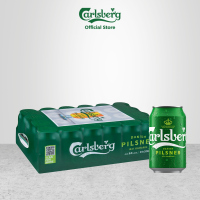
Carlsberg Danish Pilsner Beer Cans (MY) (24 x 320ml)
$51.90$62.17
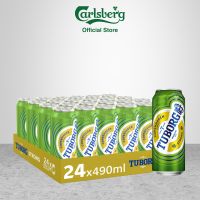
Tuborg Strong Beer Can (24 x 490ml)
$92.80$101.62
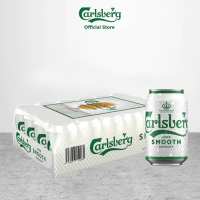
Carlsberg Smooth Draught Beer Can (24 x 320ml)
$51.90$62.17
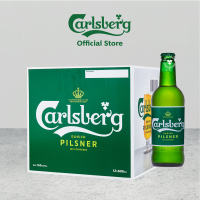
Carlsberg Danish Pilsner Beer Quart (12 x 640ml)
$79.73
Buy on Lazada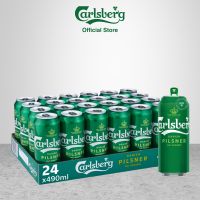
Carlsberg Danish Pilsner Beer Can (24 x 490ml)
$104.02$122.02
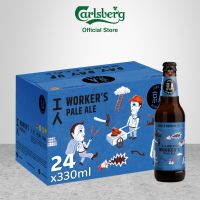
Jing-A Brewing Co. Workers Pale Ale Craft Beer Pint (24x330ml)
$88.00$111.86
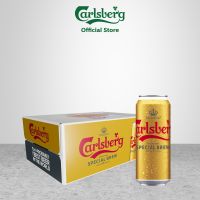
Carlsberg Special Brew Beer Can (24 x 490ml)
$135.60$142.80
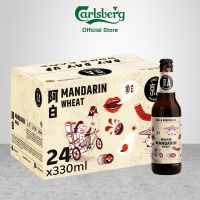
Jing-A Brewing Co. Mandarin Wheat Craft Beer Pint (24x330ml)
$88.00$111.86
About Carlsberg
Carlsberg is a Danish beer brand and one of the most recognised names in the international brewing industry. Founded in Copenhagen, Denmark, in 1847 by brewer J.C. Jacobsen, the brand takes its name from Jacobsen’s son, Carl. Today, Carlsberg serves as the flagship beer brand of the Carlsberg Group, a global beverage company headquartered in Copenhagen.1
The brand is closely associated with Danish brewing heritage, lager beer, scientific research, its distinctive green visual identity, and the long-running advertising slogan “Probably the best beer in the world.”2
Basic information
| Category | Information |
|---|---|
| Brand | Carlsberg |
| Origin | Copenhagen, Denmark |
| Founded | 1847 |
| Founder | J.C. Jacobsen |
| Industry | Brewing / beverages |
| Parent company | Carlsberg Group |
| Headquarters | Copenhagen, Denmark |
| Main product | Lager beer |
| Brand identity | Danish, premium/mainstream beer, innovation, heritage |
| Signature colour | Carlsberg green |
| Famous slogan | “Probably the best beer in the world” |
| Global presence | Sold internationally; the Carlsberg Group operates in more than 150 markets |
| Parent-group employees | More than 37,000 |
| Parent-group portfolio | More than 180 brands |
Figures regarding employees, markets and the overall portfolio refer to the Carlsberg Group rather than the individual Carlsberg beer brand.3
History
Foundation in 1847
Carlsberg’s history began with J.C. Jacobsen, a Danish brewer who sought to build a larger and more modern brewery. In 1847, he established a new brewery outside Copenhagen on a hill with access to water. The brewery became known as Carlsberg, a name derived from Carl, Jacobsen’s son, combined with bjerg, the Danish word for “hill.”4 Rather than focusing solely on large-scale production, Jacobsen emphasised quality, experimentation and scientific research, principles that remain central to the brand’s identity.
1867 brewery fire
In 1867, the Carlsberg brewery suffered a major fire. Jacobsen responded by rebuilding and modernising the facility using more fire-resistant materials. This event marked an early chapter in the company’s long history of technological development and reinvention.5
Scientific brewing in the late 19th century
One of Carlsberg’s most significant contributions to brewing was its work on yeast. The brewery developed methods for propagating a single pure yeast strain, which helped make brewing more consistent and scientifically controlled. This yeast became known as Saccharomyces carlsbergensis, and Carlsberg’s research had a profound influence on modern lager brewing.6 The company subsequently adopted a philosophy of open scientific knowledge, sharing important brewing discoveries rather than treating every innovation as a commercial secret.
The Carlsberg Laboratory
A pivotal element of Carlsberg’s history is the Carlsberg Laboratory, established by J.C. Jacobsen as a centre for scientific research related to brewing. The laboratory helped transform brewing from an empirical craft into a scientific discipline, with historical research advancing yeast cultivation, fermentation and chemistry.
Among the most famous achievements associated with the laboratory is the development of the pH scale by Danish chemist S.P.L. Sørensen. Carlsberg highlights the pH scale as one of the major scientific contributions linked to its history.7 This scientific heritage remains integral to the brand’s modern positioning, presenting Carlsberg not merely as a beer producer but as a company with a long tradition of curiosity, experimentation and innovation.
Logo and visual identity
The Carlsberg logo is one of the brand’s most recognisable visual assets. Introduced in 1904 and designed by Danish architect Thorvald Bindesbøll, the design incorporates the distinctive Carlsberg wordmark and characteristic hop-leaf imagery to reinforce its connection with brewing.8 The brand’s famous green colour has since become strongly associated with Carlsberg. Today, the visual identity combines this historical heritage with a contemporary, digitally adaptable design system.9
Product profile
The core Carlsberg product is a lager or pilsner-style beer. Traditional Carlsberg lager is characterised by a clean and refreshing profile with moderate bitterness, carbonation and a crisp finish. It is positioned as an accessible beer for everyday drinking rather than an extremely strong or experimental craft beer.
Over time, the brand has expanded beyond its traditional lager into different formats and markets, including alcohol-free variants and other product innovations. The precise range differs by country.10
“Probably the best beer in the world”
Carlsberg’s most famous advertising phrase is “Probably the best beer in the world.” This slogan became a cornerstone of the brand’s global identity. Interestingly, the phrase originated in the United Kingdom in the 1970s, where it was initially used as “Probably the best lager in the world.” It was later changed to “beer” to allow broader international usage.11
The wording is deliberately playful. Rather than making an absolute claim, the word “probably” gives the advertising a characteristic combination of confidence and humour.
Global presence
Although unmistakably Danish in origin, Carlsberg is no longer simply a Danish beer. The Carlsberg Group has developed an extensive international portfolio operating across Europe and Asia. In 2025, Western Europe, Central and Eastern Europe, and Asia accounted for approximately 43%, 28% and 29% of Group volumes, respectively.12
The Carlsberg brand is adapted to different markets while retaining consistent global characteristics:
- Danish heritage
- Green branding
- Lager positioning
- International lifestyle appeal
- Scientific and brewing heritage
- Premium and mainstream positioning
- Sports and entertainment marketing
Distinction between brand and group
It is important to distinguish between Carlsberg the beer brand and the Carlsberg Group.
Carlsberg the beer brand
This refers to the familiar green-branded beer sold in bottles, cans, bars and restaurants.
Carlsberg Group
This is the larger Danish brewing and beverage company that owns, produces or distributes a vast portfolio of brands. The Group’s portfolio includes international brands such as Carlsberg, Tuborg, 1664 Blanc and Grimbergen, alongside numerous strong local brands. It also operates in categories beyond beer, including cider, alcohol-free beverages and soft drinks.13 Strictly speaking, Carlsberg beer is one brand within the much larger Carlsberg Group.
Portfolio of associated brands
The Group’s portfolio extends considerably beyond the Carlsberg name. Notable brands include:
- Carlsberg: Flagship Danish beer brand
- Tuborg: Major international lager brand
- 1664 / Kronenbourg 1664: French-origin beer brand
- Grimbergen: Belgian abbey beer brand
- Somersby: Cider brand
- Brooklyn Brewery: American beer brand
- Numerous local and regional beer brands
- Various soft-drink brands
The exact portfolio varies by market and has changed substantially through acquisitions and partnerships.14
Expansion beyond beer
Historically associated overwhelmingly with beer, the Group has recently expanded its beverage portfolio. A major development occurred in 2025 when Carlsberg acquired Britvic, significantly increasing its presence in soft drinks. The resulting business in the UK became Carlsberg Britvic.15 Consequently, the Group increasingly describes itself as a broader beverage company rather than solely a traditional brewer.
Its current portfolio is divided broadly into categories such as:
- Mainstream core beer
- Premium beer
- Alcohol-free brews
- Beyond Beer
- Soft drinks16
Ownership structure
Carlsberg has an unusual ownership history for a major international beverage company. The Carlsberg Foundation, established by J.C. Jacobsen, remains an important shareholder. This reflects Jacobsen’s original vision that the brewery’s success should support science, research, art and culture. Carlsberg describes itself as being partly owned by the Carlsberg Foundation and partly by other shareholders.17 This link between commercial brewing and philanthropy is a distinctive feature of the company’s corporate history.
Brand philosophy and sustainability
Carlsberg’s modern purpose is expressed as “Brewing for a better today and tomorrow.” The company connects this philosophy to its founder’s curiosity and scientific mindset. Modern communication frequently focuses on innovation, sustainability and improving production and packaging methods.18
Examples include:
- Snap Pack packaging designed to reduce plastic use
- Research into new packaging materials
- Alcohol-free beer
- Brewing and fermentation research
- Efforts to reduce environmental impact
These initiatives fall under the broader sustainability programme, Brewing Tomorrow.19
Marketing and sponsorship
Carlsberg has historically invested heavily in sports, music, entertainment and lifestyle marketing. One of its most recognisable contemporary sports associations is with Liverpool FC. The partnership spans several decades and reinforces Carlsberg’s positioning as a social and international lifestyle brand rather than simply a beverage manufacturer.20
Brand image
Carlsberg’s brand image is defined by several key characteristics:
- Danish heritage: Identity deeply connected to Denmark and Copenhagen.
- Brewing expertise: A 180-year history providing a strong heritage narrative.
- Science and innovation: Distinguished by the Carlsberg Laboratory and historical brewing research.
- Green visual identity: Highly recognisable green logo and packaging.
- Social and sporting culture: Associated with social occasions through football sponsorships and partnerships.
- International character: Marketed and consumed globally despite Danish origins.
Significance in brewing history
Carlsberg is historically significant because its contribution extends beyond selling beer. Its founders and scientists advanced the scientific understanding of brewing, particularly regarding yeast and fermentation. The propagation of a pure yeast strain associated with Carlsberg became influential in lager production, and the company’s historical work is still referenced in discussions of modern brewing science.21
Carlsberg’s legacy thus has two dimensions:
- Commercial legacy: A globally recognised beer and beverage business.
- Scientific legacy: A historic contribution to brewing research and fermentation science.
Current status
As of 2026, Carlsberg remains one of the world’s major international brewing groups. The Group reports more than 37,000 employees, operations in more than 150 markets and a portfolio of more than 180 brands.22 Results from 2025 demonstrate how the business has evolved beyond its original Danish beer operation, with significant exposure to premium beer, alcohol-free beverages and soft drinks alongside traditional mainstream beer.23 The Carlsberg beer brand itself continues to be built around its original identity: Danish brewing heritage combined with modern international appeal.
Timeline
| Year | Event |
|---|---|
| 1847 | J.C. Jacobsen establishes Carlsberg in Copenhagen |
| 1860s | Carlsberg begins exporting beer, including to the UK |
| 1867 | Major fire damages the brewery; it is rebuilt and modernised |
| 1870s–1880s | Carlsberg develops its scientific brewing research |
| 1883 | Emil Christian Hansen’s work enables propagation of pure yeast cultures |
| 1887 | J.C. Jacobsen dies |
| 1904 | Thorvald Bindesbøll designs the iconic Carlsberg logo |
| 20th century | Carlsberg expands internationally |
| 1970 | Carlsberg merges with Tuborg |
| 1970s | “Probably the best lager in the world” advertising slogan emerges in the UK |
| Late 20th–21st century | Major expansion across Europe and Asia |
| 2020 | Carlsberg and Marston’s form Carlsberg Marston’s Brewing Company in the UK |
| 2025 | Carlsberg acquires Britvic, substantially expanding its soft-drinks business |
| 2026 | Carlsberg operates as a global beer and beverage group with 37,000+ employees and 150+ markets |
Historical milestones are based primarily on Carlsberg’s own heritage and corporate materials.24
References
- About the Carlsberg Group
- A history of Brewing
- Who we are » About the Carlsberg Group » Design Guide « Carlsberg Group
- Probably The Best Beer In The World – Carlsberg
- Carlsberg Group
- Base Prospectus dated 15 May 2020
- Probably the best beer in the world – Carlsberg
- Who we are » About the Carlsberg Group » Global Presence » United Kingdom « Carlsberg Group
- Carlsberg Group
- 2025
- Where is Carlsberg from? – Carlsberg
- CARLSBERG GROUP
- – Carlsberg
- Sustainability » Report & policies » Reports « Carlsberg Group
- Carlsberg Group
- Newsroom » FY 2025 Financial Statement « Carlsberg Group
- Carlsberg A/S 2025 Annual Report, Remuneration Report and Human Rights Report
- Carlsberg A/S 2025 Annual Report, Remuneration Report and Human Rights Report | Carlsberg A/S
- Timeline of the foundation’s history | Carlsbergfondet.dk
- The Carlsberg Family | Carlsbergfondet.dk
- Newsroom » Hoffen er tilbage! Carlsberg fejrer Dronningen og kalder atter pilsneren for HOF « Carlsberg Danmark
- Investor Relations » Investor Home « Carlsberg Group
- Investor Relations » Investor Home » Reports & Downloads « Carlsberg Group
- Investor Relations » Investor Home » Reports & Downloads « Carlsberg Group