Shop on Lazada
Casio Edifice products
![[Watchspree] Casio Edifice Standard Chronograph Silver Stainless Steel Watch EFV570D-1A EFV-570D-1A](https://sg-live.slatic.net/p/8c98ca842cada88e39cd7195af9f2b34.jpg_200x200q80.jpg)
[Watchspree] Casio Edifice Standard Chronograph Silver Stainless Steel Watch EFV570D-1A EFV-570D-1A
$118.20$164.00
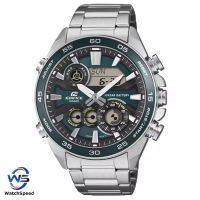
Casio Edifice ERA-130D-3 ERA-130D-3A Racing Ana-Digi Chronograph Mid-Sized Emerald Green & Steel Edition Watch
$173.85$250.00
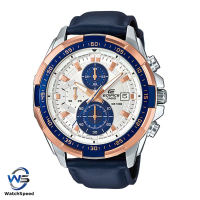
Casio Edifice EFR539 EFR-539L-7C Blue Leather Chronograph Rose Gold Design Mens Watch
$152.00$220.00
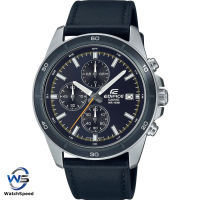
Casio Edifice EFR-526L EFR-526L-2 EFR-526L-2C Chronograph Blue Analog Leather Mens Sporty Watch
$112.10$180.00
About Casio Edifice
Overview
Casio Edifice is a wristwatch line produced by the Japanese electronics manufacturer Casio Computer Co., Ltd. Positioned around sporty yet sophisticated analogue timepieces, the collection maintains a strong association with motorsport, automotive design, chronograph timing and electronic innovation. Casio defines the brand philosophy of Casio Edifice as “Speed & Intelligence”. Since its launch in 2000, the line has evolved from conventional analogue chronographs into a diverse family encompassing solar-powered models, Bluetooth-connected watches, automatic mechanical variants, slim dress-sport pieces and numerous motorsport collaborations.3
Brand Identity and Concept
The term “edifice” in English denotes a substantial building or structure; however, within this context, it serves primarily as a product identity created by Casio rather than a literal architectural reference. The name signifies the construction of sophisticated functionality within a wristwatch, supported by brand language centred on speed, intelligence, engineering precision and motorsport. Consequently, Casio Edifice is understood as the company’s automotive and motorsport-oriented analogue watch family, rather than an independent manufacturer.5
Casio characterises the line as a high-quality men’s watch brand that merges precision, fashionable styling, high-tech functions and sporty elegance. While specifications vary by model, international brand materials typically highlight solid metal cases and water resistance rated to 10 bar.4
Speed and Intelligence
The core philosophy of “Speed & Intelligence” distinguishes Casio Edifice from purely mechanical motorsport watches:
- Speed: Reflects motorsport influences including racing cars, acceleration, lap timing, tachymeters, chronographs, aerodynamic shapes, mechanical components and racing colours.
- Intelligence: Represents Casio’s electronic technologies such as solar power, Bluetooth connectivity, automatic time adjustment, world time, smartphone integration, stopwatch data transfer and advanced movement technology.6
History and Evolution
Launch and Early Years
Casio launched Casio Edifice in 2000 as an analogue watch line targeting enthusiasts of motorsport and automobiles. From its inception, the collection emphasised chronographs and elapsed time measurement. This marked a strategic departure for Casio, which was already renowned for digital watches like G-SHOCK. Casio Edifice established a distinct identity defined by analogue displays, metal construction, motorsport themes, chronograph complications and technological integration, aiming to resemble traditional performance watches while retaining Casio’s engineering approach.5
Motorsport Integration
During the late 2000s, the brand began supporting racing teams, forging deeper ties with professional motorsport. Rather than merely applying racing aesthetics, Casio utilised motorsport as a source of functional and material inspiration, incorporating dial designs, chronograph functionality, carbon fibre materials, lightweight construction, suspension-inspired architecture, team collaborations, lap-time measurement and high-speed visual language into the product line.1
Modern Development
The evolution of the collection can be traced through distinct phases:
- 2000: Launch as an analogue motorsport watch.
- 2000s: Strengthened racing identity and chronograph focus.
- 2010s: Integration of Tough Solar, Bluetooth and increasingly sophisticated chronographs.
- Late 2010s–2020s: Introduction of thinner cases, sapphire crystals, advanced connectivity and carbon materials.
- 2020s: Adoption of automotive-inspired architecture (SOSPENSIONE), expanded collaborations and automatic mechanical models.
Today, Casio Edifice spans affordable quartz chronographs to sophisticated solar/Bluetooth and automatic models, explicitly categorised into Smartphone Link, Solar Powered, Automatic, Slim Line, Standard Chronograph and Digital-Analogue Combination segments.3
Design and Construction
Analogue Displays
Unlike Casio’s predominantly digital G-SHOCK identity, Casio Edifice is fundamentally an analogue collection. Many models feature hour, minute and second hands, multiple sub-dials, date windows, chronograph indicators and dual-time displays, with some combining analogue and digital elements.5
Chronograph Complications
The chronograph is considered the signature complication of Casio Edifice, allowing the wearer to use the watch as a stopwatch whilst maintaining standard timekeeping. This function aligns with the brand’s motorsport identity, reflecting the historical dependence of racing on precise timing. Casio describes the chronograph as central to bridging analogue watchmaking and motorsport stopwatch technology.5
Materials and Build
Many Casio Edifice watches utilise substantial stainless steel cases and bracelets, distinguishing them from resin-cased sports watches. Polished and brushed surfaces are often employed to create visual contrast, positioning the typical model as a traditional metal sports watch. Casio emphasises premium materials and machining technologies throughout the line.4
Water resistance is commonly rated at 100 m / 10 bar on many current models, making them suitable for swimming and everyday water exposure, though ratings remain model-specific.7
SOSPENSIONE Concept
The SOSPENSIONE series represents one of the most visually distinctive modern designs, featuring case architecture inspired by automotive suspension systems. Instead of conventional lugs, these watches employ a four-arm arrangement intended to evoke race car suspension components, translating automotive engineering directly into watch design. Current lineups include several SOSPENSIONE generations, such as the ECB-40 and ECB-2000/ECB-2300 families.2
Carbon Fibre and Advanced Materials
Reflecting its automotive inspiration, Casio Edifice has increasingly incorporated advanced materials. Collaborations with racing teams have introduced carbon fibre, including 6K carbon in special models associated with Scuderia AlphaTauri. This material choice reinforces associations with Formula 1, lightweight engineering and high-performance vehicles, giving modern models a more technical appearance compared to classic stainless steel chronographs.1
Technologies
Tough Solar
Tough Solar technology integrates solar cells into the watch dial to convert light into electrical energy, reducing reliance on battery replacement. This feature is prominent in higher-specification models. For instance, the EQB-1100 combines Tough Solar, Bluetooth, chronograph functionality, 100 m water resistance and sapphire crystal in a case only 8.9 mm thick.3
Bluetooth Smartphone Link
Selected models connect to the CASIO WATCHES smartphone app via Bluetooth, offering functions such as automatic time adjustment, world-time selection, easy setup, stopwatch data transfer, phone finder, home/world-time switching and alarm configuration. The EQB-1100, for example, accesses approximately 300 world-time cities through the app. This connectivity blends the aesthetic of a traditional analogue watch with modern smart features.3
Sapphire Crystal
Higher-end Casio Edifice models frequently utilise sapphire crystal for superior scratch resistance compared to mineral glass. Some versions also feature anti-reflective coatings to enhance legibility. However, lower-priced models may still use mineral glass.7
Automatic Mechanical Movements
Expanding beyond quartz and electronic movements, the current collection includes automatic mechanical models such as the EFK-110 and EFK-200. These are designed to bring the exhilaration of driving into everyday life, extending the brand into territory traditionally occupied by mechanical Swiss and Japanese watch brands.8
Product Categories
Casio organises the current Casio Edifice collection into several broad categories:3
- Standard Chronograph: The traditional formula of metal case, analogue dial, chronograph and sporty design.
- Slim Line: Thinner watches combining sporty identity with understated, everyday wearability; some feature sapphire crystal.
- Smartphone Link: Technologically advanced models with Bluetooth, smartphone synchronisation, world time and data transfer.
- Solar Powered: Models utilising Tough Solar technology for convenience and sustainability.
- Digital-Analogue Combination: Watches merging traditional hands with digital displays for a technical aesthetic.91011
- Automatic: Mechanical models using automatic movements rather than quartz technology.
- Special / Collaboration Models: Limited or themed editions connected to partners such as Honda, Honda Racing, MUGEN and TOM’S Racing.1
Motorsport Partnerships
Motorsport forms a core part of the brand’s historical identity rather than serving merely as a marketing theme. Casio currently identifies partnerships involving organisations such as NISMO, Inter Proto Series and TOM’S Racing Team.1
Honda Collaborations
Honda has been particularly significant to the brand’s storytelling. Notable releases include the Honda Racing Championship White Edition, inspired by Honda’s RA271 Formula One car, and the ECB-2300HR, commemorating the 60th anniversary of Honda’s first F1 victory achieved with the RA272 at the 1965 Mexican Grand Prix. Other collaborations utilise the SOSPENSIONE architecture and incorporate design elements linked to Honda’s Type R and racing heritage. In these instances, the automobile is treated as a direct source of engineering inspiration for the watch.1
Scuderia AlphaTauri
Collaborations with Scuderia AlphaTauri have resulted in models such as the ECB-10AT, which incorporated 6K carbon fibre inspired by materials used in the team’s Formula 1 cars.1
Market Positioning
Casio Edifice occupies a distinct position in the watch market, focusing on delivering sophisticated aesthetics, extensive functionality, Japanese electronic engineering, metal construction, motorsport styling, solar power and Bluetooth connectivity at accessible price points. It does not aim to compete directly with high-end Swiss luxury chronograph manufacturers. Instead, it offers features such as sapphire crystal, Tough Solar and Bluetooth at prices substantially lower than many Swiss counterparts with comparable visual complexity.
Pricing varies widely across the hierarchy, ranging from simple quartz chronographs to premium automatic and collaboration models. As a regional pricing example, Casio Thailand lists the EQB-1100DC at ฿17,000 MSRP and the EQB-1100XDB at ฿14,500, illustrating the range within the upper-mid tier. Actual prices differ by country, model and retailer.3
Comparison with Other Casio Lines
Casio Edifice sits between other major Casio families in terms of identity and purpose:
| Casio Family | Main Identity |
|---|---|
| G-SHOCK | Toughness, shock resistance, street/outdoor culture |
| BABY-G | Smaller, lifestyle-oriented rugged watches |
| PRO TREK | Outdoor/adventure |
| Casio Edifice | Motorsport, cars, chronographs, sophisticated metal watches |
| Oceanus | Premium Japanese metal watches, refinement and technology |
| Vintage / Classic | Retro digital and everyday Casio designs |
While G-SHOCK prioritises ruggedness and shock resistance for outdoor and street culture, Casio Edifice targets users seeking a traditional metal sports watch aesthetic combined with Casio technology. It is generally chosen for business or sport settings where a resin digital watch might be inappropriate, yet retains the brand’s electronic DNA.3
Strengths and Limitations
Strengths
- Value: Offers solar, Bluetooth, sapphire and chronograph functions without luxury pricing.
- Distinct Identity: Maintains a clear automotive and motorsport personality.
- Finishing: Prominent use of brushed and polished stainless steel.
- Practicality: Solar power and Bluetooth enhance daily convenience.
- Variety: Ranges from simple watches to feature-rich models.
- Heritage: Deep connection to racing beyond superficial styling.
Limitations
- Size: Large cases and busy dials may not suit all wrists.
- Visual Complexity: Designs can appear excessive to minimalists.
- Quartz Dominance: Mechanical purists may prefer other brands.
- Feature Variance: Not every model includes solar, Bluetooth, sapphire or chronographs.
- Styling: The racing aesthetic is polarising.3