Shop on Lazada
CHANEL products
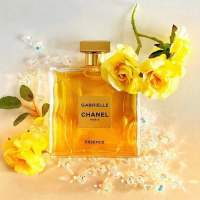
Chanel Gabrielle EDP 100ml
$295.00$590.00
(Brand new) Chanel 23S Urban Spirit Small Backpack in Black Shiny Caviar and LGHW (Model: AS4058) C/2026/06/046A
$7,380.00
Buy on Lazada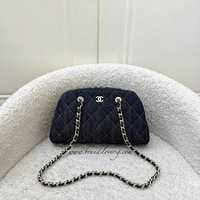
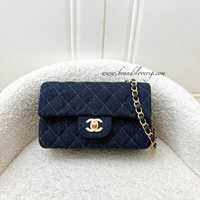
(Pre-loved) Chain / Mini Bowling Bag in Denim Fabric and LGHW (Model: AP5092) C/2026/09/007B
$4,690.00
Buy on Lazada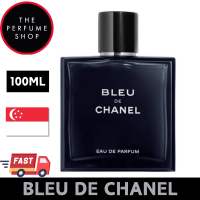
BLEU DE CHANEL EAU DE PARFUM 100ML
$76.00$96.00
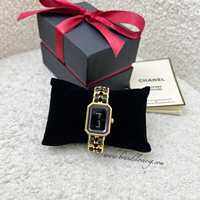
(Pre-loved) Chanel Vintage Premiere Watch in 24K GHW and Black Leather Size M (Year 1991) C/2026/06/038B
$2,660.00
Buy on Lazada![Chanel Chance Eau Tendre EDP for Women (50ml) Eau de Parfum Tender Pink [Brand New 100% Authentic Perfume/Fragrance]](https://sg-live.slatic.net/p/e93a69aae4177ca483a0056883bb7eb7.jpg_200x200q80.jpg)
Chanel Chance Eau Tendre EDP for Women (50ml) Eau de Parfum Tender Pink [Brand New 100% Authentic Perfume/Fragrance]
$230.00$253.00
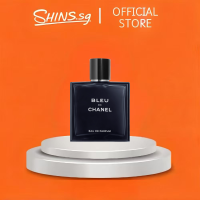
CHANEL BLEU DE CHANEL Eau de Parfum 100ML
$38.00$258.00
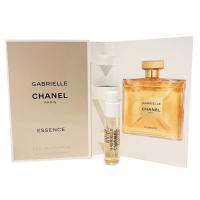
Chanel mini perfumes samples
$10.90
Buy on LazadaAbout CHANEL
CHANEL is a French luxury fashion house and one of the most influential names in the global luxury industry. Founded by Gabrielle “Coco” Chanel in Paris in the early 20th century, the House began as a hat shop and has since evolved into a diversified luxury business encompassing Haute Couture, ready-to-wear, handbags and leather goods, fashion accessories, eyewear, fragrances, makeup, skincare, fine jewellery, and watches.1 Beyond its commercial success, CHANEL is widely regarded as a cultural institution whose identity is anchored in modernity, independence, simplicity, craftsmanship, femininity, and the reinterpretation of classic codes. The brand maintains a significant retail presence in Singapore, with flagship boutiques located at key luxury destinations such as Marina Bay Sands and Ngee Ann City.
Basic information
| Category | Information |
|---|---|
| Brand | CHANEL |
| Founder | Gabrielle “Coco” Chanel |
| Founded | 1910 |
| Origin | Paris, France |
| Industry | Luxury goods / Fashion |
| Business type | Private company |
| Major categories | Fashion, Haute Couture, leather goods, beauty, fragrance, jewellery, watches |
| Historic headquarters / flagship | 31 Rue Cambon, Paris |
| Current Global CEO | Leena Nair |
| Global Executive Chairman | Alain Wertheimer |
| Fashion Artistic Director | Matthieu Blazy |
| Iconic fragrance | CHANEL N°5 |
| Iconic handbag | 2.55 / Classic Flap |
| Iconic watch | J12 |
| Signature visual codes | Camellia, interlocking CC, black & white, quilted leather, chain, pearls, tweed |
| 2025 revenue | US$19.3 billion |
| 2025 operating profit | US$4.712 billion |
For the financial year 2025, CHANEL reported revenue of US$19.3 billion, representing a 2% increase from 2024, alongside an operating profit of US$4.712 billion.2
Who was Coco Chanel?
The narrative of CHANEL is intrinsically linked to its founder, Gabrielle Chanel (1883–1971), universally known as Coco Chanel. Born in Saumur, France, she endured a challenging childhood marked by her mother’s passing and subsequent years in an orphanage, where she acquired sewing skills. These formative experiences, coupled with her independence and exposure to varied social spheres, profoundly shaped the House’s aesthetic philosophy. CHANEL characterises her as a woman defined by boldness, freedom, and an instinctive approach to creation.1
Prior to her career in fashion design, Gabrielle worked as a seamstress and performed as a singer, a period from which the nickname “Coco” is believed to have originated. Her significance to fashion history lies not merely in designing attractive garments but in fundamentally altering societal expectations regarding women’s dress.
Chanel’s central idea
Early 20th-century women’s fashion was traditionally characterised by:
- Corsets
- Restrictive silhouettes
- Elaborate decoration
- Heavy fabrics
- Highly formal clothing
Chanel charted a different course, advocating for clothing that was:
- Simpler
- More comfortable
- More practical
- Influenced by menswear
- Suitable for modern lifestyles
- Luxurious without excessive ornamentation
CHANEL describes her philosophy as the creation of a wardrobe liberated from constraints and excess, integrating masculine elements while preserving a distinctly feminine identity.3 This approach became a cornerstone of modern luxury fashion.
Foundation of the House
1910 — The first CHANEL shop
Gabrielle Chanel opened her inaugural hat boutique in 1910 in Paris. This millinery enterprise laid the groundwork for what would eventually become the House of CHANEL.4
1912 — Deauville
Expansion followed in Deauville, a fashionable seaside resort. This move was strategically significant, as her designs catered to the increasingly active lifestyles of affluent women who frequented resorts and engaged in outdoor leisure pursuits.
1915 — Biarritz
In 1915, Chanel established a couture house in Biarritz. By this juncture, the business had transcended its origins as a hat shop to become a bona fide fashion house.5
1918 — 31 Rue Cambon
By 1918, Chanel had secured premises at 31 Rue Cambon in Paris. This address remains one of the most pivotal locations in CHANEL’s history and continues to be synonymous with the House.
The Chanel revolution in fashion
Chanel’s most enduring contribution is arguably her transformation of the modern woman’s wardrobe. Rather than viewing women’s fashion as purely decorative, she approached clothing through the lens of movement, independence, and everyday life. Key codes associated with early Chanel fashion include:
Jersey
Chanel famously introduced jersey—a fabric previously associated primarily with men’s underwear and sportswear—into women’s fashion. This was revolutionary, challenging conventional notions of what constituted luxurious attire for women.
Trousers
She played a pivotal role in popularising trousers and more relaxed silhouettes for women during an era when such styles were still relatively unconventional.
Little black dress
In 1926, Chanel unveiled her famously simple little black dress. While black had traditionally been strongly associated with mourning, Chanel repositioned it as an elegant and versatile fashion colour. The little black dress subsequently became a foundational concept in modern women’s fashion.6
CHANEL N°5
If one product epitomises CHANEL, it is undoubtedly N°5.
1921 — Creation of N°5
In 1921, Gabrielle Chanel collaborated with Russian-French perfumer Ernest Beaux to create the House’s first fragrance. The result was CHANEL N°5. It was groundbreaking for several reasons:
- It was associated with a fashion designer rather than solely a traditional perfumer.
- Its name was a number instead of a conventional descriptive title.
- Its olfactory composition was abstract and complex.
- Its bottle design was remarkably minimalist.
- It positioned perfume as an integral component of a woman’s personal style.
CHANEL states that N°5 was the first perfume created by a couturier and that its name derived from the fifth sample presented to Gabrielle Chanel.7 The bottle itself became an icon of modern design, featuring transparent glass, clean geometric lines, and minimal decoration. The underlying philosophy was essentially:
The luxury is in the product itself, not in excessive decoration around it.
Consequently, N°5 became far more than a perfume; it became a symbol of CHANEL.
Expansion into beauty
In 1924, CHANEL established the Société des Parfums CHANEL, dedicated to fragrances and cosmetics. That same year marked the launch of the House’s first makeup collections, including powders and lipsticks.8 This development was significant as it signalled CHANEL’s evolution into a complete luxury lifestyle brand rather than solely a couture business.
Today, CHANEL Beauty encompasses:
- Perfumes
- Makeup
- Skincare
- Body products
- Specialised fragrance collections
Its fragrance portfolio includes renowned names such as:
- N°5
- N°19
- Coco
- Coco Mademoiselle
- Chance
- Bleu de CHANEL
- Gabrielle
- Les Exclusifs de CHANEL
Jewellery
CHANEL also made significant inroads into fine jewellery. In 1932, Gabrielle Chanel presented Bijoux de Diamants, a major fine-jewellery exhibition. This was particularly noteworthy because Chanel approached jewellery with the same ethos as fashion: challenging conventional ideas about luxury and emphasising the relationship between jewellery and the human body.9
Modern CHANEL jewellery continues to reinterpret Gabrielle Chanel’s personal symbols, including:
- The camellia
- Stars
- Pearls
- Diamonds
- The lion
- The number 5
- The interlocking CC
The CHANEL visual language
A key factor in CHANEL’s recognisability is the development of an unusually consistent set of visual codes.
Black and white
Black and white became fundamental Chanel colours, reflecting the House’s preference for contrast and simplicity.
Camellia
The camellia flower emerged as one of Chanel’s most important symbols. Gabrielle Chanel frequently incorporated the bloom into clothing, accessories, and jewellery. Today, the camellia appears throughout CHANEL’s product universe.
Pearls
Pearls were strongly associated with Chanel’s personal style. She famously mixed genuine jewellery with costume pieces, helping to blur the distinction between traditional notions of preciousness and fashion.
Tweed
Tweed became one of CHANEL’s defining materials. Originally associated with menswear and British tailoring, Chanel transformed tweed into a sophisticated material for women’s fashion.
Quilting
The quilted pattern became one of the House’s most recognisable signatures, particularly on handbags.
Chain
Gold-tone and metal chains are frequently integrated into CHANEL handbags, jewellery, and clothing.
Interlocking CC
The double-C logo is perhaps the House’s most identifiable graphic symbol. Generally associated with the name Chanel, it has become one of the most recognisable luxury logos globally.
The 2.55 handbag
One of CHANEL’s most significant products is the 2.55 handbag. Introduced in February 1955, the bag was revolutionary because it allowed women to carry a handbag over the shoulder rather than holding it in their hands. The design incorporated:
- Quilted leather
- A chain strap
- A compact rectangular silhouette
- Multiple interior compartments
The name 2.55 refers to February 1955, the month and year of its creation. The bag subsequently became one of the foundational designs of modern luxury handbags.10 The later Classic Flap design, developed by Karl Lagerfeld, became another defining CHANEL handbag.
The Karl Lagerfeld era
Following Gabrielle Chanel’s death in 1971, the House entered a distinct transitional period. The critical turning point arrived in 1983 when Karl Lagerfeld was appointed Artistic Director. His tenure is considered one of the most important chapters in the brand’s modern history.
Lagerfeld revitalised CHANEL by:
- Restoring the prestige of Haute Couture
- Developing ready-to-wear
- Expanding Cruise collections
- Developing Métiers d’Art
- Modernising Chanel’s classic codes
- Creating new interpretations of the CC logo
- Transforming the Classic Flap into a major luxury icon
- Connecting CHANEL’s heritage with contemporary pop culture
CHANEL credits Lagerfeld with breathing new life into Cruise collections, introducing Métiers d’Art and pre-collections, restoring Haute Couture, and developing the ready-to-wear business in its modern form.11
Why Lagerfeld was important
Lagerfeld understood a fundamental challenge facing heritage luxury brands:
How do you preserve history without becoming old-fashioned?
His solution was to repeatedly reinterpret Chanel’s existing vocabulary. The camellia, tweed, chain, and CC logo remained, but their combinations, proportions, colours, and cultural references evolved constantly. This approach became the CHANEL model of modern luxury.
CHANEL after Karl Lagerfeld
Karl Lagerfeld passed away on 19 February 2019. CHANEL subsequently appointed Virginie Viard as Artistic Director of its fashion collections.12 Having worked closely with Lagerfeld for many years, Viard’s tenure was characterised by a somewhat more understated interpretation of the House’s aesthetic. She departed the position in 2024.
Matthieu Blazy era
In 2024, CHANEL announced Matthieu Blazy as the new Artistic Director of its Fashion Activities, with responsibility for:
- Haute Couture
- Ready-to-Wear
- Accessories
He officially joined the House in 2025.13 As of 2026, Blazy serves as the creative leader responsible for CHANEL’s principal fashion activities. CHANEL describes his approach as combining the House’s heritage and codes with an innovative perspective on creation, craftsmanship, and materials.14 This marks another significant chapter in CHANEL’s history:
Gabrielle Chanel → Karl Lagerfeld → Virginie Viard → Matthieu Blazy
Each designer inherits the same historical vocabulary but interprets it distinctly.
CHANEL today
CHANEL has evolved beyond a mere fashion company into a vertically integrated luxury ecosystem. Its major business pillars include:
Fashion
- Haute Couture
- Ready-to-Wear
- Cruise
- Métiers d’Art
- Fashion accessories
Leather goods
- Handbags
- Wallets
- Small leather goods
- Travel products
Fragrance
- N°5
- Coco Mademoiselle
- Bleu de CHANEL
- Chance
- Gabrielle
- Les Exclusifs
Beauty
- Makeup
- Skincare
- Sun care
- Beauty accessories
Watches
Major collections include:
- J12
- Première
- Boy·Friend
- Code Coco
- Monsieur de CHANEL
CHANEL established its watchmaking division in 1987 with the Première watch, whose design drew inspiration partly from the shape of the N°5 bottle stopper and Place Vendôme.15
Fine jewellery
Important collections include:
- Coco Crush
- Comète
- Camélia
- Ultra
- N°5
- 1932
Métiers d’Art
A crucial element of CHANEL’s strategy is its investment in traditional craftsmanship. The House has acquired and supported specialised workshops involved in areas such as:
- Embroidery
- Feathers
- Flowers
- Pleating
- Buttons
- Shoemaking
- Millinery
- Goldsmithing
- Leatherwork
- Textile decoration
These specialised entities are collectively known as the Métiers d’Art. CHANEL’s strategy is distinctive in that the company does not simply outsource craftsmanship; it actively invests in preserving specialist workshops and their skills. A major manifestation of this philosophy is le 19M, a Parisian site dedicated to artistic craftsmanship. CHANEL states that this project brings together expertise from 11 artistic crafts at a single location, drawn from a wider group of approximately 40 crafts associated with the House.16
Business model
Unlike many major luxury groups, CHANEL operates as a private company rather than a publicly listed corporation. CHANEL describes itself as a private global luxury company engaged in creating, developing, manufacturing, and distributing luxury products.17
Its business model emphasises:
Brand control → Product quality → Scarcity → Craftsmanship → Long-term brand equity
This approach is particularly vital in the luxury sector. CHANEL does not compete primarily on price. Instead, the brand offers:
- Heritage
- Design
- Craftsmanship
- Exclusivity
- Cultural relevance
- Status
- Emotional attachment
Its substantial fragrance and beauty business also provides a more accessible entry point into the CHANEL universe compared to Haute Couture or high jewellery.
Financial scale
CHANEL’s financial results illustrate the sheer scale of the House. For 2025, CHANEL reported:
- Revenue: US$19.3 billion
- Growth: +2% versus 2024
- Operating profit: US$4.712 billion
- Investment: US$2.395 billion
- Capital expenditure: US$1.449 billion
- Free cash flow: US$2.646 billion
The company attributed its 2025 performance to strength across fashion, fragrance, beauty, watches, and handbags, including the launch of the CHANEL 25 handbag and other new products.18 These figures place CHANEL among the world’s largest luxury businesses.
CHANEL’s brand philosophy
CHANEL’s identity can be distilled into several core philosophical tenets:
1. Freedom
Gabrielle Chanel sought to enable women to move freely and dress appropriately for modern life.
2. Simplicity
CHANEL often achieves elegance by removing decoration rather than adding it.
3. Contrast
Male/female, black/white, hard/soft, simple/luxurious, classic/modern. These contrasts are central to Chanel’s visual identity.
4. Reinvention
CHANEL does not merely reproduce Gabrielle Chanel’s original designs; successive creative directors continually reinterpret them.
5. Craftsmanship
The House places immense importance on specialist craftsmanship and savoir-faire.
6. Independence
The independent, unconventional personality of Gabrielle Chanel remains central to the brand mythology.
CHANEL and popular culture
CHANEL’s influence extends well beyond fashion. The House has maintained strong relationships with:
- Cinema
- Photography
- Music
- Art
- Celebrities
- Museums
- Cultural institutions
Gabrielle Chanel herself engaged with cinema from an early stage. In 1931, she travelled to Hollywood at the invitation of producer Samuel Goldwyn, subsequently becoming associated with numerous actresses and filmmakers.19 Later, Karl Lagerfeld transformed CHANEL advertising into a major cultural and visual phenomenon, with campaigns frequently functioning almost as short films or art projects rather than conventional product advertisements.
CHANEL’s relationship with celebrities
Celebrity association has been central to CHANEL’s communication strategy. Over the decades, the House has collaborated with internationally recognised figures from film, fashion, and popular culture. Notable historical associations include:
- Marilyn Monroe
- Catherine Deneuve
- Carole Bouquet
- Inès de la Fressange
- Keira Knightley
Marilyn Monroe’s famous association with N°5 stands as one of the most powerful examples of celebrity culture reinforcing a luxury brand’s mythology. CHANEL identifies Monroe among the iconic figures associated with N°5.20
CHANEL’s most important products
| Product / Code | Why it matters |
|---|---|
| N°5 | Arguably the world’s most famous CHANEL product and a landmark in modern perfumery |
| 2.55 | Foundational CHANEL handbag design |
| Classic Flap | One of the world’s most recognisable luxury handbags |
| Little Black Dress | Landmark in 20th-century women’s fashion |
| Tweed jacket | Core expression of CHANEL’s fashion identity |
| Camellia | Signature House motif |
| Coco Mademoiselle | Major modern fragrance franchise |
| Bleu de CHANEL | Major men’s fragrance |
| J12 | Iconic modern CHANEL watch |
| Première | First major CHANEL watch design |
| Coco Crush | Important modern fine-jewellery collection |
A simplified CHANEL timeline
- 1883 — Gabrielle Chanel is born.
- 1910 — First CHANEL hat boutique opens in Paris.21
- 1912 — Chanel expands to Deauville.
- 1915 — Couture house opens in Biarritz.
- 1918 — Chanel establishes herself at 31 Rue Cambon.
- 1921 — CHANEL N°5 launches.
- 1924 — Société des Parfums CHANEL established; first makeup collections launched.22
- 1926 — Little black dress becomes a defining Chanel concept.23
- 1932 — Bijoux de Diamants fine-jewellery exhibition.
- 1955 — 2.55 handbag introduced.
- 1971 — Gabrielle Chanel dies.
- 1983 — Karl Lagerfeld becomes Artistic Director.24
- 1987 — CHANEL launches its watch business with Première.
- 2000 — J12 launches, becoming a major modern watch icon.25
- 2019 — Karl Lagerfeld dies; Virginie Viard becomes Artistic Director.26
- 2021 — CHANEL celebrates the centenary of N°5.
- 2025 — Matthieu Blazy joins as Artistic Director of Fashion Activities.27
- 2026 — CHANEL operates as a global private luxury house spanning fashion, beauty, fragrance, watches, and jewellery.
What makes CHANEL different?
Understanding CHANEL requires distinguishing it from a standard fashion brand. While a typical fashion brand might sell clothes, CHANEL sells a world. The same underlying codes appear across almost every category:
Camellia → handbags → jewellery → perfume → makeup → watches → fashion → advertising → boutiques
Customers are therefore not simply purchasing a jacket or perfume; they are entering a recognisable aesthetic universe. This coherence is a primary reason CHANEL has maintained its relevance for over a century.
CHANEL’s position in the luxury industry
CHANEL belongs to the elite tier of global luxury brands, alongside houses such as Hermès, Louis Vuitton, Dior, Gucci, Prada, Cartier, and Saint Laurent. However, CHANEL occupies a distinctive position.
- Hermès is particularly associated with exceptional leather craftsmanship and scarcity.
- Louis Vuitton possesses a powerful heritage in travel and monogrammed leather goods.
- Dior is strongly linked to couture, femininity, and Parisian elegance.
- Cartier is identified primarily with jewellery and watches.
CHANEL, meanwhile, combines fashion + fragrance + beauty + handbags + jewellery + watches under an unusually coherent set of symbols. This integration constitutes one of its greatest competitive advantages.
The essence of CHANEL
At its simplest, the history of CHANEL can be understood as a sequence:
Gabrielle Chanel created the codes → Karl Lagerfeld modernised them → Virginie Viard softened and continued them → Matthieu Blazy is now reinterpreting them for a new generation.
Yet beneath these creative eras, the same fundamental idea endures:
Luxury does not have to mean excess.
CHANEL’s most powerful designs often succeed precisely because they combine simplicity with exceptional materials, craftsmanship, and symbolism. This explains why a black dress, a quilted handbag, a camellia, a pearl necklace, a tweed jacket, a chain strap, or a minimalist perfume bottle can immediately communicate “CHANEL” without the brand name being visible.
In this sense, CHANEL’s greatest product is arguably not N°5, the 2.55, or the Classic Flap. It is the CHANEL aesthetic itself—a visual and cultural language that has survived for more than a century while continuously being reinvented.
Official references
For authoritative primary material, CHANEL maintains its own history of the House, featuring decade-by-decade historical information, biographies of Gabrielle Chanel, Haute Couture history, fragrance history, and corporate information.28
References
- Gabrielle Chanel, nhà sáng lập CHANEL | CHANEL
- CHANEL LIMITED FINANCIAL RESULTS FOR THE YEAR ENDED 31 DECEMBER 2025
- Fragrance Beauty – FAQ | CHANEL
- REPORTTO SOCIETY2018
- Những năm 1920 | CHANEL
- Les années 1920 | CHANEL
- Gabrielle Chanel, fondatrice de la Maison CHANEL | CHANEL
- Những năm 1980 | CHANEL
- 2010s | CHANEL
- Matthieu Blazy – Fashion Artistic Director — Fashion | CHANEL
- The History of CHANEL Haute Couture | CHANEL
- CHANEL et le cinéma
- Le Grand Numéro de CHANEL
- REPORTTO SOCIETY2018
- Lịch sử Thương hiệu CHANEL | CHANEL
- The history of the House of CHANEL | CHANEL
- Legal Statement | CHANEL
- Legal Statement | CHANEL
- Rechtliche hinweise und allgemeine nutzungsbedingungen | CHANEL
- N°5 EAU DE PARFUM DẠNG XỊT – 50 ml | CHANEL
- N°5 EAU DE PARFUM DẠNG XỊT – 100 ml | CHANEL
- L’histoire de la Haute Couture de CHANEL | CHANEL
- 1920年代 | CHANEL シャネル
- Gabrielle Chanel, the founder of CHANEL | CHANEL
- 1920s | CHANEL
- 1980s | CHANEL
- La Maison Chanel – FAQ | CHANEL
- 1980 | CHANEL