Shop on Lazada
CHARLES JANG’S HAPPY HEART products
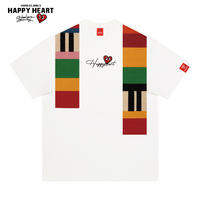
CHARLES JANGS HAPPY HEART | Colorful Print Cotton Short Sleeve T-Shirt for Couples
$35.58$72.41
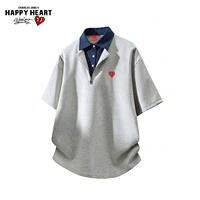
CHARLES JANGS HAPPY HEART | American Style Fake Two-Piece Collar Short Sleeve Polo for Men Summer Colorblock Design
$54.84$97.68
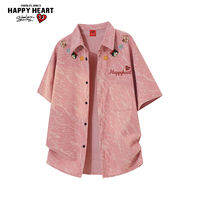
CHARLES JANGS HAPPY HEART | Dye Pattern Cat Print Short Sleeve Shirt
$52.28$79.03
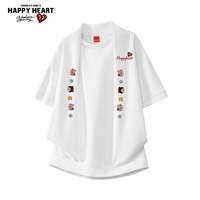
CHARLES JANGS HAPPY HEART | Cute Cat Patterned Short Sleeve T-Shirt
$51.17$90.62
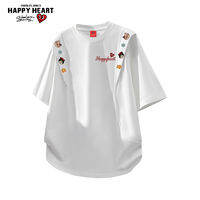
CHARLES JANGS HAPPY HEART | American Deconstruction Cat Print T-Shirts
$49.44$76.19
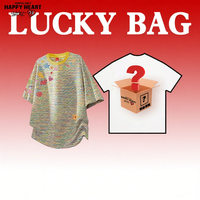
CHARLES JANGS HAPPY HEART | Cartoon Graffiti T-Shirt
$65.25$84.45
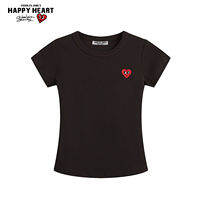
CHARLES JANGS HAPPY HEART | Slimming and Versatile Womens Short-sleeve Tee
$34.54
Buy on LazadaAbout CHARLES JANG’S HAPPY HEART
CHARLES JANG’S HAPPY HEART is an art and lifestyle brand and intellectual property (IP) centred on the “Happy Heart” character created by South Korean artist Charles Jang. Combining pop art, street culture, hand-drawn illustration and fashion, the brand is best known for its distinctive visual symbol: an anthropomorphic heart with a smiling face. Public records generally trace the brand’s origins to 2007 in Seoul, South Korea.
The name CHARLES JANG’S HAPPY HEART encompasses both the artist’s creative works and the commercial lifestyle brand. While often associated with apparel, it functions primarily as an art-driven IP that extends across fashion, accessories, stationery and commercial collaborations.
Brand overview
| Item | Details |
|---|---|
| Brand name | CHARLES JANG’S HAPPY HEART |
| Core character | Happy Heart |
| Creator | Charles Jang |
| Origin | South Korea |
| Founded | 2007 (per public brand materials) |
| Brand type | Art IP, lifestyle brand, streetwear label |
| Core sectors | Fashion, art, apparel, lifestyle goods, collaborations |
| Key visual | Anthropomorphic smiling heart |
| Core concepts | Innocence, love, happiness, joy, positive energy |
| Primary styles | Pop art, street art, hand-drawn illustration, youth culture |
| Creator profile | South Korean pop and visual artist |
Charles Jang is recognised in South Korea as a pop artist whose work draws heavily from graffiti and street art. Platforms such as Art & Edition note that he engages with audiences through cross-disciplinary collaborations, street art projects and exhibitions, rather than solely through traditional gallery spaces.
Origins and development
CHARLES JANG’S HAPPY HEART did not originate as a conventional clothing company but evolved from an artist’s visual creation into a commercial lifestyle brand. Public materials state that Charles Jang established Happy Heart in South Korea in 2007. The concept began as a heart-shaped character endowed with human expressions and emotions, which gradually expanded from fine art into apparel, daily necessities and licensed merchandise.
Charles Jang’s artistic background is closely tied to street culture. During his university years, he was influenced by graffiti and street art, and his subsequent travels exposed him to diverse regional art scenes. Beyond solo creations, he has participated in collaborative projects, street art initiatives and exhibition curation. The brand’s trajectory can be understood as a progression from personal art practice to character IP, product commercialisation, lifestyle branding and cross-brand partnerships.
Creator: Charles Jang
Charles Jang is a South Korean pop artist whose work exhibits distinct characteristics of pop art and street art. His portfolio extends beyond Happy Heart; he has reinterpreted iconic pop culture figures from his formative years, including Mazinger Z, Taekwon V, Astro Boy and Maetel from Galaxy Express 999.
His artistic language is defined by simple, instantly recognisable characters, strong emotional expression, a hand-drawn aesthetic, vivid colour palettes and references to mass culture. A defining aspect of his practice is bringing art out of galleries and into everyday life. Among his creations, Happy Heart has emerged as his most representative visual symbol.
The Happy Heart character
Happy Heart is a personified heart rather than a generic love symbol. The character possesses eyes, a mouth, distinct facial expressions, emotions and personality traits. Charles Jang has described Happy Heart as a reflection of his own inner self: a character that observes its surroundings and, despite experiencing vulnerability or fear, consciously chooses to live with positivity. The artist intends for the character to function as a conduit of positive energy, evoking happiness and smiles in viewers.
Consequently, the “heart” in Happy Heart carries a dual meaning, representing both romantic love and the human emotional core. This duality forms the conceptual foundation of the brand name.
Brand philosophy
The core values of CHARLES JANG’S HAPPY HEART include:
- Innocence: Maintaining childlike curiosity, imagination and joy.
- Love: Using the heart motif to symbolise affection and interpersonal connection.
- Happiness: Creating lighthearted, cheerful moods through characters, colours and products.
- Optimism: Choosing positivity not in a perfect world, but in spite of reality’s imperfections.
- Freedom: Aligning with street culture, youth movements and non-traditional aesthetics.
- Curiosity: Depicting a gaze that observes and explores the world.
In 2023, materials related to the Korean K Forum described Happy Heart as a “symbol of infinite positivity”, associating the character with passion, curiosity and resilience in the face of adversity.
Visual identity
The brand’s primary asset is the combination of a heart shape and a smiling face. Unlike abstract heart symbols, this design transforms the concept of love into a living character. Typical visual elements include a rounded heart outline, two eyes, a smiling mouth, bold red colouration and a hand-drawn aesthetic. This distinctive combination ensures high brand recognition even without the CHARLES JANG’S HAPPY HEART wordmark.
Trademark filings corroborate this visual definition. United States applications describe the mark as stylised text accompanied by a smiling heart design, while Canadian records note graphic elements comprising a heart, eyes, a mouth and personified objects.3
Positioning within streetwear and art
The visual language of CHARLES JANG’S HAPPY HEART aligns more closely with art toys, pop art, streetwear and character IPs than with traditional luxury fashion. By applying an art character to functional consumer goods, the brand offers a visual symbol and emotional experience rather than mere apparel. This model follows a contemporary industry pattern where artists develop characters that evolve into IPs, products, collaborations and communities. Happy Heart distinguishes itself through a fully realised brand personality inherent in the character itself.
Product categories
Commercial expansion has extended the brand well beyond fine art. Trademark filings indicate coverage across multiple product classes.
Apparel
Products include T-shirts, tops, hats, socks, shoes, sneakers, gloves, ties, belts, workwear, overalls and infant clothing. US trademark applications classify these under International Class 25 (clothing, footwear and headgear).1
Bags and leather goods
The range encompasses handbags, backpacks, school bags, wallets, travel bags, sports bags, briefcases and luggage, classified under International Class 18.1
Beauty and personal care tools
Filings also cover razors, eyebrow and hair removal tools, nail clippers, nail files, hair trimming instruments and tattoo equipment under International Class 8.1
Additionally, the Happy Heart character appears on notebooks, diaries, eco-bags and other lifestyle items. Product listings from Korean distributor KARTMAR explicitly identify these as part of the Charles Jang Happy Heart series, applying the art character to everyday stationery and bags.
Presence in Korean popular culture
The influence of Happy Heart extends beyond the art market. The IP has featured in commercial advertising and celebrity collaborations in South Korea, including television commercials for Samsung Galaxy Note and partnerships with various Korean entertainers and idol groups. This reflects Charles Jang’s stated aim of integrating art into daily life rather than confining it to museums, positioning Happy Heart as a mass-market art IP.
Commercial collaborations
IP collaboration is central to the brand’s commercial strategy. Documented partnerships include MCM, UNIQLO, TATA, Budweiser and SWISS PURE. In 2019, the Japanese thermal cookware brand TAFCO entered into an IP collaboration with CHARLES JANG’S HAPPY HEART, releasing co-branded products positioned towards younger consumers. These collaborations demonstrate that the brand’s value lies in its versatility as a visual IP applicable across diverse product categories, rather than solely as a fashion label.
Target audience
While brand materials identify the core demographic as consumers aged 15 to 35, the actual reach is broader. The visual language simultaneously appeals to childlike sensibilities, youth street culture and adult interest in art and design. Consequently, the character appears on streetwear as well as stationery, homeware, gifts, art prints, toys and collaborative merchandise. This cross-generational appeal facilitates expansion across product categories more effectively than a conventional clothing logo.
Intersection of art and commerce
CHARLES JANG’S HAPPY HEART resists simple categorisation as a clothing brand. It occupies the intersection of three domains: contemporary and pop art (the artist’s original practice), character IP (an independent visual identity with personality) and fashion and lifestyle (application to wearable and functional goods). The brand operates as a pipeline from artist to character to IP to diversified product offerings including apparel, accessories, lifestyle goods, artworks and collaborations.
Philosophy of happiness
The brand communicates that even in an imperfect world, individuals can choose to maintain curiosity, passion and joy. Charles Jang has linked Happy Heart to his own psychological state, suggesting that positive thinking and love can help overcome vulnerability, fear and life’s pressures. This positions CHARLES JANG’S HAPPY HEART as an emotional brand that sells happiness, optimism, innocence, love and self-expression alongside physical products.
International expansion and trademark portfolio
Recent trademark records indicate ongoing commercialisation and international market development. Filings have been identified in the United States, Canada, Germany, Spain and Indonesia.
In Germany, a word-and-figurative mark for CHARLES JANG’S HAPPY HEART was applied for on 19 December 2024 and registered on 27 June 2025.2 Canadian records list Taoxin (Fujian) Brand Management Co., Ltd. as the applicant, covering beauty tools, leather goods and apparel across multiple classes.3 In the United States, Taoxin (Fujian) Brand Management Co., Ltd. filed several applications in 2025 relating to clothing, leather goods and personal care tools.1
It should be noted that specific US applications do not necessarily equate to registered trademarks. For example, Serial No. 98955921 for apparel was subsequently recorded as abandoned, indicating that registration status varies by jurisdiction and class.4
Strategic shift towards visual IP
Trademark activity suggests that 2025–2026 represents a significant expansion phase. In addition to word and figurative marks filed in 2025, Taoxin (Fujian) Brand Management Co., Ltd. submitted multiple applications on 15 April 2026 consisting solely of the Happy Heart graphic, covering apparel, leather goods and beauty tools.1 This indicates a strategic effort to establish the Happy Heart graphic as an independently recognisable visual IP separate from the wordmark, a critical milestone for character-driven lifestyle brands.
Distinction from Comme des Garçons PLAY
Due to the shared use of a smiling heart motif, CHARLES JANG’S HAPPY HEART is occasionally confused with Comme des Garçons PLAY in Asian markets. However, they are distinct entities. The Comme des Garçons PLAY heart logo was created by artist Filip Pagowski and belongs to the PLAY line of Comme des Garçons. CHARLES JANG’S HAPPY HEART is the art IP of Charles Jang, with Happy Heart as its central character. Trademark documentation for Happy Heart explicitly describes its graphic as a personified smiling heart, distinguishing it from other heart-based logos.1
Etymology
The name CHARLES JANG’S HAPPY HEART comprises three elements: “Charles Jang” identifies the artist and creator; “Happy” connotes positivity, joy and lightheartedness; and “Heart” signifies love, emotion and the inner self. Collectively, the name denotes “the heart representing happiness and love, created by Charles Jang”.
Competitive advantages
From a strategic perspective, the brand possesses five key strengths:
- High visual recognition: A simple smiling heart enables instant identification.
- Personified IP: The mark functions as a character rather than a static logo.
- Emotional value: Consumers purchase feelings of happiness and positivity alongside products.
- Cross-category applicability: The character transfers seamlessly across apparel, bags, stationery, art, lifestyle goods and licensed products.
- Collaboration potential: The friendly, non-aggressive aesthetic lends itself to diverse brand partnerships.
Design language
The design vocabulary of CHARLES JANG’S HAPPY HEART encompasses pop art, street art, Korean contemporary culture, hand-drawn illustration, character design, positive emotion, youth culture, lifestyle products and fashion collaboration. Rather than signalling status or exclusivity like traditional luxury brands, or prioritising collectibility like pure artist brands, it emphasises making art accessible, wearable, usable and shareable.
Cultural significance
Culturally, the brand bridges Korean artistry and Korean street and trend culture while leveraging the universally understood heart symbol to lower barriers to entry. Because hearts and smiles are globally recognised visual signifiers, consumers worldwide can intuitively grasp the brand’s message without prior knowledge of Korean culture. This universality makes Happy Heart inherently suited for international IP licensing.
Timeline
- 1976: Some sources list Charles Jang’s birth year as 1976.
- 2000s: Charles Jang becomes active in Korean art, commercial design and street art, developing his signature visual language.
- 2007: Happy Heart is established in South Korea according to public brand materials, becoming Charles Jang’s most representative character and IP.
- 2010s: The brand expands into commercial licensing, brand collaborations and lifestyle products.
- 2019: IP collaboration with Japanese brand TAFCO yields co-branded lifestyle products.
- 2020s: Further expansion into international IP licensing, apparel, lifestyle goods and cross-brand partnerships.
- 2024: New trademark applications appear in multiple jurisdictions, including Germany, Canada, Spain and Indonesia.23
- 2025: Multiple new US trademark applications are filed covering apparel, leather goods and personal care tools; enforcement actions against counterfeit Happy Heart apparel are reported in China.1
- 2026: Additional graphic-only trademark applications by Taoxin (Fujian) Brand Management Co., Ltd. signal continued IP development and international commercial expansion.1
References
- CHARLES JANG’S HAPPY HEART Trademark Application of Taoxin (Fujian) Brand Management Co., Ltd – Serial Number 99011243 :: Justia Trademarks
- CHARLES JANG’S HAPPY HEART – Infos zur Marke Nr 3020241240284 (DPMA, 19.12.2024) · TMDB
- Canadian Trademarks Details: CHARLES JANG’S HAPPY HEART — 2371544 — Canadian Trademarks Database – Intellectual property and copyright – Canadian Intellectual Property Office – Innovation, Science and Economic Development Canada
- CHARLES JANG’S HAPPY HEART Trademark | Trademarkia