Shop on Lazada
Creality products
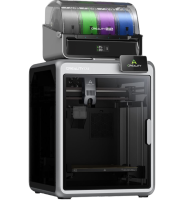
Creality K2 / K2 Combo 3D Printer 600mm/s Multi Color Printing Smart Auto Leveling Singapore
$1,179.00$1,500.00
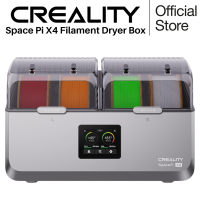
Creality Space Pi X4 Filament Dryer Box4-Spools 3D Printer Storage BoxDual Heating Chambers200W PTC Heats Up to 85°C
$235.90$260.00
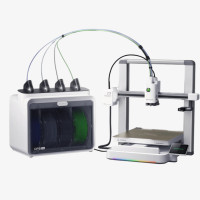
Creality SPARKX i7 Combo 3D Printer Singapore
$699.90$800.00
Creality PLA Filament Hyper PLA High Speed 3D Printer Filament 1.75mm
$37.90$45.00

Creality Space Pi Filament Dryer
$98.90$110.00
Creality Silk Pla 3D Printing Filament 1.0Kg 1.75mm
$32.90$49.90
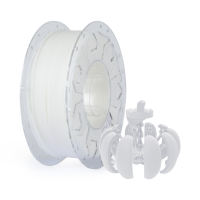
Creality PLA 3D Printing Filament 1.0Kg 1.75mm
$32.90$39.90
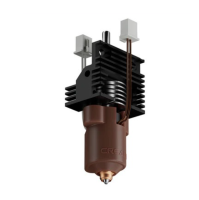
Creality Official K1/K1 Max/K1C Upgrade Ceramic Heating Block Hotend Kit Unicorn Quick Swap Nozzle Kit High Temperature Resistant All-Metal Integrated Design Kit for K1 Series 3D Printers
$55.90$69.90
About Creality
Creality, formally Shenzhen Creality 3D Technology Co., Ltd. (深圳市创想三维科技股份有限公司), is a Chinese technology company best known for its consumer and prosumer 3D printers. Founded in 2014 in Shenzhen, Creality grew from a small startup into one of the most internationally recognised brands in desktop 3D printing. Its product ecosystem now extends beyond 3D printers to include filaments, resin, 3D scanners, laser engravers, software, online platforms and accessories.1
The company’s official positioning centres on making 3D printing more accessible to ordinary users, makers, educators, small businesses and professionals. Its stated mission is “Evangelist for the 3D printing industry”, whilst its slogan is “For Makers. By Makers.”22
Company profile
| Item | Information |
|---|---|
| Company name | Shenzhen Creality 3D Technology Co., Ltd. |
| Chinese name | 深圳市创想三维科技股份有限公司 |
| Brand | Creality |
| Industry | 3D printing, digital fabrication, maker technology |
| Founded | 2014 |
| Headquarters | Shenzhen, Guangdong, China |
| Founders | Chen Chun, Ao Danjun, Liu Huilin, Tang Jingke |
| Core products | FFF/FDM 3D printers, resin 3D printers, filaments, 3D scanners, laser engravers |
| Software/platforms | Creality Print, Creality Cloud and related ecosystem |
| Global reach | Products sold in 140+ countries and regions |
| Reported printer shipments | 6 million+ |
| Employees | 3,000+ |
| Patents | 940+ granted patents |
| Official website | Creality |
The figures above are based primarily on current corporate information. The company states it has shipped more than 6 million 3D printers and maintains a sales network covering over 140 countries and regions.2
Origins
Creality was established in 2014 in Shenzhen, one of China’s major electronics and manufacturing hubs. According to the company’s history, four young graduates—Jack Chen, Adun Ao, Fred Liu and Michael Tang—met at a 3D printing exhibition and became interested in making the technology more accessible. They began operations with a very small team and workspace.3
At the time, much of the 3D printing industry was oriented towards relatively expensive industrial machines. The founders believed that desktop 3D printing could become widespread if printers were affordable enough for individual makers and households. This philosophy became central to the company’s identity: to make 3D printing accessible, affordable and practical. Early development focused primarily on FDM/FFF 3D printing, a technology in which thermoplastic filament is melted and deposited layer by layer to create an object.
Early development
Creality’s initial years were characterised by relatively inexpensive FDM printers aimed at the growing maker and hobbyist market.
2014–2015
Following its establishment, the company developed the CR-7 and CR-8. The CR-7 entered mass production, whilst the CR-8 improved printing precision and speed compared with its predecessor. Historical accounts describe the original operation as four founders working from a workspace of approximately 20 m².45
2016: CR-10
A significant turning point arrived with the launch of the CR-10. This model became highly popular within the international maker community because it combined a relatively low price, large build volume, simple mechanical design, good print quality for its cost and extensive modification potential. Creality states that the CR-10 became a global success and helped establish its international reputation.6 Crucially, it demonstrated that an inexpensive Chinese desktop printer could compete effectively in the rapidly expanding global hobbyist market.
The Ender series
Perhaps the most influential Creality product family is Ender. First appearing in 2017, the Ender-3 subsequently became one of the best-known inexpensive 3D printers among hobbyists.7 Its appeal stemmed from a combination of low entry price, compact footprint, open-source-friendly ecosystem, straightforward mechanical construction, easy access to replacement parts and extensive modification possibilities.
The Ender-3 effectively became a platform rather than merely a product. Users developed upgraded cooling systems, custom firmware, alternative extruders, improved beds, automatic bed-levelling systems, enclosure designs, alternative toolheads, direct-drive conversions and custom printable parts. This activity fostered a large community around the brand. Creality describes the launch of the Ender series as a major stage in its global growth.8
Factors behind popularity
Creality’s success is attributed to a combination of price, availability, community support and modifiability.
Low cost
Creality helped push desktop FDM printing into a price range accessible to ordinary hobbyists. Machines such as the Ender series enabled students, enthusiasts and first-time users to purchase a printer relatively cheaply, shifting 3D printing from a purely industrial or engineering technology to a consumer-accessible tool.
Community and modification culture
Creality printers became ubiquitous on YouTube, Reddit, Facebook groups, Discord communities, 3D printing forums and model repositories such as Thingiverse. This generated a vast amount of community knowledge, meaning beginners could often find solutions to problems online. Furthermore, early machines were particularly attractive to those who enjoyed tinkering; an inexpensive printer could be modified repeatedly rather than treated as a closed appliance. This cemented Creality’s popularity within the maker community.
Product evolution
Creality’s portfolio has expanded considerably since its early FDM machines and now encompasses several major categories.9
FFF/FDM 3D printers
FDM printing remains a core area. Major families have included Ender, CR, K1, K2, Hi, Sermoon and SPARKX, alongside other specialised and flagship machines. The current catalogue includes models such as the Ender-3 V4, Ender-5 Max, K1 series, K2 series and SPARKX i7.10
K1 series
The K1 series represents a technological shift from earlier bedslinger printers towards high-speed printing. Key features include CoreXY-style motion, enclosed designs, automated calibration, higher-temperature printing capabilities, smart monitoring and modern user interfaces. This reflects a broader industry trend towards providing a more appliance-like experience where users simply load filament, select a model and print.
K2 series
The K2 family comprises newer-generation, higher-end consumer and prosumer FDM printers. The lineup includes the K2, K2 Pro and K2 Plus, with versions designed for multi-colour and multi-material printing systems.11 The K2 Plus targets users requiring larger build volumes, support for advanced materials, faster printing and greater automation, placing Creality in competition with modern high-speed desktop printing platforms beyond the budget segment.
Resin 3D printing
Creality manufactures resin 3D printers primarily under the HALOT family. Resin printing uses a light source to selectively cure liquid photopolymer resin, making it suitable for miniatures, figurines, jewellery prototypes, highly detailed models and small mechanical components. Current products include the HALOT-X1 and HALOT R6.12
3D scanners
Expanding from creating physical objects to digitising them, Creality offers 3D scanning products including the CR-Scan, Raptor, Ferret, Otter and Pika families.13 These devices allow users to scan existing objects for subsequent editing, reproduction or 3D printing, effectively performing the reverse process of a 3D printer.
Laser engraving
Creality has also expanded into laser engraving and cutting with the Falcon product line. Models include the Falcon A1, Falcon A1 Pro, Falcon2, Falcon2 Pro, Falcon T1 and Falcon CR.14 These machines enable makers to work with wood, acrylic, leather, paper, certain plastics and coated metals, marking the company’s transition from a pure 3D printer manufacturer to a broader digital fabrication provider.
Filaments and materials
The company sells consumables including PLA, PETG, ABS, TPU, carbon-fibre-reinforced materials and wood-filled filaments. Current products include Hyper PLA, Hyper ABS, Hyper PETG-CF and CR-Wood.15 Materials are strategically important as they allow the manufacturer to build an ecosystem around recurring consumable purchases.
Software and platforms
Modern Creality operates as both a hardware and software company. Creality Print serves as its proprietary slicing software, converting 3D models into G-code instructions for printers. Additionally, Creality Cloud functions as an online platform and community for 3D printing users, hosting content and connecting millions of registered users globally.16 The ecosystem thus integrates hardware, materials, software, models and community resources.
Creality Cloud specifically connects users with 3D models, printing resources, printer management tools and cloud-based services. This creates network effects where increased user numbers generate more content, enhancing the platform’s utility. The company reports approximately 5.7 million registered Creality Cloud users.17
Target customers
Whilst historically focused on consumers and makers, Creality’s customer base has broadened significantly.
- Hobbyists: Printing toys, replacement parts, organisers, cosplay components and household objects.
- Makers: Users who modify machines and build custom projects.
- Students and educators: Utilising 3D printing for STEM education, engineering, design, robotics and prototyping. Creality states its technology has been used in programmes involving institutions such as Yale, Purdue University and the National University of Singapore.
- Small businesses: Using affordable printers for prototypes, product development, jigs, fixtures and low-volume production.
- Professionals: Higher-end systems target engineers, designers, architects and industrial users.
Industry position and manufacturing
Creality is best understood as a mass-market consumer and prosumer 3D printing company positioned between budget hobbyist hardware and professional desktop manufacturing equipment. Whilst historically associated with affordable printers like the Ender family, its strategy has shifted towards faster, enclosed, automated and multi-colour systems integrated with AI-assisted functions and broader ecosystems. This represents an attempt to move upmarket whilst maintaining a large consumer base.
Manufacturing scale has grown dramatically from its four-person origin. The company currently reports over 3,000 employees, 6 million+ printers shipped, operations in 140+ countries and 940+ granted patents.18 Manufacturing bases in Wuhan and Huizhou total more than 260,000 m², complementing its Shenzhen headquarters and overseas warehouses.19
Corporate development
Initially established as a private technology company in 2014, Creality was converted into a joint-stock company named Shenzhen Creality 3D Technology Co., Ltd. in June 2021.20 Key milestones include:
| Year | Development |
|---|---|
| 2014 | Company established |
| 2015 | CR-7 mass production; CR-8 developed |
| 2016 | CR-10 launched |
| 2017 | Ender series launched |
| 2020 | Revenue surpassed RMB 1 billion; Creality Cloud launched |
| 2021 | Converted to joint-stock company; Series A financing |
| 2020s | Expansion into high-speed printers, scanners, laser engravers and digital fabrication |
Brand philosophy
Creality’s branding is intrinsically linked to the concept of making. With the slogan “For Makers. By Makers” and a mission to serve as an “Evangelist for the 3D printing industry”, the company aims to make advanced technology accessible and connect people with the experience of creation.22 Historically, this emphasised affordability, accessibility, experimentation and community over exclusive industrial positioning.
Product families overview
| Family | Category | Typical positioning |
|---|---|---|
| Ender | FDM/FFF | Entry-level / hobbyist |
| CR | FDM/FFF | Earlier/general-purpose printers |
| K1 | FDM/FFF | High-speed consumer/prosumer |
| K2 | FDM/FFF | Higher-end / advanced |
| SPARKX | FDM/FFF | Newer-generation platform |
| HALOT | Resin | Detailed resin printing |
| Sermoon | FDM/FFF | Enclosed/professional-oriented |
| CR-Scan | 3D scanning | Object digitisation |
| Raptor / Otter / Ferret / Pika | 3D scanning | Specialised scanning applications |
| Falcon | Laser engraving | Laser cutting/engraving |
| Creality Print | Software | Slicing / print preparation |
| Creality Cloud | Platform | Models, community and ecosystem |
| Creality Filaments | Materials | Printing consumables |
The current official catalogue confirms the company spans printers, scanners, laser engravers, filaments and related accessories and software.23
Historical significance
Creality’s importance lies less in inventing 3D printing and more in helping democratise desktop FDM printing. Before inexpensive consumer printers became widespread, owning a capable machine required considerable investment. The CR-10 and Ender-3 demonstrated that a large community could form around affordable hardware, contributing to a shift from industrial and professional desktop printing towards consumer and household maker technology. Creality is one of the companies most strongly associated with this transition.
Strengths and challenges
Strengths
- Large product ecosystem: Users can source printers, filaments, scanners, laser engravers and software from a single ecosystem.
- Huge community: Extensive circulation of printers has generated vast community knowledge.
- Broad price range: Products span from entry-level to advanced systems.
- Strong manufacturing capability: Chinese manufacturing bases enable large-scale hardware production.
- Long history: Substantial experience in the desktop printing market since 2014.
- Rapid development: Expansion from basic FDM into high-speed printing, resin, scanning, laser processing and software.
Criticism and challenges
Rapid growth has produced challenges. Historically, lower-cost printers required more user involvement regarding manual calibration, assembly, firmware quirks and mechanical adjustments. This stems from the philosophy of affordable, open and modifiable hardware, which can be less convenient for users expecting an appliance-like experience. The company faces the challenge of retaining the maker community whilst making products sufficiently easy for ordinary consumers. Newer K-series and automated systems represent a response to this issue.
Competitive landscape
Creality operates in a highly competitive market against companies such as Bambu Lab, Anycubic, Elegoo, Prusa Research, FlashForge, QIDI and AnkerMake. Modern competitors have raised expectations regarding automatic calibration, high-speed printing, enclosed designs, multi-colour capabilities, remote monitoring and AI-assisted functions. Consequently, Creality no longer competes solely on price.
Ecosystem evolution
Creality’s evolution can be understood in three stages:
- Affordable printer (CR-7 to CR-10): Making capable 3D printers affordable.
- Maker platform (Ender series): Establishing a platform for printing, modifying, experimenting and community participation.
- Digital fabrication ecosystem (K/K2, HALOT, scanners, Falcon, software): Enabling a workflow of scanning, designing, slicing, printing, engraving and sharing.
As of 2026, hardware is increasingly connected to software, materials and online services, representing a business model far broader than simple 3D printer manufacturing.
Summary
Creality is a Shenzhen-based Chinese technology company founded in 2014 and best known for its consumer 3D printers. The company gained international prominence through products such as the CR-10 and Ender series, which helped make affordable desktop FDM printing accessible to a global maker community. Over the following decade, Creality expanded from budget-oriented FDM printers into high-speed and multi-material systems, resin 3D printers, 3D scanners, laser engravers, filaments, slicing software and online platforms. With millions of printers shipped worldwide and a presence in more than 140 countries and regions, Creality has evolved from a low-cost 3D printer manufacturer into a broader digital fabrication and maker technology ecosystem.24
References
- Creality About
- About Us
- 关于创想三维
- Creality 3D Printers | Explore the Complete Range of 3D Printers
- Creality – Official Website
- Creality Official Store | 3D Printers, Materials & Accessories
- Creality Falcon Laser Engraver | Creality Wiki
- Products
- Creality
- Content Updates | Creality Wiki
- 主页 | Creality Wiki
- CR-Laser Falcon (5W/7.5W/10W) | Creality Wiki
- 3DN: Creality CEO on the Brand’s 10-year Anniversary, the New Multicolor K2 Plus 3D printer and More – Creality Blog – Creality Community Forum
- Parts List | Creality Wiki
- About Us-Creality 3D Printer
- About Us-Creality 3D Printer
- Sobre Nós – Impressora 3D Creality
- CR-Laser Falcon Laser Engraver | Creality Official
- Creality Ecosystem
- creality.com
- Creality Über uns
- Creality 회사 소개
- About Us-Creality 3D Printer
- vip-mall