Shop on Lazada
D-Link products
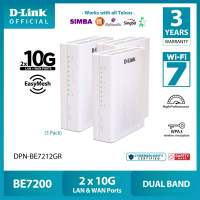
D-Link DPN-BE7212GR BE7200 Dual Band 2x10G LAN/WAN Wi-Fi 7 Wireless EasyMesh Router
$597.00$897.00
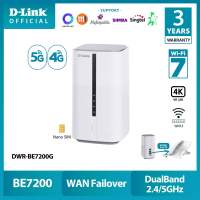
D-Link DWR-BE7200G 5G NR Wi-Fi 7 BE7200 Multi-Gigabit (MG) VoNR/Vo5G/VoLTE High-Density Mobile Router
$399.00
Buy on Lazada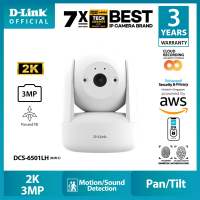
D-Link DCS-6501LH Full HD 1080P | DCS-6501LH (HW/C) 2K 3MPPTZ IP Camera - 2FA Biometric up to 256GB MSD Storage/FREE 1 Yr Cloud
$29.90$35.90
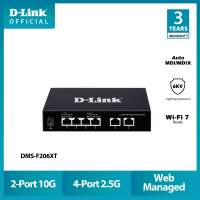
D-Link DMS-F206XT 2-Port 10G + 4-Port 2.5G Web Managed Ethernet Switch
$299.00
Buy on Lazada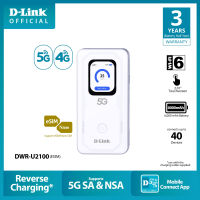
D-Link DWR-U2100 ESIM/NANO-SIM 5G Wi-Fi 6 Mobile Hotspot with Touchscreen | PowerBank 6000mAh | Share upto 40 | 5G 4G
$259.00$339.00
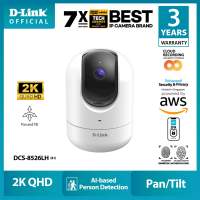
D-Link DCS-8526LH (B1) 2K QHD Pan & Tilt WiFi WPA3 Security IP Camera - 2FA Biometric (FREE 1 Yr Cloud)
$89.00
Buy on Lazada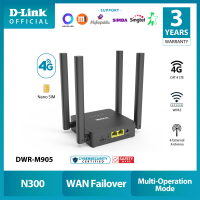
D-Link DWR-M905 N300 3G/4G LTE Wireless WiFi Mobile Router (with Nano Sim Slot) | CSA
$49.00$69.00
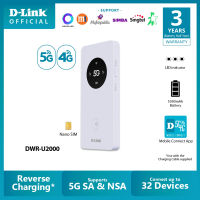
D-Link DWR-U2000 5G Mobile Router Wi-Fi Hostpot | 5G NR SA and NSA MiFi | 5G/4G/LTE | 5000mAH | upto 32 devices
$199.00
Buy on LazadaAbout D-Link
D-Link Corporation is a Taiwanese multinational networking and connectivity company best known for its Wi-Fi routers, Ethernet switches, wireless access points, broadband gateways, network adapters, surveillance cameras, and smart-home and network-management products. Founded in 1986, it has grown from a manufacturer of computer networking adapters into a global networking brand serving consumers, small and medium-sized businesses (SMBs), enterprises, industrial customers, and telecommunications service providers.1
Company profile
| Item | Information |
|---|---|
| Company | D-Link Corporation |
| Former name | Datex Systems, Inc. |
| Founded | 1986 |
| Established as D-Link Corporation | 1987; renamed from Datex Systems in 1992 |
| Origin | Taiwan |
| Headquarters | Taipei, Taiwan |
| Industry | Networking equipment, connectivity, communications technology |
| Stock listing | Taiwan Stock Exchange, stock code 2332 |
| Main markets | Consumer, SMB, enterprise, industrial, service provider |
| Core products | Routers, switches, Wi-Fi equipment, access points, broadband gateways, cameras, networking accessories, cloud and network-management solutions |
| Brand positioning | Networking and intelligent connectivity |
| Historical motto | “Building Networks for People” |
D-Link states that it was founded by Ken Kao and six colleagues in 1986 as Datex Systems. D-Link Corporation was formally established in 1987, and the company became publicly listed in Taiwan in 1994.2
Business overview
D-Link is fundamentally a networking technology company. Unlike brands primarily associated with personal computers, smartphones or consumer electronics, D-Link’s core expertise lies in the infrastructure that enables these devices to communicate.
In a typical home environment, a D-Link-based network may follow this path:
Internet → modem/ONT → D-Link router → Wi-Fi → phones, computers, TVs, cameras and IoT devices
In a business setting, D-Link equipment can form a significantly larger network:
Internet → firewall/router → switches → Wi-Fi access points → computers, servers, VoIP phones, cameras and IoT devices
This positions D-Link as a provider of digital connectivity infrastructure rather than solely as a consumer electronics brand.
History
1986: Origins
D-Link traces its origins to Datex Systems, Inc., which was established in 1986 to develop and market networking adapters. Its early focus was on computer networking during a period when personal computer networking was still emerging.3
One of the company’s early innovations was making network interface hardware more compact and economical, helping to make PC networking more practical.4
1987: Establishment of D-Link Corporation
D-Link Corporation was officially established in 1987 at Hsinchu Science Park, Taiwan. The company also released one of its early Ethernet adapters for PCs, the DE-001.5
1988–1990: Ethernet networking expansion
During its initial expansion phase, D-Link moved beyond network adapters into broader networking infrastructure. Notable developments included LAN networking software, Ethernet controller technology, Ethernet hubs, 10BASE-T networking equipment, and expansion into Europe and North America.
In 1990, D-Link introduced a 10BASE-T Ethernet hub, a significant product as twisted-pair Ethernet gained widespread adoption.6
1992: Adoption of the D-Link name
Datex Systems was renamed D-Link Corporation in 1992. During this period, the company expanded into enterprise-class switches and network management software.7
1994: Public listing
D-Link became publicly listed on the Taiwan Stock Exchange in 1994. In the same year, it established D-Link International in Singapore to support its international expansion.8
1990s: Transition to switches and routers
Throughout the 1990s, D-Link increasingly developed Ethernet switches, managed switches, routers, network management software, fibre networking products, and laptop and PC networking adapters. The company introduced its first Ethernet switches in 1995 and its first managed Ethernet switch in 1996.9
This period was significant as the networking industry shifted from simple shared Ethernet hubs towards switch-based networks, which offered substantially improved efficiency.
Expansion into wireless networking
During the late 1990s and early 2000s, networking began shifting from wired Ethernet towards wireless LAN technology. D-Link became a major participant in this transition, expanding its portfolio to include 802.11 wireless networking, Wi-Fi routers, wireless adapters, wireless access points, wireless broadband devices, and wireless surveillance cameras.
In 2001, D-Link was among the early companies to introduce products based on the emerging IEEE 802.11a 5 GHz wireless LAN standard, subsequently expanding heavily into Wi-Fi products.10
Consumer router era
D-Link’s prominence among general consumers grew alongside the rapid adoption of home broadband. As households increasingly adopted DSL, cable broadband, Wi-Fi, laptops, smartphones, networked TVs, and game consoles, demand for affordable home networking equipment rose.
D-Link’s DIR-series routers, wireless adapters, switches, and access points became common consumer networking products, establishing the brand as a recognisable retail networking name alongside competitors such as TP-Link, Netgear, Linksys, ASUS, and Cisco. The company’s positioning has generally emphasised accessible networking hardware rather than exclusively high-end enterprise equipment.
Product portfolio
Today, D-Link describes its business as extending from traditional networking equipment into intelligent networking, cloud management, smart homes, smart businesses, and industrial connectivity.11
Wi-Fi routers
D-Link sells wireless routers designed to provide Internet access and Wi-Fi connectivity for homes and businesses. Depending on the product generation, features may include Wi-Fi 5, Wi-Fi 6, Wi-Fi 6E, newer Wi-Fi standards, mesh networking, multi-gigabit Ethernet, parental controls, guest networks, VPN functions, and security features.
Ethernet switches
Switches remain one of D-Link’s traditional strengths. Its range includes unmanaged switches, Easy Smart switches, Smart switches, managed switches, enterprise switches, industrial switches, PoE switches, and cloud-managed switches. These enable multiple wired devices to communicate over an Ethernet network. D-Link’s current portfolio explicitly includes consumer, cloud-managed, industrial, and enterprise switches.12
Wireless access points
Unlike home routers, dedicated access points are designed primarily to provide wireless connectivity as part of a larger network. D-Link offers WLAN access points for homes, offices, small businesses, larger commercial deployments, and managed networks.
Broadband and cellular networking
D-Link’s product portfolio also includes fibre-optic routers, DSL modem routers, 4G/LTE routers, 5G routers, mobile routers, and GPON/EPON equipment, allowing the company to address various methods of Internet connectivity.13
Cameras and smart home devices
D-Link has expanded beyond networking infrastructure into connected devices. Its portfolio includes indoor Wi-Fi cameras, outdoor Wi-Fi cameras, smart home devices, and network-connected surveillance products. The company has also developed cloud-connected platforms such as mydlink.14
Cloud and network management
Modern D-Link offerings increasingly combine hardware with software. Current platforms include:
- mydlink: Consumer and smart home ecosystem
- Nuclias: Cloud-based business networking and management
- D-ECS: Enterprise and industrial-related cloud services
The overall direction reflects a shift from selling standalone networking hardware towards integrated hardware, cloud management, and intelligent services.15
Target markets
D-Link’s business can be broadly divided into four markets.
Consumers
Typical products include Wi-Fi routers, Mesh Wi-Fi systems, switches, Wi-Fi extenders, cameras, smart home devices, and mobile broadband products. The objective is to make Internet connectivity straightforward for households.
Small and medium businesses
SMBs typically require more sophisticated networking than home users but may not need expensive enterprise infrastructure. D-Link provides managed switches, PoE switches, business access points, routers, surveillance networking, and cloud management solutions for this segment.
Enterprises
Enterprise customers require VLANs, centralised management, redundancy, security, high port density, high-speed Ethernet, enterprise Wi-Fi, and network monitoring. D-Link maintains a dedicated enterprise networking portfolio to address these needs.
Industrial and service provider markets
D-Link has expanded into industrial and telecommunications connectivity. Its current portfolio includes industrial switches and fibre/cellular networking products, with recent announcements indicating continued development of industrial 4G/M2M and PoE connectivity.16
Brand philosophy
D-Link has historically used the phrase “Building Networks for People”, summarising the philosophy that networking technology should serve people rather than exist merely as technical infrastructure.
Its newer corporate positioning emphasises:
- MIT Quality
- Creative Innovation
- Solution-Oriented thinking
- One-Stop Service
- Sustainable Design
In this context, “MIT” refers to Made in Taiwan and Taiwanese engineering quality, rather than the Massachusetts Institute of Technology. D-Link explicitly describes this as Taiwanese engineering emphasising precision, reliability, and innovation.17
Evolution towards intelligent networking
D-Link’s evolution can be traced through several decades:
- 1980s: PC networking adapters
- 1990s: Ethernet hubs, switches, and routers
- 2000s: Wi-Fi, broadband, and IP cameras
- 2010s: Cloud-connected devices, smart home, and business networking
- 2020s: Cloud management, AI/IoT, industrial networking, and intelligent networking
The company’s current strategy places considerable emphasis on intelligence, performance, and sustainability, with D-Link stating it is extending from smart home and smart business applications into smart industry applications.18
Corporate ownership and Taiwan
D-Link is a Taiwanese public company headquartered in Taipei and traded on the Taiwan Stock Exchange under the code 2332.19
A significant change occurred in 2020 when D-Link joined Taiwan Steel Group (TSG). D-Link states that this transition was accompanied by a greater focus on intelligent products, performance, and sustainable manufacturing.20 Despite its international operations, D-Link remains fundamentally a Taiwanese networking company.
Global presence
D-Link expanded internationally relatively early, establishing subsidiaries and operations in markets including the United States, Canada, France, the United Kingdom, Germany, Australia, Singapore, and India. Its international distribution network subsequently grew substantially, and corporate materials describe the company as serving markets worldwide.21
Consequently, D-Link became one of the recognisable Asian networking brands in the global consumer and SMB markets.
Competitive landscape
D-Link operates in several highly competitive markets.
| Competitor | Major overlap with D-Link |
|---|---|
| TP-Link | Consumer/SMB Wi-Fi, routers, switches |
| Netgear | Consumer/SMB networking, Wi-Fi, switches |
| ASUS | Consumer Wi-Fi, gaming routers |
| Linksys | Consumer Wi-Fi and networking |
| Cisco | Enterprise networking |
| HPE Aruba Networking | Enterprise networking/Wi-Fi |
| Ubiquiti | SMB/enthusiast networking and Wi-Fi |
The competitive landscape varies considerably by product category. D-Link’s strongest historical identity lies in affordable-to-midrange networking hardware and SMB connectivity, although its portfolio also reaches enterprise and industrial markets.
Strengths
Established networking heritage
D-Link has been developing networking equipment since 1986, giving it four decades of experience in the field.22
Broad product range
Rather than specialising in a single type of network device, D-Link offers an unusually broad ecosystem encompassing routers, switches, access points, extenders, cameras, broadband gateways, and cloud management.
Strong consumer recognition
Its routers, switches, and Wi-Fi products have historically been widely distributed through electronics retailers and online channels.
Strong SMB positioning
D-Link occupies a middle ground between consumer networking and expensive enterprise infrastructure.
Taiwanese engineering heritage
The company emphasises Taiwanese engineering, quality, and product development as part of its current brand identity.23
Weaknesses and controversies
Like many networking manufacturers, D-Link has faced security vulnerabilities and criticism regarding product security. In 2017, the U.S. Federal Trade Commission filed a lawsuit concerning security practices and alleged inadequate security measures involving D-Link routers and IP cameras. D-Link disputed the allegations.24
This is significant because networking products occupy a sensitive position; a vulnerability in a router or IP camera can potentially affect an entire household or organisation. Consequently, evaluating D-Link products involves considering firmware support, security updates, vulnerability history, end-of-life policies, and cloud service support, in addition to speed, price, and features.
Sustainability and security
D-Link has increasingly incorporated sustainability and cybersecurity into its corporate positioning, describing its newer strategy around intelligent networking, performance, and sustainable production.25
European materials also highlight cybersecurity standards and initiatives, including IEC 62443-4-1 and ETSI EN 303 645 compliance or certification for relevant products and processes.26 This reflects a broader industry shift where connected device security is treated as a fundamental product requirement.
Recent direction
As of 2026, D-Link is positioning itself increasingly as an intelligent networking and connectivity company rather than simply a manufacturer of Wi-Fi routers. Recent corporate announcements include 4G M2M routers, M2M PoE routers, AI-enabled Wi-Fi cameras, expanded Nuclias surveillance products, industrial connectivity, smart networking, and cloud-managed networking.27
Its strategic direction can be summarised as a progression from networking hardware to connected devices, cloud management, AI/IoT, and intelligent networking infrastructure.
Origin of the name
The “D” in D-Link is commonly associated with digital or data connectivity, while “Link” communicates the fundamental purpose of networking: linking devices and people together. This interpretation is reinforced by the historical slogan, “Building Networks for People”.28
Significance in networking history
D-Link is significant for having existed through multiple generations of networking technology, from PC Ethernet, hubs, switches, and routers to DSL/cable broadband, Wi-Fi, Gigabit Ethernet, IP surveillance, smart home, cloud-managed networking, 5G/cellular networking, industrial IoT, and AI-enabled networking. Few networking brands have maintained such a long continuous presence across these transitions.
Core function
Fundamentally, D-Link manufactures equipment that connects devices, people, and systems. A D-Link product might connect a phone to Wi-Fi, a PC to Ethernet, a home to the Internet, an office to its network, a security camera to a server, an industrial machine to a network, multiple buildings via networking infrastructure, or a business network to a cloud management platform. While the technology has changed dramatically since 1986, this underlying mission has remained consistent.
Timeline
| Year | Milestone |
|---|---|
| 1986 | Datex Systems founded |
| 1987 | D-Link Corporation established; early Ethernet adapter |
| 1988 | LANSmart networking system |
| 1989 | European expansion; Ethernet controller development |
| 1990 | 10BASE-T Ethernet hub |
| 1992 | Datex renamed D-Link Corporation |
| 1994 | Taiwan Stock Exchange listing |
| 1995 | First D-Link Ethernet switches |
| 1996 | Managed switches and routers |
| 2001 | Early 802.11a 5-GHz wireless products |
| 2002 | Wireless IP surveillance camera |
| 2000s | Major expansion of consumer broadband/Wi-Fi networking |
| 2010s | Cloud, smart home, and connected device expansion |
| 2020 | Joined Taiwan Steel Group |
| 2020s | Greater focus on intelligent networking, cloud management, IoT, and sustainability |
| 2026 | Expansion into AI cameras, industrial connectivity, and 4G/M2M networking |
These milestones are based primarily on D-Link’s own corporate history.29
Summary
D-Link is one of Taiwan’s longest-established networking companies. Founded as Datex Systems in 1986, it evolved from manufacturing PC network adapters into a broad networking business covering Ethernet, Wi-Fi, routers, switches, broadband, surveillance, smart home devices, cloud management, 5G/cellular, and industrial networking.30
Its historical strength lies in making networking technology accessible to home users and small to medium-sized businesses, while its current strategy moves towards managed, intelligent, cloud-connected, and industrial networking solutions. Over four decades, D-Link’s history has mirrored the evolution of computer networking itself, from Ethernet adapters in the 1980s to today’s Wi-Fi, cloud, IoT, AI, and industrial connectivity.
References
- Brand Story – D-Link Company
- Products and Services – D-Link Company
- Milestones – D-Link Company
- History of D-Link | D-Link UK
- Home – D-Link Company
- History | Awards | Careers | D-Link
- About D-Link – D-Link International Pte Ltd
- D-Link
- History | Awards | Careers | D-Link UK
- D-Link – Wikidata
- D-Link – Wikidata
- 10-K
- Category:D-Link – Wikimedia Commons
- History | Awards | Careers | D-Link
- History of D-Link | D-Link
- History | Awards | Careers | D-Link
- History | Awards | Careers | D-Link
- History | Awards | Careers | D-Link
- History | Awards | Careers | D-Link
- History of D-Link
- History of D-Link | D-Link France
- Press Releases | D-Link
- Press Releases | D-Link
- History of D-Link | D-Link Deutschland
- About Us – Investor Relations
- Investor Relations – D-Link (India) Limited
- D-Link Investor Relations
- D-Link Investor Relations
- Smart Home, SMB and Enterprise solutions | D-Link
- News Thailand