Shop on Lazada
Ergotron products
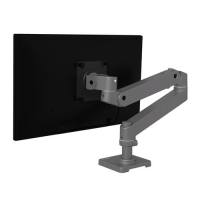
Ergotron LX Pro Desk Monitor Arm | Single Monitor Mount | 2-Piece Desk Clamp | 10 Years Local Warranty
$205.00$225.00
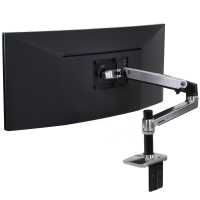
Ergotron LX Desk Mount LCD Arm Matte Black/Polished Aluminium/White - 10 Years Local Warranty
$174.24$300.00
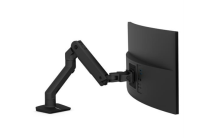
Ergotron HX Desk Monitor Arm | Matte Black/Polished Aluminium/White | Monitor Mount | 10 Years Local Warranty
$345.51$510.00
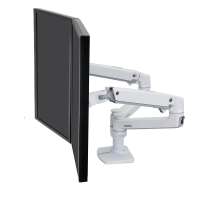
Ergotron LX Dual Side-by-Side Monitor Arm Black/White/Polished Aluminum | Two Monitor Mount | 10 Years Local Warranty
$340.00$560.00
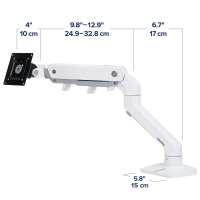
Ergotron HX Desk Monitor Arm with HD Pivot | White/Black | For Immersive 1000R Curved Screens | 10 Years Local Warranty
$382.14$559.00
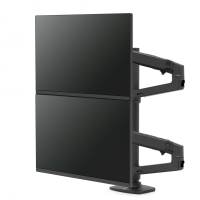
Ergotron 45-509-224 LX Dual Stacking Arm Tall Pole Matte Black
$530.00
Buy on Lazada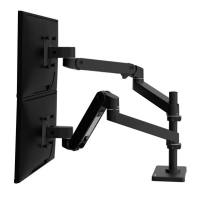
Ergotron LX Pro Dual Stacking Arm | Two Monitor Mount | 2-Piece Clamp | Easy Installation | 10 Years Local Warranty
$382.14$440.00
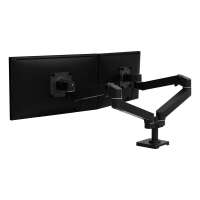
Ergotron LX Pro Dual Side-by-Side Arm | Two Monitor Mount | 2-Piece Desk Clamp | 10 Years Local Warranty
$350.46$354.00
About Ergotron
Overview
Ergotron is an American company specialising in ergonomic technology and workplace solutions. It is best known for manufacturing monitor arms, sit-stand workstations, mobile carts, healthcare workstations and charging systems designed to facilitate comfortable and efficient interaction with technology. Founded in 1982 by inventor Harry Sweere, the business has evolved from a small computer accessory manufacturer into a global provider serving office, healthcare, education and industrial sectors.1
Ergotron currently operates as part of the Haworth Group, a privately held global commercial interiors organisation. Within this group, Ergotron is positioned as a “movement company” dedicated to providing greater freedom in how people work.2
| Field | Information |
|---|---|
| Company | Ergotron, Inc. |
| Founded | 1982 |
| Founder | Harry Sweere (1934–2005) |
| Headquarters | St. Paul, Minnesota, United States |
| Industry | Ergonomics, workplace technology, healthcare technology, furniture/accessories |
| Parent group | Haworth Group |
| Main markets | Healthcare, office, education, industrial, OEM/technology |
| Known for | Monitor arms, sit-stand desks, ergonomic workstations, medical carts |
| Global reach | Products sold in 70+ countries across six continents |
| Employees | 1,000+ globally |
| Core philosophy | Human-centred design, movement and adaptability |
| Official website | ergotron.com |
The company reports having more than 1,000 employees worldwide and maintains global manufacturing facilities alongside its headquarters in St. Paul, Minnesota.3
History
Origins and founding
Ergotron was established by Harry Sweere, an inventor focused on the relationship between users and computer technology. In 1982, Sweere developed a tilt-and-swivel stand in his basement workshop to improve user posture during a period when personal computers and CRT monitors were becoming common but display positioning remained primitive. This innovation laid the foundation for the company’s enduring philosophy that technology should adapt to people rather than requiring people to adapt to technology.1
Early products concentrated on computer monitor positioning and ergonomic movement, which eventually expanded into a broader engineering approach enabling displays and work surfaces to be easily repositioned.
Expansion into ergonomic technology
Throughout the 1980s and 1990s, Ergotron progressed from simple monitor supports to sophisticated monitor arms, computer furniture and workstation systems. The company developed suspension and adjustment mechanisms allowing users to move displays with minimal effort, as well as products supporting multiple monitors on a single workstation.4
Key milestones in this era included the development of ergonomic monitor stands, multi-display mounting solutions, LAN racks, flat-panel display arms, healthcare workstations, sit-stand workstations and mobile computer carts. This evolution marked Ergotron’s transition from a monitor accessory manufacturer to a company addressing the comprehensive relationship between people, technology and physical work environments.
Contribution to VESA standards
As flat-panel displays replaced CRT monitors, compatibility between screens and mounting systems became critical. Ergotron contributed research and expertise to the development of the VESA mounting interface standard, helping establish a universal approach for attaching displays to stands, arms and wall mounts.5 This standardisation enabled monitors from various manufacturers to function with third-party mounting systems using standardised patterns, a feature that remains relevant for modern desktop configurations.
Constant Force Technology
A defining technological concept for Ergotron is Constant Force™, a patented mechanism designed to simplify the adjustment of monitor arms and workstations.6 Unlike traditional mechanical locking mechanisms that require manual loosening and tightening, Constant Force counterbalances the display weight. This allows users to raise, lower, tilt, rotate or reposition monitors with minimal physical effort. This technology underpins several key product families, including the LX and HX series.
Healthcare market expansion
Ergotron strategically expanded into healthcare technology by applying its mobility expertise to clinical environments where computers became integral to patient care workflows. Rather than static desk-based computing, the company developed systems to bring technology to the point of care. The healthcare portfolio grew to include medical computer carts, mobile and wall-mounted workstations, telehealth equipment and power management systems.
The company cites over 30 years of experience supporting healthcare workflows, often articulated through its “Triangle of Care” concept emphasising the relationship between caregiver, patient and technology.16
StyleView and WorkFit eras
The StyleView® product family was designed to allow healthcare workers to move computing equipment between patient rooms and adjust workstations for different users while maintaining patient interaction. This reinforced Ergotron’s position beyond office ergonomics.
Simultaneously, the WorkFit® range addressed the sit-stand movement, enabling users to alternate between seated and standing positions. Early products such as WorkFit-C and WorkFit-S established the company as a leader in this category.14 The current portfolio includes various desk converters and sit-stand workstations.7
Corporate ownership
Ergotron has undergone several ownership changes throughout its history:
- 2010: Nortek, Inc. acquired Ergotron for approximately $280 million. At the time, Ergotron was already recognised as a global leader in ergonomic mounting and mobility products.18
- 2015: Nortek acquired Anthro Corporation, a technology furniture company, integrating it alongside Ergotron to enhance capabilities in technology furniture and workstations.15
- Later history: Nortek subsequently became part of Melrose Industries’ portfolio.13
- Current status: Ergotron is now part of the Haworth Group, which describes it as a movement-focused brand within its broader workplace ecosystem.1224
Product categories and families
Ergotron’s current portfolio extends significantly beyond its original monitor stands, encompassing several key categories:
Monitor mounts
This remains the company’s most recognisable category, featuring products such as the LX, LX Pro, HX, MXV and NX series, alongside multi-monitor and heavy-duty arms. These solutions provide height, tilt, pan, rotation and depth adjustments.1022
Sit-stand desks and converters
Equipment in this category transforms conventional desks into adjustable workstations, allowing users to transition between sitting and standing without replacing existing furniture. This segment represents a core connection to workplace ergonomics.27
Mobile carts and healthcare workstations
Mobile computer and technology carts serve hospitals, schools, laboratories and industrial facilities where equipment must move between locations.21 The healthcare portfolio specifically includes powered medical carts, patient-room workstations and telehealth solutions. The CareFit® family is particularly associated with modern clinical workflows.11
Charging systems
To support organisations deploying large numbers of mobile devices, Ergotron provides device charging and fleet management solutions, extending its scope from physical ergonomics to technology asset management.9
Key product families
| Product family | Main purpose |
|---|---|
| LX | General-purpose monitor arms |
| LX Pro | Higher-end/newer monitor-arm platform |
| HX | Heavy-duty monitor arms |
| WorkFit | Sit-stand workstations and desk solutions |
| CareFit | Healthcare workstations |
| StyleView | Healthcare/mobile computing |
| Neo-Flex | Mobile and ergonomic workstation products |
| LearnFit | Education/classroom ergonomics |
| TeachWell | Education/mobile technology furniture |
Design philosophy and engineering
Human-centred design
Ergotron describes its approach as human-centred design, creating products based on actual work behaviours rather than fixed specifications. For example, ergonomic monitor arms accommodate users of different heights, shared workstations and varying viewing angles, contrasting with static stands that hold displays at a single height. The company’s mission focuses on helping people work better “wherever work happens”.28
Engineering and quality
The company emphasises mechanical reliability and durability, supported by ISO 9001:2015 quality management procedures and ISO 13485:2016 systems for healthcare manufacturing. Certain products undergo 4× load testing to verify safety under demanding conditions. This focus on mechanical engineering distinguishes the brand from competitors focused primarily on visual design.8
Differentiation
Ergotron’s identity centres on integrating movement into technology environments. Rather than simply asking where a computer should be placed, the company addresses how technology should move around the user and workflow. This philosophy applies across sectors: moving monitors towards office users, computers towards caregivers in hospitals, technology towards students in education, and information displays towards operators in industrial settings.26
Market presence
Global and regional operations
Although founded in Minnesota, Ergotron operates internationally with products sold in over 70 countries across six continents.14 In Singapore and the wider Asia-Pacific region, the company has actively expanded its healthcare business, appointing dedicated management to oversee growth in this sector.19 Local availability includes key products such as the LX Sit-Stand Desk Arm and Wall Arm through authorised distributors.2930
Relationship with Haworth
As part of the Haworth Group, Ergotron complements Haworth’s furniture and seating offerings with specialised technology positioning and ergonomic equipment. This integration allows Ergotron to function within a broader workplace ecosystem rather than solely as an independent accessory manufacturer.23
Sustainability
Corporate responsibility reporting highlights investments in materials and designs intended to reduce environmental impact. Product longevity and durability are cited as key sustainability factors, as long-lasting ergonomic hardware reduces replacement frequency.9
Timeline
| Year | Milestone |
|---|---|
| 1982 | Harry Sweere establishes Ergotron around ergonomic computer positioning.1 |
| 1980s | Development of ergonomic monitor stands, arms and computer-furniture solutions.25 |
| 1990s | Expansion into monitor arms, multi-display systems and contribution to VESA standards.5 |
| 2000s | Expansion into healthcare, development of StyleView solutions and advocacy for sit-stand working. |
| 2010 | Nortek completes acquisition of Ergotron for approximately $280 million.18 |
| 2015 | Nortek acquires Anthro, adding technology-furniture capabilities.15 |
| 2010s–2020s | Expansion across healthcare, office, education and industrial applications. |
| 2020s | Ergotron becomes part of the Haworth Group and continues expanding workplace and healthcare technology solutions.12 |
| 2026 | Current portfolio includes monitor mounts, sit-stand desks, mobile carts, workstations, charging systems and services.17 |
Reputation
Ergotron occupies a distinct niche at the intersection of technology, furniture, ergonomics and mechanical engineering. It is not primarily a computer, monitor or traditional furniture manufacturer, but rather a specialist in ergonomic technology. Decades of specialisation have built strong associations with premium monitor arms (LX/HX), sit-stand workstations (WorkFit), healthcare computing (StyleView/CareFit) and Constant Force mechanical technology. This reputation ensures the brand is frequently encountered by consumers seeking high-quality ergonomic solutions even outside enterprise or healthcare contexts.20
References
- History of Innovation | Ergotron
- We Make Work Better | About Ergotron
- Ergotron | Haworth
- Work Better.
- Ergonomic Sit-to-Stand Desk Converters | Ergotron
- SEC
- Monitor Mounts, Computer Carts, Sit to Stand Desks | Ergotron
- We are devoted to
- CORPORATERESPONSIBILITY REPORT 2024
- iF Design – Ergotron, Inc.
- Ergotron – EverybodyWiki Bios & Wiki
- Ergotron Joins The Sterling Group’s Portfolio of Companies
- Investegate | Company Announcement
- sec.gov
- sec.gov
- Helping to Ensure Positive Patient Experiences is the New Trend for Healthcare Equipment Manufacturers
- sec.gov
- Nortek to Acquire Ergotron, Inc.
- Ergotron Focuses on Developing and Expanding its Healthcare Business in Asia And Announces Cyrus Law as APAC Healthcare Manager | Fierce Healthcare
- ERGOTRON INC Trademark – Registration Number 1276173 – Serial Number 73382388 :: Justia Trademarks
- Ergotron LX Sit to Stand Wall Mount System | Haworth
- Monitor Arm | Haworth
- We Make Work Better | About Ergotron
- We Make Work Better | About Ergotron
- History of Innovation | Ergotron
- Moving You Forward | About Ergotron
- Ergonomic Sit-to-Stand Desk Converters | Ergotron
- Human-Centered Design for Better Work Environments | Ergotron posted on the topic | LinkedIn
- Ergotron Singapore | Ergotron Monitor Arms | Ergotron Monitor Mounts | Ergotron LX Sit-Stand Desk Arm (45-360-026) | LIONWARE
- Ergotron Singapore | Ergotron Monitor Arms | Ergotron Monitor Mounts | Ergotron LX Sit-Stand Wall Arm (45-353-026) | LIONWARE