Shop on Lazada
Feed products
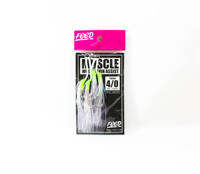
Feed FTAW-CH 4/0 Muscle White Twin Assist Hooks Size 4/0 2 set (5847)
$10.80
Buy on Lazada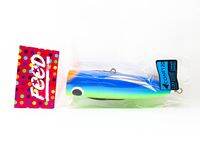
Feed Cone 120 Hand Made Wood Popper Floating Lure 120 grams 56 (6056)
$60.40
Buy on Lazada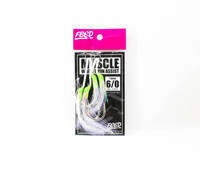
Feed FTAW-CH 6/0 Muscle White Twin Assist Hooks Size 6/0 2 set (5854)
$11.20
Buy on Lazada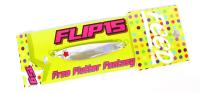
Sale Feed Metal Jig Flip 15 grams 103 (6103)
$4.50
Buy on LazadaAbout Feed
Feed. was a French food-tech company and consumer brand that specialised in meal replacements and “smart food”: nutritionally complete products designed to replace a conventional meal while being quicker and easier to consume. Founded by French entrepreneur Anthony Bourbon, the company launched commercially in January 2017. Its product portfolio included powdered drinks, ready-to-drink beverages, nutritional bars, shakers and snack items.1
A significant corporate development occurred in 2026. Following a trademark infringement judgment involving the United States company The Feed.com, the French entity formerly known as Feed. adopted the name O.K.R. The Paris Judicial Court ruled that several French trademarks incorporating the word “Feed” infringed upon the earlier European Union trademark “The Feed.”2
Overview
| Field | Information |
|---|---|
| Former name | Feed. / Feed |
| Current corporate name | O.K.R. |
| Industry | Food & beverage, food-tech, meal replacements |
| Country of origin | France |
| Founder | Anthony Bourbon |
| Commercial launch | January 2017 |
| Headquarters | Paris, France |
| Core concept | Convenient nutritionally complete meal replacements |
| Main formats | Bars, powdered drinks, ready-to-drink beverages, shakers and snacks |
| Target customers | Busy or active consumers seeking convenient alternatives to conventional meals |
| Notable investors | Alven, Kima Ventures, Otium and Eutopia |
| Major 2018 funding round | €15 million |
| 2026 status | Former Feed. business operating under the name O.K.R. following trademark litigation |
Although the company was legally established in 2016, its commercial website and product sales commenced in 2017.3
Concept and positioning
Feed. operated within the emerging “smart food” and complete food category. The fundamental value proposition offered consumers a specially formulated product intended to provide the nutritional components of a full meal in a portable format, eliminating the need to purchase, prepare or eat a traditional meal.
This placed Feed. in the same broad sector as companies such as Soylent and Huel. However, Feed. differentiated itself by focusing specifically on the French market, emphasising convenience alongside a wider variety of flavours and formats.4 The company positioned its offerings as complete meals rather than standard protein bars or dietary supplements, historically claiming that a single serving supplied the nutritional requirements associated with a full meal.5
History
Foundation
Feed. was established by Anthony Bourbon, a French entrepreneur born in Bordeaux in 1988. Prior to founding the company, Bourbon worked in corporate environments and developed an interest in convenient eating solutions that did not rely on conventional fast food or skipping meals entirely.6
Bourbon has stated that he personally experienced periods where obtaining food was difficult or where meals did not fit his schedule. During a particularly intense professional period, he explored powdered complete-food products but found existing options lacking in taste and ingredient quality.7 This experience informed the core concept behind Feed.: a French, convenient complete-meal product suitable for consumption in almost any setting.
Commercial launch
Feed. launched its e-commerce platform in January 2017. The initial product range drew inspiration from the burgeoning complete-food movement, particularly powdered formulations designed to be mixed with water.
The company sought to differentiate itself through several key attributes:
- French food culture and flavour profiles
- Convenience and portability
- Nutritional completeness
- Vegan formulations
- Multiple product formats
- Relatively accessible pricing
Early market response was strong. Bourbon later reported that approximately 10,000 meals were sold within less than two weeks of the website going live.8
Product portfolio
The central premise of Feed. was that one product equalled one convenient meal. Rather than marketing food primarily as a snack, the company designed its range around meal replacement. Historically, the portfolio comprised the following categories:
Powdered meals
The original concept featured powder that consumers mixed with water to create a drinkable meal.
Ready-to-drink meals
The company subsequently introduced pre-prepared beverages requiring little or no preparation.
Meal bars
Feed. developed solid bars designed to contain the nutritional components of a complete meal in a compact format.
Shaker products
Powdered recipes could be prepared using a branded shaker, making them suitable for office, travel and sports contexts.
Snack products
The brand also offered smaller items intended for consumption between meals or around physical activity.
By 2019, company materials indicated that the Feed. product portfolio had expanded to include more than 50 distinct products.9
Product ranges
At its peak, Feed. organised its offerings into several distinct ranges:
Feed. Original
The core line served as a general-purpose complete meal for everyday use.
Feed. Sport
Oriented towards physically active consumers, this range emphasised protein content and sports-specific nutrition.28
Feed. Light
This range featured lower-calorie meal-replacement products marketed to consumers interested in weight management.26
Feed. Bio
An organic range that included products developed in collaboration with French chef Thierry Marx.
Snackables
Smaller, snack-oriented products designed for consumption while travelling, working or on the move.27
Nutritional profile
A primary selling point for Feed. was the marketing of its products as nutritionally complete meals rather than mere snacks. Historical communications emphasised several key characteristics:
- Vegan
- Gluten-free
- Lactose-free
- GMO-free
- Manufactured in France
- Convenient storage
- Long shelf life
The company stated that products were formulated to meet the nutritional requirements of a single meal.10 This positioning distinguished Feed. from ordinary cereal bars, protein supplements or sports drinks.
Target market
Feed. primarily targeted time-poor, mobile consumers. Marketing materials explicitly promoted products for scenarios including:
- Office work
- Commuting
- Travel
- Exercise
- Study
- Cinema visits
- Any situation where preparing or purchasing a conventional meal was inconvenient
The underlying consumer proposition focused less on permanently replacing traditional food and more on providing an efficient alternative when conventional meals were impractical.11 This positioned the brand at the intersection of food-tech, convenience food, nutrition, fitness and meal replacement trends.
Distribution
Feed. initially grew through direct-to-consumer online sales before expanding into physical retail channels. By 2019, company data indicated that products were available in more than 3,500 points of sale across France and parts of Europe. Retail partners included Franprix, Monoprix, Leclerc, Auchan, Carrefour, Intermarché and Système U, as well as gyms and other specialist locations.12
This expansion moved the brand beyond the niche online “complete food” community and into mainstream French retail distribution.
Funding and growth
Feed. attracted significant venture capital interest during its early expansion phase. In June 2018, the company announced a €15 million funding round led by Alven and Otium. TechCrunch reported that this capital was intended partly to support international expansion.4
Other investors associated with Feed. included:
- Kima Ventures
- Alven
- Otium
- Eutopia
Company materials from 2019 reported total fundraising of approximately €18.5 million up to that point.13 International strategy included expansion into Switzerland, the Benelux region and plans for additional European markets.
Brand philosophy
Feed. branding centred on the concept of saving time without sacrificing nutrition. Marketing challenged the traditional notion that a meal necessarily requires shopping, cooking, sitting down and eating. Instead, the brand proposed a streamlined process: open, prepare if necessary, consume and continue with daily activities.
This approach appealed to consumers with increasingly mobile and digitally connected lifestyles. Consequently, the brand presented food as a form of infrastructure for daily life rather than primarily as a social or gastronomic experience. This represented a philosophical departure from traditional French food culture.
Relationship with the complete food movement
Feed. emerged during the rapid growth of the global complete-food and meal-replacement movement. Influential players in this category included Soylent, founded in the United States in 2013, and the British company Huel.
Feed. adapted this concept specifically for the European, and particularly French, market. Contemporary media coverage frequently described Feed. as a French answer to the complete-food products associated with Soylent and Huel.14 However, Feed. attempted to align the concept more closely with French expectations regarding flavour, variety and food quality.
Thierry Marx collaboration
A distinctive element of Feed.’s early brand strategy was its collaboration with Thierry Marx, a prominent French chef. Feed. partnered with Marx on its Bio range, reflecting an effort to demonstrate that technologically formulated complete food could still be associated with French culinary expertise.15
This collaboration was strategically significant. The company aimed not merely to sell “food in a bottle” but to render the concept of meal replacement culturally acceptable to French consumers.
COVID-19 and strategic transformation
The COVID-19 pandemic significantly disrupted Feed.’s original business model. Prior to the pandemic, a key selling point was convenience for people working outside the home. Lockdowns and the shift to remote work altered consumer behaviour; people had more opportunities to cook and became less dependent on portable meals.
According to Bpifrance, Feed.’s annual revenue had reached approximately €10 million two years after its creation, but the pandemic subsequently caused revenue to fall by roughly half.12 The company underwent a strategic transformation around 2020, which included:
- Revising recipes
- Changing packaging
- Replacing some plastic bottles with single-dose sachets
- Reconsidering international expansion plans
- Adapting product positioning to evolving consumer behaviour
The pandemic marked a major turning point in the company’s development.16
Criticism
Like other meal-replacement companies, Feed. faced criticism regarding the distinction between nutritional completeness and the experience of eating a conventional meal. Journalists testing the products reported issues including:
- Lack of satiety
- Desire to chew conventional food
- Dissatisfaction with taste or texture
- Difficulty consuming meal replacements exclusively
- Questions about whether liquid or bar formats could psychologically replace a traditional meal
Some nutrition professionals also questioned the desirability of relying heavily on highly formulated meal-replacement products. These criticisms reflect a broader industry debate: whether satisfying nutritional requirements is equivalent to having a satisfying meal. Feed.’s proposition was primarily nutritional and practical, whereas critics often evaluated it based on gastronomic, psychological and social dimensions of eating.17
Trademark controversy
The most significant recent development in Feed.’s history is its trademark dispute with The Feed.com. The conflict concerned the use of the name “Feed” / “Feed.” for meal-replacement products.
On 18 February 2026, the Paris Judicial Court issued its judgment in case RG 22/08878. The court held that several French trademarks used by the company formerly known as Feed. infringed the earlier European Union trademark “The Feed.”1819
The court ordered the cancellation of registrations for:
- “Feed”
- “Feed.Smartfood”
- Two semi-figurative “Feed.” trademarks
for the products and services covered by those registrations.20 Furthermore, the court prohibited the company from using “Feed,” “Feed.” and “The Feed” in connection with relevant meal-replacement products and associated services within the European Union, subject to the terms and execution conditions of the judgment.
Transition to O.K.R.
As a direct consequence of the trademark dispute, the company formerly known as Feed. adopted the corporate name O.K.R. When discussing the entity today, it is necessary to distinguish between:
- Feed. (2016/2017–2026): The historical consumer brand and identity.
- O.K.R. (2026–present): The company’s new name following trademark litigation.
The court explicitly refers to “la société O.K.R., anciennement Feed” (“O.K.R., formerly Feed”).21 The change was not a voluntary rebranding exercise but was directly connected to the legal dispute over the Feed trademark.
Significance of the 2026 judgment
The judgment affects not only the corporate name but the use of the Feed brand itself. In addition to cancelling relevant French trademarks and prohibiting use of the disputed signs for meal replacements, the court awarded €179,416.41 as a provision toward damages, plus €30,000 under Article 700 of the French Code of Civil Procedure.21
Certain measures were conditional on the judgment becoming final, while others were subject to provisional enforcement rules. A subsequent May 2026 judgment clarified the interpretation of these provisions. Consequently, the 2026 trademark case is now an integral part of the company’s corporate history.
Founder: Anthony Bourbon
Anthony Bourbon is the entrepreneur most closely associated with Feed. He founded the company and served as its principal public representative. His personal narrative became a key component of the company’s image; he presented himself as someone who had experienced financial hardship before building a successful technology-oriented food company.22
Bourbon subsequently gained recognition beyond Feed. through investment activities and media appearances, particularly his association with the investment platform Blast.Club. Feed. was therefore not only a food company but also an important early component of Bourbon’s public entrepreneurial identity.
Business model
Feed. employed a multi-channel business model:
Direct-to-consumer
Products were sold via the company’s own online store, facilitating subscription and repeat-purchase relationships.
Retail
Distribution expanded to include supermarkets, convenience stores and specialist locations.
Recurring consumption
As customers could consume multiple Feed. products per week, the category naturally supported repeat purchasing.
Product diversification
Rather than relying on a single powder product, Feed. expanded into bars, beverages, snacks and specialised nutritional ranges. This diversification was crucial, as meal replacements can otherwise be perceived as a repetitive product category.
Significance and legacy
Feed. was notable for several reasons. Firstly, it helped introduce complete-food products to a mainstream French audience. Secondly, it demonstrated that the category could transition from niche internet communities to conventional retail. Thirdly, it attempted to synthesise food technology with French culinary culture, notably through the Thierry Marx collaboration. Fourthly, it became one of the better-known French startups associated with Anthony Bourbon. Finally, the 2026 trademark dispute and subsequent transition to O.K.R. provided the company with an unusual second chapter in its corporate history.24
Comparison with conventional food
The company’s proposition can be understood as a trade-off between traditional dining and functional nutrition:
| Conventional meal | Feed.-style meal replacement |
|---|---|
| Requires more time | Designed for speed |
| Usually requires preparation or purchasing | Minimal preparation |
| Strong social/cultural dimension | Primarily functional |
| Highly varied textures | Standardised formats |
| Fresh food is often preferred | Long shelf life |
| Flexible nutritional composition | Formulated nutritional profile |
| Eating experience is central | Convenience is central |
Feed. is thus best understood as a food-format innovation rather than simply another diet-food company.
Place in French food culture
A notable aspect of Feed.’s trajectory was the tension between its technology-driven philosophy and France’s strong food culture, which traditionally values cooking, fresh ingredients, shared meals, culinary pleasure, regional traditions and the social importance of eating. Feed. challenged this model by suggesting that, under certain circumstances, food could be optimised for efficiency. Its commercial success demonstrated that a market existed for this proposition, particularly among urban professionals, athletes and individuals with constrained schedules.25
Timeline
Historically, Feed. is viewed as a French pioneer of the complete-meal and smart-food market. Its trajectory is summarised below:
- 2016: Company founded.
- January 2017: Feed. launches commercially.
- 2017–2019: Rapid growth and expansion of product range.
- 2018: €15 million funding round secured.
- 2019: Thousands of retail locations and over 50 products reported.
- 2020: COVID-19 disrupts the original convenience-oriented model.
- 2020s: Strategic repositioning and evolution of product range.
- January/February 2026: Paris court rules against use of disputed Feed trademarks.
- 2026: Company adopts O.K.R. as its new name.23
Summary
Feed. was a French food-tech brand founded by Anthony Bourbon that popularised the concept of nutritionally complete, convenient meal replacements in France. Launched in 2017, it sold powders, drinks, bars, shakers and snacks aimed primarily at busy consumers seeking alternatives to conventional meals. The company grew rapidly, raised substantial venture capital and expanded into thousands of retail locations, differentiating itself through vegan formulations, French production, product variety and collaborations such as that with chef Thierry Marx. The COVID-19 pandemic disrupted its original business model and prompted a strategic transformation. In 2026, the Paris Judicial Court found that several of the company’s “Feed” trademarks infringed the earlier EU trademark “The Feed,” ordering cancellation of relevant French registrations and restricting use of the disputed name in the meal-replacement sector. The company subsequently became known as O.K.R., rendering “Feed.” primarily a historical name rather than its current corporate identity.24
Note: If by “Feed” you meant a different brand—such as FEED Projects, the American social-impact fashion and food brand founded by Lauren Bush Lauren—this is a completely different company.14
References
- Feed. – Wikidata
- Why I Launched a Complete Meal Company After Facing Hunger Twice.
- Annulation des marques Feed, Feed. et Feed. Smartfood en raison du risque de confusion avec la marque antérieure de l’UE THE FEED – Responsabilité personnelle du dirigeant au titre de la contrefaçon | INPI PIBD
- Feed raises $17.4 million for its Soylent-like food products | TechCrunch
- Feed: the French meal replacements with a certain je ne sais quoi – Inside Food | Issue 34 | December 2019
- French ‘smart food’ start up Feed. wants to ‘simplify your life’
- Feed. the convenient meal – feed
- Anthony Bourbon
- feed
- feed
- Feed. le repas pratique – feed
- Se réinventer en temps de crise, l’exemple de Feed.
- O.K.R
- FEED Projects
- [Blog] THE FEED vs FEED : Annulation des marques FEED et contrefaçon | Novagraaf
- What is Sales and Marketing Strategy of Feed. Company? – businessmodelcanvastemplate.com
- Anthony Bourbon (“Qui veut être mon associé ?”) condamné pour contrefaçon avec sa marque “Feed” – Puremédias
- Feed condamné pour contrefaçon de marque – LE MONDE DU CHIFFRE : L’actualité des professionnels de l’audit et de l’expertise comptable
- Feed condamné pour contrefaçon de marque – Lhermet & Lefranc-Bozmarov
- La startup française Feed condamnée pour contrefaçon (TJ Paris, 18 février 2026) – Lorang Avocats – Propriété intellectuelle et Droit des Affaires
- [Blog] THE FEED vs FEED : Annulation des marques et lourdes condamnations pour contrefaçon – Trademark – France
- Meet Anthony from Feed., one of the FoodTech 500 winners | Forward Fooding
- Feed. | General Terms and Conditions
- Une start-up propose un repas complet qui se boit – Le Parisien
- Feed. | Les Marques Françaises
- Meal replacements for fast weight loss Feed.
- Healthy & functional snacks Feed.
- Protein bar & high protein meals for athletes Feed.