Shop on Lazada
Flower Knows products
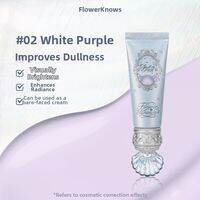
Flower Knows | Illuminating Non-caking Long-lasting Primer
$33.07
Buy on Lazada![[GIFT]Flower Knows Hand Mirror](https://sg-live.slatic.net/p/14f4da87e36d2206f85d828a5b7f97f8.jpg_200x200q80.jpg)
[GIFT]Flower Knows Hand Mirror
$35.00$53.00
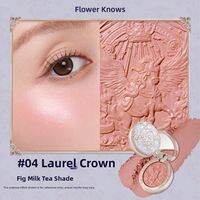
Flower Knows | Sweet Bear Pearl Finish Blush
$55.27
Buy on Lazada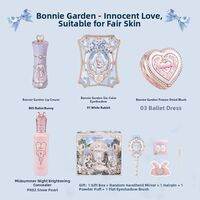
Flower Knows | Swan Ballet Dance Makeup Set
$72.90
Buy on Lazada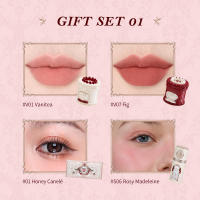
Flower Knows Strawberry Cupid Collection Makeup Gift Set Includes Make-up Palette+Cake Lip Cream*2+Liquid Blush
$160.00$224.00
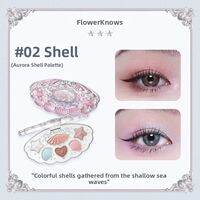
Flower Knows | Matte Shimmer Glitter Long-lasting Easy-to-apply Eyeshadow Palette
$28.82$49.49
![[NEW]Flower Knows Knight Unicorn Collection 6-Color Satin Makeup Palette](https://sg-live.slatic.net/p/addf77db3fcf103aef52bc6c158aaa1a.jpg_200x200q80.jpg)
[NEW]Flower Knows Knight Unicorn Collection 6-Color Satin Makeup Palette
$41.36$62.00
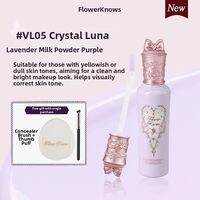
Flower Knows | Highlight Concealer Brightening Face Highlighter Blemish Cover
$18.67$72.02
About Flower Knows
Flower Knows (Chinese: 花知晓; often stylised as Flower Knows®) is a Chinese cosmetics and beauty brand established in 2016 by Yang Zifeng (杨子枫) and Zhou Tiancheng (周天成). The label is distinguished by its integration of colour cosmetics with highly ornate, collectible packaging that draws upon fairy tales, Rococo art, ballet, fantasy motifs, and少女美学 (‘girlish’ aesthetics) 1. Originally cultivated within China’s online youth and cosplay communities, Flower Knows has developed into an international beauty brand with distribution across Asia, North America and other markets. In May 2026, Proya Cosmetics acquired a controlling 51% stake in the company, incorporating it into the broader Proya group whilst founder Yang Zifeng remained active in the business 3.
Infobox
| Field | Information |
|---|---|
| Chinese name | 花知晓 |
| English name | Flower Knows |
| Industry | Cosmetics / Beauty |
| Founded | 2016 |
| Founders | Yang Zifeng (杨子枫), Zhou Tiancheng (周天成) |
| Origin | China |
| Original headquarters | Hangzhou, Zhejiang, China |
| Core category | Colour cosmetics |
| Products | Eye makeup, face makeup, lip products, primer, fragrance, accessories and tools |
| Brand positioning | Fantasy / fairytale-inspired beauty |
| Key aesthetic influences | Rococo, ballet, fantasy, kawaii/girlish aesthetics, cosplay and visual storytelling |
| Major markets | China, Japan, Southeast Asia, United States, Europe and other international markets |
| Current controlling shareholder | Proya Cosmetics |
| Controlling stake acquired | 51% in 2026 |
| Official website | flowerknows.co |
The current international store lists products across categories including eyes, face, lips, primer, fragrance, all-in sets, and accessories and tools 2.
Overview
Flower Knows occupies a distinctive position within the cosmetics industry because visual design functions as a central product attribute rather than merely a marketing layer. Whilst conventional brands may differentiate through formulation technology, ingredients or celebrity endorsements, Flower Knows has built its identity on the premise that a cosmetic object can serve simultaneously as makeup, fashion accessory, decorative item and collectible.
Palettes, blushes, lip products, powders and accessories are frequently designed around a unified fictional or historically inspired world. Packaging often features elaborate reliefs, metallic ornamentation, pearls, bows, butterflies, flowers, cherubs, swans, shells and other decorative motifs. The company describes its vision as being inspired by ‘enchanting fairytales and timeless arts’, with each creation intended to tell a story and encourage consumers to enact their own version of a fairytale 6.
This approach positions the brand at the intersection of several domains:
- Colour cosmetics
- Fashion and accessories
- Collectibles
- Pop culture
- Cosplay and subculture
- Social-media-driven beauty
Founding and origins
Flower Knows was founded in 2016 by Yang Zifeng and Zhou Tiancheng 18. Prior to entering the cosmetics sector, both founders were prominent figures in the Chinese cosplay community, known online as the duo Baozi & Hana. Their background in cosplay proved foundational, as the discipline requires expertise in makeup, costume design, character construction and visual storytelling—concepts that later became integral to the brand’s identity 4.
Yang subsequently assumed the role of co-founder and CEO, whilst Zhou became closely associated with the brand’s creative direction. In a 2021 interview, Yang described Flower Knows as a company built around highly distinctive product design and frequent launches 20. Unlike traditional cosmetics houses that typically begin with large R&D organisations or department store distribution networks, Flower Knows emerged from internet culture, youth communities and visual subcultures.
Transition from cosplay to cosmetics
The brand’s eventual identity is deeply rooted in the philosophy of cosplay, which centres on transforming oneself into a character or inhabiting a fantasy world. Beyond makeup, this transformation encompasses costume, colour, props, accessories, photography, storytelling, character identity and world-building. Flower Knows effectively transferred this ethos from character creation to everyday beauty.
Rather than presenting products solely as functional cosmetics, the brand frames them as objects belonging to a particular fantasy universe. Collections typically adhere to a cohesive theme, with individual products designed to appear as part of the same world. Historically, the company has pursued a strategy of releasing approximately 3–4 major original collections per year, comprising around 100 SKUs in particularly active years 7.
Brand philosophy
The central concept underpinning Flower Knows is often articulated in China through the term ‘少女心’ (shaonü xin). Literally translating to ‘a girl’s heart’, the cultural connotation extends to youthful romanticism, sweetness, fantasy, playfulness, innocence, nostalgia, self-expression and an appreciation for beautiful objects. Flower Knows transformed this abstract sensibility into a recognisable commercial aesthetic.
Its official international brand story emphasises fairy tales and timeless art, describing products as canvases that tell stories 23. Consequently, the brand’s identity extends beyond ‘cute makeup’, encompassing a spectrum that moves between cute, romantic, Rococo, gothic, ballet, fantasy, vintage, princess-like and surreal aesthetics, all whilst maintaining a consistent sense of ornamentation.
Visual identity and packaging
The most immediately identifiable feature of Flower Knows is its packaging. The company makes extensive use of embossed metal, ornate typography, decorative mirrors, sculptural compacts, ribbons, pearls, flowers, butterflies, shells, cherubs, swans, unicorns, bows, pastel colours, pinks, creams, and gold and silver accents.
Rather than treating packaging as disposable, Flower Knows frequently positions the container itself as part of the emotional value proposition. This yields two significant outcomes:
Products as collectibles
Makeup palettes and compacts often resemble decorative keepsakes more closely than conventional plastic cosmetic cases, encouraging retention and collection.
Photogenic design
The packaging is exceptionally well-suited to visual platforms such as Instagram, TikTok, YouTube, Pinterest, Xiaohongshu and unboxing videos. As a result, the product itself functions as marketing content, a factor that has contributed significantly to the brand’s success in social-media environments 10.
Major aesthetic eras and collections
Flower Knows does not adhere to a single permanent visual style; instead, it repeatedly constructs distinct fantasy worlds. Notable collections include:
Swan Ballet
Inspired by ballet, swans and classical romanticism, this collection incorporates elements associated with ballet costumes, swan feathers, pearls, white and pink palettes, and classical femininity. Swan Ballet became one of the brand’s most internationally recognisable lines and is sold through retailers such as Ulta Beauty 8.
Strawberry Cupid
Combining strawberries, Cupid and romantic sweetness, this collection leans heavily into red and pink tones, hearts, fruit motifs and Valentine’s-style imagery.
Shell’s Jewel
A fantasy interpretation of pearls, shells and oceanic jewellery, incorporating iridescence and marine fantasy elements.
Little Angel
An angelic fantasy aesthetic featuring celestial and cherub-like imagery.
Strawberry Rococo
A distinctive example of the brand’s design philosophy, merging Rococo ornamentation with strawberry imagery.
Sweetie Bear
A playful, teddy-bear-oriented aesthetic that combines childhood nostalgia with elaborate beauty packaging.
Knight Unicorn
A newer fantasy world centred on unicorns and heroic fairytale characters. The international site describes the collection through the concepts of an ‘unicorn soul’ and ‘knight’s heart’ 9.
The official site also highlights collections including Bunny Garden, The Sweetie Bear, Shell’s Jewel, Strawberry Cupid, Butterfly Cloud Collar, Midsummer Fairytales, Strawberry Rococo, Little Angel and Swan Ballet 10.
Product categories
Although primarily associated with decorative colour cosmetics, the Flower Knows assortment has expanded considerably. The current international catalogue includes:
Face
Blush, setting powder, loose powder, complexion products and primers.
Eyes
Eyeshadow palettes and individual eye products.
Lips
Lipsticks, lip glosses, lip jellies and lip treatments or glazes.
Fragrance
Expansion beyond traditional makeup into fragrance products.
Accessories
Mirrors, brushes, hair accessories, charms and cosmetic tools. These items reinforce the brand’s fashion and collectible positioning.
The official store organises its catalogue into Eyes, Face, Lips, Primer, Fragrance, All-In, Accessories & Tools and Other 5.
Business model and launch frequency
A core business strategy for Flower Knows has been high-frequency product launches. In 2021, co-founder Yang Zifeng stated that the brand typically produced 3–4 new collections annually, with approximately 100 SKUs per year 20. This approach mirrors the logic of fast fashion; rather than relying on a single permanent hero product, the brand continually provides consumers with reasons to return through new themes, packaging, colours, stories, social media content and collectible objects. This model transforms cosmetics purchasing into a recurring cultural event rather than a purely functional transaction.
Social media strategy
Social media has been fundamental to the growth of Flower Knows. The packaging provides an immediate ‘thumbnail effect’, communicating a distinctive identity even before the product function is understood. Its international social presence spans Instagram, TikTok, YouTube and Pinterest 10. The brand’s official international links also connect consumers to regional e-commerce stores in Southeast Asia and other markets.
In China, early development was closely tied to online youth communities and platforms such as Bilibili and Xiaohongshu, facilitating reach among consumers interested in beauty, cosplay and subcultural aesthetics 1.
International expansion
Flower Knows began expanding outside China relatively early. Industry reporting indicates the brand entered Japan around late 2019, a logical first international market given Japan’s mature anime, manga and kawaii consumer culture 19. It subsequently expanded into Southeast Asia, North America, Europe and other international markets.
The international strategy benefited from a visual language that communicates effectively without translation. Consumers across different regions may not share identical beauty preferences, but the fantasy aesthetic is immediately legible as a ‘magical fairytale makeup collection’. This visual universality has served as a key competitive advantage.
Entry into the United States
Flower Knows has transitioned from direct-to-consumer international e-commerce towards mainstream retail distribution. A significant milestone occurred in December 2025, when the brand launched on Ulta.com in the United States, featuring collections such as Strawberry Cupid, Shell’s Jewel, Little Angel, Swan Ballet and Strawberry Rococo 11. Distribution has also included Urban Outfitters and Amazon 11. Ulta currently carries products from the Swan Ballet, Shell’s Jewel, Strawberry Cupid and Sweetie Bear collections 8. This marks a transition from a Chinese internet beauty brand to a global DTC brand and subsequently to an international retail beauty brand.
Financing and corporate history
2021 Series A
In March 2021, Flower Knows announced an A-round financing of nearly RMB 100 million, with Kunyuan Capital as the sole investor. Stated purposes included improving product experience, community marketing and supply-chain optimisation. At the time, the company described itself as a youth-oriented colour cosmetics brand originating from Bilibili’s online ecosystem 20.
2025 Proya investment
In 2025, Chinese beauty company Proya Cosmetics became a major investor through a B-round financing. Reports indicated that Proya became the largest institutional investor at that point, holding a 38.45% stake 12.
2026 Proya acquisition
The relationship changed substantially in 2026. According to Shanghai Stock Exchange reporting, Proya acquired an additional 12.6% stake from Yang Zifeng for approximately RMB 351 million. This brought Proya’s indirect ownership to approximately 51%, granting controlling ownership of Flower Knows 3. The same report stated that Flower Knows generated approximately RMB 1.7 billion in revenue and RMB 280 million in net profit in 2025, making it Proya’s second-largest cosmetics brand following consolidation 13.
Relationship with Proya Cosmetics
As of 2026, Flower Knows operates as a controlled subsidiary of Proya Cosmetics, which holds a 51% controlling stake 12. This structure allows Flower Knows to potentially leverage Proya’s supply-chain resources, manufacturing capabilities, capital, distribution networks, retail relationships, regulatory expertise and international expansion support. Conversely, Flower Knows provides Proya with exposure to a younger, globally oriented and visually distinctive Gen-Z consumer segment.
Target audience
The original target consumer was primarily young women interested in girlish, fantasy and subcultural aesthetics, overlapping with communities focused on cosplay, Lolita fashion, Japanese kawaii culture, anime, ballet aesthetics and collectible products. However, the international audience has broadened to include consumers who simply appreciate beautiful, unusual and collectible makeup. The brand has gradually transformed its aesthetic from a specific subculture into something more globally accessible.
Competitive differentiation
The brand’s competitive differentiation can be summarised in five areas:
- Packaging as product: The packaging itself is a primary purchase driver.
- World-building: Collections feel like components of fictional worlds rather than unrelated SKUs.
- High launch frequency: New collections continually refresh consumer attention.
- Internet-native marketing: Growth occurred through communities and social media rather than traditional retail.
- Cross-cultural visual language: The fantasy aesthetic travels internationally without requiring prior knowledge of Chinese culture.
Comparison with conventional beauty brands
| Traditional beauty brand | Flower Knows |
|---|---|
| Product-focused | Product + object + story |
| Formula often primary | Formula + packaging + aesthetics |
| Stable product lines | Frequent themed collections |
| Functional packaging | Collectible packaging |
| Advertising-led | Social-media/content-led |
| Brand identity | Fantasy universe |
| Beauty as function | Beauty as experience |
| Seasonal campaigns | Entire themed worlds |
Flower Knows is arguably closer to a beauty and lifestyle storytelling brand than a conventional cosmetics manufacturer.
Design philosophy
The design philosophy of Flower Knows functions as commercialised visual storytelling. A collection typically encompasses multiple layers: theme, visual world, packaging, colour palette, product naming, photography and social content. For example, a ballet-themed collection influences not just the graphic on a palette, but the shape of the compact, embossed patterns, colour selection, model styling, campaign photography, product names, accessories and gift sets. Consumers are thus buying into an aesthetic universe, leading design publications to describe the brand as a celebration of fantasy and individual beauty 14.
Market positioning and pricing
Flower Knows occupies a middle ground in the beauty market. It is generally more affordable than luxury cosmetics, yet its packaging creates a luxury-like unboxing and collecting experience. U.S. retail pricing illustrates this strategy; the 2025 Ulta launch placed products roughly in the $8–$45 range, depending on the item 15. The proposition can be summarised as accessible cosmetics packaged like luxury fantasy objects.
Ethical positioning
Flower Knows has promoted ethical product claims. The Beauty Design Awards profile lists the brand as vegan 2, whilst the 2025 U.S. announcement described it as cruelty-free 11. These claims are increasingly relevant for international consumers, particularly younger shoppers. However, consumers are advised to verify current ingredient and product-specific information, as characteristics may vary across the range.
Scarcity and collectibility
The business model leverages the psychological relationship between limited collections and collecting. When products are released as part of a tightly themed collection, consumers may feel compelled to purchase complete sets (e.g., palette, blush, lipstick, mirror, brush and pouch). Because the products are visually coherent, this resembles the business model of collectibles: new story leads to new collection, which drives the desire to complete the set. This differs significantly from purchasing conventional staples with little collectible value.
Cultural significance
Flower Knows represents a shift in the global perception of Chinese beauty brands. Historically, international perceptions were influenced by price, manufacturing, OEM production and mass-market positioning. Flower Knows demonstrates that a Chinese beauty company can export an original aesthetic identity rather than merely a product. Its success aligns with the broader rise of C-beauty, where Chinese brands build recognisable design, product and cultural identities independent of manufacturing cost competition.
Factors in international popularity
Several factors have contributed to international growth:
- Visual differentiation: Products look immediately distinct from ordinary cosmetics.
- Social-media compatibility: Packaging is highly suited to photography and video.
- Affordable luxury: Ornate, premium-looking products are available without traditional luxury prices.
- Collection mentality: Themed collections encourage repeat purchases.
- Nostalgia: Taps into childhood concepts of princesses, dolls and fairy tales.
- Subculture crossover: Roots in cosplay and Asian youth culture provide credibility.
- Globalised fantasy: Motifs like ballet, angels, strawberries, pearls and unicorns are universally understood.
Criticism and limitations
Because packaging is central to the value proposition, some consumers question whether they are paying primarily for aesthetic design rather than cosmetic technology. Challenges associated with a design-led brand include increased production costs for ornate packaging, potential imitation, inventory complexity from rapidly changing collections, contribution to consumption via frequent launches, shifting aesthetic trends, and the need for diverse regulatory and retail strategies in international markets. Maintaining consumer excitement requires the continuous creation of new visual worlds.
Current status
As of August 2026, Flower Knows is a globally expanding Chinese beauty brand under the control of Proya Cosmetics. The international website continues to emphasise fantasy, fairytale storytelling and themed collections, with a catalogue extending into fragrance, accessories and gift sets 16. International retail presence includes major platforms such as Ulta Beauty, whilst proprietary channels connect customers with regional stores across Asia and other markets 17. The 2026 Proya transaction marks a definitive transition from a venture-backed independent startup to a controlled brand within a major Chinese cosmetics group 3.
Timeline
- 2016: Yang Zifeng and Zhou Tiancheng establish Flower Knows in China 18.
- 2019: International expansion begins, with Japan among early overseas markets 19.
- 2020: Rapid domestic growth; annual SKU output reaches approximately 100+.
- 2021: Completes A-round financing of nearly RMB 100 million from Kunyuan Capital 20.
- 2021–2022: Expansion into Southeast Asia and Western markets accelerates.
- 2025: Proya invests in B-round financing, acquiring a major minority position 21.
- December 2025: Launches on Ulta.com in the United States 11.
- May 2026: Proya acquires additional shares, reaching approximately 51% ownership and gaining control 3.
- 2026: Continued expansion of international product portfolio and retail presence, including collections such as Knight Unicorn.
Summary
Flower Knows is a Chinese beauty brand that transformed the aesthetics of cosplay, fairy tales, Rococo art and ‘girlish’ fantasy into a social-media-native cosmetics business, using collectible packaging and constantly changing themed collections to build a global beauty identity. If brands like Glossier represent effortless everyday beauty and Fenty Beauty represents inclusivity and performance, Flower Knows’ core proposition is ‘makeup as a fairytale object’. Its product is the combination of makeup, design, fantasy, nostalgia, collecting and self-expression—a combination that evolved the company from a small Chinese internet-native firm into a recognisable C-beauty brand and ultimately attracted the investment and control of Proya Cosmetics 22.
References
- Flower Knows’ strategy in China: Leveraging cosplayer culture and visual storytelling
- Flower Knows | Beauty Design Awards 2023 Finalist
- YICAI | China’s Proya Jumps After Gaining Control of Chinese Cosmetics Brand Flower Knows | SHANGHAI STOCK EXCHANGE
- Who Owns Flower Knows? Founders and Investors – LegalClarity
- Shop All Products – Flower Knows
- About Flower Knows – Flower Knows
- Mengenal Brand Makeup Flower Knows, Karya ex-Cosplayer
- Flower Knows – Makeup Palettes – 4 Products | Ulta Beauty
- Flower Knows® Official Site | Live your fairytales – Flower Knows
- flower_knows Official: TikTok, Instagram | Linktree
- Flower Knows Expands U.S. Retail Distribution By Entering Ulta Beauty
- Proya Increases Stake in Flower Knows to 51% | BeautyMatter
- 揭開夢幻彩妝面紗:爆紅的花知曉是哪一國的品牌? – UpToGo
- 華麗包裝背後的身世揭密:到底花知曉是哪個國家的品牌? – UpToGo
- 花知晓出海的杀手锏 – 亚马逊代运营丨亚马逊代运营服务商丨融皓科技
- 花知晓出海的杀手锏-AMZ123跨境导航
- Flower Knows News and Press Releases | PR Newswire
- Flower Knows Founder Yang Zifeng: How a Fairytale Brand Took Over the Beauty World » Xstylers
- フラワノーズ日本公式ページ – フラワノーズ「Flower Knows」日本公式ページ
- Beauty Brand Breakdown: Flower Knows
- Post | Double V Consulting
- Official Website of Flower Knows
- About Flower Knows – Flower Knows