Shop on Lazada
Fuguang products
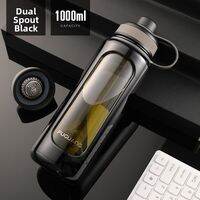
Fuguang | Durable High-borosilicate Glass Water Bottle 1L
$26.57$58.63
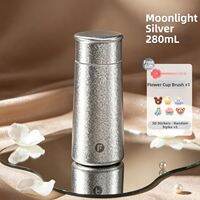
Fuguang | Portable Titanium Thermal Mug
$51.25$71.95
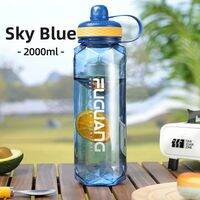
Fuguang | High Temperature Resistant Large Capacity Plastic Water Bottle 2000ML
$11.65$30.70
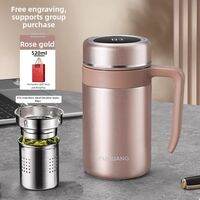
Fuguang | Insulated Tea-infusing Mug Stainless Steel Gift Box
$39.14$73.94
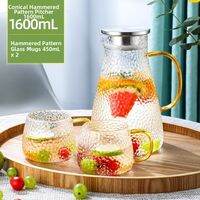
Fuguang | High-Temperature-Resistant Large Capacity Glass Water Pitcher Set
$47.75$85.01
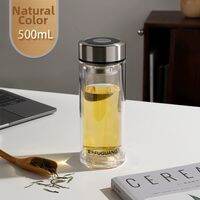
Fuguang | Borosilicate Double-Layered Cup Tea
$20.31$30.25
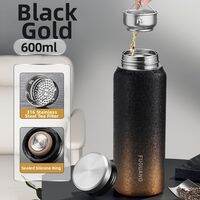
Fuguang | Mens Large Capacity 316L Stainless Steel Insulation Cup
$23.96$49.44
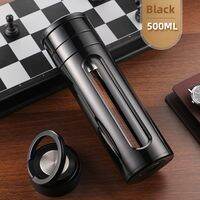
Fuguang | Glass Double Layered Large Capacity Borosilicate Tea Infuser Bottle
$26.89$63.99
About Fuguang
Overview
Fuguang (富光) is a Chinese consumer brand best known for drinking vessels such as water bottles, vacuum flasks, thermoses, glass cups, children’s cups and other reusable drinkware. It is operated by Anhui Fuguang Industrial Co., Ltd. (安徽省富光实业股份有限公司) and traces its origins to 1984 in Sanhe, Hefei, Anhui, China.1
The brand is particularly notable in China for its “space cup” (太空杯), a durable plastic drinking cup introduced in 1997 that became widely popular and helped establish Fuguang as a major domestic drinkware brand. Over four decades, Fuguang has expanded from plastic cups into glassware, vacuum-insulated products, titanium cups, smart drinkware, children’s products and lifestyle-oriented sub-brands.2
Basic information
| Item | Information |
|---|---|
| Chinese name | 富光 |
| English/romanized name | FUGUANG |
| Company | Anhui Fuguang Industrial Co., Ltd. |
| Chinese company name | 安徽省富光实业股份有限公司 |
| Founded | 1984 |
| Origin | Sanhe, Hefei, Anhui, China |
| Industry | Consumer goods / drinkware / household products |
| Main products | Water bottles, vacuum flasks, thermoses, glass cups, children’s drinkware, titanium cups, smart cups |
| Current brand positioning | “安心饮水,守护健康” — roughly, “Drink with peace of mind, protect health” |
| Main market | China, with exports to overseas markets |
| Official website | fuguangchina.com |
The company’s headquarters are in Sanhe, Hefei, Anhui, and its own history describes the business as specialising in the manufacturing, R&D and sales of healthy drinking cups and vessels.3
History
1984: Foundation
Fuguang traces its history to 1984, when its predecessor, Feixi Sanhe Plastic Accessories Factory (肥西三河塑料配件厂), was established in the historic town of Sanhe. This makes Fuguang one of the longer-established Chinese companies in the modern domestic drinkware industry. The company later went through several corporate-name changes before becoming Anhui Fuguang Industrial Co., Ltd.4
1997: The “Space Cup”
A major turning point came in 1997, when Fuguang developed and commercialised its first 太空杯, commonly translated as “space cup.” The product was lightweight, inexpensive and highly resistant to breaking. It became famous in China for being difficult to break, leading to the popular association of Fuguang with the phrase “摔不碎的富光杯,” approximately “the Fuguang cup that doesn’t break when dropped.” The success of the space cup transformed Fuguang from a relatively small manufacturer into a nationally recognised consumer brand.
1998: Tea-drinking products
Fuguang subsequently expanded into products designed for Chinese tea drinking, including a new type of purple-sand tea cup. The company gradually moved beyond simple plastic products and began developing a broader portfolio of drinking vessels.5
2000s: Industrial expansion
During the 2000s, Fuguang expanded its manufacturing capabilities across different materials. By 2006, the company had established separate glass, vacuum and plastic business divisions, reflecting the transition from a predominantly plastic-cup manufacturer towards a diversified drinkware company.6 In 2007, its annual production exceeded 100 million pieces, illustrating the scale it had reached.7 In 2008, the “Fuguang” trademark was recognised by China’s State Administration for Industry and Commerce as a “China Well-known Trademark” (中国驰名商标).8
Development timeline
- 1984: Fuguang’s predecessor established in Sanhe.
- 1997: First Fuguang space cup launched.
- 1998: Expansion into tea-drinking products.
- 2002: Production and sales became industry-leading according to the company’s historical account.
- 2004: Double-wall glass cup introduced.
- 2005: TeaMaster/茶马仕 brand established.
- 2006: Plastic, glass and vacuum divisions established.
- 2007: Annual production exceeds 100 million units; technology centre recognised at provincial level.
- 2008: Fuguang trademark recognised as a China Well-known Trademark.
- 2009: FGA launched as a younger, urban-oriented sub-brand.
- 2010: Ulov/悠乐 and Bestjoy brands introduced.
- 2015: Smart temperature-control cups, smart cups and portable cooking cups launched.
- 2018: Postdoctoral research workstation established.
- 2019: High-end TeaMaster/茶马仕 product line developed further.
- 2022: Brand repositioned around “安心饮水,守护健康.”
- 2023: Became an official cup-and-flask cooperation brand for China Aerospace’s “Space Imagination” and “Aerospace Youth.”
- 2024: A new titanium-cup production base was completed, with planned annual capacity in the tens of millions of units.
Products
Fuguang today is much broader than the classic plastic bottle that made it famous. Its current product portfolio includes:
Vacuum-insulated products
These include vacuum thermos bottles, insulated water bottles, travel cups, coffee-style tumblers, large-capacity bottles and tea-oriented insulated cups. The company currently highlights products such as its Yaming leisure vacuum cup and Ruiming high-lid cup.
Glass cups
Fuguang produces both conventional and specialty glass drinkware. Its current products include double-wall glass cups and products incorporating antibacterial technologies.9
Titanium drinkware
Titanium has become an important newer category for Fuguang. The company has specifically promoted pure-titanium vacuum cups, and its 2024 manufacturing expansion included a dedicated titanium cup-and-flask production base. Fuguang says it began emphasising titanium because of characteristics including light weight and corrosion resistance.10
Children’s drinkware
The company also sells products aimed at children and students, including insulated children’s bottles and technologically enhanced children’s cups.11
Smart drinkware
Fuguang has experimented with more technologically oriented products since the mid-2010s, including temperature-control cups, smart cups, smart children’s cups and other functional drinkware. Its historical timeline records the introduction of smart and temperature-control products in 2015.12
Brand philosophy
Fuguang’s modern brand positioning centres on the slogan “安心饮水,守护健康”, which translates as “Drink with peace of mind, protect health.” This positioning was formally established during the company’s 2022 brand upgrade.
The company emphasises food-grade materials, product safety, quality control, manufacturing consistency, innovation, healthy drinking and long-term durability. Fuguang states that it does not cooperate with suppliers providing non-environmentally friendly raw materials, manufacturers producing unsafe products, or distributors dealing in unhealthy products. It also maintains inspection of each stage of production and insists on food-grade materials.
Technology and manufacturing
One of Fuguang’s distinguishing characteristics is that it presents itself not simply as a consumer brand but as a manufacturing and R&D company. According to the company’s current corporate information, Fuguang has participated in the formulation or revision of over 10 national and industry standards, accumulated more than 1,000 independent intellectual-property rights, operated dedicated R&D capabilities, established a postdoctoral research workstation, and developed products using plastic, glass, stainless steel/vacuum technologies and titanium.
Its technological development is therefore closely connected to its manufacturing identity. Fuguang is closer to a large-scale Chinese drinkware manufacturer that has developed into a consumer brand than to a fashion or lifestyle label that happens to sell bottles.
The “Space Cup”
The 太空杯 (space cup) deserves special mention because it is arguably the product most closely associated with the brand. The concept was based around a lightweight, durable plastic drinking vessel. Fuguang’s first version was launched in 1997 and quickly became popular nationwide. Its appeal was straightforward: light, cheap, durable and portable. At a time when reusable plastic drinking bottles were becoming increasingly common in China, the product fit everyday use at school, work, travel and outdoor activities. The commercial success of this product gave Fuguang enormous domestic brand recognition. The company itself describes the space cup as the beginning of its long-running relationship with Chinese consumers.13
Brand portfolio
Fuguang has developed a number of sub-brands and product lines over the years.
FUGUANG / 富光
The core brand and the company’s best-known name, covering a broad range of everyday drinkware.
FGA
FGA was introduced in 2009 as a younger, more urban-oriented sub-brand aimed at city consumers.14
TeaMaster / 茶马仕
A brand focused particularly on tea-drinking and higher-end tea-related drinkware. It was established in 2005 and subsequently positioned as a higher-end product brand.15
FU+ / 富光·嘉
FU+ was developed as a more premium lifestyle-oriented drinking-container brand, emphasising quality, design and a more refined consumer experience. The company describes it as being created for consumers pursuing higher-quality and more sophisticated lifestyles.16
Ulov / 悠乐
A younger, lifestyle-oriented brand that appeared around 2010.17
The broader portfolio illustrates Fuguang’s strategy of using different brands to target different ages, lifestyles, price points and drinking occasions.
Guochao and national identity
In recent years, Fuguang has increasingly presented itself as a Chinese national consumer brand (国货) and has participated in the broader 国潮 (“guochao,” Chinese cultural trend) movement. This is significant because the company’s original image was very utilitarian: the famous plastic “space cup” was essentially an inexpensive everyday product.
The newer Fuguang attempts to combine that manufacturing heritage with contemporary product design, Chinese cultural identity, premium materials, celebrity marketing, younger consumers, technology and lifestyle positioning. An industry report from iResearch describes Fuguang as a long-established domestic drinkware company that has built a multi-level and diversified brand system, while actively targeting younger consumers through new marketing approaches.18
Aerospace connection
One of the more distinctive recent developments is Fuguang’s association with China Aerospace. In 2023, Fuguang became an official cup-and-flask cooperation brand for China Aerospace · Space Imagination and China Aerospace · Aerospace Youth.19 This fits the brand’s attempt to connect everyday drinking products with themes of technology, Chinese manufacturing, national identity and innovation. It also represents a shift from Fuguang’s traditional image as a practical household product brand towards a more contemporary Chinese technology and lifestyle brand.
International presence
Although Fuguang is primarily associated with the Chinese market, it also exports internationally. The company says its products are sold in more than 30 countries and regions, including Malaysia, Thailand, Japan, Russia, Germany, the United States and Canada.20 This makes Southeast Asia particularly relevant to the brand’s international footprint, with established distribution in neighbouring markets such as Malaysia and Thailand.
Market positioning
Fuguang’s development can be understood in three stages:
Stage 1: Mass-market utility (1980s–1990s)
Fuguang was primarily a manufacturer of practical plastic products. Its space cup established its reputation for durability and affordability.
Stage 2: Major Chinese drinkware manufacturer (2000s–2010s)
The company diversified from plastic to glass, vacuum-insulated products, tea products and smart drinkware, and built a much larger national distribution network.
Stage 3: Modern Chinese lifestyle brand (2020s)
Fuguang has increasingly emphasised health, safety, design, technology, titanium, premium products, younger consumers and Chinese-brand identity. Its 2022 repositioning around healthy and safe drinking is an important part of this transition.21
Reputation and significance
Fuguang’s importance stems from its long period of mass-market penetration rather than luxury status. For many Chinese consumers, particularly those who grew up in the 1990s and 2000s, “富光杯” became almost synonymous with the practical reusable drinking bottle. Its 1997 space cup was particularly influential because it offered something inexpensive, reusable, lightweight and difficult to break. The company subsequently used that consumer recognition to move into increasingly sophisticated categories. This gives Fuguang a somewhat unusual position: an old-school Chinese household brand that is attempting to reinvent itself as a modern, technologically capable consumer brand.
Corporate identity
Fuguang lists its corporate mission as “让生活美起来” (roughly, “Make life more beautiful”). Its stated core values include honesty, integrity, benevolence, trust, responsibility and pursuit of perfection. Its stated corporate vision is “世界品牌、基业长青” (roughly, “Become a global brand and build a long-lasting enterprise”).
Brand evolution
From a brand-history perspective, Fuguang exemplifies the evolution of Chinese manufacturing into Chinese consumer branding. Its story can be summarised as a progression from plastic manufacturer to mass-market space-cup producer, national drinkware company, multi-category manufacturer, technology and R&D-oriented company, and finally modern Chinese lifestyle brand. The company did not abandon its original strength in manufacturing scale and product engineering, but has layered branding, design, technology and lifestyle positioning on top of it.
Current status
As of 2026, Fuguang remains a major Chinese drinkware brand with roots going back to 1984. Its portfolio now spans everyday bottles, vacuum flasks, glassware, children’s products, titanium drinkware and smart products. The company reports more than four decades of operation and says that its products have reached more than 30 overseas markets. Its current brand message combines Chinese drinkware heritage, manufacturing expertise, safety and health, innovation and increasingly modern design. Fuguang is not simply a “water bottle brand” but a long-established Chinese drinkware manufacturer that has gradually built itself into a broad consumer brand.
References
- Fuguang China
- Fuguang China
- Fuguang China
- Fuguang China
- 关于我们 – 安徽省富光实业股份有限公司
- Fuguang China
- Fuguang China
- 安徽省富光实业股份有限公司
- 富光FUGUANG品牌介绍-富光水杯_太空杯_玻璃杯_保温杯-买购APP
- 杭州新富光家居用品有限公司
- 杭州新富光家居用品有限公司
- 富光FUGUANG品牌_富光FUGUANG好不好?_富光FUGUANG是哪家公司的?_安徽省富光实业股份有限公司 – 爱厂家
- 富光品牌介绍_富光是哪个公司品牌?-百强排行网
- FUGUANG/富光品牌_富光牌子口碑_FUGUANG实力档次排名
- fuguangchina.com
- fuguangchina.com
- fuguangchina.com
- 产品定制 – 安徽省富光实业股份有限公司
- fuguangchina.com
- China Anhui Fuguang Import and Export Trading Co., Ltd. company profile
- 孚光官网 | 仁和医疗器械 -领航医疗器械,护航健康生活