Shop on Lazada
Giant products
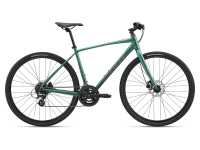
Giant Hybrid Bike Escape 3 Disc (2x8)
$755.00
Buy on Lazada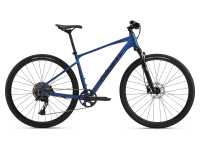
Giant Adventure Bike Roam 1 (CUES 1X11)
$1,510.00
Buy on Lazada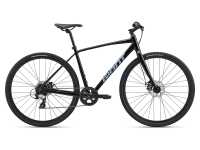
Giant Hybrid Bike Escape 4 Disc
$670.00
Buy on Lazada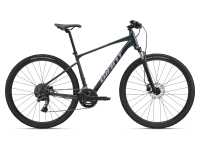
Giant Adventure Bike Roam 2 (CUES 2X10)
$1,240.00
Buy on Lazada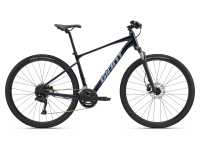
Giant Adventure Bike Roam 3 (CUES 2X9)
$985.00
Buy on Lazada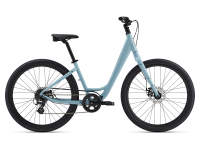
Momentum Hybrid Bike Vida Low Entry
$900.00
Buy on Lazada
Giant Adventure Bike Roam 4 Disc
$820.00
Buy on Lazada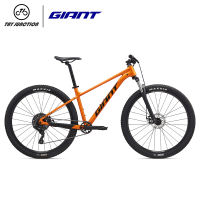
Giant Mountain Bike Talon 4 29 (5th Gen)
$830.00
Buy on LazadaAbout Giant
Overview
Giant Bicycles, commonly referred to as Giant, is a Taiwanese bicycle brand and one of the world’s largest bicycle manufacturers. It serves as the flagship bicycle brand of the Giant Group, whose parent company, Giant Manufacturing Co., Ltd., was established in Taiwan in 1972 by King Liu (Liu Chin-piao). The company initially operated as an original-equipment manufacturer (OEM), producing bicycles for international brands, before launching Giant as its own global consumer brand in 1981. 1
Today, Giant manufactures bicycles across a wide spectrum of categories, including road bikes, mountain bikes, gravel bikes, hybrid/fitness bikes, city bikes, children’s bikes, and electric bicycles. The brand is distinguished by its integration of large-scale manufacturing with in-house engineering, materials research, frame design, and professional racing development.
Basic information
| Item | Details |
|---|---|
| Brand | Giant |
| Parent company | Giant Manufacturing Co., Ltd. / Giant Group |
| Industry | Bicycles and cycling equipment |
| Founded | 1972 — Giant Manufacturing; 1981 — Giant brand |
| Founder | King Liu |
| Origin | Taiwan |
| Headquarters | Taichung, Taiwan |
| Main products | Bicycles, e-bikes and cycling-related products |
| Major markets | Asia, Europe, North America, Australia and other global markets |
| Corporate group | Giant Group |
| Related brands | Liv, Momentum, CADEX |
Giant Manufacturing is publicly listed on the Taiwan Stock Exchange under the ticker TWSE: 9921. As of 31 March 2026, the Giant Group reported approximately 13,695 employees, nine manufacturing factories, and four product brands. 2
Origins
The history of Giant began in 1972 in Taiwan. The company was founded by King Liu, a Taiwanese entrepreneur who had previously engaged in various business ventures. Following the failure of an earlier enterprise, Liu established Giant Manufacturing in Taichung with the objective of building a high-quality manufacturing firm.
Rather than immediately marketing bicycles under its own name, Giant initially focused on manufacturing bicycles for established international brands. This OEM strategy enabled the company to develop sophisticated manufacturing expertise and gain insight into the requirements of major Western bicycle markets. 3
This approach was significant because Taiwan’s manufacturing sector was still developing its international reputation at the time. Giant deliberately prioritised manufacturing quality and consistency, seeking to challenge perceptions that Taiwanese-made products were inferior. 4
Transition from OEM to consumer brand
During its formative years, Giant became an increasingly vital manufacturer for international bicycle companies. This business model provided several strategic advantages:
- Large-scale manufacturing experience
- Knowledge of international markets
- Experience with advanced frame construction
- Relationships with international bicycle companies
- Understanding of consumer requirements
- The ability to invest in proprietary engineering and production facilities
Eventually, Giant recognised that relying exclusively on manufacturing for other brands limited its long-term potential. In 1981, the company launched its own bicycle brand, Giant, marking a significant transformation from a primarily OEM manufacturer to a company with its own consumer-facing identity. 5
The company subsequently established international marketing operations, beginning with Europe in 1986, followed by expansion into markets including the United States, Germany, Italy, Japan, Australia, Canada, and China. 6
Early technological development
A defining characteristic of Giant has been its emphasis on bicycle engineering and manufacturing technology. The company became particularly influential in the development of lightweight bicycle frames and composite materials.
Aluminium frames
At a time when steel remained dominant in bicycle manufacturing, Giant invested heavily in aluminium-frame technology. The company’s development of lighter aluminium bicycles helped accelerate the adoption of aluminium in performance cycling. 7
Carbon fibre
Giant began investing in carbon-fibre frame manufacturing during the mid-1980s. In 1987, it introduced the CADEX carbon-fibre road bicycle. The Giant Group describes CADEX as the world’s first mass-produced carbon-fibre road bike, representing a significant milestone in bringing carbon-frame technology beyond small-scale, highly specialised production. 8
This achievement underscores Giant’s historical significance: it was not merely a high-volume bicycle manufacturer but also a key player in making advanced bicycle construction techniques commercially scalable.
The Compact Road revolution
One of Giant’s most influential innovations was its Compact Road frame design. Introduced in the 1990s, the design featured a sloping top tube and smaller frame triangles compared with traditional road-bike geometry.
The concept offered several advantages:
- Reduced frame material
- Lower weight
- Increased frame stiffness
- Greater structural efficiency
- A wider range of frame sizes
- Easier production
Giant’s TCR—originally associated with the Total Compact Road concept—became one of the company’s most important road-bike platforms. The design was sufficiently influential that other manufacturers subsequently adopted similar compact-frame geometries. The Giant Group describes the TCR as a revolutionary development in road-bike frame design. 9
Professional racing
Professional cycling has played a pivotal role in Giant’s product development and marketing. The company began sponsoring World Cup mountain-bike teams in 1995, including riders such as John Tomac and Rune Høydahl. Racing provided Giant with a testing environment for frame designs, suspension systems, materials, and other technologies. 10
Giant subsequently expanded its involvement to professional road cycling. The TCR was used by the Spanish professional team ONCE, helping to establish the bicycle as an internationally recognised performance platform. 11
This created a feedback cycle characterised by professional racing leading to testing, engineering improvements, consumer bicycles, and further racing development. This approach remains common among major performance bicycle manufacturers today.
Mountain bikes
Giant has become a major player in mountain biking. Its mountain-bike lineup has included:
- Cross-country bikes
- Trail bikes
- Enduro bikes
- Downhill bikes
- All-mountain designs
- Electric mountain bikes
One of the company’s notable technologies is Maestro suspension. Maestro uses a multi-link suspension arrangement designed to allow the rear suspension to remain active while maintaining pedalling efficiency and traction. Giant developed the system for use across several mountain-bike platforms. 12
Giant’s mountain-bike development has also been strongly connected with professional competition, where suspension designs and frame geometry can be tested under demanding conditions.
Road bicycles
Road cycling remains one of Giant’s most recognisable areas. The company’s major road-bike families include:
TCR
The TCR is Giant’s lightweight, race-oriented road-bike platform. It emphasises low weight, stiffness, climbing performance, aerodynamic integration, and racing-oriented geometry. Its Compact Road concept became particularly influential in the road-bike industry.
Propel
The Propel is Giant’s aerodynamic road-bike platform. While the TCR focuses strongly on lightweight all-round racing performance, the Propel places greater emphasis on aerodynamic efficiency.
Defy
The Defy is designed around endurance road riding, combining performance with a greater emphasis on comfort and long-distance riding.
Together, these models allow Giant to cover different segments of the road market rather than relying on a single race-bike design.
Gravel and adventure cycling
As gravel cycling gained popularity, Giant expanded its offerings into this category. Its gravel-oriented bicycles are designed for riding on a mixture of asphalt, gravel roads, dirt roads, light trails, and long-distance adventure routes. This reflects a broader shift in the bicycle industry, where modern road bikes increasingly overlap with touring, adventure, and off-road cycling.
Electric bicycles
Giant was an early participant in the electric-bicycle industry. The Giant Group began investing in electric-assist bicycle research in 1996 and introduced the Lafree electric-assist bicycle under the Giant brand in 1997. 13
Today, electric bicycles are a central component of the Giant Group’s technological strategy, encompassing e-road bikes, e-MTBs, e-hybrid bikes, and urban/commuter e-bikes. The company has invested in integrating motors, batteries, control systems, and bicycle-frame engineering, rather than treating an electric bicycle simply as a conventional bicycle with a motor attached.
Manufacturing philosophy
A critical aspect of Giant’s identity is that it functions as both a bicycle brand and a major manufacturing company. The Giant Group describes itself as one of the relatively few vertically integrated bicycle manufacturers in Taiwan. Its operations span R&D, design, manufacturing, assembly, distribution, and sales/service.
This vertical integration affords the company considerable control over its products and manufacturing processes. 14 This background distinguishes Giant from many smaller bicycle brands that primarily design and market products while outsourcing much of the physical manufacturing.
Global manufacturing
Although Giant is fundamentally a Taiwanese company, its manufacturing and commercial operations have become global. The Giant Group currently reports nine manufacturing factories worldwide. 15
The company has historically operated manufacturing facilities and subsidiaries in various countries as the bicycle industry has evolved. This global manufacturing structure allows the Giant Group to serve different markets while managing production costs, supply chains, logistics, regional demand, trade regulations, and product development.
Distinction between Giant and Giant Group
It is important to distinguish between the brand and the corporate entity.
Giant
This is the consumer bicycle brand. It primarily represents bicycles sold to consumers, including performance, recreational, and electric bicycles.
Giant Group
This is the larger corporate organisation. It encompasses manufacturing, research and development, international operations, bicycle brands, and other cycling businesses. The group’s current product-brand portfolio includes Giant, Liv, Momentum, and CADEX. It also operates cycling-related service businesses and initiatives. 16
Liv
One of the most significant brands associated with the Giant Group is Liv. Created specifically around women’s cycling, the brand originated as Liv/giant in 2008 and became an independent parallel brand within the Giant Group in 2014. Giant describes Liv as a brand dedicated exclusively to women’s bicycles and cycling products. 17
The underlying premise was that women’s bicycles should not simply be smaller versions of men’s bicycles. Liv therefore focuses on factors such as women’s body proportions, bicycle geometry, contact points, component selection, fit, product aesthetics, and women’s cycling experiences.
Momentum
Momentum is another Giant Group bicycle brand. Unlike the performance-focused Giant bicycles, Momentum primarily targets urban transportation, commuting, leisure, and lifestyle cycling. The objective is to make cycling more approachable for individuals who are not necessarily interested in competitive cycling.
In this sense, the Giant Group’s portfolio covers distinct types of cyclists: Giant for performance, Liv for women’s cycling, Momentum for urban/lifestyle cycling, and CADEX for high-performance components. 18
CADEX
CADEX is the Giant Group’s high-end component brand. It specialises in products such as carbon wheels, tyres, saddles, and other high-performance components. The CADEX name has historical roots in Giant’s early carbon-fibre bicycle development, particularly the CADEX 980C introduced during the company’s early carbon-bike era.
Today, CADEX occupies a position above the standard Giant component range, targeting high-performance and professional-level cycling.
YouBike and cycling infrastructure
The Giant Group’s influence extends beyond bicycles themselves. The company participated in the development of YouBike, Taipei’s public bicycle-sharing system. The initial programme began on a small scale in 2009, followed by an official launch in 2012. The system subsequently expanded substantially and became a significant example of large-scale public bicycle sharing.
This illustrates the Giant Group’s broader philosophy: cycling can be viewed not only as a sport or consumer product but also as a form of urban transportation and mobility.
King Liu
The central figure in Giant’s history is its founder, King Liu. Liu established Giant Manufacturing in 1972 and was instrumental in developing its manufacturing-focused culture. Later in life, he became a prominent advocate for cycling itself.
Notably, Liu was not initially a lifelong competitive cyclist. He eventually became known for long-distance cycling and cycling advocacy, helping to promote the bicycle as a healthy and sustainable means of transportation. King Liu died on 16 February 2026 at the age of 91. 19
His legacy is closely tied to two transformations: the evolution of Taiwanese bicycle manufacturing into the global bicycle industry, and the shift from bicycle manufacturing to cycling culture.
Corporate philosophy
The Giant Group’s current philosophy is summarised by the phrase: “Raise the Bar: Advancing the Entire Cycling World.”
The company emphasises engineering, manufacturing quality, innovation, cycling accessibility, sustainability, global partnerships, and the development of cycling culture. The company describes its objective as setting new standards in materials, manufacturing, and services while developing new cycling ecosystems such as e-bikes and shared urban mobility.
Historical significance
Giant’s historical importance stems from several overlapping developments rather than merely its size.
Establishing Taiwan as a manufacturing centre
Giant’s success demonstrated that Taiwan could compete internationally on manufacturing quality and engineering rather than solely on low cost.
Industrialising advanced production
Carbon-fibre bicycle manufacturing, aluminium frames, and sophisticated frame construction became increasingly scalable through companies like Giant.
Influencing bicycle design
The Compact Road/TCR concept had a major influence on modern road-bike geometry.
Connecting manufacturing with racing
Giant utilised professional racing as both an engineering and marketing platform.
Developing a global brand from an OEM background
Perhaps the most significant aspect of the company’s history is its transition from manufacturing bicycles for other companies to designing, manufacturing, and selling bicycles under its own global brand.
Current position
As of 2026, Giant remains the flagship bicycle brand of the Giant Group, while the parent company continues to operate as a vertically integrated global bicycle manufacturer. The Giant Group’s reported scale includes approximately 13,695 employees, nine factories, and 10,000 sales channels, alongside four principal product brands. 20
The company’s current strategic priorities include smart manufacturing, e-bike technology, carbon and advanced materials, aerodynamics, digital/connected cycling, sustainable manufacturing, urban mobility, and global cycling culture. The Giant Group is also investing in manufacturing automation and smart-factory technologies, including sensors and data-driven production systems. 21
Timeline
| Year | Event |
|---|---|
| 1972 | King Liu establishes Giant Manufacturing in Taiwan |
| 1970s | Giant develops its OEM manufacturing business |
| 1981 | Giant bicycle brand is launched |
| 1985 | Giant begins major investment in carbon-fibre frame technology |
| 1986 | Giant Group establishes its first European branch in the Netherlands |
| 1987 | CADEX carbon-fibre road bicycle introduced |
| 1995 | Giant begins sponsoring World Cup mountain-bike teams |
| 1996–97 | Giant enters electric-assist bicycle development; Lafree follows |
| 1990s | Compact Road/TCR technology becomes a major Giant innovation |
| 2000s | Giant expands global racing, manufacturing and product development |
| 2008 | Liv/giant established |
| 2009 | Giant Group participates in the early YouBike programme |
| 2014 | Liv becomes an independent parallel brand |
| 2010s | Giant expands its e-bike and performance-bike platforms |
| 2020s | Greater focus on e-bikes, smart manufacturing, sustainability and advanced components |
| 2026 | Giant Group continues operating Giant, Liv, Momentum and CADEX as its major product brands |
References
- Milestones and History | Giant Group
- Giant manufacturing founded | Giant Bicycles US
- Financial Information | Giant Group
- GIANT GROUP
- 釋放無限潛能 | Giant Bicycles Taiwan 臺灣
- Our History | GiantIndia – Giant Bicycles India
- Giant Group | Taiwan Bicycle Factory and Components Manufacturer
- Organizational and Management Team | Giant Group
- GIANT GROUP
- Ride Like King | Giant Bicycles Taiwan 臺灣
- King Liu
- Mission and Vision | Giant Group
- Giant Group Mourns the Passing of Founder Mr. King Liu|Giant Group
- Ride Like King | Giant Bicycles Ireland
- 捷安特官网
- De geschiedenis van Giant – deel 1 (1972 – jaren 90) | Vintagefiets
- GIANT GROUP
- GIANT GROUP
- 巨大集團創立 | Giant Bicycles Taiwan 臺灣
- The Brand is born | Giant Bicycles Official site
- Ride Like King | Giant Bicycles US
- Giant manufacturing founded | Giant Bicycles US