Shop on Lazada
Giorgio Armani products

Giorgio Armani | Crema Nera Moisturizing UV Filter SPF 50+
$310.27
Buy on Lazada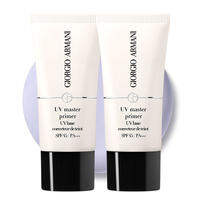
Giorgio Armani | UV Master Primer
$282.63
Buy on Lazada
GIORGIO ARMANI | Fine Matte Coverage Cushion
$349.99
Buy on Lazada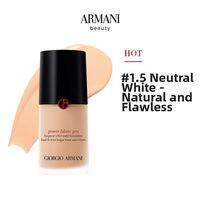
Giorgio Armani | Cover Long-Lasting Foundation
$212.33
Buy on Lazada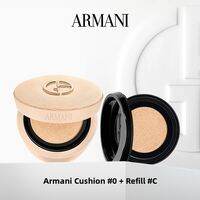
Giorgio Armani | Power Fabric Cushion Foundation
$293.32
Buy on Lazada
Giorgio Armani | Lip Power Longwear Satin Lipstick″
$129.61
Buy on Lazada
Giorgio Armani | Velvet Matte Liquid Lipstick
$123.26
Buy on Lazada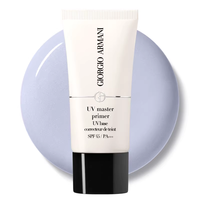
Giorgio Armani | UV Master Primer
$123.36
Buy on LazadaAbout Giorgio Armani
Overview
Giorgio Armani is an Italian luxury fashion house and the flagship label of the wider Armani group. Founded in Milan in 1975 by Giorgio Armani and Sergio Galeotti, the brand became a defining force in modern Italian fashion through its relaxed tailoring, unstructured jackets, restrained colour palettes and concept of understated luxury 1. The name is closely associated with the idea of quiet luxury; expensive materials and sophisticated construction are prioritised over logos, ornamentation or obvious displays of wealth.
The term “Giorgio Armani” refers specifically to the luxury line, while “Armani” or “Armani Group” denotes the larger company encompassing multiple brands and business divisions. Giorgio Armani died on 4 September 2025 at the age of 91, after more than five decades leading the company. Following his death, the Armani Group initiated a succession process intended to preserve the company’s independence and creative identity 2.
Basic information
| Category | Information |
|---|---|
| Brand | Giorgio Armani |
| Founder | Giorgio Armani |
| Co-founder/business partner | Sergio Galeotti |
| Founded | 1975 |
| Place founded | Milan, Italy |
| Industry | Luxury fashion, accessories, beauty and lifestyle |
| Parent/company | Giorgio Armani S.p.A. / Armani Group |
| Core markets | Men’s and women’s luxury fashion |
| Headquarters | Milan, Italy |
| Founder/style figure | Giorgio Armani (1934–2025) |
| Current CEO | Giuseppe Marsocci |
| Current chairman | Pantaleo “Leo” Dell’Orco |
| Signature aesthetic | Minimalism, relaxed tailoring, understated elegance |
| Famous logo | Interlocking “GA” eagle emblem |
| Major categories | Ready-to-wear, tailoring, couture, leather goods, shoes, eyewear, watches, fragrances, beauty and lifestyle |
The founder: Giorgio Armani
Giorgio Armani was born on 11 July 1934 in Piacenza, Italy. Fashion was not his original career ambition; he initially studied medicine at the University of Milan but left his studies after completing military service. His first significant exposure to the fashion industry came through the Milanese department store La Rinascente, where he worked in merchandising and window display. He subsequently designed menswear for Italian designer Nino Cerruti before establishing himself as a freelance designer 13.
These formative years provided Armani with a comprehensive understanding of how clothing was constructed, manufactured, marketed and worn. In 1975, together with Sergio Galeotti, he established his own company, marking the beginning of the Giorgio Armani brand.
Founding of the house
In 1975, Armani and Galeotti founded Giorgio Armani S.p.A. in Milan and introduced their first men’s and women’s ready-to-wear collections. The company’s early philosophy diverged radically from the stiff, highly structured tailoring traditionally associated with formal menswear 3. Armani sought to make tailoring softer, lighter and more natural. Rather than treating a suit jacket as architectural armour, he experimented with softer shoulders, lighter construction, fewer layers of internal padding, looser silhouettes, fluid fabrics, relaxed trousers, muted colours and unconventional proportions. This approach, which allowed clothing to move with the body, became known as deconstructed tailoring. The Armani archive describes this early revolution as combining the experience of industrial prêt-à-porter with the lightness of traditional Neapolitan tailoring 4.
Revolutionary approach to tailoring
Prior to Armani, the conventional business suit was strongly associated with structure, authority and stiffness. Armani redefined this equation by integrating structure with softness and movement. His jackets retained a formal appearance without feeling rigid, a shift that proved particularly significant during the late 1970s and 1980s as social attitudes towards work, gender and masculinity evolved.
Armani created a new professional wardrobe characterised by power without excessive rigidity. His menswear offered sophistication without undue formality, while his women’s tailoring adapted elements of traditional men’s clothing into elegant and sensual forms. Vogue has described his tailoring as “un-constructed”, emphasising how he fundamentally altered the conventional relationship between the jacket and the body 5.
The Armani aesthetic
Giorgio Armani’s design philosophy is best characterised as understated Italian elegance. Its principal characteristics include:
Neutral colours
Armani became renowned for a palette featuring charcoal, grey, greige, taupe, beige, cream, black, navy and brown. Rather than relying on bright colours, the brand often creates luxury through subtle differences in tone and texture.
Soft tailoring
The classic Armani jacket is less rigid than traditional British tailoring, featuring softer shoulders, lighter construction and a more fluid silhouette.
Fluidity
Movement is central to the aesthetic. Armani clothing is designed to fall naturally around the body rather than forcing it into a highly engineered shape.
Minimalism
The design frequently removes unnecessary decoration, adhering to a philosophy of less ornament and greater emphasis on material, proportion and construction.
Sensuality without obvious exposure
Particularly in women’s clothing, sensuality is achieved through draping, fluid fabrics, elongated silhouettes, bare shoulders, controlled transparency, soft tailoring and subtle body definition rather than overt decoration. The brand describes its modern identity as a balance between rigour and freedom, with simplicity and sophistication at the centre 6.
International recognition and Hollywood
The 1980s transformed Armani from a successful Italian fashion house into a global luxury name, largely through cinema. Armani designed the wardrobe for Richard Gere in the 1980 film American Gigolo. The film became a landmark moment in fashion history, connecting Armani with a new image of masculine sexuality through relaxed jackets, muted colours and soft tailoring. It is widely regarded as one of the most important examples of fashion and Hollywood collaborating to create a designer’s global identity 7.
Following American Gigolo, Armani developed a strong relationship with cinema and celebrities. His clothing became associated with Hollywood actors, red-carpet events, award ceremonies and premieres, helping to establish the now-standard concept that a designer’s brand can be integral to a celebrity’s identity. His work in film and entertainment extended far beyond a single film, making him one of the industry’s most recognisable names in costume and celebrity dressing 8.
Brand portfolio and expansion
A key business achievement was transforming a designer label into a multi-brand lifestyle empire. The Armani universe eventually included several distinct lines:
Giorgio Armani
The flagship luxury label represents the purest expression of the original aesthetic and occupies the upper end of the group’s fashion hierarchy. It includes men’s and women’s clothing, tailoring, accessories, footwear, leather goods, eyewear, fragrances and lifestyle products. Current collections continue to emphasise refined materials, restrained palettes and timeless tailoring 9.
Armani Privé
This line represents the haute couture side of the Armani universe, featuring the most elaborate and exclusive fashion, particularly eveningwear and couture creations.
Emporio Armani
Created in 1981, Emporio Armani was conceived as a more youthful and accessible interpretation of the Armani aesthetic. It became crucial in making the brand relevant to younger consumers, offering a style that is more contemporary, casual and urban than the main Giorgio Armani label 20.
A|X Armani Exchange
Developed as a more accessible, youth-oriented fashion proposition, Armani Exchange differs substantially in price and positioning from the Giorgio Armani flagship line.
Lifestyle diversification
Armani expanded far beyond clothing to sell an entire aesthetic across multiple touchpoints. The broader universe has included fashion, haute couture, accessories, eyewear, watches, fragrances, cosmetics, home furnishings, interior design, restaurants, cafés, hotels and flowers. This strategy allows customers to encounter the same design language across diverse categories, from perfume and cosmetics to furniture and hospitality.
Armani Beauty
The beauty business includes foundation, concealer, blush, lipstick, eye makeup, skincare and fragrances. One of its best-known products is Luminous Silk Foundation, which became a major luxury beauty staple 18. The division operates through licensing arrangements, with L’Oréal serving as Armani’s major beauty partner for decades.
Armani/Casa
Armani/Casa extends the brand’s philosophy into interior design, applying principles of neutral colours, refined materials, clean forms and understated luxury to furniture, lighting, textiles, kitchens and decorative objects. This illustrates that the Armani design language is not limited to fashion.
Armani Hotels
The brand entered hospitality with properties such as Armani Hotel Dubai and Armani Hotel Milano, designed around the same minimalist luxury associated with the fashion house. These ventures reinforce that Armani is a design philosophy applied to different areas of life rather than merely a clothing label.
Corporate identity and logo
The famous Armani logo consists of an eagle-like geometric emblem incorporating the initials “GA”. Intentionally restrained and symmetrical, it represents elegance, balance, minimalism and sophistication. The logo reflects the broader brand philosophy of recognisable luxury without excessive visual noise 10.
Brand differentiation
Confusion often arises regarding the various Armani labels, which operate at different price points and target different consumers:
| Brand | Positioning | General aesthetic |
|---|---|---|
| Giorgio Armani | Luxury / flagship | Refined, sophisticated, understated |
| Armani Privé | Haute couture | Exclusive, artistic, highly elaborate |
| Emporio Armani | Contemporary premium | Modern, youthful, metropolitan |
| A|X Armani Exchange | More accessible | Youth-oriented, casual |
| Armani/Casa | Luxury interiors | Minimalist, sophisticated |
| Armani Beauty | Luxury beauty | Cosmetics & fragrance |
Relationship with Milan and Italian fashion
Milan is fundamental to the identity of Giorgio Armani. Founded there in 1975, the city remained the centre of the brand’s creative and corporate world, housing headquarters and architectural spaces such as Armani/Teatro. The brand’s identity is strongly connected to Milan, Italian craftsmanship, modern architecture and design 19.
Armani was instrumental in establishing Milan as a major global fashion capital alongside Paris, London and New York. His success demonstrated that Italian fashion could compete internationally through a combination of design, manufacturing, business discipline, celebrity culture and craftsmanship, helping to create what is now recognised as the Italian luxury fashion system 15.
Business philosophy and independence
Unlike many major fashion houses absorbed by large luxury conglomerates, Armani remained independently controlled for decades. This independence was part of a philosophy to maintain control over design, branding, manufacturing, distribution, corporate strategy and long-term identity. The Armani Group has consistently emphasised independence as a defining characteristic 12.
Succession and future ownership
Giorgio Armani died on 4 September 2025, having continued working on collections and company projects until his final days 14. Following his death, the company entered a formal succession process. Giuseppe Marsocci became CEO, while longtime collaborator Pantaleo “Leo” Dell’Orco became chairman 11. The succession structure is designed to preserve significant influence for the Giorgio Armani Foundation while allowing the company to evolve.
Armani’s will established a gradual succession strategy rather than an immediate sale. Under the plan reported after his death, a 15% stake is intended to be sold initially, with preferred potential buyers including LVMH, L’Oréal and EssilorLuxottica. A larger transaction or possible stock-market listing could follow later, while the Foundation retains a significant stake 10. As of August 2026, this process is still developing; Reuters reported on 11 August 2026 that the planned 15% sale could extend beyond the March 2027 target, with the company prioritising suitable terms and not ruling out a future listing 12. Consequently, while Giorgio Armani is no longer run by its founder personally, the brand remains active under a succession structure intended to preserve his legacy.
Design legacy
Giorgio Armani’s influence encompasses several major contributions:
- Transforming the suit: Changing it from a rigid symbol of authority to something softer and more natural.
- Redefining menswear: Establishing a more relaxed definition of masculinity.
- Innovating women’s tailoring: Adapting masculine tailoring for women as a sophisticated alternative to decorative fashion.
- Popularising understated luxury: Demonstrating that luxury need not be loud.
- Connecting fashion with Hollywood: Using cinema and celebrity to transform a designer into a global cultural figure.
- Creating a lifestyle universe: Expanding into interiors, beauty and hospitality.
- Maintaining visual consistency: Keeping the design philosophy recognisable across decades.
The official Armani archive documents more than 50 years of activity, over 200 collections, approximately 5,500 runway looks and more than 30,000 individual archived items 16.
Market positioning and customer profile
Armani’s luxury positioning derives from fine materials (wool, silk, cashmere, leather), centralised tailoring engineering, a controlled aesthetic independent of trends, five decades of heritage, high price levels for flagship collections, global cultural significance and remarkable visual consistency. This combination creates discreet luxury.
The traditional Giorgio Armani customer seeks sophisticated tailoring, high-quality materials, discreet branding, timeless design, professional elegance and refined accessories. The brand appeals particularly to those who desire luxury without obvious logo display, aiming for elegance rather than trend-driven fashion. Compared to other Italian houses, Giorgio Armani is distinguished by understated elegance and soft tailoring, whereas Prada is intellectual and conceptual, Gucci is eclectic and maximalist, Versace is glamorous and bold, and Bottega Veneta focuses on craftsmanship and discreet luxury 22.
Current status
As of 2026, the Giorgio Armani brand remains active across men’s and women’s collections, accessories, and made-to-measure services. Current collections continue to emphasise essential lines, refined materials, balanced palettes and enduring design 17. The house is also using its ARMANI/Archivio project to preserve and study its history while making its creative heritage accessible to researchers, designers and the public 21. The post-Giorgio Armani era focuses not only on financial viability but on whether the Armani aesthetic can endure without its founder, a question likely to define Italian fashion in the latter half of the 2020s.
References
- The History and Identity of the Giorgio Armani Fashion House TH
- Five iconic Giorgio Armani looks from the V&A collections · V&A
- Giorgio Armani group names long-time executive Marsocci as CEO
- Giorgio Armani News, Collections, Fashion Shows, Fashion Week Reviews, and More | Vogue
- The History and Identity of the Giorgio Armani Fashion House
- Giorgio Armani biography | UNHCR Asia Pacific
- Giorgio Armani’s Living Legacy | Archivio Armani
- Men’s Spring/Summer Collection | Giorgio Armani TH
- Women’s Spring/Summer Collection | Giorgio Armani TH
- Armani after Giorgio Armani: key details of his will
- Armani names new board to steer company through succession plan
- Armani stake sale could be delayed beyond March 2027 deadline, report says
- Giorgio Armani: Biography, Fashion Designer, Olympic Tribute
- Announcement
- The Histiory of Italian Fashion: Giorgio Armani • Camera Nazionale della Moda Italiana
- La Living Legacy di Giorgio Armani | Archivio Armani
- Men’s Fall/Winter Collection | Giorgio Armani
- 13.25 DEEP – NEUTRAL GOLDEN, Luminous Silk Natural Glow Blurring Foundation with 24- Hour Wear 30ML | Giorgio Armani US
- Storia e Identità della Maison Giorgio Armani IT
- The History, Values, and Mission of Emporio Armani US
- Giorgio Armani Archivio
- The Group’s brands | Armani Values