Shop on Lazada
Givenchy products
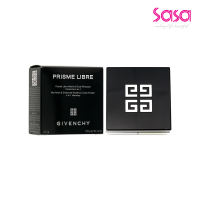
GIVENCHY Prisme Libre Mat-Finish & Enhanced Radiance Loose Powder #1 Mousseline Pastel (3g x 4)
$66.99$146.00
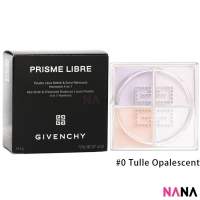
GIVENCHY Prisme Libre Loose Powder 4 in 1 Harmony #0 Tulle Opalescent 12g
$54.40$79.00
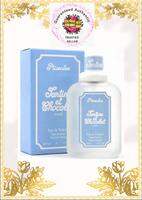
Givenchy Tartine et Chocolat Ptisenbon Paris EDT 100ml for Women (Retail Packaging) - BNIB Perfume/Fragrance
$75.24$76.00
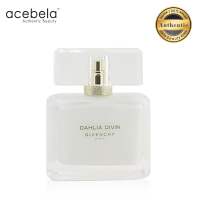
Givenchy Dahlia Divin Eau Initiale EDT 75ml (100% Authentic from Acebela)
$73.60$135.00
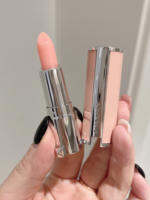
Givenchy | Velvet Custom Color-Long-lasting Lipstick 1.5g
$18.51
Buy on Lazada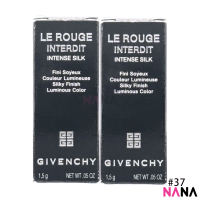
GIVENCHY Le Rouge Interdit Intense Silk #37 Sample Pack (1.5g x 2/1)
$26.20$40.00
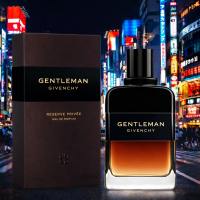
Givenchy Gentleman Reserve Privee Eau de Parfum for Men 100ml
$112.50$205.00
![[FragranceCart] Givenchy Amarige EDT for Women (100ml) Brand New 100% Authentic Perfume Eau de Toilette Woman Red Yellow](https://sg-live.slatic.net/p/fd2d6f24d334e3c1adc1a9adc1975e0e.jpg_200x200q80.jpg)
[FragranceCart] Givenchy Amarige EDT for Women (100ml) Brand New 100% Authentic Perfume Eau de Toilette Woman Red Yellow
$104.00$195.00
About Givenchy
Givenchy is a historic French luxury fashion house established in Paris in 1952 by Hubert de Givenchy. Renowned for haute couture, ready-to-wear, leather goods, accessories, fragrances, makeup, and skincare, the maison achieved global prominence through the creative partnership between its founder and actress Audrey Hepburn, whose wardrobe helped define twentieth-century elegance 1.
Today, Givenchy operates under the French luxury conglomerate LVMH and maintains its headquarters at 3 Avenue George V, Paris. As of 2026, Sarah Burton serves as Creative Director, overseeing both women’s and men’s collections 2.
Basic information
| Category | Details |
|---|---|
| Brand | Givenchy |
| Founded | 1952 |
| Founder | Hubert de Givenchy |
| Founded in | Paris, France |
| Headquarters | 3 Avenue George V, 75008 Paris |
| Industry | Luxury fashion, leather goods, fragrances & cosmetics |
| Parent company | LVMH |
| Creative Director | Sarah Burton |
| Major categories | Haute couture, womenswear, menswear, leather goods, accessories, fragrance, makeup, skincare |
| First fragrance | L’Interdit, 1957 |
| Famous muse | Audrey Hepburn |
| Current era | Sarah Burton, from 2024 |
LVMH records Givenchy’s founding year as 1952 and lists its Paris headquarters on Avenue George V 3.
Origins: Hubert de Givenchy
Hubert James Taffin de Givenchy founded his eponymous house in 1952 at the age of 24, an achievement considered remarkable for the period. His approach diverged from the rigid formality of mid-century fashion; rather than prescribing complete, coordinated ensembles, he introduced versatile pieces that women could mix and wear in varied combinations 4.
His debut collection presented “Les Séparables”, comprising separate blouses and skirts designed to be interchanged. This concept became an early expression of casual chic, offering luxury clothing that retained sophistication without excessive restriction or formality 5.
The Givenchy aesthetic was anchored in several core principles:
- Clean lines
- Refined proportions
- Understated luxury
- Elegant simplicity
- Feminine silhouettes
- Sophisticated yet effortless dressing
- A balance between tradition and modernity
These elements collectively established the foundation of the Givenchy identity.
Cristóbal Balenciaga’s influence
Cristóbal Balenciaga played a pivotal role in the early development of Givenchy. The two designers met in 1953, and Balenciaga subsequently became a significant mentor and friend. Givenchy admired Balenciaga’s architectural approach to garment construction and his exceptional grasp of proportion and silhouette 6.
This influence manifested in Givenchy’s design progression:
structure → simplicity → proportion → movement
Rather than relying on ornamentation, the garments themselves were intended to generate visual impact. This philosophy distinguished Givenchy from the more ornate styles prevalent in mid-century couture.
Audrey Hepburn and the birth of the Givenchy image
While Hubert de Givenchy established the house, Audrey Hepburn was instrumental in shaping its mythology. Meeting in the early 1950s, their professional and personal relationship evolved into one of fashion history’s most celebrated designer–muse partnerships, with Givenchy designing for Hepburn both on and off screen 7.
Their collaboration is closely associated with films including:
- Sabrina
- Breakfast at Tiffany’s
- Charade
- Funny Face
- How to Steal a Million
The most iconic example remains Hepburn’s little black dress in Breakfast at Tiffany’s. Recognised as one of cinema’s most memorable garments, it cemented the association between Givenchy and a distinctively Parisian, aristocratic femininity. The maison’s press materials describe the dress as a symbol of timeless elegance 8.
Crucially, Hepburn was not merely a celebrity endorser; she embodied the archetype of the Givenchy woman: sophisticated, intelligent, graceful, modern, and understated.
Expansion into fragrance
In 1957, Givenchy expanded beyond couture with the launch of L’Interdit. Originally created for Audrey Hepburn before its commercial release, the name translates to “the forbidden” in French 8.
This expansion was strategically significant, allowing the Givenchy aesthetic to reach clients unable to purchase haute couture. The brand subsequently developed a substantial fragrance and beauty business, including men’s scents.
The beauty portfolio eventually encompassed:
- Perfume
- Makeup
- Skincare
The cosmetics line launched in 1989, with products such as Le Prisme Visage reinforcing Givenchy’s couture-oriented approach to beauty.
Givenchy and LVMH
Givenchy joined LVMH in 1988, marking a major turning point in its history 8. The conglomerate provided the financial stability and international infrastructure required to develop Givenchy as a global luxury business while preserving its identity as a French fashion house.
Currently, Givenchy operates within LVMH’s Fashion & Leather Goods division, while Parfums Givenchy falls under the Perfumes & Cosmetics division 8. Consequently, the brand functions across two interconnected luxury sectors:
Givenchy Fashion
→ Clothing, haute couture, leather goods, and accessories
Givenchy Beauty
→ Perfume, makeup, and skincare
Hubert de Givenchy’s retirement
Hubert de Givenchy remained creatively active at the house for over four decades before retiring in 1995 after approximately 43 years of design 12.
His departure concluded the founder era and initiated a period in which Givenchy increasingly relied on younger designers to reinterpret its heritage. This cycle of reinvention through successive creative directors has become a defining characteristic of the modern maison.
Designers after Hubert de Givenchy
Following the founder’s retirement, Givenchy experienced several distinct creative eras.
John Galliano — 1995–1996
British designer John Galliano briefly led the house after Hubert de Givenchy’s retirement. Although short-lived, his tenure signalled the beginning of Givenchy’s transition toward a more theatrical and fashion-forward identity.
Alexander McQueen — 1996–2001
Alexander McQueen introduced a darker, more provocative sensibility that contrasted sharply with Hubert’s restrained elegance. His collections incorporated:
- Gothic imagery
- Sexuality
- Historical references
- Aggressive tailoring
- Dramatic silhouettes
- Dark romanticism
This period demonstrated the house’s capacity to accommodate radical interpretations of its heritage.
Julien Macdonald — 2001–2004
Welsh designer Julien Macdonald succeeded McQueen, continuing the house’s trajectory toward glamour and provocation.
Riccardo Tisci — 2005–2017
Riccardo Tisci oversaw one of the most commercially influential periods in Givenchy’s modern history. He developed an aesthetic centred on:
- Gothic romanticism
- Religious imagery
- Dark tailoring
- Streetwear
- Graphic prints
- Oversized silhouettes
- Luxury sportswear
His work significantly influenced the intersection of high fashion and street culture. The Rottweiler graphic and subsequent religious motifs became synonymous with the brand during this era. Tisci also enhanced Givenchy’s visibility among celebrities and musicians, extending the house’s reach beyond traditional couture clientele.
Clare Waight Keller — 2017–2020
In 2017, Clare Waight Keller was appointed as Givenchy’s first female artistic director 11. Her approach differed markedly from Tisci’s, emphasising:
- Refined tailoring
- Couture craftsmanship
- Romantic femininity
- Elegant eveningwear
- Classic Givenchy references
She gained international recognition for designing Meghan Markle’s wedding dress for her 2018 marriage to Prince Harry, reinforcing Givenchy’s association with ceremonial elegance and royal fashion.
Matthew M. Williams — 2020–2023
American designer Matthew M. Williams became Creative Director in 2020. Drawing from his background in contemporary streetwear and his label 1017 ALYX 9SM, he introduced an industrial vocabulary to Givenchy featuring:
- Hardware
- Utility details
- Oversized clothing
- Sneakers
- Graphic elements
- Streetwear influences
- Strong leather goods
Notable accessories from this period include the 4G bag, whose hardware and construction contributed to Givenchy’s modern accessories identity 9. Williams departed the house in 2023.
Sarah Burton era — 2024–present
In September 2024, Givenchy announced Sarah Burton as its new Creative Director, responsible for both women’s and men’s collections 14. Previously the Creative Director at Alexander McQueen, Burton represents a distinct evolution for the house.
Rather than pursuing streetwear or provocation, her work focuses on combining:
craftsmanship + femininity + tailoring + sensuality + modern wearability
Burton presented her first Givenchy collection in March 2025 13. By 2026, the maison describes this direction as continuing Givenchy’s heritage through a contemporary lens, with the Summer 2026 campaign explicitly presented as “Givenchy by Sarah Burton” 10.
Stylistic identity
Givenchy resists reduction to a single aesthetic due to significant shifts under various designers. However, consistent philosophical threads remain evident.
The classic Givenchy
Elegant + clean + aristocratic + feminine
Derived primarily from Hubert de Givenchy.
The McQueen/Tisci interpretation
Dark + dramatic + rebellious + romantic
The Waight Keller interpretation
Couture + romantic + refined + ceremonial
The Matthew Williams interpretation
Industrial + street + hardware + contemporary
The Sarah Burton interpretation
Craft + femininity + tailoring + sensuality + modern elegance
The common denominator is a tension between elegance and rebellion, allowing the house to evolve its visual language without abandoning its core identity.
Signature elements
Several visual codes have become intrinsically linked to the house.
4G motif
The 4G emblem is one of Givenchy’s most recognisable contemporary symbols, appearing across handbags, shoes, clothing, jewellery, accessories, and hardware. Matthew M. Williams notably integrated the 4G into modern leather goods, including the 4G bag 9.
Black
Black occupies a central place in Givenchy’s visual identity, largely due to the house’s association with Audrey Hepburn and the iconic black dress from Breakfast at Tiffany’s.
Couture tailoring
Regardless of shifts toward streetwear, the house’s historical foundation remains rooted in couture construction and tailoring.
Elegant minimalism
Hubert de Givenchy’s legacy persists in the principle that luxury does not necessitate excessive decoration.
Dark romanticism
Later designers, particularly McQueen and Tisci, transformed the brand’s elegant foundation into something darker and more dramatic.
Major product categories
Fashion
Givenchy produces:
- Women’s ready-to-wear
- Men’s ready-to-wear
- Haute couture and couture-related creations
- Eveningwear
- Tailoring
- Knitwear
- Shoes
- Accessories
Leather goods
Handbags constitute a significant portion of the modern Givenchy business. Notable families and designs include:
- Antigona
- Pandora
- 4G
- Voyou
- Cut-Out and other seasonal designs
The Antigona, introduced during the Riccardo Tisci era, remains one of Givenchy’s most recognisable modern handbags.
Fragrance
Givenchy maintains a substantial fragrance portfolio. Key names include:
- L’Interdit
- Gentleman
- Irresistible
- Pi
- Organza
- Amarige
- Gentleman Society
L’Interdit retains particular significance due to its connection with Audrey Hepburn and the origins of the house’s fragrance business 8.
Makeup
Givenchy Beauty is known for products such as:
- Prisme Libre
- Le Rouge
- Foundation and complexion products
Prisme Libre loose powder stands as one of the brand’s best-known contemporary beauty offerings.
Skincare
Givenchy also operates a luxury skincare business, including the Le Soin Noir range.
Relationship with celebrity culture
Celebrity culture has been integral to Givenchy since its inception. Audrey Hepburn established the original model combining designer, actress, cinema, and fashion. The house subsequently expanded this relationship to include musicians, actors, models, athletes, and other public figures.
Riccardo Tisci successfully connected Givenchy with contemporary celebrity and music culture, while Sarah Burton’s era has emphasised a broader cast of women and creative personalities. The Summer 2026 campaign, for instance, featured Kaia Gerber, Liu Wen, Isabelle Albuquerque, and photographer Annie Leibovitz 10.
Comparison with other French luxury houses
Givenchy occupies a distinctive position among French luxury brands.
| House | Traditional identity |
|---|---|
| Chanel | Parisian elegance, tweed, femininity, modern classicism |
| Dior | Couture, femininity, architectural silhouettes |
| Saint Laurent | Sharp tailoring, rock, sensuality |
| Balenciaga | Avant-garde, volume, experimentation |
| Louis Vuitton | Travel, leather goods, monogram, luxury lifestyle |
| Hermès | Craftsmanship, leather, discretion |
| Givenchy | Couture elegance, refined femininity, dark romanticism, modern tailoring |
Givenchy’s unique positioning stems from the contrast between refinement and rebellion, capable of presenting aristocratic polish in one collection and dark, street-influenced aesthetics in another.
Significance in fashion history
Givenchy’s importance extends beyond individual garments to several major developments in fashion:
1. The democratisation of luxury dressing
Hubert de Givenchy’s separates challenged the notion that sophisticated fashion required a complete, predetermined look 5.
2. Designer–celebrity collaboration
The Givenchy–Hepburn relationship established a model for modern interactions between fashion designers and celebrity culture.
3. The cinematic power of fashion
Givenchy demonstrated how costume could become intrinsic to a film character’s identity.
4. The fusion of couture and ready-to-wear
The house expanded beyond traditional couture into a broader luxury ecosystem.
5. The fusion of luxury and street culture
Particularly under Riccardo Tisci and Matthew M. Williams, Givenchy illustrated how a historic couture name could participate in contemporary streetwear culture.
Brand identity
Givenchy’s DNA can be summarised as a French luxury house built on Hubert de Givenchy’s concept of refined, effortless elegance, continually reinvented through darker, more rebellious, and contemporary interpretations.
More concisely:
Givenchy = French couture elegance + modern attitude + controlled rebellion.
Timeline
1952 — Hubert de Givenchy establishes the house in Paris 15.
1952 — First collection, Les Séparables, is presented 17.
1953 — Givenchy meets Cristóbal Balenciaga 16.
1950s — Relationship with Audrey Hepburn develops.
1957 — L’Interdit launches as Givenchy’s first fragrance 8.
1988 — Givenchy becomes part of LVMH 8.
1995 — Hubert de Givenchy retires after 43 years 12.
1995–1996 — John Galliano serves as Creative Director.
1996–2001 — Alexander McQueen serves as Creative Director.
2001–2004 — Julien Macdonald serves as Creative Director.
2005–2017 — Riccardo Tisci serves as Creative Director.
2017–2020 — Clare Waight Keller serves as Artistic Director 20.
2020–2023 — Matthew M. Williams serves as Creative Director 21.
2024–present — Sarah Burton serves as Creative Director 14.
2025 — Sarah Burton presents her first Givenchy collection 13.
2026 — Givenchy continues the Sarah Burton era, positioning her vision around contemporary interpretations of its heritage 10.
Summary
Givenchy is one of France’s historic luxury fashion houses, founded in Paris in 1952 by Hubert de Givenchy. Its original identity was predicated on clean, sophisticated couture and a modern conception of effortless elegance. The house became inseparable from Audrey Hepburn, whose Givenchy wardrobe—particularly the Breakfast at Tiffany’s black dress—helped transform the brand into a global cultural icon 18.
Following Hubert’s retirement, Givenchy repeatedly reinvented itself through designers including John Galliano, Alexander McQueen, Riccardo Tisci, Clare Waight Keller, and Matthew M. Williams. Each shifted the house’s visual language, from McQueen’s darkness and Tisci’s gothic streetwear to Waight Keller’s couture romanticism and Williams’s industrial modernity 19.
Today, under Sarah Burton, Givenchy is entering another chapter: reconnecting its historic couture craftsmanship and femininity with modern tailoring, sensuality, and contemporary fashion. This positions Givenchy not as a brand with a fixed aesthetic, but as a fashion house whose central identity is the continuous reinterpretation of elegant French luxury 20.
References
- The Givenchy Maison | Givenchy Pressroom | Pressroom
- House
- Givenchy, high end ready-to-wear for men and women… – LVMH
- Sarah Burton’s Appointment | Givenchy
- Givenchy News, Collections, Fashion Shows, Fashion Week Reviews, and More | Vogue
- Givenchy, prêt-à-porter homme et femme – Mode & Ma… – LVMH
- La Maison Givenchy | Givenchy Pressroom | Pressroom
- Givenchy Parfums – LVMH
- Maison_Iconics_4G_Content_Text1_FW21 | Givenchy
- GIVENCHY BY SARAH BURTON SUMMER 2026 CAMPAIGN | Givenchy Pressroom | Pressroom
- A woman’s work: Sarah Burton is reshaping Givenchy
- Givenchy Creative Directors, 1952–2026 | FORMA
- GIVENCHY BY SARAH BURTON WOMEN’S READY-TO-WEAR FALL-WINTER 2026 COLLECTION | Givenchy Pressroom | Pressroom
- Sarah Burton is Givenchy’s New Creative Director | Vogue
- The history of the house | Givenchy
- The House of Givenchy – Maison history | Givenchy
- The House of Givenchy – Maison history | Givenchy
- Home | Givenchy Pressroom | Pressroom
- La Nomination de Sarah Burton
- Clare Waight Keller biography | Givenchy
- Givenchy appoints Matthew M.Williams as Creative Director | Givenchy