Shop on Lazada
Green Earth products
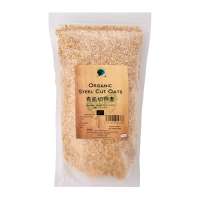
Green Earth Organic Steel Cut Oats
$7.10
Buy on Lazada
Green Earth Organic Coconut Cooking Oil
$29.90
Buy on Lazada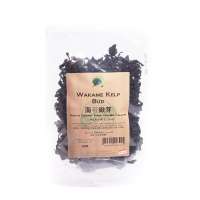
Green Earth Young Wakame Bud
$6.10
Buy on Lazada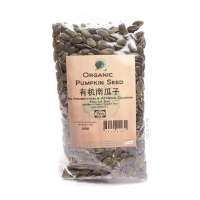
Green Earth Organic Pumpkin Seed
$6.85
Buy on Lazada
Green Earth Mee Sua
$6.20
Buy on Lazada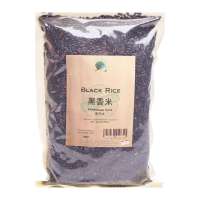
Green Earth Black Rice
$7.30
Buy on Lazada
Green Earth Red Dates
$5.50
Buy on Lazada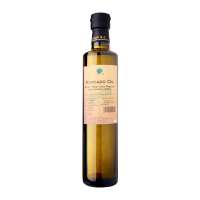
Green Earth Cold Press Avocado Oil
$24.90
Buy on LazadaAbout Green Earth
Green Earth Group N.V. is a Dutch publicly listed environmental company specialising in nature restoration, carbon projects, biodiversity and other nature-based solutions. Formerly known as DGB Group N.V., the organisation adopted the Green Earth name as part of its transition from a carbon-project developer into a vertically integrated ecosystem-restoration business.12 The company describes itself as a purpose-driven, for-profit organisation aiming to make environmental regeneration scalable and investable by combining ecological science, project development, financial expertise and data intelligence.3
Readers in Singapore should note that Green Earth Group N.V. is distinct from several unrelated local entities that share similar names, including Green Earth Brands Pte. Ltd., Green Earth Organic LLP, Green Earth Lifestyle Pte. Ltd., Green Earth International Pte. Ltd. and Green Earth Foods.7891011131417
Company profile
| Field | Information |
|---|---|
| Full name | Green Earth Group N.V. |
| Former name | DGB Group N.V. |
| Industry | Nature-based solutions / environmental services / carbon markets |
| Headquarters | Netherlands |
| Stock exchange | Euronext Amsterdam |
| Ticker | EARTH |
| ISIN | NL0009169515 |
| Business model | End-to-end development and management of nature-based projects |
| Core areas | Carbon, biodiversity, plastic and ecosystem restoration |
| Brand promise | “Engineering Possibilities” |
| Stated long-term ambition | Plant 1 billion trees |
History
Green Earth’s current identity evolved from DGB Group, which originally focused primarily on carbon project development. As its activities expanded to include biodiversity, ecosystem restoration, community development and other environmental products, the company determined that the DGB name no longer adequately represented the breadth of its operations and subsequently rebranded as Green Earth.5
This rebranding signalled a shift in positioning. Rather than presenting itself solely as a developer of individual carbon projects, Green Earth aims to operate across the entire project lifecycle and carbon-credit value chain. This encompasses identifying, developing, implementing and managing projects, as well as producing environmental credits and related products.6 The company officially began trading under the EARTH ticker on Euronext Amsterdam following this transition.2
Core activities
Green Earth develops and operates large-scale nature-based projects designed to address environmental challenges while generating economic opportunities for local communities. Its principal activities are categorised into four areas.
Carbon projects
Carbon projects constitute one of Green Earth’s primary business lines. The company develops initiatives designed to either remove greenhouse gases from the atmosphere or avoid emissions, including reforestation, afforestation, agroforestry and improved cooking technologies. These projects can generate verified carbon credits for organisations seeking to compensate for emissions or support climate-related environmental initiatives.8 Green Earth states that its approach incorporates ecological restoration, community participation and economic development alongside tree planting.
Biodiversity projects
The company has expanded beyond carbon into biodiversity restoration, aiming to improve ecosystem health, restore habitats and increase biodiversity. Biodiversity is viewed as an environmental asset that complements carbon-related outcomes. One example is the Bulindi Chimpanzee Habitat Restoration project in Uganda, which combines afforestation with efforts to protect chimpanzee habitat and support local households.9
Plastic projects
Green Earth also develops projects involving plastic removal and recycling. The objective is to prevent plastic from entering the environment or oceans and to create systems that convert waste into environmental and potentially economic assets. These activities can generate plastic credits.10
Sustainable agriculture and community projects
Agriculture forms a significant component of the company’s nature-restoration strategy. Green Earth employs approaches such as agroforestry, sustainable agriculture and community-based land management to combine environmental restoration with income generation for rural communities. In 2026, for example, the company announced a regenerative cassava programme in the Democratic Republic of the Congo.11
Business model
Green Earth distinguishes itself through a vertically integrated model. Instead of purchasing environmental credits from unrelated third parties, the company develops and manages projects directly. Its general process follows these stages:
- Identify degraded land or environmental opportunity
- Design the project
- Secure land and community participation
- Implement restoration activities
- Monitor environmental outcomes
- Verify the project
- Generate carbon, biodiversity or plastic credits
- Sell environmental products and services
This model allows Green Earth to participate in multiple stages of the value chain rather than functioning purely as a carbon-credit reseller. The company states this approach helps maintain greater control over project quality, environmental integrity and resulting products.12
Nature-based solutions
Nature-based solutions (NbS) are central to Green Earth’s identity. These solutions use or restore natural ecosystems to address environmental and social problems. For Green Earth, this encompasses reforestation, afforestation, agroforestry, ecosystem restoration, habitat conservation, biodiversity enhancement, energy-efficient cookstoves, plastic removal and recycling, and community-based sustainable agriculture. The company argues that nature restoration can simultaneously address climate change, biodiversity loss and rural development challenges.13
Major projects
Green Earth operates projects in several countries, with a particular focus on Africa.
Uganda — Bulindi
The Bulindi Agroforestry and Chimpanzee Conservation Project focuses on restoring chimpanzee habitat while supporting surrounding communities. The initiative combines tree planting, habitat restoration and community involvement rather than treating carbon sequestration as its sole objective.14
Kenya — Hongera Reforestation Project
The Hongera Reforestation Project operates around the Mount Kenya and Aberdare regions. Its objectives include restoring previously forested areas, improving water security and increasing biodiversity.15
Cameroon — Greenzone
The Greenzone Afforestation Project in Cameroon focuses on creating and restoring forests in collaboration with local farmers. The project is designed to combine environmental restoration with sustainable development and community benefits.16
Democratic Republic of the Congo
Green Earth has expanded into regenerative agriculture in the Democratic Republic of the Congo, including a cassava programme announced in 2026.11
Scale and impact
Green Earth presents itself as a large-scale environmental project developer. According to the company’s reported figures, its portfolio includes:
- Over 59 million trees being planted
- Over 135,800 hectares being restored
- Over 476,000 efficient cookstoves being distributed
- Over 80,000 people positively impacted
- Over 16.3 million tonnes of CO₂ targeted for capture17
The company has also stated a long-term ambition to plant 1 billion trees.4 These figures are company-reported metrics representing Green Earth’s stated portfolio and impact targets rather than independent estimates.
Corporate structure and stock-market status
Green Earth is a publicly traded purpose-driven company listed on Euronext Amsterdam under the ticker EARTH.2 The company positions its public-market status as a mechanism for connecting nature restoration with investment capital. Its underlying thesis is that properly structured environmental restoration projects can generate ecological benefits while creating investable economic value, rather than being treated solely as a cost.6
“Engineering Possibilities”
Green Earth’s brand promise is “Engineering Possibilities,” reflecting its attempt to combine ecology, technology and data, and finance. The company posits that restoring ecosystems at a global scale requires capital, measurement systems, verification, commercial structures and operational management in addition to environmental expertise. Green Earth therefore presents itself as an organisation operating at the intersection of nature, finance and technology, with a mission to make regeneration scalable and investable.6
Position in the carbon-credit industry
Green Earth operates within the voluntary carbon market (VCM) and the wider natural-capital economy. Its role is principally that of a project developer rather than a marketplace. While a marketplace connects buyers and sellers of environmental credits, a project developer creates the underlying environmental project that produces those credits.
Green Earth’s approach integrates land, capital, local communities and environmental science to produce verified environmental outcomes and credits. Consequently, the company has exposure to both the opportunities and challenges associated with carbon markets, including demand for high-quality credits, verification standards, project permanence, additionality, community benefits and concerns regarding greenwashing.
Sustainability philosophy
Green Earth maintains that successful environmental projects should produce multiple benefits simultaneously. A reforestation project, for instance, might capture atmospheric carbon, restore degraded land, improve biodiversity, protect water resources, create employment, provide agricultural opportunities and generate carbon credits. The company therefore describes its projects as having co-benefits rather than viewing carbon reduction as the only outcome.13
Global workforce
Green Earth reports having employees in more than 20 countries, reflecting the international nature of its operations. Its multidisciplinary workforce includes environmental scientists, ecologists, agronomists, project developers, financial analysts and sustainability specialists.14
Recent developments
Green Earth has continued to expand commercially in 2026. In July 2026, the company announced that its sales order book had reached €41.5 million, describing this as evidence of increasing commercial traction. The company has also continued expanding its project pipeline with new agricultural and ecosystem-restoration initiatives.15
Competitive positioning
Green Earth differentiates itself through several characteristics:
- Vertical integration: Seeking to control the project lifecycle from development through environmental-credit generation.
- Nature-first approach: Maintaining a portfolio heavily oriented toward physical ecosystem restoration rather than purely financial carbon instruments.
- Multiple environmental products: Operating across carbon, biodiversity and plastic rather than relying exclusively on one credit category.
- Community involvement: Incorporating local farmers and communities into project implementation.
- Public-market access: Leveraging its Euronext listing for a different capital structure and visibility compared to privately held carbon-project developers.
- Global project portfolio: Spanning multiple countries and ecosystems, particularly in emerging markets.16
Challenges and considerations
Green Earth operates in an industry subject to significant scrutiny. Carbon and biodiversity projects can be difficult to measure, and issues such as additionality, permanence, leakage, verification, community rights and the actual environmental impact of credits are material considerations when evaluating any project developer.
The broader voluntary carbon market has faced criticism regarding the quality and credibility of some credits. Therefore, claims about environmental impact are best assessed on a project-by-project basis using independent verification, methodology documentation and monitoring data rather than relying solely on corporate communications. This does not imply that Green Earth’s projects are ineffective; rather, it reflects that environmental-credit quality is a technical question requiring project-level evidence.
Distinction from Singapore entities
The name “Green Earth” is used by several unrelated businesses in Singapore. Green Earth Group N.V. has no known corporate affiliation with these entities:
- Green Earth Brands Pte. Ltd.: A wellness, sport and lifestyle holding company associated with Padel 88.78
- Green Earth Organic LLP: A Singapore partnership involved in processed fruit, vegetables, plant materials and health supplements.913
- Green Earth Lifestyle Pte. Ltd.: A Singapore-incorporated company.10
- Green Earth Foods: A food business providing healthier options.1114
- Greenearth Consultants: A Singapore-based consultancy firm.1516
- Green Earth International Pte. Ltd.: A wholesale trade company.17
References
- We continue as Green Earth: A new era of environmental impact
- Green Earth Group NV begins trading as EARTH on Euronext Amsterdam
- Green Earth | About us
- Green Earth | Media centre
- Green Earth Group N.V.
- Green Earth | Engineering possibilities
- Green Earth Brands PTE LTD | LinkedIn
- Green Earth Brands | Building Intelligent Ventures in Wellness Sports and Lifestyle
- GREEN EARTH ORGANIC LLP (T09LL1172F) – Singapore Partnership
- GREEN EARTH LIFESTYLE PTE. LTD. (201130352K) – Singapore Company
- About Us – Green Earth foods
- Contact us – Green Earth foods
- GREEN EARTH ORGANIC LLP (T09LL1172F) – PROCESSED FRUIT, VEGETABLE AND PLANT MATERIALS AND HEALTH SUPPLEMENT – Singapore Company
- Green Earth Foods | Bring you the Healthier Options
- About Us | Greenearth Consultants | Singapore
- Home | Greenearth
- GREEN EARTH INTERNATIONAL PTE. LTD. (201018082R) – Wholesale trade of a variety of goods without a dominant product – Singapore Company