Shop on Lazada
Herbal Essences products
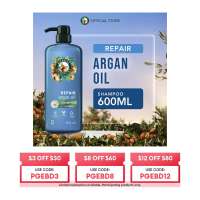
Herbal Essences Argan Oil Repair Shampoo
$13.01$15.30
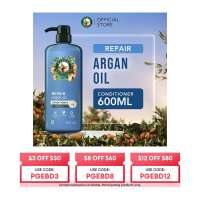
Herbal Essences Argan Oil Repair Conditioner
$13.01$15.30
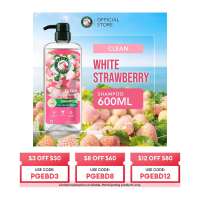
Herbal Essences White Strawberry & Mint Clean Shampoo
$13.01$15.30
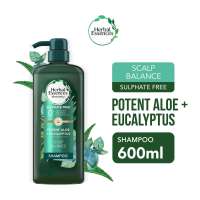
Herbal Essences Potent Aloe Plus Eucalyptus Shampoo 600ML
$19.50$24.37
Herbal Essences Deep Hydate Coconut Milk Shampoo
$13.01$15.30
Herbal Essences Deep Hydrate Coconut Milk Conditioner
$13.01$15.30
Herbal Essences White Strawberry & Mint Clean Conditioner
$13.01$15.30
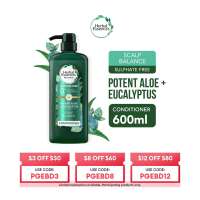
Herbal Essences Conditioner Scalp Balance Potent Aloe + Eucalyptus 600ml
$19.50$24.37
About Herbal Essences
Overview
Herbal Essences is an American hair-care brand recognised primarily for its shampoos, conditioners, treatments, mists and styling products. The brand is closely associated with botanical ingredients, nature-inspired fragrances, colourful packaging and an emphasis on the sensory aspects of hair care. It is currently owned by The Procter & Gamble Company (P&G), which lists Herbal Essences among its global hair-care brands.
| Category | Information |
|---|---|
| Brand name | Herbal Essences |
| Industry | Beauty & personal care |
| Product category | Hair care |
| Founded / introduced | 1971 |
| Original company | Clairol |
| Current owner | Procter & Gamble (P&G) |
| Main products | Shampoo, conditioner, hair treatments, hair mists, styling products |
| Brand positioning | Nature-inspired, botanical, sensory hair care |
| Key identity | Plants, botanical ingredients, fragrances, self-care |
| Major modern platform | bio:renew |
| Notable partner | Royal Botanic Gardens, Kew |
| Current market | International / sold in numerous markets |
The origins of the brand date to 1971, when Clairol introduced Clairol Herbal Essence Shampoo. However, the contemporary Herbal Essences identity was largely established through a significant relaunch in the 1990s.2
History
1971: The original Herbal Essence
Herbal Essences traces its beginnings to 1971, when Clairol launched a shampoo named Clairol Herbal Essence Shampoo. The original product was strongly linked to nature, featuring transparent packaging, green-coloured liquid and imagery intended to evoke a botanical atmosphere.2
During the 1970s, the product gained prominence as consumer interest in natural lifestyles and botanical goods increased. Historical accounts describe the original formulation as a highly fragranced green shampoo associated with herbs and wildflowers.
Despite this early success, the product subsequently lost market share. By the early 1990s, the brand had become far less significant within the wider US shampoo market.
1994: The major relaunch
A pivotal moment occurred in 1994 when Clairol relaunched Herbal Essences as a comprehensive hair-care range rather than a single shampoo product.
The new line initially comprised four shampoos and four conditioners. Rather than focusing advertising solely on functional claims such as shine or softness, Clairol positioned Herbal Essences around the experience of using the product, particularly fragrance, nature and the ritual of washing hair.3
The associated “Totally Organic” marketing campaign became one of the most defining moments in the brand’s history. Marketing research indicates that this campaign helped Herbal Essences substantially increase its market share between 1994 and 1999.
The range was later expanded beyond shampoo and conditioner to include styling gels, mousses, sprays and other personal-care items. Herbal Essences also grew internationally, entering markets such as the United Kingdom in 1997.4
2001: Acquisition by Procter & Gamble
In 2001, ownership of Herbal Essences transferred from Clairol to Procter & Gamble. P&G subsequently developed the brand as part of its global hair-care portfolio alongside labels such as Pantene and Head & Shoulders.5
P&G remains the brand’s owner today, identifying Herbal Essences as a key hair-care brand within its corporate portfolio.6
Brand identity
A defining characteristic of Herbal Essences is its connection between hair care and nature. Rather than presenting shampoo purely as a functional cleanser, the brand has historically sought to make hair washing a sensory and emotional experience. Fragrance, botanical imagery, vibrant packaging and plant-based narratives are therefore central to its identity.
Herbal Essences describes its philosophy as involving ingredients with intent, nature-inspired colours, and fragrances and formulas designed to be as clean as possible while maintaining performance.7
In modern communications, the brand frames its approach as hair care capable of transforming both hair and mood, linking maintenance routines with self-care.8
Products
Herbal Essences has evolved considerably beyond its original shampoo offering. Its current portfolio includes:
- Shampoos
- Conditioners
- Hair masks and treatments
- Hair oils and mists
- Curl-care products
- Scalp-care products
- Styling products
- Hair sprays and mousses
The specific product assortment varies by country. Modern collections are typically organised around particular hair needs or ingredients. For example, Herbal Essences markets products featuring argan oil, aloe, coconut, avocado, honey, jojoba, eucalyptus, lavender, mango, green tea, passion flower, rose, tea tree and chamomile, among other botanicals.4
bio:renew
One of the most significant modern developments for Herbal Essences is the bio:renew platform. This range emphasises botanical ingredients combined with contemporary formulation science. The brand states that bio:renew shampoos and conditioners use botanical ingredients sourced from real plants, with selected botanicals identified and authenticated by experts at the Royal Botanic Gardens, Kew.9
Ingredients used across the platform include:
- Aloe vera
- Argan oil
- Coconut
- Avocado
- Jojoba oil
- Eucalyptus
- Lavender
- Green tea
- Chamomile
- Tea tree
- Mango
Crucially, the modern positioning of Herbal Essences extends beyond simple “natural shampoo” claims. The brand combines botanical storytelling with scientific ingredient identification and formulation, with its partnership with Kew serving as a cornerstone of this approach.10
Ingredients and formulation
Ingredient transparency has become an increasingly important aspect of the Herbal Essences identity. The company states that its formulas contain plant-derived cleansing agents, plant-derived antioxidants, pH-balancing ingredients, purified water and other components necessary for texture, fragrance and stability.5
The brand also offers various formulas free from specific ingredients depending on the product. Current materials identify options that are paraben-free, gluten-free and sulfate-free, whilst other products may exclude silicones, mineral oil or colourants.6
It is important to note that not every Herbal Essences product shares the same formulation. Claims regarding sulfate-free or silicone-free status should therefore be verified against the specific product rather than assumed for the entire brand.
Royal Botanic Gardens, Kew partnership
A distinctive feature of the modern brand is its partnership with the Royal Botanic Gardens, Kew, a leading botanical research institution in the United Kingdom. Herbal Essences states that Kew scientists assist in identifying and authenticating the botanical ingredients used in its products. This collaboration aims to connect the plants depicted and described in marketing materials with genuine botanical sources, rather than treating plant imagery merely as a thematic device.9
This partnership helps differentiate the brand’s modern botanical positioning from generic herbal marketing claims.
Marketing
Marketing has historically been one of the greatest strengths of Herbal Essences. The brand became particularly renowned for making shampoo advertising sensual, playful and experiential, rather than presenting hair care as a purely technical activity. Its 1990s campaigns utilised the concept of a pleasurable, almost theatrical interaction with nature and fragrance.
The “Totally Organic” campaign was especially influential, with historical marketing sources citing it as a major factor in the brand’s revival during the 1990s.11
The overall marketing formula can be summarised as:
Nature + fragrance + sensory pleasure + attractive packaging + accessible hair care
This combination enabled Herbal Essences to occupy a distinctive position within the mass-market shampoo category.
Packaging
Packaging forms a significant part of the brand’s visual identity. Herbal Essences has traditionally employed:
- Bright, botanical colours
- Transparent or colourful bottles
- Imagery of flowers, fruit and plants
- Large, recognisable product names
- Strong fragrance cues
- Distinct colours to differentiate product collections
More recently, the brand has incorporated inclusive packaging design. In 2019, Herbal Essences introduced tactile markings on its bottles to assist people with visual impairments in distinguishing between shampoo and conditioner. Raised stripes indicate shampoo, whilst raised dots indicate conditioner.8
P&G has described Herbal Essences as an early example of integrating accessibility features into everyday beauty packaging.
Cruelty-free positioning
Herbal Essences currently identifies as a PETA-certified cruelty-free brand. The company states that neither its products nor ingredients are tested on animals, and that it employs non-animal testing alternatives.12
P&G’s animal welfare materials also list Herbal Essences among its brands holding a cruelty-free credential, noting that the brand received PETA certification in 2019.13
Sustainability
Environmental considerations have become another component of the brand’s identity. Herbal Essences states it is working to reduce its impact on landfills and water supplies, whilst supporting reforestation and biodiversity initiatives.15
The brand has also advanced packaging sustainability. P&G reports that Herbal Essences became the first P&G brand to utilise Eastman Renew molecular-recycled plastic in its packaging, coinciding with the introduction of tactile accessibility features.12
Additionally, the brand has promoted projects relating to the protection and replanting of plant species and biodiversity.15
Brand positioning
Herbal Essences is broadly positioned between mass-market hair care and nature-oriented beauty. Its competitive identity is built upon several core concepts:
Botanical beauty
Plants and botanical ingredients remain central to the brand’s storytelling.
Sensory experience
Fragrance, colour, texture and the shower experience are emphasised alongside hair performance.
Accessibility
The brand has incorporated tactile packaging to make products easier to distinguish for people with low or no vision.8
Ingredient transparency
Modern communications provide detailed explanations regarding ingredient selection and purpose.5
Sustainability
Packaging, biodiversity and environmental initiatives increasingly form part of the brand narrative.15
Target consumers
Historically, Herbal Essences held particular appeal among younger female consumers, especially those interested in affordable beauty products with distinctive fragrances and nature-inspired branding.
Its modern positioning is broader. Products are now organised around different hair types, textures and needs, including moisture, curls, scalp care, damage repair and strengthening. The brand thus attempts to combine lifestyle appeal with specific hair-care benefits.14
Global presence
Herbal Essences is an international brand rather than a purely American product. Following its expansion into the UK and other markets during the 1990s, it became part of P&G’s international hair-care portfolio.4
The brand is currently represented in P&G’s portfolios in markets including the United States, India, Japan and Australia/New Zealand, although individual products and formulations may differ between countries.17
Current brand direction
As of 2026, Herbal Essences continues to operate as a P&G hair-care brand. Recent communications show the brand continuing to emphasise botanical ingredients, fragrance, self-care and hair-specific benefits, whilst introducing new collections and collaborations.1
For example, in 2026 the brand introduced its Papaya + Citrus Strength Collection, featuring shampoo and conditioner positioned around strengthening and shine. This demonstrates how Herbal Essences continues to combine its traditional fruit-and-botanical identity with specific hair-performance claims.1
Significance of the brand
Herbal Essences is notable because its success was not based solely on the functional promise of shampoo. It helped popularise a style of mass-market beauty marketing in which using the product itself became part of the emotional experience.
Its evolution can be broadly divided into four stages:
- 1971–early 1990s: Original botanical-themed shampoo
- 1994–2000: Major relaunch and Totally Organic marketing era
- 2001 onward: Development under Procter & Gamble
- Modern era: Botanical science, bio:renew, ingredient transparency, sustainability and inclusive design
In this sense, Herbal Essences has evolved from a single nature-themed shampoo into a global hair-care brand whose identity combines botanical ingredients, fragrance, sensory pleasure, scientific ingredient authentication and modern consumer values.16
References
- Herbal Essences and Amaya “Papaya” Launch Papaya + Citrus Strength Collection
- Herbal Essences
- The Herbal Essences Story | Herbal Essences
- Our Ingredients | Herbal Essences
- What’s In Your Bottle And Why | Herbal Essences
- Sulfate & Paraben-Free Shampoo & Conditioner | Herbal Essences
- Creating Safe Shampoos and Conditioners | Herbal Essences
- Making beauty more inclusive | Herbal Essences US
- About Us | Herbal Essences
- About Us | Herbal Essences
- Herbal Essences Logo, symbol, meaning, history, PNG, brand
- How This 1971 Shampoo Brand Is Finally Living Up to Its Natural Image – Organic Authority
- The History Behind the Most Iconic Herbal Essences Scents
- How Herbal Essences’ ’90s Shampoo Scents Became Iconic
- Sustainability in Hair Care | Herbal Essences
- Bliptext · Edit a Word Every 30s
- Discover Herbal Essences’ nature-inspired formulas