Shop on Lazada
Hermes products
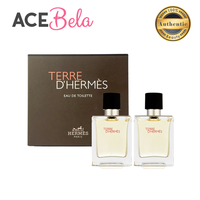
Hermes Terre DHermes EDT (50ml x 2) (100% Authentic from Acebela)
$116.11$230.00
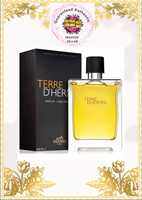
Hermes Terre D’Hermes Pure Perfume (Parfum) 200ml for Men (Retail Packaging) - BNIB Perfume/Fragrance
$218.40
Buy on Lazada
Hermes Terre edt sp 100ml TESTER Packaging
$113.00$212.00
![Hermes Terre DHermes Pure Parfum Spray 75ml [TESTER packaging] - Eclat Parfum](https://sg-live.slatic.net/p/5/hermes-terre-edp-sp-75ml-tester-pack-0636-44828148-40963a610838700746f0f7ccdc918258-catalog.jpg_200x200q80.jpg)
Hermes Terre DHermes Pure Parfum Spray 75ml [TESTER packaging] - Eclat Parfum
$122.00$246.00
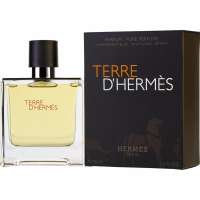
Hermes Terre DHermes Parfum sp 75ml
$135.00$255.00
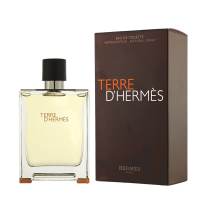
Hermes Terre DHermes Eau De Toilette SP 100ml
$123.00$212.00
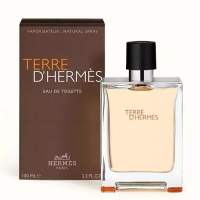
Hermes Terre dHermès Eau De Toilette 100ml
$34.55$130.00
![Hermes Terre DHermes EDT Gift Set (30ML Travel Spray + 125ML Refill) For Men [Perfume / Fragrance] (100% Authentic from Acebela)](https://filebroker-cdn.lazada.sg/kf/Sf7d4dec03acc46d8aab813ef3d3b1e59e.png_200x200q80.jpg)
Hermes Terre DHermes EDT Gift Set (30ML Travel Spray + 125ML Refill) For Men [Perfume / Fragrance] (100% Authentic from Acebela)
$106.27$301.00
About Hermes
Overview
Hermes, officially Hermès International S.A., is a French luxury goods manufacturer and one of the world’s most prestigious maisons. Established in Paris in 1837 by Thierry Hermès, the company originally operated as a workshop specialising in horse harnesses and saddlery. Nearly two centuries later, Hermes has expanded its portfolio to include handbags, silk, clothing, shoes, jewellery, watches, perfumes, beauty products, furniture, tableware and other lifestyle items, whilst retaining craftsmanship and its equestrian origins as central elements of its identity.1
Unlike many large luxury conglomerates, Hermes remains an independent, family-backed company. Its business philosophy is anchored in three core concepts: creation, craftsmanship and an exclusive distribution network. As of 2025, the group operated 16 métiers, employed 26,494 staff, maintained 63 production and training sites in France, and ran 294 stores worldwide.2
Basic information
| Hermes | |
|---|---|
| Full name | Hermès International S.A. |
| Common name | Hermes |
| Founded | 1837 |
| Founder | Thierry Hermès |
| Headquarters | Paris, France |
| Industry | Luxury goods / fashion |
| Original business | Harnesses and saddlery |
| Main products | Leather goods, silk, fashion, jewellery, watches, perfumes, beauty, home goods |
| Number of métiers | 16 |
| CEO / Executive Chairman | Axel Dumas |
| Artistic Director | Pierre-Alexis Dumas |
| Employees | 26,494 at end-2025 |
| Stores | 294 worldwide at end-2025 |
| 2025 revenue | €16.002 billion |
| 2025 recurring operating income | €6.569 billion |
| 2025 net profit, Group share | €4.524 billion |
The financial figures above are derived from the latest published full-year results; first-half 2026 results subsequently reported revenue of €8.163 billion and 27,107 employees.3
Origins: 1837
Hermes began with Thierry Hermès, a harness maker who opened his workshop in Paris in 1837. His original speciality was not fashion but high-quality equipment for horses, particularly harnesses and saddlery.
This origin is fundamental to understanding the modern Hermes brand. The company’s focus on leather, precision, durability and functional design stems directly from the requirements of equestrian craftsmanship. Thierry Hermès’s products combined delicacy with strength, and his work received recognition at the 1867 Universal Exhibition in Paris.4
Hermes did not start as a fashion brand; it began as an artisan workshop. This distinction continues to influence the company today.
The move to 24 Faubourg Saint-Honoré
In 1880, Thierry’s son Charles-Émile Hermès relocated the business to 24 rue du Faubourg Saint-Honoré in Paris. This address eventually became one of the most famous locations in luxury fashion.
The new premises allowed Hermes to sell and produce custom-made harnesses and saddles, whilst its reputation spread among wealthy European customers.5 Even today, 24 Faubourg Saint-Honoré functions as a physical symbol of the house itself.
From horses to modern transportation
During the early 20th century, the automobile began replacing the horse as the primary form of transportation, creating a potentially existential challenge for a company whose core business was equestrian equipment. Rather than abandoning its craftsmanship, Hermes adapted it.
Under Émile Hermès, the company shifted towards travel goods, bags and leather accessories. A significant development occurred in 1922, when Émile Hermès obtained exclusive rights to an American fastening system that became the zipper. Hermes subsequently incorporated this technology into its luggage and leather goods.6
This period established a defining characteristic of Hermes: tradition combined with adaptation. The company preserved its craftsmanship whilst evolving its product offering to suit changing lifestyles.
Robert Dumas and the birth of modern Hermes
A major turning point arrived with Robert Dumas, Émile Hermès’s son-in-law, who became head of the company in 1951. Dumas was responsible for several seminal Hermes creations, including:
- The silk scarf
- The Kelly bag
- The Chaîne d’Ancre bracelet
- Significant developments in leather goods
The Chaîne d’Ancre bracelet, for example, was inspired by the shape of a ship’s anchor chain.7 This illustrates a recurring Hermes design principle: ordinary functional objects can serve as sources of luxury design.
The Kelly bag
The Kelly is one of the two most renowned Hermes handbags. Its origins predate its name; Robert Dumas designed the trapezoidal handbag in the 1930s.
The bag achieved international fame in the 1950s due to Grace Kelly, the Hollywood actress who became Princess of Monaco. A famous photograph depicted Grace Kelly carrying the bag, and the association between the princess and the handbag became so powerful that Hermes officially named it the Kelly.8
Consequently, the Kelly represents a convergence of Hermes, Parisian craftsmanship, royal glamour and timeless design.
The Birkin bag
If the Kelly represents one facet of Hermes, the Birkin represents the other. The Birkin was created in 1984 following a chance encounter between Jean-Louis Dumas, then head of Hermes, and British actress and singer Jane Birkin on a flight between Paris and London.
According to the company’s history, the two discussed the difficulty of finding an ideal large yet elegant everyday bag. Dumas subsequently sketched a design for her.9 The resulting handbag became the Birkin.
Its appeal derives from a combination of exceptional leather craftsmanship, relatively limited availability, extensive handwork, distinctive construction, strong historical associations, cultural prestige and long-term desirability. The Birkin has consequently become one of the most recognisable symbols of luxury globally.
Product range and métiers
Although Hermes is particularly famous for handbags, the company’s scope is far broader. Its 16 métiers include:10
- Leather goods and equestrian
- Women’s silk
- Men’s silk
- Women’s ready-to-wear
- Men’s ready-to-wear
- Shoes
- Belts
- Hats
- Gloves
- Jewellery
- Watchmaking
- Perfumes
- Beauty
- Furniture and art de vivre
- Tableware
- petit h
Hermes is therefore best understood as a luxury house of craftsmanship rather than simply a handbag manufacturer.
The Hermes silk scarf
The Hermes silk carré is another fundamental element of the brand. Introduced in the 1930s, the carré eventually became one of the company’s signature products.
Hermes scarves are noted for intricate illustrations, elaborate colour combinations, silk twill, equestrian references, historical and cultural imagery, and collectible designs. The company treats the scarf almost as a portable piece of art.
This product demonstrates a key difference between Hermes and conventional fashion brands: Hermes often approaches its products through craft, illustration and object design, rather than solely through seasonal fashion trends.
Equestrian heritage
Even after expanding into fashion and lifestyle products, Hermes has never abandoned its original equestrian identity. The company continues to manufacture saddles, bridles, riding accessories, equestrian clothing and horse-related leather goods.
Horses, harnesses, chains and riding motifs appear repeatedly in the visual language of Hermes. The original business is not merely historical decoration; it remains an active part of the company.
Visual identity
Orange packaging
One of the most recognisable visual characteristics of Hermes is its orange packaging. The orange boxes and bags are now strongly associated with the brand.
The colour became prominent due to wartime shortages: traditional cream-coloured packaging materials became difficult to obtain, and orange packaging was adopted instead. Over time, what began as a practical solution evolved into an iconic part of the brand identity. Today, the orange box immediately evokes Hermes even without visible branding.
Logo
The Hermes logo depicts a horse-drawn carriage with a groom standing beside it. This image reflects the company’s origins as a harness maker.
Significantly, the logo does not primarily communicate handbags, clothing or cosmetics. Instead, it communicates heritage, horses, craftsmanship and service, acting as a historical signature.
Competitive positioning
Hermes occupies a distinct position within the luxury industry. Its competitive philosophy relies less on rapid fashion turnover and more on specific pillars:
Craftsmanship
Many Hermes products require substantial manual work by highly trained artisans.
Longevity
The company explicitly describes its products as objects designed to last, acquire patina and potentially be passed from one generation to another.11
Scarcity
Some of its most desirable products are difficult to obtain, which contributes to their exclusivity.
Controlled distribution
Hermes maintains a predominantly directly operated retail network. More than 92% of its revenue comes through its own distribution network.12
Independence
Unlike brands such as Louis Vuitton and Dior, which belong to LVMH, Hermes remains an independent family-backed company.13
Family leadership
The company’s history has been shaped by six generations of leadership. After Thierry Hermès, management passed through his descendants and family connections, including:
- Thierry Hermès
- Charles-Émile Hermès
- Émile Hermès
- Robert Dumas
- Jean-Louis Dumas
- Axel Dumas
Axel Dumas, a member of the sixth generation, has led the company since 2013.14 This family continuity is one of the most significant differentiators between Hermes and many other global luxury companies.
Globalisation under Jean-Louis Dumas
Jean-Louis Dumas, who led Hermes from 1978 to 2006, played a pivotal role in transforming the company into a global luxury house. Under his leadership, Hermes expanded beyond traditional leather goods into ready-to-wear, watches, shoes, jewellery, fragrances and home products.
He also helped maintain the company’s emphasis on creativity rather than allowing it to become solely a traditional leather-goods manufacturer. The company’s history describes this period as one in which the house diversified and expanded internationally.15
Current operations
As of 2026, Hermes is a global luxury company with a significant international presence whilst maintaining a strong French manufacturing base. At the end of 2025, it recorded:
- €16.002 billion in annual revenue
- €6.569 billion in recurring operating income
- €4.524 billion in net profit attributable to the group
- 26,494 employees
- 294 stores worldwide16
The company’s production model remains unusually concentrated in France. Hermes states that 75% of its objects were made in France in 2025, while all leather goods were produced domestically.17 In 2025, the company opened its 24th leather-goods workshop in France at L’Isle-d’Espagnac.18
Business philosophy
The Hermes philosophy can be summarised as making fewer things, making them exceptionally well, and making them last. The company describes its strategy around three pillars: Creation → Craftsmanship → Distribution.
Its stated values include freedom of creation, exceptional craftsmanship, authenticity, quality, innovation, responsible growth and transmission of savoir-faire. Hermes also organises its creative universe around an annual theme. For 2026, the house’s theme is “L’appel du large” (“Call of the Open Sea”), which provides inspiration across its different métiers.19
Sustainability and durability
The sustainability philosophy of Hermes is closely connected to durability. Rather than positioning sustainability primarily around disposable “eco-fashion”, Hermes emphasises durable products, repair, responsible materials, traceability, transmission of craftsmanship, long product lifetimes and local manufacturing.
Its integrated production model affords greater control over materials and manufacturing. Hermes reports that 55% of production was carried out in internal and exclusive workshops in 2025.
Distinction from fashion
Hermes does not define itself simply through fashion. While traditional fashion emphasises newness, seasonality, trends and replacement, Hermes emphasises craft, function, quality, longevity and heritage.
This does not mean Hermes ignores fashion; it produces ready-to-wear collections and participates in the fashion calendar. However, the brand’s identity is broader. A Hermes scarf from decades ago can remain culturally relevant, and a Kelly or Birkin from an earlier period still appears unmistakably Hermes today. Consequently, the house is often described as a luxury maison rather than simply a fashion label.
Cultural status
Hermes has become a symbol of extreme luxury, but its cultural significance extends beyond price. The brand represents several concurrent ideas:
- French craftsmanship: Its identity is deeply associated with Paris and French artisanal traditions.
- Exclusivity: Certain products are difficult to obtain, reinforcing the perception of scarcity.
- Quiet luxury: Many products are recognisable primarily through materials, construction and subtle design rather than prominent logos.
- Heritage: The company traces its identity directly back to a 19th-century artisan workshop.
- Investment and collectability: Certain handbags, scarves, jewellery and watches have developed strong collector communities.
- Status: The Birkin and Kelly in particular have become cultural shorthand for extraordinary wealth and luxury.
Comparison: Kelly vs Birkin
| Kelly | Birkin | |
|---|---|---|
| Original design | 1930s | 1984 |
| Associated person | Grace Kelly | Jane Birkin |
| General character | Structured, elegant, formal | Spacious, relaxed, versatile |
| Main image | Royal / sophisticated | Celebrity / effortless luxury |
| Historical significance | One of Hermes’s foundational handbags | Modern icon of Hermes |
Both bags embody the brand’s larger philosophy: a functional object transformed into an enduring luxury icon.
Savoir-faire
Perhaps the single most important concept associated with Hermes is savoir-faire—the accumulated knowledge and skill required to make something exceptionally well. This encompasses not only sewing leather but also selecting materials, cutting, stitching, polishing, metalworking, silk printing, watchmaking, jewellery making, shoemaking, saddle making, perfume creation and furniture making.
Hermes therefore operates more like a network of specialised crafts than a single conventional fashion production line.
Artistic direction
Hermes maintains a broad creative structure rather than relying on one celebrity designer to define the entire brand. Pierre-Alexis Dumas serves as the house’s artistic director, while different creative directors oversee individual métiers such as women’s ready-to-wear, men’s ready-to-wear, silk, shoes, jewellery, watches, perfume and home.20
This decentralised creative structure enables Hermes to simultaneously produce diverse items—from handbags and scarves to watches, perfumes, furniture and riding saddles—whilst ensuring they feel like parts of the same universe.
References
- Six générations d’artisan | Hermès France
- Hermès, artisan contemporain depuis 1837 | Hermès France
- Rapport d’activite 2025 Activity report 2025 L
- Strategy | Hermès Finance
- Key figures | Hermès Finance
- Sac Kelly | Hermès France
- Six generations of artisans | Hermès USA
- La liberté de création | Hermès France
- Stratégie | Hermès Finance
- Un développement responsable et durable | Hermès France
- Hermès financial information | Hermès Finance
- Hermès Informations Financières | Hermès Finance
- Share and dividend | Hermès Finance
- HERMES | HERMES INTERNATIONAL
- | HERMES Hermes_URD_2025 2025 | HERMES INTERNATIONAL
- Group management – Hermès Finance | Hermès Finance
- Welcome | HERMES URD 2024 | HERMES INTERNATIONAL
- Your Guide to the Top 10 Hermès Bags | Handbags & Fashion | Sotheby’s
- DISCOVER HERMÈS TOPANGA | Hermès USA
- Histoire & Héritage – Hermes Créations