Shop on Lazada
JINRO products
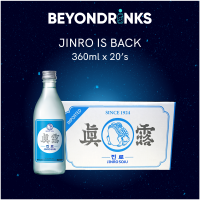
Jinro is Back Korean Soju | 360ml x 20s Authentic Korean Source
$175.00$221.00
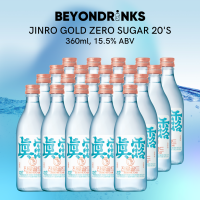
JINRO GOLD Zero Sugar Soju 360ml x 20 Bottles | 15.5% ABV | Premium Korean Soju Carton
$178.89$221.00
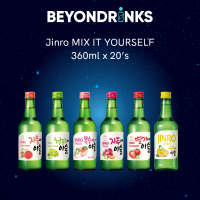
Jinro Flavoured Fruit Soju | 360ml x 1s | PICK AND CHOOSE | Minimum 20 Bottles | Green Grape Peach Lemon Strawberry Plum Grapefruit | JINRO ONLY #1 Soju in KOREA!
$7.22$10.90
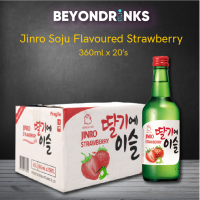
Jinro Flavoured Soju | Strawberry | 360ml x 20s (Authentic Korean Soju Ready stocked in Singapore)
$146.68$190.00
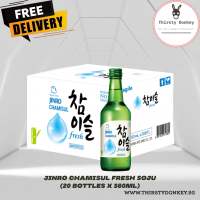
Jinro Chamisul Fresh Soju (Bundle of 20)
$204.90$205.00
Jinro Chamisul Soju Fresh
$12.50$16.04
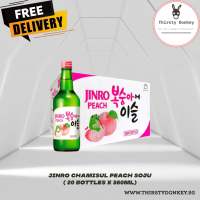
Jinro Chamisul Peach Soju (Bundle of 20)
$156.90$157.00
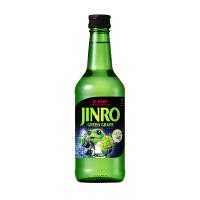
Jinro Green Grape 360ML Bottle Soju - Packaging May Vary
$16.04
Buy on LazadaAbout JINRO
JINRO (Korean: 진로; Chinese: 眞露) is a South Korean alcoholic beverage brand best known for soju, a clear distilled spirit that occupies a central place in Korean drinking culture. Owned and produced by HiteJinro Co., Ltd., one of South Korea’s largest beverage companies, JINRO traces its origins to 1924, making it among the country’s oldest surviving soju brands.1 The brand is widely recognised for its traditional green bottle, distinctive toad mascot, and product lines including JINRO Original, JINRO Fresh, and Chamisul. Driven by the global popularity of K-dramas, K-pop, Korean cuisine, and the broader Korean Wave, JINRO has also become an international symbol of Korean food and social culture.
Quick facts
| JINRO | |
|---|---|
| Korean name | 진로 / 眞露 |
| Founded | 1924 |
| Country of origin | Korea |
| Industry | Alcoholic beverages / spirits |
| Best known for | Soju |
| Parent company | HiteJinro Co., Ltd. |
| Flagship products | JINRO, JINRO Fresh, Chamisul |
| Signature visual | Green bottle + toad mascot |
| Major international markets | Asia, North America, Europe and other global markets |
| 100th anniversary | 2024 |
| Global position | Marketed as the world’s No. 1 best-selling spirit brand by volume |
HiteJinro reports that JINRO sold 100 million cases of soju worldwide in 2022, and describes the brand as the world’s number-one spirit by volume.2
Brand architecture
It is useful to distinguish between three related but distinct entities:
JINRO
JINRO is the heritage brand, with roots dating to 1924.
HiteJinro
HiteJinro is the modern beverage company that owns and produces JINRO. It also manufactures beer and other alcoholic beverages.
Chamisul
Chamisul (참이슬) is one of HiteJinro’s most significant soju product lines. Launched in 1998, it has become one of the most recognisable modern Korean soju brands.3 While JINRO represents the overarching brand family and corporate heritage, Chamisul functions as a specific flagship soju within the HiteJinro portfolio.
History
1924: Foundation
JINRO was established in 1924 in Yonggang, an area now located in North Korea.4 The name JINRO (眞露) derives from Chinese characters meaning “true” (眞) and “dew” (露), evoking the clear droplets formed during distillation and suggesting purity and freshness.5
1950s: War and relocation
The Korean War profoundly affected the company. JINRO relocated to Busan in 1951 and subsequently moved to Seoul in 1954. During this period, the brand adopted the toad as its mascot, replacing earlier monkey imagery.6 The toad later became one of the most recognisable symbols associated with Korean soju.
1968: International expansion
JINRO began exporting in 1968, with Vietnam among its first overseas markets.7 This marked the beginning of its transformation from a domestic spirit into an international brand.
1970: Korea’s leading soju
By 1970, JINRO had become South Korea’s top-selling soju brand, cementing its association with the country’s emerging modern drinking culture.8
1979: Entry into Japan
JINRO entered the Japanese market in 1979 after a three-year development period tailored specifically to Japanese drinking and dining customs. Sales commenced in August 1979, and Japan subsequently became one of the brand’s most important overseas markets.9
The green bottle
The small green bottle is arguably the single most defining visual element of Korean soju internationally. JINRO transitioned to green packaging in 1994, intending the colour to convey a clean and mild character. The design proved highly influential, prompting other soju producers to adopt similar bottles.10 Today, the 360 ml green bottle serves as a visual shorthand for Korean dining and social culture, and soju is sometimes referred to internationally simply as the “green bottle.”
Chamisul and modern soju
The launch of Chamisul in 1998 was a pivotal moment in modern JINRO history. Filtered using bamboo charcoal, Chamisul helped redefine the contemporary soju category.11 Its name, meaning “true dew”, aligns with JINRO’s naming tradition and reinforces notions of purity. Chamisul has since become virtually synonymous with Korean soju both domestically and abroad.
Global sales and market position
JINRO’s most notable achievement is its sales volume. According to Drinks International rankings, it became the world’s best-selling spirit brand in 2000 and has maintained that position.12 HiteJinro’s reported figure of 100 million cases sold globally in 2022 places JINRO at the top of the global spirits category by volume.13 Unlike premium Western spirits such as whisky or cognac, JINRO achieved this dominance through accessible, relatively low-ABV soju rather than high price points.
Factors behind JINRO’s success
Compatibility with Korean cuisine
Soju is traditionally consumed alongside food rather than as a standalone spirit. It pairs naturally with Korean barbecue, fried chicken, seafood, spicy stews, hotpot, noodles, and street food, embedding it deeply in restaurant and social culture.
Affordability and accessibility
Unlike premium spirits positioned around luxury or craftsmanship, soju developed as an affordable, widely available beverage suited to group consumption. This fostered enormous domestic demand and strong brand familiarity.
Social drinking culture
Korean drinking culture emphasises sharing and communal rituals. Soju is frequently consumed during dinners, company gatherings, celebrations, reunions, university events, and casual nights out, associating the product with social connection rather than mere alcohol consumption.
Distinctive packaging
The green bottle, curved label, Korean script, and toad mascot provide extraordinary visual recognition, even among consumers unable to read Korean.
Influence of K-culture
The global rise of Korean entertainment has provided soju with a powerful cultural distribution channel. JINRO and Chamisul appear regularly in films, dramas, and variety shows. Collaborations with major cultural properties have further strengthened these associations; for example, HiteJinro partnered with Netflix’s Squid Game on Chamisul merchandise.14 Consequently, many international consumers encounter JINRO through K-dramas and Korean restaurants before engaging with traditional advertising.
The JINRO toad
Adopted in 1954, the toad replaced an earlier monkey logo and was chosen partly for its positive cultural associations with fortune, prosperity, and longevity.15 Over time, it evolved from a corporate emblem into a lifestyle character featured in merchandise, limited-edition bottles, collaborations, social media campaigns, and pop-culture activations. This reflects a strategic shift: JINRO is no longer marketed solely as an alcohol brand but also as a cultural icon.
Product portfolio
JINRO’s range has expanded well beyond traditional plain soju.
JINRO Original
Represents the classic JINRO style and historical identity, with a stronger, more traditional spirit profile than lighter contemporary variants.
JINRO Fresh
Designed for a smoother, more approachable experience. Historically, JINRO soju was approximately 35% ABV, but modern versions are substantially lower in response to changing consumer preferences.
Chamisul
Launched in 1998 and filtered with bamboo charcoal, Chamisul remains the most culturally significant modern JINRO-associated soju.16
Fruit-flavoured soju
JINRO has introduced flavoured varieties including grapefruit, green grape, plum, strawberry, peach, and lemon. Availability varies by market and changes over time.17 These products lower the barrier to entry for consumers unfamiliar with traditional soju.
Taste profile
Traditional soju is typically clean, neutral, and mildly sweet, lacking the intense aromatics of many whiskies, rums, or gins. Modern expressions vary:
- JINRO / Fresh: Clean, mild, slightly sweet, relatively neutral, easy-drinking.
- Chamisul: Clean, smooth, light-bodied, subtly sweet.
- Fruit JINRO: Noticeably sweeter, fruity aroma, less spirit-forward, designed for approachability.
This versatility has made flavoured soju an effective introduction for international consumers.
Traditional consumption practices
Chilled and neat
Soju is generally served cold in small shot glasses. The typical social ritual involves opening a bottle, pouring for others, toasting, drinking, eating, and repeating, with emphasis placed on camaraderie rather than connoisseurship.
Pairing with Korean food
A bottle of soju alongside Korean barbecue is perhaps the most archetypal image of Korean dining culture.
Somaek
Somaek, a portmanteau of soju and maekju (beer), combines soju and beer in a single glass. It became especially popular in Korean workplace and social drinking culture.
Cultural significance
For many Koreans, soju embodies friendship, food, work, celebration, stress relief, and social bonding. JINRO has consequently become part of Korea’s visual vocabulary, appearing in restaurants, convenience stores, supermarkets, dramas, films, variety shows, and social media content. The brand effectively functions as an exportable symbol of Korean identity.
The Korean Wave and international growth
JINRO’s global popularity is inseparable from Hallyu, or the Korean Wave. As Korean entertainment gained international mainstream appeal, audiences developed curiosity about everyday Korean life, including dining and drinking rituals depicted on screen. JINRO benefits from being simultaneously a consumer good and a cultural artefact.
Export activities began in 1968, but HiteJinro states that its globalisation strategy accelerated from 2017 under the banner “Globalization of Soju”.18 Today, JINRO products are available in more than 80 countries, with international marketing increasingly emphasising Korean food, K-culture, fruit flavours, younger demographics, retail distribution, social media, collaborations, and limited-edition packaging.
JINRO in Japan
Corporate history: Hite and JINRO
Modern JINRO must be understood through the merger of two major Korean beverage companies: JINRO, historically associated with soju and spirits, and Hite, historically associated with beer. Their combination created HiteJinro, a group covering both pillars of Korean drinking culture. This portfolio synergy is particularly relevant given the popularity of somaek.
Major timeline
| Year | Event |
|---|---|
| 1924 | JINRO founded and brand launched |
| 1951 | Company relocates to Busan during Korean War |
| 1954 | Moves to Seoul; toad becomes major brand symbol |
| 1968 | First overseas exports, including Vietnam |
| 1970 | JINRO becomes Korea’s No. 1 soju |
| 1979 | JINRO launches in Japan |
| 1994 | Green bottle becomes defining visual identity |
| 1998 | Chamisul launched |
| 2000 | JINRO reaches No. 1 position in global spirits by volume |
| 2017 | Stronger “Globalization of Soju” strategy |
| 2023 | HiteJinro receives Supreme Brand Champion recognition |
| 2024 | JINRO celebrates its 100th anniversary |
| 2024–present | Continued global expansion and K-culture marketing |
Brand positioning
JINRO’s positioning differs markedly from Western spirits. Where whisky may emphasise craftsmanship and heritage, vodka purity and nightlife, or tequila authenticity and celebration, JINRO centres on Korea, friendship, food, fun, and everyday social drinking. Its competitive advantage lies not in sophistication but in its association with a holistic cultural experience.
Five pillars define the brand:
- Korean identity: One of the most internationally recognisable Korean alcohol brands.
- Social connection: Strongly associated with communal drinking.
- Food culture: Intrinsically linked to Korean cuisine.
- Mascot recognition: The toad provides distinctive personality.
- Global accessibility: Adapted through flavours, packaging, and marketing for international audiences.
Contemporary developments
As of 2026, JINRO is a century-old brand that balances tradition with contemporary relevance. Having celebrated its 100th anniversary in 2024, it continues to pursue international growth, with HiteJinro emphasising accessibility and expansion beyond traditional Korean consumption occasions.22 Recent initiatives include fruit flavours, character merchandise, limited editions, K-pop aesthetics, entertainment collaborations, social media campaigns, and lifestyle products. Notably, a JINRO Green Grape K-POP Edition began rolling out across 21 countries in 2026, illustrating the brand’s use of Korean pop culture to extend its global identity.23
Summary
JINRO is a South Korean soju brand founded in 1924 and owned by HiteJinro, renowned for its iconic green bottles and toad mascot and recognised as the world’s leading spirit brand by volume, with its identity closely intertwined with Korean food, drinking culture, and the global Korean Wave. Studied as a brand rather than merely a liquor label, JINRO’s strongest assets are soju, the green bottle, the toad mascot, Korean social drinking, food culture, and Hallyu. This combination explains how a product originating as a Korean everyday spirit has become one of the world’s most recognisable alcoholic beverage brands.24
References
- About JINRO Soju & Korean Drinking Culture
- Jinro | The Oxford Companion to Spirits & Cocktails | Spirits & Distilling
- JINRO Toad History |100 Years of the Iconic Soju Mascot
- JINRO 眞露株式会社 | お客様相談室 | よくあるご質問とその答え「商品編」
- JINRO 眞露株式会社 | 企業情報 | 眞露の歩み
- JINRO & the Soju Origin Story: Korea’s True Original Soju
- History of HITEJINRO
- Squid Game Season 2 × Chamisul | Exclusive Netflix Collaboration
- How to Spot Authentic JINRO Soju and Avoid Fake Bottles
- JINRO 眞露株式会社 | 企業情報 | 企業メッセージ
- JINRO’s Toad Just Made Its K-Pop Debut
- Hite Jinro’s ‘JINRO’ named world’s top-selling spirit for 25th straight year
- K-Soju Jinro Tops Global Spirits Sales for 25th Straight Year – Seoul Economic Daily
- JINRO 眞露株式会社
- Jinro soju named world’s best-selling spirit for 24 consecutive years | Yonhap News Agency
- About – Jinro Soju Shop
- 8 Things You Should Know About Jinro Soju | VinePair
- Jinro Soju
- About JINRO Soju & Korean Drinking Culture
- Korea’s No.1 Soju & World’s Top Spirit | JINRO Soju
- JINRO Soju Sales Record: No.1 Korean Spirit for 20 Years
- JINRO Global Vision 2030 | Celebrating 100 Years of Leadership
- 燒酒最先是誰發明的?
- Top 3 Chamisul Brand Goods | Popular JINRO Merchandise