Shop on Lazada
Johnson’s Baby products
Johnsons Baby Active Kids Clean and Fresh Shampoo
$8.11$11.70
Johnsons Baby Soft and Smooth Shampoo 800ml
$10.56$13.10
Johnsons Baby Milk + Rice Bath
$7.43$9.90
Johnsons Baby Milk + Rice Bath Refill 600ml
$5.51$6.30
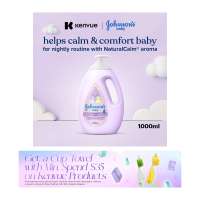
Johnsons Baby Bedtime Bath
$7.43$9.90
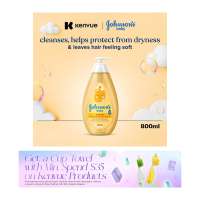
Johnsons Baby Gold Shampoo 800ml
$11.44$13.10
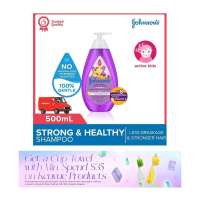
Johnsons Active Kids Strong and Healthy Shampoo 500mL
$9.96$11.70
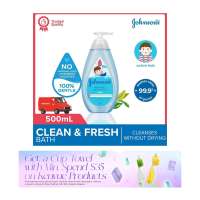
Johnsons Baby Active Kids Clean and Fresh Bath
$7.25
Buy on LazadaAbout Johnson’s Baby
Johnson’s Baby (stylised as JOHNSON’S® Baby) is a global baby-care brand best known for products such as baby shampoo, body wash, lotion, baby oil, powder, wipes and soaps. The brand originated within Johnson & Johnson in the late 19th century and is now owned by Kenvue Inc., following the separation of Johnson & Johnson’s consumer-health business into an independent publicly traded company in 2023.
Johnson’s Baby has built its identity around gentleness, baby skin care, safety, scientific research and parent–child bonding, and remains one of the most recognisable names in the global baby-care market. Its products are sold in numerous countries, with formulas and product ranges varying by market.
Brand overview
| Category | Information |
|---|---|
| Brand name | Johnson’s Baby / JOHNSON’S® Baby |
| Industry | Baby care, personal care, skin care |
| Origin | United States |
| Heritage | Johnson & Johnson |
| Established | 1890s baby-care business |
| Current owner | Kenvue Inc. |
| Parent company historically | Johnson & Johnson |
| Main markets | Global |
| Core consumers | Newborns, babies, children and parents/caregivers |
| Major categories | Bath, shampoo, lotion, oil, powder, wipes, soap, hair care |
| Brand positioning | Gentle, mild, science-backed baby care |
| Major brand association | Baby skin care and the classic baby scent |
Kenvue currently categorises Johnson’s Baby as one of its essential-health brands, alongside other long-established consumer-care brands. Kenvue states that its portfolio reaches approximately 1.2 billion people globally.1
History
Origins: Johnson & Johnson
The history of Johnson’s Baby is closely connected with that of Johnson & Johnson, which was founded in 1886 in New Brunswick, New Jersey, by brothers Robert Wood Johnson, James Wood Johnson and Edward Mead Johnson.
The company initially concentrated on sterile surgical supplies, including sterile cotton, gauze and sutures. Its early development was influenced by the antiseptic-surgery movement and the work of Joseph Lister.2
Johnson & Johnson subsequently expanded beyond medical supplies into consumer products and products related to mothers and children.
1894: Baby powder
A major milestone came in 1894, when Johnson & Johnson introduced JOHNSON’S® Baby Powder. The company states that the product grew out of efforts to address skin irritation associated with medicated plasters and helped establish the company’s baby-care business.15
According to Kenvue’s historical account, scientific director Frederick B. Kilmer played an important role in the development of early baby-care products. His work on a formula intended to help alleviate diaper rash contributed to the emergence of the Johnson’s Baby line.
This forms the foundation for Johnson’s Baby’s claim to more than a century of experience in baby skin care.
Development of the brand
During the 20th century, Johnson’s Baby expanded from essentially a powder-centred business into a much broader personal-care portfolio.
One of its most significant innovations came in 1954, with the introduction of Johnson’s Baby Shampoo featuring the “NO MORE TEARS®” formula. Johnson & Johnson describes it as a mild, soap-free shampoo designed to be gentle enough for babies’ hair and eyes.16
This helped establish a major characteristic of the Johnson’s brand:
Baby care should combine effective cleansing with gentleness.
Over subsequent decades, the brand expanded into:
- Baby shampoos
- Body washes
- Bath products
- Baby lotions
- Baby oils
- Baby powders
- Baby soaps
- Wet wipes
- Hair-care products
- Fragrances/colognes
- Bedtime products
- Sensitive-skin products
- Products for older children
The exact portfolio differs between countries.
From Johnson & Johnson to Kenvue
For most of its modern history, Johnson’s Baby was associated directly with Johnson & Johnson.
However, Johnson & Johnson reorganised its business and separated its consumer-health portfolio. Kenvue became an independent publicly traded company in August 2023, and Johnson’s Baby became part of Kenvue’s portfolio.17
Today, therefore, it is more accurate to describe the corporate structure as:
Johnson’s Baby → Kenvue Inc.
rather than saying that Johnson’s Baby is currently owned by Johnson & Johnson.
Johnson & Johnson itself now focuses on its Innovative Medicine and MedTech businesses rather than consumer products.
Product portfolio
Johnson’s Baby has developed a very broad product ecosystem around the daily routines of babies and young children.
Baby bath
Typical products include:
- Baby bath
- Head-to-toe wash
- Body wash
- Bath wash
- Bedtime bath
- Bar soap
- Specialty washes
For example, the current Malaysian range includes Top-To-Toe™, Cotton Touch™, Milk + Rice, Milk + Oats, Bedtime™ and Peach Bath products.3
Hair care
Johnson’s is particularly famous for its baby shampoo.
Its hair-care range includes:
- Baby shampoo
- Baby wash & shampoo
- Head-to-toe products
- Kids’ shampoos
- Detangling products
- Curl-care products
The classic NO MORE TEARS® concept is one of the most recognisable elements of the brand’s historical identity.4
Skin care
Skin care is arguably the central category of the brand.
Products include:
- Baby lotion
- Moisturisers
- Baby oil
- Sensitive-skin products
- Face and body products
- Massage products
The Malaysian portfolio, for example, currently includes Baby Lotion, Bedtime™ Baby Lotion and Cotton Touch™ Face & Body Lotion, among others.5
Powder and wipes
Johnson’s has historically been strongly associated with baby powder. Modern portfolios also include:
- Baby powder
- Powder-related products
- Baby wipes
- Skincare wipes
The current Malaysian website lists powder and wipes among its major product categories.6
Fragrance
In some markets, including Malaysia, Johnson’s also sells baby colognes and fragranced products.
This reflects the brand’s unusual association with a particular “baby smell” or clean, powdery fragrance profile, which has become an important part of its brand identity.
Brand philosophy
The fundamental Johnson’s Baby proposition is gentleness.
The brand describes itself as dedicated to providing products that are safe, clinically proven, mild and gentle. Its current messaging combines traditional ideas of baby care with scientific research into infant skin and development.7
Its broader philosophy can be summarised as:
Science + Safety + Gentleness + Care + Bonding
Rather than positioning itself purely as a cosmetic brand, Johnson’s attempts to associate its products with everyday parenting rituals.
For example:
Bath → Massage → Moisturising → Hair care → Bedtime
The brand therefore sells not only individual products but also a concept of a baby-care routine.
Brand positioning
Johnson’s Baby occupies a distinctive position in the market.
It is generally positioned between:
Mass-market personal care
and
Specialised baby skin care
Its products are designed to be accessible to ordinary families while maintaining a scientific and clinical image.
The brand’s communication repeatedly emphasises concepts such as:
- Mildness
- Gentle care
- Delicate baby skin
- Dermatological testing
- Clinical research
- Safety
- Newborn care
- Parent–baby bonding
The official Johnson’s website currently describes its products as being designed for delicate skin and highlights safety, quality and science-backed formulation.8
Scientific and safety positioning
Safety is particularly important for a baby-care brand because babies’ skin and bodies are perceived by consumers as more vulnerable than those of adults.
Johnson’s therefore places considerable emphasis on:
- Ingredient evaluation
- Clinical testing
- Dermatological testing
- Mildness
- Hypoallergenic formulations for selected products
- pH-balanced products
- Newborn suitability for selected products
- Product-quality standards
Its current global website describes selected classic products as clinically proven safe and gentle for use from day one.9
However, it is important to distinguish brand claims from universal medical conclusions. “Gentle,” “hypoallergenic,” “clinically proven,” and similar terms can apply to particular products or formulations and should not automatically be interpreted as meaning that every Johnson’s product is suitable for every baby.
Parents should always follow the specific product label and, where appropriate, paediatric or dermatological advice.
Ingredients and formulation
Johnson’s has increasingly emphasised simpler formulations and ingredient selection.
On its Malaysian website, the company says it has reduced the number of ingredients in its formulas by 50% and describes its newer formulations as free from added parabens, phthalates and sulfates.10
However, Johnson’s products are not all identical worldwide. Formulations, fragrances, product names and available ranges can differ according to country, regulation and product generation.
For example, the Malaysian website currently lists products containing ingredients such as moisturisers, fragrance and naturally derived ingredients depending on the product.11
Therefore, when evaluating a specific Johnson’s product, the ingredient list on that particular product is more useful than general statements about the brand.
The famous Johnson’s Baby scent
One of Johnson’s Baby’s strongest intangible assets is its recognisable fragrance.
For generations, the brand’s products—particularly lotions, oils, powders and bath products—have been associated with a clean, soft, powdery “baby” scent.
This is significant from a marketing perspective because fragrance transforms the product from simply a functional cleanser or moisturiser into an emotional memory.
For many consumers, the Johnson’s scent is associated with:
- Newborn babies
- Cleanliness
- Soft skin
- Bath time
- Childhood
- Motherhood and parenthood
- Comfort
- Nostalgia
This gives the brand an emotional identity that extends beyond its functional product benefits.
Marketing and advertising
Johnson’s Baby’s advertising historically focused heavily on the emotional relationship between parents and babies.
Common themes include:
“Gentle”
The brand’s central functional promise is gentleness.
“Baby softness”
Products are associated with soft, moisturised skin.
“Bonding”
Bathing, massage and bedtime are presented as opportunities for parents and babies to spend time together.
“Science”
The brand increasingly uses scientific research and clinical testing to reinforce consumer confidence.
“Healthy development”
More recent communication goes beyond skin care and discusses sensory stimulation, skin-to-skin contact and healthy development.12
Global presence
Johnson’s Baby is an international brand rather than a single-market product line.
It is sold under the Johnson’s name across numerous regions, although individual markets may have significantly different products.
For example, the Malaysia portfolio currently includes baby bath, lotion, oil, wipes, soap, hair care, powder and cologne categories.3
This localisation allows the brand to adapt to:
- Local consumer preferences
- Climate
- Cultural bathing practices
- Local regulations
- Fragrance preferences
- Retail environments
- Different stages of childhood
Sustainability
Kenvue has also incorporated sustainability into Johnson’s Baby’s more recent strategy.
One example is the development of refill packaging. Kenvue has described Johnson’s Baby refill products as part of its effort to reduce packaging waste. It also says the brand began transitioning some lotions and washes from pumps to caps in 2020, removing tens of millions of pumps from packaging.13
Johnson’s Malaysian website similarly presents the brand as seeking to reduce its environmental impact while continuing to develop baby-care products.14
Thus, the brand’s modern identity increasingly combines:
Baby safety + Scientific formulation + Emotional care + Sustainability.
Brand extensions
Although “Johnson’s Baby” traditionally means infant products, the brand’s consumer base has expanded.
Current Johnson’s portfolios can include products aimed at:
- Newborns
- Babies
- Toddlers
- Active children
- Adults
The Malaysian site, for instance, explicitly organises products around newborn, baby, active kids and adult life stages.14
This represents an important marketing strategy: a parent who trusts Johnson’s for a newborn may continue purchasing the brand as the child grows.
Major milestones
A simplified timeline looks like this:
1886 — Johnson & Johnson founded in New Brunswick, New Jersey.
1894 — Johnson & Johnson launches maternity kits and JOHNSON’S® Baby Powder, establishing the foundation of its baby-care business.15
1890s — Early baby-care development associated with Frederick B. Kilmer and products addressing infant skin irritation.
1954 — JOHNSON’S® Baby Shampoo with NO MORE TEARS® enters the market.16
Late 20th century — The brand expands globally and develops extensive bath, hair, skin-care, oil, powder and wipe categories.
21st century — Increasing emphasis on clinical research, ingredient selection, sensitive skin and sustainability.
2023 — Kenvue becomes an independent publicly traded company; Johnson’s Baby becomes part of the Kenvue portfolio.17
2025–2026 — Kenvue continues positioning Johnson’s Baby around science-backed, gentle baby skin care and expanding product/packaging innovations.
Brand identity
The visual and sensory identity of Johnson’s Baby is built around several recognisable elements:
Colour: Traditionally soft, clean and baby-oriented colours, particularly pinks, blues and whites depending on the product and market.
Logo: The distinctive Johnson’s wordmark inherited from the wider Johnson’s brand heritage.
Packaging: Typically emphasises cleanliness, softness, simplicity and recognisability.
Fragrance: An especially important sensory component.
Tone of voice: Caring, reassuring, gentle and parent-focused.
Together, these elements communicate a relatively simple proposition:
Johnson’s = gentle care for babies.
Why the brand became so successful
Johnson’s Baby’s success can be attributed to several factors.
1. Very early entry into baby care
The brand has roots going back to the 1890s, giving it an unusually long history in the category.
2. Strong brand recognition
Johnson’s has become almost synonymous with baby toiletries in many markets.
3. A complete product ecosystem
Rather than selling only shampoo or lotion, it provides products for an entire baby-care routine.
4. Emotional branding
Its advertising connects products with affection, parenting and bonding rather than treating them simply as toiletries.
5. Scientific positioning
The brand uses clinical research, dermatological testing and safety messaging to support consumer confidence.18
6. Generational familiarity
Parents who used Johnson’s products when they were children may later purchase them for their own children, creating a powerful intergenerational brand effect.
7. Global localisation
The company adapts products and portfolios to different countries, allowing Johnson’s to remain relevant across diverse markets.
Johnson’s Baby today
As of 2026, Johnson’s Baby remains one of Kenvue’s major global baby-care brands. Kenvue describes it as an essential-health brand and highlights its long history of research into baby skin care.19
The brand’s current direction can be understood as a transition from its traditional identity:
“Baby powder + baby shampoo”
toward a broader proposition:
“Complete, science-backed care for babies and children.”
Its current portfolio covers bath, hair, skin, moisturising, oils, wipes, soap, powder and related care routines.
References
- Our Brands | Kenvue
- Baby Products Designed For Baby’s Delicate Skin | JOHNSON’S®
- Baby Care Products from JOHNSON’S®
- Produk Penjagaan Bayi daripada JOHNSON’S®
- Produk Penjagaan Bayi daripada JOHNSON’S®
- Produk Penjagaan Bayi daripada JOHNSON’S®
- Get to Know JOHNSON’S® Baby Skin Care Difference | JOHNSON’S®
- Baby Skin Care, Bath & Hair Products | JOHNSON’S®
- Johnson’s ® Baby Soap | JOHNSON’S®
- Baby Skin Care, Bath & Hair Products | JOHNSON’S®
- Kenvue is dedicated to eco-friendly and sustainable packaging innovations to make the world greener – A new view of care
- Johnson’s Baby: Infant Skin Products & HCP Resources
- Learn Who is Behind JOHNSON’S® Product Development
- Natural Baby Products | JOHNSON’S® NATURAL™
- Our Purpose & Mission | Johnson’s Baby®
- Our Story | JOHNSON’S® Baby UK
- Johnson’s Baby hosts ONEder Labs: Over 2000 mums experience science behind Babycare – A new view of care
- Anil and Sonam Kapoor come together for Johnson’s® Baby’s ‘Protection* ka Promise Pehle Din Se’ campaign – A new view of care
- Johnson’s Baby – A new view of care