Shop on Lazada
Kérastase products
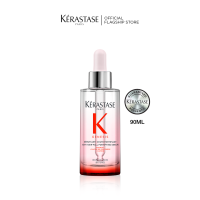
Kerastase Genesis Serum Anti-Chute 90ml - Anti Hair Fall Daily Treatment For Weak Hair & Anti-Breakage
$94.00$95.00
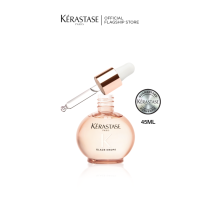
Kerastase Gloss Absolu Glaze Drops Anti-Frizz Hair Oil 45ml
$67.32$68.00
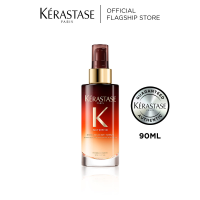
Kerastase Nutritive 8H Magic High Nutrition Nourishing Overnight Hair Serum For Leave-In Hair Treatment Dry Hair 90ml
$106.00$107.00
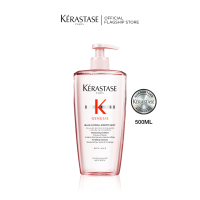
Kerastase Genesis Bain Hydra-Fortifiant 500ml - Anti Hair Fall Shampoo for Weak Hair
$91.00$92.00
![[10.10 EXCLUSIVE FROM 9TH OCT 8PM] Kerastase Genesis Hair Serum For Weakend Hair Duo Set (Serum 90ml + Serum 90ml)](https://sg-live.slatic.net/p/730d7a245b6dfeb1231700c1b4790ace.png_200x200q80.jpg)
[10.10 EXCLUSIVE FROM 9TH OCT 8PM] Kerastase Genesis Hair Serum For Weakend Hair Duo Set (Serum 90ml + Serum 90ml)
$189.00$190.00
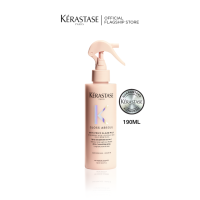
Kerastase Gloss Absolu Glaze Milk Anti-Frizz Heat Protecting Spray 190ml
$74.00
Buy on Lazada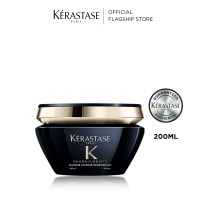
Kerastase Chronologiste Hair Mask 200ml
$106.00
Buy on Lazada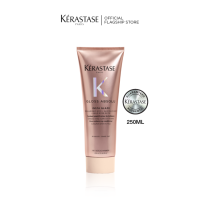
Kerastase Gloss Absolu Insta Glaze Conditioner 250ml
$68.00
Buy on LazadaAbout Kérastase
Kérastase is a French luxury professional haircare brand owned by L’Oréal. Established in 1964, it was created to introduce a sophisticated, treatment-oriented approach to haircare that integrates scientific research, hairdresser expertise, personalised diagnosis, high-performance formulas and a luxury sensory experience. Today, Kérastase positions itself as the world’s leading luxury professional haircare brand, with a presence in more than 60 countries and a professional community comprising over 150,000 hairdressers.1
Basic profile
| Attribute | Information |
|---|---|
| Brand | Kérastase |
| Origin | Paris, France |
| Founded | 1964 |
| Founder | François Dalle |
| Parent company | L’Oréal |
| Industry | Luxury beauty / professional haircare |
| Main category | Hair and scalp care |
| Distribution | Professional salons, selected retailers and e-commerce |
| Positioning | Premium/luxury professional haircare |
| Current slogan | “You Dare. We Care.” |
| Global presence | 60+ countries |
| Professional network | 150,000+ hairdressers |
Kérastase operates within L’Oréal’s Professional Products Division, distinguishing it from mass-market shampoo or cosmetics labels by placing it alongside the group’s specialised professional hair brands.25
Brand philosophy and identity
At its core, Kérastase is a professional haircare brand built around the concept of treating hair and scalp according to individual needs. The brand’s philosophy holds that haircare should extend beyond basic cleansing. Historical accounts describe the pre-1964 market as largely hygiene-focused; Kérastase sought to transform this into a sophisticated care ritual incorporating treatment, diagnosis, professional expertise, fragrance and sensorial textures.2
This philosophy positions Kérastase products above conventional shampoo and conditioner brands in terms of formulation complexity, targeted treatment, professional consultation, sensory experience, salon services, packaging and price. Consequently, Kérastase offers a comprehensive haircare experience rather than merely individual products.
The brand’s approach is underpinned by five key pillars:
Diagnosis
Effective haircare begins with understanding the specific condition of the hair and scalp. Historically, Kérastase developed professional diagnostic tools for salons, which have evolved into technologies such as K-SCAN, utilising AI-powered high-resolution imaging to assist hairdressers in assessing needs.6
Personalisation
Rather than offering a universal routine, Kérastase organises its portfolio around specific concerns including dryness, damage, hair fall, scalp imbalance, frizz, curls, blonde hair, colour-treated hair, ageing hair, and heat or environmental damage. The objective is to construct a regimen tailored to individual requirements.
Professional expertise
Kérastase maintains a close relationship with hairdressers and salons, designing products to function both as at-home routines and as components of professional salon treatments.7
Science
The brand leverages L’Oréal’s research capabilities and advanced cosmetic science, explicitly describing its proposition as professional expertise combined with scientific research.6
Luxury and sensoriality
Unlike purely clinical brands, Kérastase emphasises the sensory experience through elegant packaging, sophisticated fragrances, rich textures, salon rituals and premium presentation. This combination of efficacy and sensory luxury distinguishes it from pharmaceutical-style scalp brands.21
History
1964: Foundation
Kérastase was launched in 1964 in Paris under François Dalle, a significant figure within L’Oréal who created the brand to establish a new direction in professional haircare.3 The original concept was revolutionary: rather than viewing hair primarily as something to be washed, Kérastase approached it as requiring specialised care based on condition and individual needs. Early innovations included the first professional comprehensive haircare products, featuring a “bain” for the hair and dedicated scalp care.15
1970s: From cleansing to treatment
During the 1970s, Kérastase expanded its treatment philosophy. In 1973, it introduced Bain Divalent, designed for oily roots and sensitised lengths. In 1979, the brand launched its first treatment mask.4 This period established the practice of developing products around specific hair and scalp conditions rather than assuming a universal hair type.
1980s: Skincare-inspired approach
The 1980s were pivotal for product philosophy. In 1984, the brand launched Nutritive, which became one of its most recognised families, followed by ranges such as Spécifique and Solaire. In 1989, Kérastase introduced its first serum for dry lengths.5 This era marked the development of the “skincare for hair” philosophy: diagnosing a condition and applying targeted nutrients and treatments.
Major product families
Kérastase maintains an extensive portfolio organised into specialised families rather than relying on a single flagship product.
Nutritive
Focused primarily on dry and under-nourished hair, Nutritive is one of Kérastase’s oldest iconic franchises, dating back to 1984.8
Genesis
Launched in 2020, Genesis targets hair fall caused by breakage and weakened hair, reflecting the brand’s expansion toward more inclusive hair concerns.9
Curl Manifesto
Designed specifically for curly and coily hair, this range launched in 2021 as part of a broader move toward diverse hair types.10
Symbiose
Introduced in 2023, this scalp-focused range addresses concerns associated with dandruff and scalp imbalance.22
Chronologiste
A prestige-oriented range positioned around hair and scalp revitalisation and longevity, Chronologiste became a major luxury franchise following its launch in 2010.23
Elixir Ultime
One of the brand’s most recognisable luxury lines, particularly noted for its hair oils. The Elixir Ultime L’Huile Originale became a signature product after the range launched in 2010.11
Blond Absolu
A specialised franchise for blonde and lightened hair, addressing issues such as brassiness, dryness and damage associated with bleaching.
Spécifique
A scalp-oriented line developed for particular scalp concerns.
Terminology and salon experience
The “Bain” concept
Kérastase uses the French word “Bain” (bath) rather than “shampoo” for many products, such as Bain Satin, Bain Divalent, Bain Chroma, Bain Hydra-Fortifiant and Bain Ultra-Violet. This terminology reinforces the philosophy that washing is a treatment ritual rather than a mere cleansing step, reflecting the brand’s French luxury identity.
Professional salon ecosystem
A significant component of the business is the professional salon ecosystem. The signature service includes Fusio-Dose, a personalised in-salon treatment system where different components are combined according to client needs.12 The broader salon proposition follows a consistent sequence: Diagnosis → consultation → personalised treatment → professional ritual → home-care recommendation. This model connects the professional business with consumer retail.
Market positioning
Kérastase sits at the intersection of professional haircare and luxury beauty. Its value proposition is not simply cleansing, but rather providing a specialised luxury treatment system diagnosed by a professional for specific hair conditions.
| Category | Typical proposition | Kérastase position |
|---|---|---|
| Mass-market haircare | Affordable everyday cleansing | Above this |
| Premium beauty haircare | Better ingredients / image | Above or around this |
| Professional salon haircare | Expert treatment and performance | Core territory |
| Luxury haircare | Prestige + sensorial experience | Core territory |
| Medical/dermatological scalp care | Clinical problem solving | Not primary identity |
Its positioning is defined by luxury (premium pricing, packaging, rituals), professionalism (salon connection), science (L’Oréal research), personalisation, French heritage and aspirational beauty. The current brand philosophy is encapsulated by the slogan “You Dare. We Care.”13
Target audience
While historically focused on women seeking premium salon experiences, Kérastase now addresses a broader demographic. Core consumers typically consider hair integral to personal appearance, are willing to invest in specialised care, regularly colour or chemically treat their hair, seek professional results at home, value sensory experiences and are familiar with premium beauty brands. The brand has increasingly emphasised different hair textures, curls, inclusivity and diverse beauty needs, highlighting Genesis, Curl Manifesto and Symbiose as examples of this expansion.14
Manufacturing and sustainability
Although a French-origin brand, Kérastase products are manufactured in Burgos, Spain.15 It is sold internationally in more than 60 countries, supported by over 150,000 hairdressers.16
Sustainability has been formally integrated into the brand strategy since 2013, covering packaging, formulation, manufacturing, energy, water and waste. The Burgos factory uses renewable energy and operates a closed-loop water system.18 For its 60th anniversary, Kérastase stated goals including 100% recycled plastic by 2030 and 100% eco-designed launches or renovated products by 2030.19
Relationship with L’Oréal
Kérastase belongs to L’Oréal’s Professional Products Division.25 While L’Oréal Professionnel focuses broadly on the professional hairdresser ecosystem including colour and technical products, Kérastase is positioned around luxury haircare, treatment, diagnosis and premium consumer experience. They are complementary rather than direct substitutes. Within the division, Kérastase occupies the high-end space, competing with brands such as Redken, Shu Uemura Art of Hair, Oribe, Aveda, Davines, Olaplex and Moroccanoil.
Key milestones
- 1964: Kérastase launched in Paris.
- 1973: Bain Divalent introduced.
- 1979: First treatment mask launched.
- 1984: Nutritive range launched.
- 1989: First serum for dry lengths introduced.
- 2010: Chronologiste and Elixir Ultime launched.
- 2011: Fusio-Dose personalised salon treatment introduced.
- 2013: Sustainability commitment formalised.
- 2020: Genesis launched.
- 2021: Curl Manifesto launched.
- 2023: Symbiose launched.
- 2024: Kérastase celebrated its 60th anniversary.20
Factors in brand success
Kérastase’s enduring recognition stems from several factors: early entry into luxury haircare, strong salon credibility, access to L’Oréal’s scientific infrastructure, a structured product architecture addressing specific problems, emphasis on sensory luxury, iconic products like Elixir Ultime, and a commitment to personalisation through diagnosis.17 These elements combine to form a competitive advantage defined by science, hairdresser expertise, diagnosis, personalisation and luxury, sustaining its status as a leading premium haircare brand for over 60 years.24
References
- Kérastase
- Kérastase
- About Us – Take care with Kerastase – Kérastase
- Our Journey and Hertiage in Luxury Haircare | Kérastase Australia
- Kérastase Pioneers Haircare Service Page | Kerastase
- About Kérastase | Professional Luxury Haircare | L’Oréal ACCESS
- À propos de Kérastase: Notre histoire et nos valeurs
- Kérastase Celebrates 60 Years of Luxury Hair Care Innovation
- Kérastase fabrica en España sus productos para todo el mundo
- Kérastase: укладка, шампунь и уход за волосами – Группа L’Oréal
- Kérastase and Withings Unveil World’s First Smart Hairbrush at CES 2017
- About Kerastase
- L’Oréal 2016: Brands overview
- Kérastase Story: Entdecken Sie unsere Markengeschichte
- Enestående og Profesjonell Hårpleje Siden 1964|Kérastase
- About Kérastase | Professional Luxury Haircare | L’Oréal ACCESS
- Kérastase Products
- WE CARE FOR THE PLANET – Sustainable development – Kérastase
- We Care
- This Is All the Inspiration You Need on International Women’s Day – Kérastase – Hair
- Signature Scents | Hair Perfume | Fragrance| Kérastase
- Products – Kérastase
- decoding-the-dna-of-youthful-hair
- Live Beyond time – Take care with Kerastase – Kérastase
- Kérastase