Shop on Lazada
Karl Lagerfeld products
![Karl Lagerfeld Fleur De Pivione EDP for Women (100ml) [Brand New 100% Authentic Perfume FragranceCart] Eau de Parfum Woman Coral Pink KL](https://sg-live.slatic.net/p/6448562ee7621e9c36b15228a64d761e.jpg_200x200q80.jpg)
Karl Lagerfeld Fleur De Pivione EDP for Women (100ml) [Brand New 100% Authentic Perfume FragranceCart] Eau de Parfum Woman Coral Pink KL
$63.00$89.00
![Karl Lagerfeld Fleur de Pecher EDP for Women (100ml) [New 100% Authentic Perfume FragranceCart] KL Peach Eau de Parfum Woman Pink](https://sg-live.slatic.net/p/ddf8ab21332f895c3af0deaff9ecdade.jpg_200x200q80.jpg)
Karl Lagerfeld Fleur de Pecher EDP for Women (100ml) [New 100% Authentic Perfume FragranceCart] KL Peach Eau de Parfum Woman Pink
$63.00$120.00
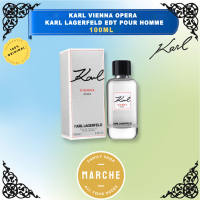
KARL Vienna Opera Karl Lagerfeld EDT Pour Homme 100ml #Marche Family Shop#
$49.50
Buy on Lazada![[100% Original] Karl Lagerfeld Classic Grey EDT 100mL](https://sg-live.slatic.net/p/184bacecf47baae00a3aa99d627e5dac.png_200x200q80.jpg)
[100% Original] Karl Lagerfeld Classic Grey EDT 100mL
$45.44$79.90
About Karl Lagerfeld
KARL LAGERFELD is a Paris-based fashion and lifestyle house named after the German designer Karl Lagerfeld (1933–2019). Established in 1984, the brand is defined by Lagerfeld’s personal aesthetic, which combines sharp tailoring, Parisian elegance, rock-and-roll influences, monochrome styling, and modern glamour. It is positioned as an accessible, aspirational designer brand rather than an ultra-luxury couture house.1
The brand is currently owned by G-III Apparel Group, which acquired full ownership in June 2022. G-III reports that Karl Lagerfeld generated approximately US$630 million in net sales in fiscal 2026, with distribution through more than 200 stores worldwide and operations across more than 60 countries.2
Basic information
| Brand name | KARL LAGERFELD |
| Founder / namesake | Karl Lagerfeld |
| Founded | 1984 |
| Origin | Paris, France |
| Industry | Fashion & lifestyle |
| Main products | Ready-to-wear, bags, accessories, footwear, watches, eyewear, fragrances, jewellery |
| Target market | Contemporary / accessible designer |
| Current owner | G-III Apparel Group |
| Full acquisition by G-III | 2022 |
| CEO & President | Pier Paolo Righi |
| Creative direction | Hun Kim, with Carine Roitfeld as Style Advisor |
| Global presence | 60+ countries |
| Retail footprint | 200+ stores worldwide |
| FY2026 net sales | Approx. US$630 million |
The company describes its aesthetic as a combination of “Parisian classics” and a “rock-chic” attitude, paired with tailored silhouettes.3
Karl Lagerfeld
Understanding the brand requires understanding its founder. Karl Otto Lagerfeld was one of the most influential fashion designers of the late 20th and early 21st centuries. Born in Germany, he established his career in Paris and became one of the most recognisable figures in the industry.
Throughout his career, Lagerfeld was simultaneously associated with several major European fashion houses, including Chanel, Fendi, Chloé, and his eponymous label. At Chanel, he is widely credited with transforming the historic heritage label into a globally dominant modern fashion brand.
His personal image also became embedded in popular culture, characterised by white hair, black sunglasses, high-collared shirts, black suits, leather gloves, and a tightly controlled public persona. Consequently, the founder himself became the brand’s logo and cultural symbol, and the company continues to utilise his visual identity as a central element of its branding.4
Foundation of the brand
The House of Karl Lagerfeld was founded in 1984. Unlike traditional luxury maisons whose identities are primarily rooted in haute couture, craftsmanship, and historical archives, Lagerfeld’s namesake brand was intrinsically linked to his personality and contemporary creativity.
The brand was designed to communicate Karl Lagerfeld as a person, designer, and cultural figure. This approach allowed fashion to be combined with photography, illustration, publishing, pop culture, humour, celebrity, and commercial products. Lagerfeld was notably multidisciplinary; beyond designing clothing, he worked as a photographer, illustrator, stylist, publisher, creative director, and cultural commentator. The brand’s contemporary identity continues to emphasise this broad creative scope.5
Post-2019 era
Following Karl Lagerfeld’s death in 2019, the brand faced the challenge of operating a fashion house whose primary asset was the personality of its deceased founder. The strategy has been to transform Karl’s personal codes into a permanent brand language.
Rather than attempting to replace him with another celebrity designer, the house emphasises his visual codes, Parisian identity, appreciation for contemporary culture, fascination with technology and the future, sense of humour, distinctive silhouette, and collaborative spirit. The company positions itself as a custodian of Karl Lagerfeld’s legacy while continuing to develop the brand for new generations.6
Ownership: G-III Apparel Group
A significant development in the brand’s modern history occurred in 2022. Prior to the acquisition, G-III Apparel Group already held a 19% stake in the Karl Lagerfeld business. In May 2022, G-III announced an agreement to purchase the remaining 81% for €200 million, becoming the sole owner upon completion of the transaction in June 2022.7
This acquisition is notable because G-III is a major international fashion company rather than a traditional French luxury conglomerate. Its portfolio includes brands such as DKNY, Donna Karan, Vilebrequin, G.H. Bass, Sonia Rykiel, and Karl Lagerfeld. As a result, Karl Lagerfeld operates within a large global fashion infrastructure encompassing design, manufacturing, wholesale, retail, licensing, and digital commerce.8
Aesthetic and visual identity
The Karl Lagerfeld aesthetic is summarised by the formula: Parisian classics + rock-chic attitude + tailored silhouettes.9 Visually, this produces a style that emphasises structured jackets, sharp coats, fitted silhouettes, clean trousers, and crisp shirts. The Parisian influence is evident in understated elegance, monochrome styling, sophisticated proportions, and French references, while the rock influence manifests through leather, metal hardware, black colourways, graphic treatments, and rebellious details. Pop-culture elements include celebrities, collaborations, graphic imagery, playful references, and Karl’s own likeness.
Visual codes
The brand’s visual identity relies heavily on Karl Lagerfeld himself. Key codes include:
- The Karl silhouette: A stylised illustration depicting his white hair, black sunglasses, high collar, and black suit, which has become an instantly recognisable icon.
- Black and white: These colours are strongly associated with both Karl’s personal wardrobe and the brand, providing strong visual consistency.
- The Karl logo: The wordmark KARL LAGERFELD is typically presented in clean, modern typography.
- IKON Karl: A stylised character used prominently in accessories, T-shirts, sweatshirts, and casual products. Contemporary “Ikon” products continue to incorporate Karl’s image and signature branding.
Product categories
KARL LAGERFELD has evolved into a comprehensive lifestyle brand spanning multiple categories.
Fashion and accessories
- Women’s fashion: Dresses, tops, shirts, knitwear, trousers, skirts, tailoring, jackets, coats, and denim.
- Men’s fashion: Suits, blazers, shirts, T-shirts, polos, knitwear, trousers, outerwear, and denim.
- Bags: Shoulder bags, crossbody bags, tote bags, handbags, clutches, and backpacks. Bags are particularly important commercially and visually.
- Small leather goods: Wallets, cardholders, purses, and cases.
- Footwear: Sneakers, boots, loafers, sandals, and fashion shoes.
- Accessories: Watches, eyewear, jewellery, belts, scarves, hats, and gloves.
Lifestyle and licensing
- Fragrance: Extends the brand into the beauty market.
- Home and lifestyle: The wider licensing programme covers home goods, children’s products, and other lifestyle items. G-III additionally describes hospitality and residential projects as part of the brand’s broader lifestyle strategy.10
Market positioning
KARL LAGERFELD is best described as an accessible or aspirational designer brand rather than an ultra-luxury maison. Within the broad fashion hierarchy, it sits below heritage luxury houses like Hermès, Chanel, Dior, and Louis Vuitton, as well as luxury designer brands such as Saint Laurent, Givenchy, and Balenciaga. It occupies the same tier as accessible designer and premium contemporary brands like Michael Kors and Coach, positioned above mass-market retailers.
The brand uses the phrase “accessible, aspirational” to describe its collections.11 This positioning allows consumers to acquire a recognisable designer name and fashion identity without entering the price territory of traditional luxury handbags.
KARL LAGERFELD vs. Karl Lagerfeld Paris
Two distinct labels exist within the brand’s ecosystem:
- KARL LAGERFELD: The main international fashion house.
- KARL LAGERFELD PARIS: A label with particular importance in North America.
G-III launched the Karl Lagerfeld Paris brand in North America in 2015 through a joint venture. Following G-III’s acquisition of the global Karl Lagerfeld brand in 2022, both businesses became part of its portfolio.12 Karl Lagerfeld Paris is especially visible through American retail and outlet distribution channels.
Creative direction
Since Lagerfeld’s death, creative direction has been led by individuals who worked closely with him. Hun Kim serves as Creative Director, having previously collaborated directly with Lagerfeld. Carine Roitfeld, the influential French fashion editor and stylist, acts as Style Advisor and helps shape the brand’s creative narrative.13
This continuity ensures that current collections interpret Karl’s codes for contemporary consumers, incorporating modern streetwear, pop culture, new materials, and contemporary silhouettes while retaining the brand’s recognisable DNA.
Celebrity and pop-culture strategy
Celebrity culture remains integral to the brand’s identity. The company frequently features prominent personalities in campaigns and collaborations. For example, Paris Hilton served as a key face of the Fall/Winter 2025 and Spring/Summer 2026 campaigns, representing a convergence between her personality and the Maison’s French fashion identity.14
This approach demonstrates that KARL LAGERFELD actively participates in contemporary pop culture rather than adhering strictly to traditional heritage luxury conventions.
Retail and global presence
The brand maintains a significant international footprint. G-III currently reports more than 200 stores worldwide, presence in over 60 countries, and more than 3,000 points of sale globally, comprising both company-operated and partner-operated locations alongside substantial wholesale distribution and e-commerce operations.15
Major cities associated with the brand include Paris, London, Munich, Berlin, New York, Dubai, and Shanghai. The official website also maintains dedicated markets including Singapore, alongside numerous European, Asian, Middle Eastern, and North American markets.16
Business scale
The brand has experienced considerable growth in recent years. According to G-III’s annual reports:
| Fiscal year | Karl Lagerfeld net sales |
|---|---|
| FY2024 | ~$475 million |
| FY2025 | ~$580 million |
| FY2026 | ~$630 million |
Karl Lagerfeld is now one of the most significant owned brands within G-III’s portfolio. The group has stated that it sees a long-term opportunity exceeding US$1 billion in annual net sales for the brand.18
Sustainability: Karl Cares
The brand operates a sustainability and social responsibility programme called KARL CARES, focusing on three pillars:
- People: Workers, employees, and communities involved in the brand’s operations.
- Planet: Environmental impact and resource use.
- Partners: Relationships with suppliers and business partners.
The brand publishes sustainability information and progress reporting as part of this strategy.19 Additionally, some products now provide supply-chain traceability information through a partnership with Fairly Made, a French fashion traceability platform.
Choupette
Choupette, Karl Lagerfeld’s Birman cat, forms a distinctive part of the brand’s mythology. She became an important element of Karl’s later public persona and remains associated with the Karl Lagerfeld universe. The brand describes their relationship as developing unexpectedly after he was asked to look after her temporarily.20
Choupette represents a characteristic blend of fashion, celebrity, eccentricity, and humour that defines much of the brand’s personality.
Brand philosophy
The phrase “Embrace the present and invent the future” encapsulates the philosophy the company inherited from Karl Lagerfeld. Rather than treating his archive as static, the brand uses his ideas as a starting point for contemporary design.
This distinguishes Karl Lagerfeld from conventional heritage brands; where many look backward, Karl Lagerfeld aims to make heritage forward-looking. The brand explicitly describes its identity as Karl’s aesthetic combined with a “contemporary, forward-looking spirit.”21
Distinctive characteristics
The brand’s competitive identity can be summarised through six key attributes:
- The founder is the logo: Few fashion brands possess such a recognisable founder persona. Karl’s sunglasses, white hair, and black tailoring function as a visual trademark.
- Parisian without being traditionally French: Although Karl was German-born, he built his career primarily in Paris. The brand therefore carries a Parisian identity without pretending to be an old French maison.
- Luxury image with accessible positioning: It offers designer branding at prices considerably below traditional French luxury houses.
- Strong visual consistency: Black, white, tailoring, Karl’s face, typography, and rock-inspired details create an immediately recognisable aesthetic.
- Fashion and pop culture integration: The brand comfortably engages with celebrities, artists, digital culture, and collaborations.
- Scalable lifestyle business: Beyond runway clothing, the brand reaches a wider audience through bags, accessories, watches, fragrances, eyewear, footwear, children’s products, and licensing.22
References
- Karl Lagerfeld – G-III Apparel Group, Ltd.
- About the Brand | KARL LAGERFELD IN
- G-III Apparel Group Completes Acquisition of Iconic Karl Lagerfeld Brand | GIII Apparel Group
- G III APPAREL GROUP LTD /DE/_January 31, 2026
- ABOUT THE BRAND | KARL LAGERFELD
- About Us | Karl Lagerfeld Paris
- G-III Apparel Group to Purchase Iconic Karl Lagerfeld Brand | GIII Apparel Group
- Ikon sweatshirt with rubber patch | Black | Men | KARL LAGERFELD SG
- Ikon T-shirt | Black | Men | KARL LAGERFELD | Page 1
- Karl Lagerfeld Campaigns | KARL LAGERFELD NL
- Store Locator | KARL LAGERFELD SG
- KARL CARES | Page 1 | KARL LAGERFELD
- Ikon jersey polo shirt | White | Men | KARL LAGERFELD SG
- G III APPAREL GROUP LTD /DE/_April 30, 2026
- G III APPAREL GROUP LTD /DE/_January 31, 2025
- sec.gov
- Karl Lagerfeld: A Line of Beauty – The Metropolitan Museum of Art
- The Life And Times Of Karl Lagerfeld | Vogue
- G-III Apparel Group, Ltd. Strengthens Partnership With KARL LAGERFELD
- Pier Paolo Righi – G-III Apparel Group, Ltd.
- The World of Karl | KARL LAGERFELD US
- The World of Karl | KARL LAGERFELD GB