Shop on Lazada
Kenneth Cole products
![Kenneth Cole Black Bold EDP for Men (100ml) Eau de Parfum [Brand New 100% Authentic Perfume/Fragrance]](https://sg-live.slatic.net/p/ca54fdcbe66c04d9f66b212a5b7fdad5.jpg_200x200q80.jpg)
Kenneth Cole Black Bold EDP for Men (100ml) Eau de Parfum [Brand New 100% Authentic Perfume/Fragrance]
$82.00$130.00
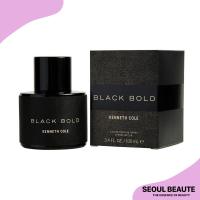
Kenneth Cole Black Bold Eau de parfum 30ml / 100ml
$69.00
Buy on Lazada![Kenneth Cole Mankind Ultimate EDT for Men (200ml) [Brand New 100% Authentic Perfume FragranceCart] Eau de Toilette Man Black Grey Woody](https://sg-live.slatic.net/p/b3cba8f5731b0c50a0a1c8ff95d714e2.jpg_200x200q80.jpg)
Kenneth Cole Mankind Ultimate EDT for Men (200ml) [Brand New 100% Authentic Perfume FragranceCart] Eau de Toilette Man Black Grey Woody
$99.00$137.00
![Kenneth Cole Mankind Legacy EDT for Men (100ml) [Brand New 100% Authentic Perfume FragranceCart] Eau de Toilette Man Blue](https://sg-live.slatic.net/p/d57c709d8f1cc6fe7e87ee593d438bcf.jpg_200x200q80.jpg)
Kenneth Cole Mankind Legacy EDT for Men (100ml) [Brand New 100% Authentic Perfume FragranceCart] Eau de Toilette Man Blue
$71.00$84.00
![Kenneth Cole Black EDT for Men (100ml) Eau de Toilette KC [Brand New 100% Authentic Perfume/Fragrance]](https://sg-live.slatic.net/p/91e064de79b2f0887d1fbb4312d06960.jpg_200x200q80.jpg)
Kenneth Cole Black EDT for Men (100ml) Eau de Toilette KC [Brand New 100% Authentic Perfume/Fragrance]
$74.00$120.00
Kenneth Cole Mankind Ultimate EDT 100ml
$54.00
Buy on Lazada
Kenneth Cole Mankind EDT 100ml for Men (Retail Packaging) - BNIB Perfume/Fragrance
$53.36$53.90
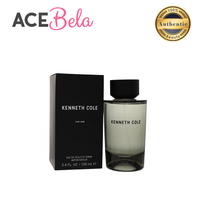
Kenneth Cole For Him EDT 100ml (100% Authentic)
$57.07$93.00
About Kenneth Cole
Kenneth Cole is an American contemporary fashion and lifestyle brand established in New York City in 1982 by designer and entrepreneur Kenneth D. Cole. Originally a footwear business, the company has expanded into a comprehensive lifestyle label offering clothing, shoes, handbags, watches, fragrances, luggage and accessories for men and women. The brand is widely recognised for combining New York-inspired contemporary fashion with socially conscious advertising and activism 1.
Today, Kenneth Cole positions itself around modern urban style, practicality, comfort and social awareness. Its products target consumers seeking contemporary fashion suitable for professional, casual and everyday settings 2.
Brand profile
| Category | Information |
|---|---|
| Brand name | Kenneth Cole |
| Legal/company name | Kenneth Cole Productions, Inc. |
| Founded | 1982 |
| Founder | Kenneth D. Cole |
| Origin | New York City, United States |
| Industry | Fashion & lifestyle |
| Original category | Footwear |
| Current categories | Apparel, footwear, watches, bags, fragrances and accessories |
| Positioning | Contemporary / accessible designer fashion |
| Core aesthetic | Modern, urban, practical, polished |
| Key brand characteristic | Socially conscious fashion and advertising |
| Ownership structure | Privately held following a 2012 take-private transaction |
| Official website | kennethcole.com |
The company was originally incorporated as Kenneth Cole Inc., but the name was changed to Kenneth Cole Productions, Inc. prior to its 1982 launch. This decision remains one of the most notable episodes in the company’s history 3.
Founder: Kenneth Cole
Kenneth D. Cole is an American fashion designer and businessman who founded Kenneth Cole Productions in 1982. Born into a family involved in the footwear industry, he gained early experience in shoe manufacturing, design and sales while working with his father. He graduated from Emory University in 1976 before returning to the family business and eventually launching his own label 4.
Cole’s significance extends beyond his role as founder. Throughout much of the brand’s history, his personality, design philosophy, advertising style and social activism have been intrinsically linked to the corporate identity. Consequently, Kenneth Cole serves simultaneously as the designer’s name, the company name and the central personality behind the brand’s public image. This founder-centric identity has historically enabled the company to maintain a distinctive voice.
Origins and founding
The origin of Kenneth Cole is considered one of the most famous entrepreneurial stories in American fashion. In 1982, having designed his first shoe collection, Cole sought to present it to buyers during Market Week in New York City. Unable to afford a showroom at the New York Hilton or nearby, he borrowed a 40-foot trailer to use as a mobile showroom.
As New York City did not issue permits for parking trailers solely to sell shoes, Cole creatively circumvented this restriction. Permits were available for utilities and film production companies, so he renamed his business from Kenneth Cole Inc. to Kenneth Cole Productions, Inc. and applied for permission to shoot a fictional film titled The Birth of a Shoe Company 5.
The resulting setup functioned as a film set, showroom, advertising stunt and retail presentation. Opening on 2 December 1982 near the New York Hilton, the venture reportedly sold 40,000 pairs of shoes in approximately three days, providing the young company with a strong commercial start 6. The name Kenneth Cole Productions was retained after the event, serving as a reminder of the founding principles of resourcefulness, creativity and challenging convention 7.
Expansion into a lifestyle brand
Kenneth Cole initially focused on women’s footwear. Early success allowed the company to expand into additional categories rather than competing solely within the mass footwear market. Over time, the brand extended its portfolio to include:
- Men’s and women’s footwear
- Men’s and women’s clothing
- Tailored clothing
- Handbags
- Watches
- Fragrances
- Belts, wallets and sunglasses
- Luggage and jewellery
- Ties, socks and business accessories
- Other lifestyle products
The company’s strategy involved extending the Kenneth Cole aesthetic and consumer base into a complete wardrobe and lifestyle offering. Historical filings describe Kenneth Cole New York as a contemporary lifestyle collection spanning footwear, apparel and accessories 8. The current assortment continues to cover men’s and women’s clothing, shoes, accessories and lifestyle products 9.
Kenneth Cole New York
Kenneth Cole New York is a primary line associated with the company. The “New York” designation reflects the city’s central role in the brand’s identity, with an aesthetic emphasising modern metropolitan dressing. Rather than positioning itself exclusively as high fashion, Kenneth Cole New York occupies a space between designer fashion and accessible contemporary apparel.
Historical positioning emphasised sophistication, modernity, versatility, work-to-weekend wear, contemporary silhouettes, quality and accessible designer pricing. Company filings have described it as a “day-to-night, work-to-weekend” lifestyle collection designed for fashion-conscious consumers seeking accessible designer fashion 10.
Design philosophy
Kenneth Cole’s design philosophy is broadly characterised as urban, contemporary and functional. Rather than focusing on experimental runway fashion, the brand prioritises pieces that integrate into a modern wardrobe. Key characteristics include:
Clean silhouettes
Products typically feature simple, streamlined shapes rather than excessive ornamentation.
Contemporary styling
Collections are influenced by modern city life, professional dressing and contemporary casualwear.
Versatility
Many items are designed to transition between work, travel, social occasions and everyday wear.
Comfort and functionality
The brand increasingly emphasises practical materials, flexibility and comfort alongside aesthetics 11.
Accessible luxury
Kenneth Cole historically occupies an intermediate position: more design-driven than ordinary mass-market clothing, yet generally more accessible than traditional luxury houses.
Social consciousness and activism
A defining characteristic of Kenneth Cole is its use of fashion advertising to address social and political issues. Since the 1980s, the company has utilised its platform to discuss topics including HIV/AIDS, homelessness, civil liberties, LGBTQ+ rights, political issues, social justice and public health.
The brand’s official history describes this philosophy as placing “cause” before “commerce”, identifying AIDS, homelessness, LGBTQIA+ rights, civil liberties, social justice and mental health among the causes associated with its work 12. This approach was particularly notable in the 1980s, when corporate brands were generally cautious about associating with controversial social issues.
AIDS activism
The AIDS crisis became integral to Kenneth Cole’s identity. In the mid-1980s, when public discussion of AIDS was heavily stigmatised, Cole addressed the subject through advertising at a time when many companies avoided it. This established a characteristic formula of fashion combined with current events and social commentary. Advertisements aimed to provoke thought about societal issues rather than simply selling products, becoming a defining element of the brand’s marketing strategy 13.
Advertising style
Kenneth Cole advertising is historically known for being witty, provocative, topical, sometimes political or controversial, minimalist and often reliant on wordplay. Instead of conventional fashion imagery, the company frequently used short, memorable statements connected to current events. The underlying philosophy was to encourage audiences to notice the message before the brand. This strategy created a recognisable brand voice and associated Kenneth Cole with commentary on American society and culture.
Cause-related marketing
Kenneth Cole incorporated social causes into its brand identity decades before sustainability and diversity became mainstream industry concerns. Its approach is viewed as an early example of cause-related marketing, using commercial influence to highlight social issues. Both Columbia Business School and Wharton have highlighted Cole’s combination of business strategy and philanthropy as significant 14. Crucially, social responsibility was integrated into the brand’s advertising language and personality rather than treated as an occasional corporate initiative.
Business development and ownership
During the 1980s and 1990s, Kenneth Cole grew from a small footwear company into a substantial fashion business, expanding distribution through department stores, specialty retailers, company-owned stores, international markets, catalogues and e-commerce. By the 1990s, the company had become publicly traded on the New York Stock Exchange (NYSE), facilitating expansion into new categories and markets 15.
Return to private ownership
In 2012, Kenneth Cole proposed taking Kenneth Cole Productions private. At the time, Cole already controlled a substantial voting interest. The transaction was completed on 25 September 2012, with shareholders other than Cole and affiliated holders receiving $15.25 per share in cash 16. Class A stock subsequently ceased trading on the NYSE 17. This transition returned Kenneth Cole to private ownership, allowing the brand to operate without the reporting requirements and quarterly market pressures associated with public listing.
Product categories
Kenneth Cole has evolved significantly beyond its original shoe business. The current product universe includes:
Men’s fashion
Suits, dress shirts, sweaters, jackets, pants, chinos, casualwear, outerwear and shoes.
Women’s fashion
Dresses, tops, pants, jackets, footwear, handbags and accessories.
Footwear
As the category from which the company originated, footwear remains central. The modern assortment includes sneakers, loafers, boots, Oxford shoes, Chelsea boots and other styles 18.
Accessories
Watches, wallets, belts, sunglasses, ties, bags, backpacks, luggage and jewellery.
Fragrance
The brand maintains a fragrance business, including lines such as Mankind, Mankind Hero, Mankind Rise, Mankind Legacy and Black 19.
Brand positioning and identity
Kenneth Cole is positioned between mass-market fashion and traditional luxury. Unlike heritage luxury houses such as Chanel, Hermès, Louis Vuitton, Prada or Dior, which emphasise exclusivity and high price points, Kenneth Cole operates in the contemporary/accessible-designer segment. Its appeal derives from combining design, New York identity, practicality, recognisable branding, accessible pricing and social consciousness. Historically, the company described Kenneth Cole New York as an “accessible designer” collection competing in contemporary/bridge-level fashion 20.
Key elements of the brand identity include:
- New York: Fundamental to the brand’s history and visual identity.
- Modern: Focuses on contemporary rather than traditional fashion.
- Urban: Designed around metropolitan lifestyles.
- Accessible: Offers designer-inspired fashion without ultra-luxury positioning.
- Functional: Prioritises comfort, versatility and practicality.
- Socially conscious: Maintains a long history of addressing social issues.
- Provocative: Advertising frequently challenges conventional fashion marketing.
- Entrepreneurial: The founding story represents improvisation and unconventional problem-solving.
Sustainability and corporate responsibility
Kenneth Cole has developed policies concerning responsible production. Official corporate responsibility information states that new factories are inspected upon engagement and that the company maintains supplier standards and auditing rights. Additionally, Kenneth Cole has been fur-free since 2007 21. The company has also outlined goals regarding environmental impact, responsible sourcing and workplace responsibility, representing an evolution of its earlier social consciousness positioning by connecting public messaging with production and sourcing practices.
Collaborations
The brand continues to use collaborations to connect fashion with culture and social commentary. Current collaboration assortments include limited-edition pieces developed with partners such as Lingua Franca and The Onion, incorporating graphic messaging, streetwear influences and cultural commentary 22. This aligns with the brand’s historical approach of using fashion as a medium for expressing ideas.
Differentiation and legacy
Kenneth Cole’s primary point of differentiation is the combination of product and personality.
| Dimension | Kenneth Cole |
|---|---|
| Origin | New York footwear |
| Core aesthetic | Contemporary urban |
| Price positioning | Accessible designer / contemporary |
| Major strength | Brand identity |
| Historical signature | Provocative advertising |
| Social positioning | Strong |
| Primary consumer | Modern, fashion-conscious professionals |
| Product philosophy | Stylish + practical |
| Brand personality | Intelligent, witty, socially aware |
| Heritage | 40+ years |
| Founder influence | Extremely strong |
The brand’s significance in American fashion lies not in revolutionising clothing design, but in demonstrating that a fashion brand could hold a strong societal viewpoint while operating as a commercial business. Early advertising regarding AIDS and other social issues helped establish a model where brands use marketing platforms to discuss culture, politics, public health and social justice 23. The unusual founding story—a designer with limited resources turning a borrowed truck and creative idea into a successful business—remains central to the company’s identity.
Summary
Kenneth Cole is an American contemporary fashion and lifestyle brand founded in New York City in 1982 by designer Kenneth D. Cole. Originally established as a footwear company, it grew into a broad lifestyle business encompassing apparel, footwear, handbags, watches, fragrances, luggage and accessories. The brand is characterised by modern metropolitan design, accessible-designer positioning and an emphasis on versatile, functional clothing. Its most distinctive characteristic is its long history of socially conscious and often provocative advertising, through which Kenneth Cole has addressed issues including AIDS, homelessness, LGBTQ+ rights, civil liberties and social justice. After becoming publicly traded, Kenneth Cole Productions was taken private in 2012 through a transaction led by Kenneth Cole. Today, the brand continues to combine contemporary fashion with New York identity, practical design and social commentary 24.
References
- Kenneth Cole: “To be aware is more important than what you wear” | Columbia Business School
- Kenneth Cole
- Kenneth Cole
- “Birth of a Shoe Company” Film
- SEC
- Kenneth Cole: How the King of Sole Got Soul – Knowledge at Wharton
- Kenneth Cole (designer)
- SEC
- SEC
- Kenneth Cole
- Kenneth Cole New York – Vida Group
- Kenneth Cole Purpose & Social Impact
- Kenneth Cole Productions, Inc. — Company History
- SEC
- SEC
- Our Business
- Shop Exclusive Fashion Collabs | Kenneth Cole
- Who Owns Kenneth Cole After Going Private? – LegalClarity
- G III APPAREL GROUP LTD /DE/_January 31, 2026
- Company:Kenneth Cole Productions – HandWiki
- Terms & Conditions
- G III APPAREL GROUP LTD /DE/_January 31, 2025
- KENNETH COLE NEW YORK Trademark Application of Kenneth Cole Productions (LIC), LLC – Serial Number 98504506 :: Justia Trademarks
- KENNETH COLE NEW YORK Trademark of Kenneth Cole Productions (LIC), LLC – Registration Number 6266518 – Serial Number 90061731 :: Justia Trademarks