Shop on Lazada
KING JIM products

King Jim Simplease A4 Clear Holder Pocket File 40 pockets 186TSP (Translucent)
$22.83
Buy on Lazada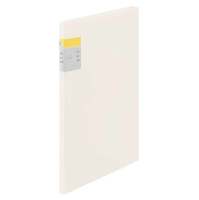
King Jim Kakiko Clear File - write on documents without taking them out.
$15.30
Buy on Lazada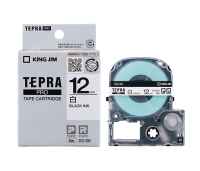
King Jim TEPRA PRO Tape Cartridge12mm SS12K (White Label Black Wording) SG Seller Local Stock
$23.66
Buy on Lazada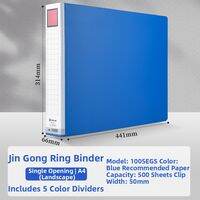
King Jim | A4 File Organizers Office Folder
$27.53
Buy on Lazada
KING JIM Tepra Lite Tape 15mm x 4m
$7.20
Buy on Lazada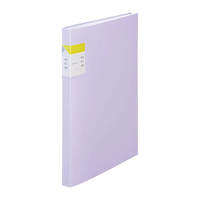
King Jim | Writetable Folder Large Capacity Transparent Multilayer A4 A3
$16.01$20.45
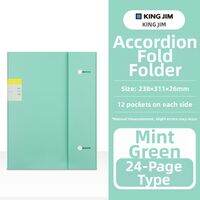
King Jim | Writable Expandable Sheet Music Folder Anti-glare Transparent
$23.08
Buy on Lazada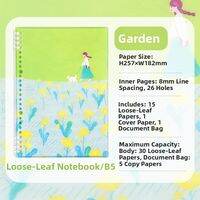
King Jim | Replaceable Core Lightweight Loose-leaf Notebook B5
$7.72$11.51
About KING JIM
KING JIM CO., LTD. (キングジム, KING JIM) is a Japanese manufacturer best known for its filing and organisation products, office stationery, and electronic information-management devices. Founded in 1927, the company has developed a distinctive identity around creating products that introduce new ways of organising information and everyday life. Its best-known products include the KING FILE filing system and TEPRA label printers.1
Today, KING JIM is a publicly listed Japanese company headquartered in Higashi-Kanda, Chiyoda-ku, Tokyo, and operates as the parent of a group with businesses spanning stationery, office supplies, electronic products, lifestyle goods, and overseas manufacturing and sales. Its shares are traded on the Tokyo Stock Exchange Prime Market under securities code 7962.2
Basic information
| Item | Information |
|---|---|
| Official name | KING JIM CO., LTD. |
| Japanese name | 株式会社キングジム |
| Japanese reading | Kabushiki-gaisha Kingu Jimu |
| Founded | April 1927 |
| Incorporated | August 1948 |
| Headquarters | Chiyoda-ku, Tokyo, Japan |
| President & CEO | Miyoko Kimura |
| Main industries | Stationery, filing systems, office supplies, electronic products, lifestyle products |
| Stock exchange | Tokyo Stock Exchange, Prime Market |
| Securities code | 7962 |
| Capital | ¥1.978 billion (June 2025) |
| Consolidated sales | ¥39.639 billion (FY2025) |
| Consolidated employees | 1,738 (June 2025) |
| Major brands/products | KING FILE, TEPRA, POMERA, HITOTOKI |
| Corporate philosophy | “Developing original products and creating a new culture to contribute to society” |
The corporate figures above are the latest published in KING JIM’s corporate profile for June 2025; the company has subsequently published FY2026 financial results, so individual financial figures may change with each reporting year.3
Corporate identity and business scope
KING JIM is fundamentally an information-management and organisation company. This description is significant because the company’s scope extends beyond that of a traditional stationery manufacturer. Its historical business was built around helping people store, organise, identify, and access information, initially through physical filing products and later through electronic devices.
Its two historical pillars are:
- Files and filing products
- Electronic information-management products
The company’s own history describes it as a manufacturer of information-management products, with files and electronic products at the centre of its business.4 This explains why products such as a simple ring binder and an electronic label printer can belong to the same brand: both solve essentially the same problem of making information easier to organise and use.
History and origins
KING JIM’s history dates back to 1927, when founder Eitaro Miyamoto began selling a patented address book and a seal-impression book. The original business was known as Meikando. These early products were not merely conventional stationery; they exemplified Miyamoto’s philosophy of creating items that solved specific organisational problems in novel ways.5
In 1948, Meikando was formally incorporated. The company subsequently expanded into loose-leaf notebooks, binders, files, and other information-management products. A key tenet associated with founder Eitaro Miyamoto was that there was little value in simply replicating existing market offerings. This attitude became a foundation of the company’s later product-development culture.6
Adoption of the KING JIM name
The company adopted the name KING JIM in 1961. According to official corporate history, the name reflected the founder’s ambition for the company to become the “king of office products”.7 The name therefore has an unusual origin compared with many Japanese corporate names, as it was intended to express an aspiration rather than simply identify a founder, location, or traditional concept.
Key products and innovations
KING FILE
One of the most significant products in the company’s history was the KING FILE G, introduced in 1964. KING FILE became highly influential in Japanese offices due to its combination of functionality, standardised organisation, and distinctive appearance. The company states that the product became a standard office file in Japan.8
Before KING FILE, filing products were largely viewed as basic office necessities. KING JIM approached the category differently by standardising filing, emphasising easy identification, making the spine visually clear, focusing on functionality and durability, and developing an extensive ecosystem of compatible products. The crisp white spine of KING FILE helped transform Japanese office environments from visually dark, cluttered spaces into more organised workplaces.9
By 1993, cumulative KING FILE G sales had surpassed 100 million units.10
TEPRA label printers
Perhaps KING JIM’s most important innovation after KING FILE was TEPRA, introduced in 1988 as a solution for creating clean, attractive labels for file spines. Instead of handwriting file titles, users could print professional-looking labels.11
TEPRA created an entirely new product category in Japan: the label printer. Labels came to be used for office files, machinery, equipment, storage boxes, factory instructions, warning notices, retail environments, schools, homes, and general organisation. KING JIM describes TEPRA as having become virtually synonymous with the label-printer category in Japan.12
By 1993, cumulative TEPRA sales had reached one million units, and by 2018, cumulative sales exceeded 10 million units.13
TEPRA represents a fundamental aspect of KING JIM’s strategy: extending historical expertise in physical organisation into electronics. While a file organises information physically, a printed label identifies that information, making TEPRA a natural evolution of the company’s core competency.
Digital and electronic products
KING JIM continued experimenting with the transition from paper to digital information. In 2008, it introduced POMERA, a compact digital memo device with a folding keyboard and LCD screen.14 POMERA was notable for deliberately focusing on writing and note-taking rather than functioning as a general-purpose computer. This reflects KING JIM’s product philosophy of creating specialised tools for narrowly defined problems rather than competing directly with large technology companies.
Other notable information-management products followed, including SHOT NOTE, launched in 2011.15
Lifestyle stationery
In 2017, the company launched HITOTOKI, a stationery brand aimed at making everyday, casual stationery more enjoyable and comfortable.16 This represented a shift in positioning from a strict association with offices, filing, and information management towards everyday life, personal organisation, and design. This diversification is part of KING JIM’s broader effort to expand beyond traditional stationery and office supplies.
Product portfolio
KING JIM’s current product portfolio is broadly divided into several areas.
Filing products
Filing remains the company’s traditional core. Products include ring binders, KING FILE products, clear files, folders, document cases, box files, filing accessories, storage products, and products for photographs, cards, maps, and other media. KING JIM describes its filing range as covering information management for both offices and homes.17
Label printers
The TEPRA family includes TEPRA PRO, TEPRA Lite, label tapes in various widths and colours, and products designed for office, industrial, and personal applications. The current range is divided principally into TEPRA Lite and TEPRA PRO.18
Stationery
KING JIM also produces notebooks, folders, organisers, writing and filing accessories, storage products, and everyday stationery.
Digital and electronic products
Historically, this segment has included TEPRA, POMERA, and other electronic information-management devices. KING JIM’s electronic-products business specifically emphasises products designed to create new ways of handling information.19
Lifestyle products
The company has increasingly expanded into lifestyle-related products, including household and everyday-use goods. This has become a distinct lifestyle products business within KING JIM’s reporting structure.20
Corporate philosophy and development culture
The company’s management philosophy is: “Developing original products and creating a new culture to contribute to society.” Its associated guideline is: “Locate Markets, Rethink Customs and Find New Ways of Thinking.”
These statements explain KING JIM’s product strategy. Rather than asking only what product the market already wants, KING JIM has historically tried to ask what new product could create a market that does not yet exist. Corporate materials describe this as a culture of generating original ideas, communicating across organisational boundaries, and using new materials and technologies to create new markets.
The “first penguin” approach
KING JIM’s integrated-report materials describe a “first penguin” approach to product development. During discussions, an idea is not necessarily rejected simply because most people dislike it. A minority idea may be pursued if developers believe there is a real customer who strongly wants it. This helps explain why KING JIM has historically produced products that can seem unusually specific or unconventional. The underlying philosophy is that a small number of people with a strong unmet need may represent a new market, which differs significantly from conducting mass-market research and making incremental improvements.
Market position and international operations
Role in Japanese office culture
KING JIM has a strong historical association with Japanese offices. Its filing products helped establish systematic document organisation as part of office culture, while TEPRA expanded labelling from handwriting to digital production. Consequently, KING JIM is both a stationery manufacturer and a creator of office culture. The company’s president describes KING FILE as having established a culture of filing documents in Japanese offices, while TEPRA subsequently created another important category around labelling.21
International expansion
Although fundamentally a Japanese company, KING JIM has developed an international manufacturing and sales network. Key milestones include:
- 1996 — KING JIM Indonesia established
- 1998 — KING JIM Malaysia established
- 2002 — Shanghai trading company established
- 2007 — KING JIM Vietnam established
- 2012 — KING JIM Hong Kong established22
The company currently has overseas operations involving Indonesia, Malaysia, Vietnam, Shanghai, Hong Kong, and Shenzhen.23
Manufacturing in Vietnam
KING JIM has a significant manufacturing presence in Vietnam. KING JIM (VIETNAM) CO., LTD. was established in April 2007. Located at My Phuoc Industrial Park 3, the facility manufactures products including pipe files and polypropylene clear files. The site covers approximately 60,000 m².24
As of the end of March 2026, KING JIM Vietnam had 571 employees. Its principal activity is producing filing products and related accessories for export and the domestic market.25 This makes Vietnam an integral part of KING JIM’s global manufacturing network rather than solely a sales market.
Corporate structure and management
Business segments
KING JIM has evolved from a focused stationery company into a broader group. Business reporting currently divides operations primarily into:
- Stationery & office supplies: Includes filing, office organisation, stationery, and TEPRA-related products.
- Lifestyle products: Includes household life, interior/lifestyle use, and everyday consumer products.
From FY2025, the former interior-lifestyle business was renamed the lifestyle products business, and WINCESS CORPORATION was also moved into this category.26
Leadership and strategy
The current President & CEO is Miyoko Kimura, who took the position in 2024.27 KING JIM’s current strategy recognises that the traditional office environment is changing due to paperless work, digitalisation, AI, changing lifestyles, diversification of consumer values, and overseas market opportunities. Rather than abandoning its traditional business, KING JIM uses these changes as opportunities to create new products and businesses.28
Current strategic priorities include strengthening existing businesses, expanding into service businesses, expanding the lifestyle-products field, and strengthening overseas business.29
Sustainability
Sustainability is a component of KING JIM’s corporate strategy. The company identifies four major materiality areas:
- Social contribution through development of original products
- Environmental consideration
- Promotion of diverse human resources
- Enhancement of governance30
The first area aligns with KING JIM’s historical identity, viewing product innovation itself as a form of social contribution. Its sustainability policy also emphasises environmental responsibility, corporate governance, compliance, and creating an environment where employees can develop their abilities.31
Financial and operational scale
For FY2025 / June 2025, KING JIM reported the following figures:
- Consolidated sales: ¥39.639 billion
- Employees: 1,738
- Capital: ¥1.978 billion
- Shares issued: 31,459,692
- Headquarters: Tokyo
- Sales offices: 8
- Distribution centres: 332
While modest in size compared with Japan’s largest consumer-electronics or stationery conglomerates, KING JIM maintains considerable recognition within the specific fields it pioneered.
Significant products and brands
| Product / brand | Introduced | Significance |
|---|---|---|
| KING FILE G | 1964 | Flagship filing product and Japanese office standard |
| TEPRA | 1988 | Created/pioneered the modern label-printer category |
| POMERA | 2008 | Specialised portable digital writing device |
| SHOT NOTE | 2011 | Paper/digital information-management product |
| HITOTOKI | 2017 | Lifestyle-oriented stationery brand |
Among these, KING FILE and TEPRA are the two products most central to understanding KING JIM’s corporate history.33
Competitive characteristics
KING JIM’s competitive identity is defined by several characteristics:
- Category creation: TEPRA is the clearest example of KING JIM establishing a dedicated product category rather than merely making another office appliance.34
- Analog-digital integration: The company’s history moves naturally from address books to files, labels, electronic memo devices, and digital information management, always centred on information organisation.
- Valuing unusual ideas: Product-development culture deliberately gives space to unconventional ideas and niche needs.35
- Functional beauty: Products are designed not merely to work but to look organised when used together, such as rows of files on a shelf.36
- Expansion beyond the office: The company increasingly positions itself around lifestyle products and overseas markets alongside its traditional office-supply business.37
Chronological timeline
- 1927 — Eitaro Miyamoto begins the business with a patented address book and seal-impression book.
- 1948 — Meikando Co., Ltd. established.
- 1961 — Company renamed KING JIM CO., LTD.
- 1964 — KING FILE G launched.
- 1987 — Shares listed on the over-the-counter section of the Tokyo Stock Exchange.
- 1988 — TEPRA launched.
- 1993 — KING FILE G cumulative sales exceed 100 million; TEPRA reaches 1 million units.
- 1996 — Indonesia subsidiary established.
- 1998 — Malaysia subsidiary established.
- 2002 — Shanghai trading company established.
- 2003 — TEPRA cumulative sales reach 5 million.
- 2007 — KING JIM Vietnam established.
- 2008 — POMERA launched.
- 2011 — SHOT NOTE launched.
- 2012 — Hong Kong subsidiary established.
- 2017 — HITOTOKI stationery brand launched.
- 2018 — TEPRA cumulative sales exceed 10 million.
- 2020 — WINCESS Corporation acquired.
- 2021 — Life on Products acquired.
- 2022 — KING JIM moves to the Tokyo Stock Exchange Prime Market.
- 2024 — Miyoko Kimura becomes President & CEO.
- 2025 — KING JIM reports ¥39.639 billion consolidated sales for FY2025 and 1,738 consolidated employees as of June 2025.
- 2026 — The company continues its strategy of expanding lifestyle, service, and overseas businesses; FY2026 results were released in July 2026.38
References
- History | Corporate Profile | KING JIM CO., LTD.
- President’s Message | Corporate Profile | KING JIM CO., LTD.
- Corporate Data | Corporate Profile | KING JIM CO., LTD.
- Investor Relations | KING JIM CO., LTD.
- Stationery | Business Overview | KING JIM CO., LTD.
- Global Instagram is open! | 2021 News Releases | KING JIM CO., LTD.
- Electronic Products | Business Overview | KING JIM CO., LTD.
- Segment Information | Financial Information | Investor Relations | KING JIM CO., LTD.
- Management Philosophy | Corporate Profile | KING JIM CO., LTD.
- Growth Strategy
- Integrated Report 2022
- Location | KING JIM CO., LTD.
- Giới thiệu | KING JIM
- President’s Message | Management Policy | Investor Relations | KING JIM CO., LTD.
- Addressing the Corporate Governance Code | Governance | Sustainability | KING JIM CO., LTD.
- President’s Message | Sustainability | KING JIM CO., LTD.
- King Jim : Financial Results Briefing for the Fiscal Year Ended December 20, 2025 | MarketScreener
- Latest Business Results / Forecasts | Financial Information | Investor Relations | KING JIM CO., LTD.
- King Jim Co. Ltd., Matsudo-shi, Vietnam
- EDGAR Filing Documents for 0001477932-25-009206
- Directors and Auditors | Governance | Sustainability | KING JIM CO., LTD.
- KING JIM CO.,LTD. – Annual Report 2025 | FinancialReports.eu
- CHÀO MỪNG KỶ NIỆM NGÀY THÀNH LẬP CÔNG TY 12/04 HỘI THAO – ẨM THỰC CDCS | KING JIM
- Tepra® Máy in nhãn, in tem dán ghi chú – Chính hãng King Jim Nhật Bản
- Global Facebook page is open! | 2020 News Releases | KING JIM CO., LTD.
- Corporate Profile | KING JIM CO., LTD.
- Integrated Report | IR Library | Investor Relations | KING JIM CO., LTD.
- About Us | KING JIM CO., LTD.
- KING JIM CO., LTD.
- Label Printers | KING JIM CO., LTD.
- Catalogue | KING JIM CO., LTD.
- IR Library | Investor Relations | KING JIM CO., LTD.
- 事業概要 | 個人投資家の皆様へ | IR情報 | ファイルとテプラのキングジム
- Basic Policy and Structure | Governance | Sustainability | KING JIM CO., LTD.
- Business Overview | KING JIM CO., LTD.
- 2026 News Releases | KING JIM CO., LTD.
- Financial Information | Investor Relations | KING JIM CO., LTD.
- Sitemap | KING JIM CO., LTD.