Shop on Lazada
Kohler products
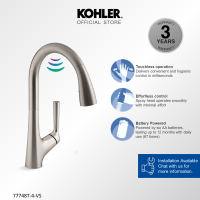
KOHLER Malleco Touchless Kitchen Tap / Mixer / Faucet K-77748T
$699.00$899.00
![[DBS] KOHLER Ladena Bathroom Sink Under-Counter K-2214X / K-2215X](https://sg-live.slatic.net/p/b2ff963f8f54cdfea619f65b7fdf8798.png_200x200q80.jpg)
[DBS] KOHLER Ladena Bathroom Sink Under-Counter K-2214X / K-2215X
$159.00$460.00
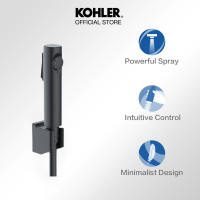
KOHLER Cuff 1.0/2.0 Handheld Spray / Bidet Spray K-98100T / K-R29782T / K-R98100T
$95.00$117.00
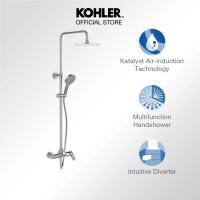
KOHLER Atom 3-Way Shower Column Thermostatic K-32404T
$649.00$854.00
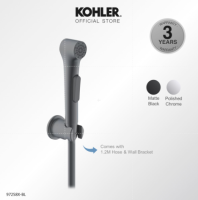
KOHLER Elate 1.0/2.0 Handheld Spray / Bidet Spray K-97258X / K-R29784T / K-R97258T
$220.00$310.00
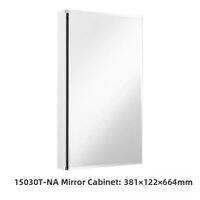
Kohler | Wall-Mounted Bathroom Mirror Cabinet with Storage
$425.93$1,066.95
![[DBS] KOHLER Grooming Mirror Cabinet K-29828K](https://sg-live.slatic.net/p/38358de401acdf403b664c348dc92fc3.jpg_200x200q80.jpg)
[DBS] KOHLER Grooming Mirror Cabinet K-29828K
$1,007.00$1,511.00
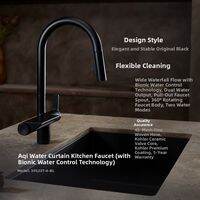
Kohler | Pull-down Waterfall Cold and Hot Water Kitchen Faucet
$620.40$1,154.27
About Kohler
KOHLER is the flagship brand of Kohler Co., a privately held American multinational corporation best known for its premium kitchen and bathroom products. Founded in 1873 in Wisconsin by Austrian immigrant John Michael Kohler, the company has evolved from an iron-and-steel foundry into a diversified global group with interests spanning kitchen and bath, decorative products, power systems, hospitality, wellness, and related design businesses.1
While the KOHLER name is most commonly associated with bathrooms, faucets, toilets, bathtubs, sinks, showers, and kitchen fixtures, the parent company’s operations extend significantly beyond plumbing. Its brand identity is anchored in a combination of design, craftsmanship, engineering, innovation, and what the company terms “gracious living.”2
Quick facts
| Item | Information |
|---|---|
| Brand | KOHLER |
| Parent company | Kohler Co. |
| Founded | 1873 |
| Founder | John Michael Kohler |
| Origin | Wisconsin, United States |
| Headquarters | Kohler, Wisconsin, USA |
| Ownership | Privately held / family-controlled |
| Main reputation | Premium kitchen & bathroom products |
| Other businesses | Decorative products, power systems, hospitality, wellness and golf |
| Current CEO & Chair | David Kohler |
| Brand positioning | Design-led, premium, innovative, craftsmanship-focused |
| Core philosophy | “Gracious living” |
| Major historical milestone | First Kohler bathtub in 1883 |
David Kohler represents the fourth generation of Kohler family leadership. The company describes itself as one of America’s oldest and largest privately held companies.3
Origins of KOHLER
The company’s history began in 1873 when John Michael Kohler purchased a small foundry in rural Wisconsin. Initially, the business was not focused on bathrooms; it manufactured cast-iron and steel products, including agricultural and industrial items.4
A pivotal breakthrough occurred approximately a decade later. In 1883, Kohler took a cast-iron product resembling a horse trough or hog-scalding vessel, coated it with enamel, and added four legs to create a functional bathtub. This invention became the company’s first bathtub and marked its entry into the plumbing industry.5
This origin story remains central to Kohler’s modern identity, illustrating a core philosophy: taking an ordinary functional object and transforming it through engineering, materials, and design into something desirable. Following this innovation, Kohler increasingly focused on plumbing products, and by the late 19th century, plumbing had become the company’s dominant business.6
Historical development
1873 — Foundation
John Michael Kohler established the company in Wisconsin as an iron-and-steel foundry.7
1883 — First bathtub
Kohler developed its first enameled cast-iron bathtub from a modified industrial vessel. This moment was pivotal in the company’s transformation into a plumbing manufacturer.8
Late 19th century — Plumbing specialization
The company expanded its plumbing business until it became the core of the enterprise. By 1900, plumbing accounted for almost all of Kohler’s profits.9
1920s — Design as a competitive advantage
Kohler began treating bathroom fixtures as design objects rather than purely utilitarian products. A notable example occurred in 1929, when Kohler’s Kathryn black fixture series was exhibited at New York’s Metropolitan Museum of Art.10 This signalled a philosophical shift where toilets, sinks, and faucets were viewed as integral elements of architecture and interior design.
1960s — Expansion beyond plumbing
The company expanded into categories such as cabinetry, further developing the concept of coordinated kitchen and bathroom environments.11
1970s — Art enters the company
In 1974, Kohler launched its Art/Industry program, inviting artists to work within its manufacturing environment. The company states it has hosted more than 500 resident artists from around the world through this initiative.12 This programme distinguishes Kohler from conventional plumbing manufacturers by integrating artistic practice with industrial production.
1990s onward — Globalization
Kohler expanded internationally, entering Asian markets in the 1990s and eventually developing a global manufacturing and distribution network.13
2023 — 150th anniversary
Kohler celebrated its 150th anniversary, highlighting four major brand pillars: Design, Innovation, Wellness, and Sustainability.14
Product portfolio
When consumers refer to “Kohler,” they typically mean the KOHLER kitchen and bathroom brand. However, Kohler Co. organises its broader business around four major areas:
- Kitchen & Bath
- Power
- Decorative Products
- Hospitality15
Kitchen & Bath
This segment remains the heart of the KOHLER consumer brand. Products include:
- Toilets
- Bidets and intelligent toilets
- Bathroom sinks
- Kitchen sinks
- Bathtubs
- Shower systems
- Showerheads
- Faucets (kitchen and bathroom)
- Mirrors
- Vanities and bathroom furniture
- Accessories
- Wellness and bathing products
- Smart and connected bathroom products
Kohler’s competitive advantage lies in providing an entire design language for a room, ensuring that bathtubs, faucets, toilets, sinks, and accessories form a coherent interior scheme.16
Premium market positioning
KOHLER generally occupies the premium to luxury end of the bathroom and kitchen market. It competes not only on technical functionality but also on a value chain of design, materials, engineering, brand, and experience. Consequently, KOHLER products often command higher price points than basic plumbing fixtures.
Rather than viewing a toilet merely as a functional sanitary product, Kohler approaches the bathroom as an experience and design environment incorporating aesthetics, ergonomics, technology, and wellness. This aligns with the company’s self-description as a leader in design, craftsmanship, and innovation.17
Status as a design brand
Kohler has deliberately blurred the boundary between industrial manufacturing and art. The 1929 Metropolitan Museum of Art exhibition demonstrated that bathroom fixtures could be presented as design objects, while the later Art/Industry program institutionalised collaboration between artists and manufacturing.18
As a result, Kohler’s brand philosophy is closer to “designing the bathroom as part of the home” than simply manufacturing plumbing hardware. This approach has secured KOHLER a strong presence among architects, interior designers, developers, hospitality designers, luxury residential projects, and high-end homeowners.
Brand philosophy
Several key concepts define Kohler’s corporate and brand communication:
- Design: Functional products are intended to be visually expressive and architecturally relevant.
- Innovation: Historically focused on materials and engineering, innovation now encompasses digital technology and connected products.
- Wellness: The bathroom is positioned as a space for relaxation, personal care, and wellness rather than mere sanitation.
- Sustainability: Water efficiency, recycled materials, and environmental considerations are integrated into product development.19
- Craftsmanship: The company emphasises manufacturing expertise and durable materials, particularly cast iron.
- “Gracious living”: This phrase encapsulates the brand’s proposition. Kohler aims to create environments that make everyday life more comfortable, beautiful, and enjoyable, describing its mission as helping people live “gracious, healthy, and sustainable lives.”20
Cast-iron heritage
The cast-iron bathtub is one of the products most closely associated with Kohler’s heritage. The material offers high durability, excellent heat retention, substantial construction, long service life, and a strong enamel surface. Kohler states that its modern cast-iron products use a minimum of 80% recycled material, linking its oldest manufacturing technology to current sustainability strategies. This exemplifies how the brand connects heritage, engineering, and sustainability.
Technology and the smart bathroom
Kohler has actively developed connected bathroom technology. Its modern ecosystem includes touchless controls, digital shower controls, smart toilets, integrated bidets, heated seats, automated flushing, personalised water temperature settings, lighting, audio integration, and app-connected controls.
The strategic direction is to transform the bathroom from a collection of independent fixtures into an integrated personal wellness environment, moving beyond the traditional model of separate toilet, sink, shower, and bathtub components.
Other brands within Kohler Co.
It is important to distinguish between KOHLER as a brand and Kohler Co. as the parent company. The parent company operates a portfolio of brands beyond the flagship name:
- KALLISTA: A luxury-oriented kitchen and bathroom brand focused on high-end faucets, fixtures, and complete design solutions.
- ANN SACKS: A premium decorative-surface and design brand specialising in tile, stone, plumbing, lighting, and accessories.21
- Robern: Known for bathroom cabinetry, vanities, mirrors, and related products.
This portfolio allows Kohler Co. to operate at various points within the luxury and premium design market without consolidating all offerings under a single brand identity.
Kohler Power
Kohler Co. maintains a substantial Power business that many consumers may not associate with the brand. This division involves engines, generators, backup power, power systems, energy-resiliency solutions, and clean-energy technologies. Power is identified as one of the company’s four major business groups, demonstrating that the corporate portfolio spans from luxury bathtubs to industrial power equipment.22
Hospitality and golf
Kohler Co. owns and operates luxury hospitality and golf properties, combining hotels, restaurants, spas, wellness facilities, interior design, golf courses, and culinary experiences. Notably, its Whistling Straits golf course in Wisconsin hosted the 2021 Ryder Cup, illustrating the brand’s extension beyond bathroom products.23
The hospitality business functions strategically as a living showroom for the Kohler philosophy, allowing guests to experience the company’s approach to architecture, bathrooms, kitchens, and wellness firsthand.
Sustainability initiatives
Sustainability has become increasingly central to Kohler’s operations:
- Water conservation: Water-efficient faucets, toilets, and shower products are a primary focus. Kohler reports that its WaterSense-labeled products sold in the U.S. since 2007 have helped save significant quantities of water and associated energy.24
- Recycled materials: The company uses recycled materials in products such as cast-iron fixtures and develops items incorporating repurposed materials.25
- KOHLER WasteLAB: This programme explores methods for converting manufacturing waste and byproducts into new materials and products.26
- Sustainable design: Sustainability is integrated directly into the product-design process rather than treated solely as an environmental compliance issue.
Art and culture
Kohler’s relationship with art is unusually deep for a manufacturing company. The Art/Industry residency programme brings artists into the manufacturing environment to work with industrial processes and materials.27 This creates a feedback loop where industrial manufacturing informs artistic experimentation, which in turn influences design culture and product development. This engagement helps explain why Kohler’s brand language tends to be more culturally sophisticated than that of conventional plumbing manufacturers.
Visual identity
The KOHLER brand communicates premium quality, modern American design, confidence, craftsmanship, architectural sophistication, innovation, wellness, and luxury. Products are typically photographed in highly designed environments rather than against plain backgrounds. This reflects the strategy of selling the idea of a beautifully designed kitchen or bathroom, with individual products like faucets serving as elements of that broader environment.
Target customers
KOHLER appeals to several distinct groups:
- Luxury homeowners: Individuals willing to invest in bathrooms and kitchens as significant parts of their home.
- Upper-middle-market consumers: Buyers seeking premium products without necessarily requiring ultra-luxury bespoke fixtures.
- Architects and interior designers: A critical audience capable of specifying KOHLER products across entire projects.
- Developers: Hotels, residential developments, and luxury properties that specify Kohler across multiple units.
- Hospitality sector: Hotels and resorts where bathroom and wellness experiences are key differentiators.
Main competitors
KOHLER operates in multiple competitive categories. In plumbing and bathroom products, key competitors include brands associated with:
- LIXIL (including GROHE and American Standard)
- Moen / Fortune Brands
- Hansgrohe
- TOTO
- Roca
- Villeroy & Boch
- Duravit
- Geberit
The competitive landscape varies considerably depending on whether the category is toilets, faucets, showers, bathtubs, bathroom furniture, or luxury decorative products.
Strategic differentiators
Kohler is distinguished by several strategic characteristics:
- Design-led positioning: The brand sells design, not just plumbing.
- Heritage: More than 150 years of history provides credibility in manufacturing and plumbing.28
- Integration of art and industry: The Art/Industry programme is a unique element of its identity.
- Diversified portfolio: Bathroom products, decorative products, power systems, hospitality, and golf create a broader corporate ecosystem than most plumbing brands.
- Family ownership: Kohler remains privately held with fourth-generation family leadership.29
- Lifestyle focus: The bathroom is treated as a lifestyle space rather than a purely functional area.
Summary
KOHLER is a 150-year-old American design and manufacturing brand that transformed plumbing fixtures from purely functional hardware into premium architectural, technological, and wellness products. Its evolution from an iron foundry to a diversified group explains why it does not fit neatly into the category of “bathroom manufacturer.” It is better understood as a design-led lifestyle and manufacturing group whose most recognizable consumer expression is KOHLER kitchen and bath.
References
- About us | Kohler
- Press Room – Kohler News and Media Relations | KOHLER
- About Us | Our Business Groups | KOHLER
- Kohler Co. Celebrates 150 Years of Bold Moves, Creativity, and Impact While Shaping the Next 150 Years of Its Iconic KOHLER Brand | KOHLER
- Kohler Celebrates 150 Years | KOHLER
- History of KOHLER Kitchens | KOHLER
- Kohler Co. Celebrates 145 Year Anniversary | KOHLER
- About Us | KOHLER
- About Us | Our History | KOHLER
- Sustainable Products | KOHLER
- Sustainable Products | KOHLER
- Our Impact | KOHLER
- About Us | Our History | KOHLER
- 10-K
- ko-20251231
- mas-20251231
- 10-K
- Kohler Inspires Transformation Through Innovation and Design at KBIS 2025 | Press Room | KOHLER
- About Kohler | 151 Years of Bathroom & Kitchen Excellence – Gracious Living Since 1873
- Our Impact | KOHLER
- About us | Kohler
- Our Impact | KOHLER
- About Us | Who We Are | KOHLER
- The History of Kohler | Studio KOHLER®
- KOHLER Sustainability Practices
- About Us | Our Business Groups | KOHLER
- The Bath Was Just The Beginning | KOHLER
- Sustainable Products | KOHLER
- About Us | Who We Are | KOHLER