Shop on Lazada
L’Oréal products
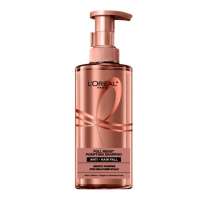
LOreal Paris Elseve Anti Hair Fall Shampoo 440ML
$19.68
Buy on Lazada![LOreal Professional Serie Expert Serioxyl Advanced Densifying Shampoo [For Thinning Hair] RELBE BEAUTY](https://sg-live.slatic.net/p/a2fa6b999213d81962e53197407177be.jpg_200x200q80.jpg)
LOreal Professional Serie Expert Serioxyl Advanced Densifying Shampoo [For Thinning Hair] RELBE BEAUTY
$68.00$95.00
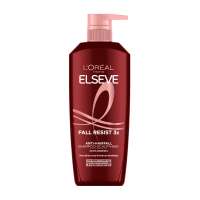
LOreal Paris Elseve Fall Resist 3X Anti-Hair Fall Shampoo 620ML
$16.04
Buy on Lazada
LOreal Paris Elseve Anti Hair Fall Conditioner 440ML
$19.68
Buy on Lazada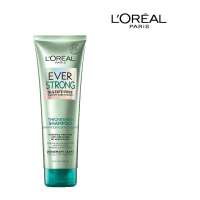
LOreal Paris EverStrong Thickening Shampoo
$18.67
Buy on Lazada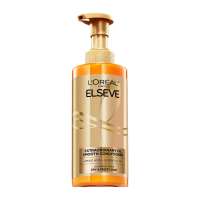
LOreal Paris Extraordinary Oil Silicone-Free Sleek Conditioner
$19.68
Buy on Lazada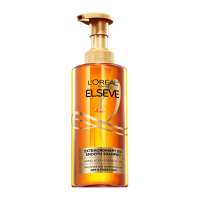
LOreal Paris Extraordinary Oil Silicone-Free Sleek Shampoo
$19.68
Buy on Lazada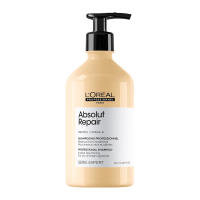
LOreal Serie Expert Protein + Omega-9 Absolut Repair Shampoo - By Beauty Language
$30.90
Buy on LazadaAbout L’Oréal
L’Oréal is a French multinational beauty and cosmetics group headquartered in Clichy, France. Recognised as one of the world’s largest companies dedicated exclusively to the beauty sector, it was founded in 1909 by chemist Eugène Schueller. Originally a hair dye manufacturer, the company has since expanded into haircare, skincare, makeup, fragrance, professional beauty, and dermatological products. Today, L’Oréal operates more than 40 international brands across over 150 countries and describes itself as the world’s number one beauty group.1
Note: The term “L’Oréal” may refer to either the L’Oréal Group (the parent conglomerate) or the L’Oréal Paris consumer brand. These are distinct entities; L’Oréal Paris is merely one of the many brands owned by the Group.
Basic Information
| Item | Information |
|---|---|
| Full name | L’Oréal S.A. / L’Oréal Groupe |
| Founded | 1909 |
| Founder | Eugène Schueller |
| Origin | France |
| Headquarters | Clichy, France |
| Industry | Beauty, cosmetics, personal care |
| Main businesses | Haircare, skincare, makeup, fragrance, professional beauty, dermatological beauty |
| International brands | 40 |
| Countries/markets | 150+ |
| Employees | 94,610 (as of 31 Dec 2025) |
| 2025 sales | €44.05 billion |
| CEO | Nicolas Hieronimus |
| Chairman | Jean-Paul Agon |
| Stock listing | Euronext Paris |
| Major divisions | Consumer Products, L’Oréal Luxe, Dermatological Beauty, Professional Products |
According to the 2025 annual report, the Group employed 94,610 people and achieved sales of €44.05 billion.2
Corporate Structure and Strategy
L’Oréal is best understood as a beauty conglomerate rather than a single cosmetics brand. Its core strategy involves owning and developing a diverse portfolio of brands positioned across different price points, consumer demographics, product categories, and distribution channels.
Key examples of this segmentation include:
- Mass-market beauty: L’Oréal Paris, Garnier, Maybelline New York
- Professional haircare: Kérastase, Redken, Matrix
- Luxury beauty: Lancôme, Yves Saint Laurent Beauty, Armani Beauty, Prada Beauty
- Dermatological skincare: La Roche-Posay, CeraVe, Vichy
- Specialist/niche beauty: Aesop, SkinCeuticals, Medik8
This multi-brand approach enables L’Oréal to compete simultaneously across supermarkets, drugstores, pharmacies, salons, department stores, luxury boutiques, e-commerce platforms, and travel retail outlets.3
History
1909: Foundation
The origins of L’Oréal lie with Eugène Schueller, a young French chemist and entrepreneur. In 1909, Schueller established the Société Française des Teintures Inoffensives pour Cheveux (“French Society for Safe Hair Dyes”) to produce hair dyes for Parisian hairdressers.
His founding innovation was predicated on the principle that beauty products should be developed through chemistry and scientific research. This ethos remains a defining characteristic of the company. The first hair colour product was named L’Auréale, referencing a fashionable hairstyle of the era and golden hair tones. The name eventually evolved into Oréal and subsequently L’Oréal.4
1930s: Diversification
During the 1930s, L’Oréal expanded beyond professional hair colouring. Significant innovations included:
- DOP (1934): Marketed as the company’s first soap-free shampoo.
- Ambre Solaire (1935): An early sun protection product that established L’Oréal’s presence in the skincare and sun care segments.
In 1939, the company officially adopted the name L’Oréal and relocated its headquarters to 14 Rue Royale in Paris.5
1950s–1980s: International Expansion
Following World War II, L’Oréal entered a significant phase of growth under chairman François Dalle. The company’s strategy increasingly focused on five pillars: scientific research, international expansion, advertising, acquisitions, and new brand development.
L’Oréal listed on the stock exchange in 1963. During this period, it acquired or developed key brands including Lancôme, Biotherm, Mixa, and Garnier, while launching new lines such as Kérastase.6 This era cemented the modern L’Oréal formula of building a portfolio of distinct brands for varied consumer bases rather than relying on a single identity.
Business Model
L’Oréal’s contemporary business model rests on four primary pillars.
Research and Science
Science has been integral to the company since its inception. L’Oréal currently employs more than 4,000 scientists and operates 22 research centres within a global research-and-innovation network.7
Research activities encompass skin biology, hair and scalp science, cosmetic chemistry, formulation, dermatology, biotechnology, packaging, sustainability, and digital technology including AI. This scientific foundation is particularly critical in skincare and haircare, where efficacy claims serve as a major market differentiator.
Brand Portfolio
Rather than utilising a monolithic brand, L’Oréal maintains a portfolio with distinct identities tailored to specific segments:
- L’Oréal Paris: Accessible, mainstream beauty
- Garnier: Accessible skincare and haircare
- Maybelline: Mass-market makeup
- Lancôme: Luxury skincare, makeup, and fragrance
- Kérastase: Premium professional haircare
- La Roche-Posay: Dermatological skincare
- CeraVe: Dermatologist-oriented skincare
- Aesop: Premium niche skincare
This structure allows the Group to address a vast range of consumer segments without diluting individual brand equity.
Global Distribution
L’Oréal distributes products through nearly every major beauty channel, including supermarkets, drugstores, pharmacies, beauty retailers, department stores, salons, luxury stores, e-commerce sites, and travel retail. This extensive reach provides access to consumers ranging from those seeking affordable daily essentials to high-end luxury buyers.8
Acquisitions
Acquisitions form a central component of L’Oréal’s growth strategy. Instead of developing every new category internally, the Group frequently acquires or invests in brands to secure new consumers, geographic markets, technologies, product categories, premium positioning, and emerging trends. Consequently, L’Oréal functions more as a portfolio of beauty companies than a single cosmetics manufacturer.
Divisions
L’Oréal organises its global portfolio into four operational divisions.9
Consumer Products
With the stated purpose of “democratizing the best of beauty”, this division targets the broadest consumer market. Major brands include L’Oréal Paris, Garnier, Maybelline New York, NYX Professional Makeup, 3CE, Essie, Mixa, and Dr.G.
In 2025, the Consumer Products Division generated approximately €16.1 billion, representing about 36.5% of Group sales.10
L’Oréal Luxe
This division focuses on premium and luxury beauty. Its portfolio includes Lancôme, Yves Saint Laurent Beauty, Armani Beauty, Kiehl’s, Helena Rubinstein, Valentino Beauty, Aesop, Prada Beauty, Biotherm, Shu Uemura, IT Cosmetics, Urban Decay, Mugler, Maison Margiela, and Ralph Lauren fragrances.
Luxe generated approximately €15.6 billion in 2025, accounting for roughly 35.4% of Group sales. This division is strategically vital for participation in the high-margin luxury beauty and fragrance markets.
Dermatological Beauty
Focusing on skincare with a strong dermatological and scientific positioning, this division comprises brands such as La Roche-Posay, CeraVe, Vichy, SkinCeuticals, and Skinbetter science.
In 2025, the division recorded sales of around €7.2 billion, growing 5.5% on a like-for-like basis.11 It has become a key growth driver as consumers increasingly view skincare through the lens of dermatology, ingredients, and skin health.
Professional Products
This division serves beauty professionals, particularly hair salons. Key brands include L’Oréal Professionnel, Kérastase, Redken, Matrix, Pureology, and Biolage.
It generated approximately €5.2 billion in 2025, recording 7.5% like-for-like growth.12
Brand Portfolio Overview
The diversity of the L’Oréal portfolio is illustrated below:13
| Segment | Examples |
|---|---|
| Mass beauty | L’Oréal Paris, Garnier, Maybelline |
| Makeup | Maybelline, NYX, Lancôme, Urban Decay, IT Cosmetics |
| Skincare | CeraVe, La Roche-Posay, Vichy, Kiehl’s, SkinCeuticals |
| Haircare | L’Oréal Paris, Garnier, Kérastase, Redken, Matrix |
| Professional hair | Kérastase, Redken, L’Oréal Professionnel |
| Luxury | Lancôme, YSL Beauty, Armani Beauty, Prada Beauty |
| Fragrance | Armani, YSL, Prada, Valentino, Mugler, Ralph Lauren |
| Niche/premium | Aesop, Medik8, Skinbetter science |
The portfolio is deliberately heterogeneous to maximise market coverage.
Distinction Between L’Oréal Paris and L’Oréal Group
It is essential to distinguish between the corporate entity and the consumer brand.
- L’Oréal Group: The parent conglomerate that owns or operates dozens of international beauty brands.
- L’Oréal Paris: A specific consumer brand within the Group, positioned around accessible beauty with products spanning hair colour, haircare, skincare, makeup, and men’s grooming.
While statements such as “L’Oréal owns Lancôme” or “L’Oréal owns Garnier” are conceptually accurate regarding ownership, L’Oréal Paris is itself just one brand within the wider L’Oréal Groupe ecosystem.
Financial Performance
L’Oréal has developed into a massive global beauty enterprise. For the fiscal year 2025, the Group reported:
- €44.05 billion in sales
- +4.0% like-for-like growth
- 94,610 employees
- 40 international brands
- Operations in over 150 countries/markets
The 2025 sales breakdown by division was as follows:
| Division | 2025 Sales |
|---|---|
| Consumer Products | €16.1B |
| L’Oréal Luxe | €15.6B |
| Dermatological Beauty | €7.2B |
| Professional Products | €5.2B |
| Total | €44.05B |
By product category, skincare was the largest segment, accounting for roughly 37% of sales, followed by makeup, haircare, and fragrances.14
Research and Innovation
Research constitutes a fundamental element of L’Oréal’s corporate identity. Having begun as a scientific hair-dye business, the company has maintained this focus for over a century. Contemporary research spans chemistry, biology, dermatology, formulation, digital technology, and AI.
L’Oréal states that it employs more than 4,000 scientists alongside over 8,000 Digital, Tech, and Data talents.15 The company is also heavily investing in Beauty Tech, leveraging AI and digital personalisation to transform how consumers discover, test, and purchase beauty products.16
Marketing and Advertising
L’Oréal is renowned for its marketing capabilities as much as its products. Historically, the company’s success stemmed from understanding that beauty is not purely functional but also communicates attractiveness, confidence, identity, social status, and self-expression. This insight drove significant investment in advertising, celebrity endorsements, fashion, entertainment, and increasingly, social media and influencer partnerships.
One of the company’s most enduring slogans is “Because You’re Worth It.” Closely associated with L’Oréal Paris, this tagline represented a shift in beauty advertising towards emphasising self-worth and personal empowerment rather than solely focusing on product efficacy.
Globalisation and Localisation
As a fundamentally global company selling in 150+ countries, L’Oréal adapts its offerings to local markets rather than distributing identical products worldwide. Beauty preferences vary significantly based on skin tone, hair texture, climate, cultural standards, preferred ingredients, purchasing power, cosmetic routines, and distribution habits.
Consequently, L’Oréal’s global strategy combines universal brands with local adaptation. In 2025, sales were distributed across Europe, North America, North Asia, SAPMENA-SSA (South Asia Pacific, Middle East, North Africa, Sub-Saharan Africa), and Latin America.17
Sustainability
Through its L’Oréal for the Future programme, the Group has made sustainability a corporate priority. Key focus areas include reducing greenhouse gas emissions, renewable energy, sustainable sourcing, water management, packaging circularity, biodiversity, social inclusion, and community investment.
According to its 2025 reporting, L’Oréal achieved 100% renewable energy usage and continued progress on environmental and social goals.18 The company also reported receiving a triple-A CDP rating for ten consecutive years.19 As with any major multinational, these claims and performance metrics are subject to independent evaluation.
Corporate Leadership
As of 2026, Nicolas Hieronimus serves as the Chief Executive Officer of L’Oréal, having assumed the role in 2021 after an extensive career within the company. Jean-Paul Agon serves as Chairman of the Board; he previously held the CEO position before transitioning to Chairman. Both roles are confirmed in L’Oréal’s 2025 Annual Report.20
Competitive Advantage
L’Oréal’s success is attributed to several mutually reinforcing factors:
- Scientific Expertise: Continuous investment in beauty research since foundation.
- Brand Portfolio Breadth: Ability to serve mass, premium, professional, luxury, and dermatological segments simultaneously.
- Distribution Strength: Presence in nearly every major beauty channel.
- Global Scale: Capacity to amortise research, manufacturing, marketing, and technology costs across a massive international base.
- Strategic Acquisitions: Entry into new categories and demographics via established brands.
- Marketing Prowess: Historical strength in building recognisable global brands.
- Continuous Innovation: Ongoing development of formulations, ingredients, packaging, and technologies.
- Consumer Segmentation: Ownership of brands with distinct personalities rather than forcing consumers into a single identity.
Ultimately, L’Oréal’s competitive advantage lies not merely in manufacturing cosmetics, but in building, managing, and scaling beauty brands.
Competitive Landscape
L’Oréal competes with companies such as Estée Lauder Companies, Shiseido, Procter & Gamble, Unilever, Coty, Beiersdorf, Kao, and Puig. However, its structure is distinctive due to the breadth of its portfolio. Unlike competitors who may specialise in specific tiers, L’Oréal participates across the entire spectrum from drugstore beauty and pharmacy skincare to salon haircare, prestige cosmetics, luxury fragrance, and niche skincare.
Strategic Direction
As of 2026, several strategic themes are prioritised:
Beauty Tech and AI
Technology is increasingly viewed as part of the consumer beauty experience. AI applications support product recommendations, personalised routines, virtual try-ons, consumer insights, marketing, product development, and employee productivity. In 2025, more than 65,000 employees were upskilled in generative AI.
Dermatological Beauty
Brands like CeraVe and La Roche-Posay provide exposure to the rapidly expanding intersection of beauty, skincare, and dermatology.
Luxury Beauty
Luxury remains a primary growth engine, anchored by brands such as Lancôme, YSL Beauty, Armani Beauty, Prada Beauty, and Aesop.
Emerging Markets
L’Oréal continues to pursue growth in emerging markets where rising incomes drive beauty consumption. The 2025 results specifically highlighted ongoing efforts in markets including Brazil, Mexico, GCC nations, and Vietnam.21
Summary
L’Oréal can be summarised as a French beauty conglomerate founded in 1909 that has evolved from a hair-dye manufacturer into the world’s largest beauty group. This position was achieved by combining scientific research, global distribution, powerful marketing, strategic acquisitions, and a portfolio of over 40 international brands.22
Beyond cosmetics, the company’s core capability is transforming science, consumer insight, branding, and distribution into scalable beauty businesses. This explains its ability to manage disparate brands such as Maybelline, Lancôme, Kérastase, La Roche-Posay, CeraVe, and Aesop under one corporate umbrella. The history of L’Oréal effectively mirrors the industrialisation and globalisation of modern beauty, evolving from a Parisian chemist’s workshop in 1909 to a €44.05-billion global ecosystem.
References
- Discover L’Oréal Groupe
- L’Oréal Group : Culture & Heritage
- L’Oréal Annual Report 2025 | L’Oréal Finance
- 5.6 Notes to the Consolidated Financial Statements – Page 302 | L’Oréal – 2025 Universal Registration Document
- L’Oréal Group : Our Global Brands Portfolio
- 1. Presentation of the Group – Integrated Report – Page 5 | L’Oréal – 2025 Universal Registration Document
- L’Oréal’s history: the adventure of beauty – L’Oréal
- L’Oréal’s history: the adventure of beauty
- 2025 Annual Results | L’Oréal Finance
- Financial Performance & Key Figures | L’Oréal Finance
- L’Oréal completes the acquisition of Kering Beauté within the framework of its strategic alliance with Kering
- Dive into the beauty of performance with the 2025 Annual Report | L’Oréal Finance
- Annual Report | L’Oréal Finance
- Strategy L’Oréal | L’Oréal Finance
- Introduction – Page 308 | L’Oréal – 2025 Universal Registration Document
- 6.5 Notes to the financial statements of L’Oréal SA – Page 364 | L’Oréal – 2025 Universal Registration Document
- People L’Oréal | L’Oréal Finance
- 6.5 Notes to the financial statements of L’Oréal SA – Page 363 | L’Oréal – 2025 Universal Registration Document
- 1.1 L’Oréal Groupe fundamentals – Page 13 | L’Oréal – 2025 Universal Registration Document
- Rapport Annuel | L’Oréal Finance
- L’Oréal Group – Documents
- Découvrez le Groupe L’Oréal