Shop on Lazada
La Chapelle products
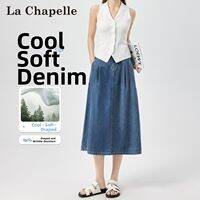
La Chapelle | Lycell Denim Skirt for Women Summer Mid-Length A-line High Waist Style
$39.90$51.02
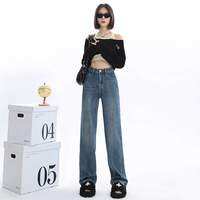
La Chapelle | Slim Fit Light Colored Tencel Wide Leg Jeans Thin High Waist
$38.90$80.84
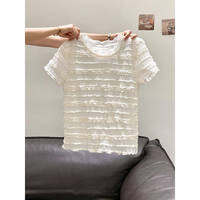
La Chapelle | Cute and Stylish Sweet Korean Style T Shirt
$30.62$44.00
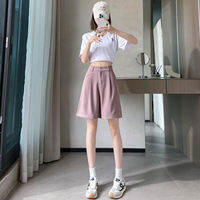
La Chapelle | Icy Silk High Waist A-line Loose Wide Leg Shorts
$26.72$36.23
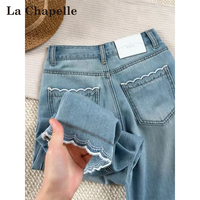
La Chapelle | Lightweight Summer Tencel High Waist Straight Leg Wide Jeans
$37.63$47.77
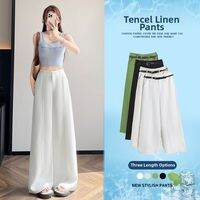
La Chapelle | Summer Thin Premium Drape Silk Straight Trousers
$36.57$45.99
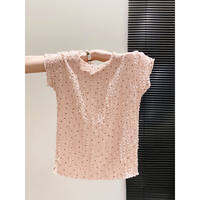
La Chapelle | Korean Gentle Style Slimming Polka Dot T-Shirt
$23.35$33.51
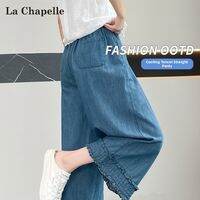
La Chapelle | Flared Ruffled Hem Ankle Jeans for Women Summer Lightweight High Waist Elastic Wide Leg Casual Pants
$38.55$45.23
About La Chapelle
La Chapelle is a Chinese fashion brand and the flagship label of Shanghai La Chapelle Fashion Co., Ltd. Established in Shanghai in the late 1990s, it grew to become one of China’s most prominent domestic women’s fashion retailers, particularly during the 2000s and 2010s. The brand was historically associated with affordable, feminine, French-inspired fashion, while its parent company evolved into a large multi-brand fashion group.
It is necessary to distinguish between La Chapelle as a consumer-facing fashion label and La Chapelle Fashion as the corporate entity that owned and operated multiple brands. As of 2026, the brand’s business history is notable for its trajectory from a small Shanghai womenswear label to a nationwide retail giant with more than 9,000 stores, followed by dual listings in Hong Kong and Shanghai, a severe financial crisis, delisting, and court-supervised bankruptcy reorganization. With a reorganization plan approved in 2025, the corporate narrative is best characterised as a restructuring and attempted revival rather than a completed liquidation.1
Basic information
| Item | Information |
|---|---|
| Brand name | La Chapelle / 拉夏贝尔 |
| Chinese name | 拉夏贝尔 |
| Country of origin | China |
| Origin city | Shanghai |
| Brand founded | 1998 (per corporate history) |
| Commercial operation | 2001 |
| Founder | Xing Jiaxing (邢加兴) |
| Original category | Women’s ready-to-wear |
| Core positioning | Mass-market / affordable fashion |
| Historical core customer | Young and middle-young urban women |
| Major style associations | Feminine, romantic, elegant, French-inspired |
| Corporate group | Shanghai La Chapelle Fashion Co., Ltd. |
| Hong Kong listing | 2014 |
| Shanghai A-share listing | 2017 |
| Shanghai A-share delisting | 2022 |
| Hong Kong H-share delisting | 2024 |
| Current corporate situation | Bankruptcy/reorganization process; plan approved 2025 |
Corporate historical documents indicate the brand’s predecessor dates to 1998, although the entity operating under the La Chapelle name was established in March 2001. The 2014 Hong Kong prospectus specifically records 2001 as the launch year for the La Chapelle brand.2
Name and brand concept
The name “La Chapelle” is French for “the chapel” and was selected to evoke French culture and a romantic European atmosphere. Rather than presenting itself as a traditional Chinese fashion label, the brand’s identity was built around a distinctly French-influenced aesthetic, differentiating it from many domestic apparel companies of its era.
Historical corporate materials described the principal La Chapelle brand as elegant, classic and romantic.3 This positioning distinguished it from ultra-fast-fashion models; instead, it offered accessible feminine fashion with European styling through a large physical retail network. In China, the transliterated name 拉夏贝尔 became significantly more recognisable than the literal French meaning.
Foundation and early history
1998–2001: Founding
La Chapelle’s history is generally traced to 1998, when entrepreneur Xing Jiaxing (邢加兴) founded the brand in Shanghai. The corporate predecessor, Shanghai Xuhui La Chapelle Fashion Limited, was formally established in March 2001, with Xing Jiaxing holding 90% of the original registered capital and Wu Jinying holding 10%. The company commenced operations and launched the La Chapelle brand that year.4
La Chapelle emerged during a period of rapid expansion in China’s consumer economy. Key market conditions included a growing urban middle class, increased consumption of fashion as a lifestyle product, the proliferation of shopping malls and department stores, greater visibility of international brands, and demand for fashionable domestic products at accessible price points. La Chapelle positioned itself directly within this emerging market segment.
Shift to a direct-retail model
A pivotal strategic shift occurred in 2003 when the company adopted a direct-operated retail model. Moving away from wholesale distribution allowed La Chapelle to exercise greater control over store design, product presentation, pricing, inventory management, customer experience, brand image and location strategy. The company subsequently began developing a multi-brand strategy in 2004.5
Multi-brand strategy
The parent company sought to build a diversified fashion portfolio targeting distinct consumer segments through multiple labels.
La Chapelle
The flagship women’s brand emphasised femininity, elegance, romance, classic fashion and urban womenswear, targeting consumers seeking fashionable clothing at accessible prices.3
La Chapelle Sport
Launched in 2003, this brand adopted a more casual and sporty aesthetic, described in historical materials as casual, fun and stylish.4
La Chapelle Homme
Introduced in 2011, this menswear extension allowed the group to expand beyond its original womenswear specialisation.5
7.Modifier / 7M
Launched in 2012, 7.Modifier targeted a younger women’s fashion segment.
La Babité
Also launched in 2012, La Babité was positioned towards a younger demographic with an East Asian and Korean-influenced aesthetic.
La Chapelle Kids
Introduced in 2013, this label extended the portfolio into children’s apparel.
Pote
Pote was another label introduced during the group’s expansion phase.
By the mid-2010s, the group had accumulated a substantial portfolio. Corporate reporting in 2018 described nearly 20 fashion brands covering womenswear, menswear, childrenswear and household products, although womenswear remained the dominant business.6
Product offering
At its peak, La Chapelle operated as a full-look women’s fashion retailer. Products included dresses, skirts, T-shirts, shirts, knitwear, blouses, trousers, jackets, coats, outerwear and fashion accessories. The emphasis was on providing a complete wardrobe rather than specialising in a single category.7 Consequently, the brand’s appeal relied less on technical innovation and more on styling, fashionability, store experience and affordability.
Target customer
Historically, La Chapelle’s core audience comprised urban Chinese women, particularly younger and middle-young consumers. The broader womenswear customer base was described as women aged approximately 18 to 38, with individual brands differentiated by age, taste and lifestyle.8
The brand effectively occupied a position between traditional Chinese apparel brands and international affordable-fashion or premium labels. Its value proposition remained consistent: fashionable enough to feel aspirational, yet affordable enough for mass consumption.
Rise of La Chapelle
The 2010s represented the company’s golden period, driven by the expansion of China’s shopping-mall economy and growing demand for domestic fashion brands. Pursuing an aggressive store-opening strategy, the group developed a vast retail footprint.
By 2018, the group operated 9,269 retail outlets across mainland China, comprising 9,238 directly operated stores and 31 franchised stores.9 Due to its ambition to create a large, nationwide, vertically controlled fashion-retail network, La Chapelle was sometimes compared to Zara, with contemporary reports describing it as aiming to become a Chinese equivalent.10 However, unlike Zara’s model based on rapid product development and supply-chain responsiveness, La Chapelle’s historical strength was tied more closely to brand portfolio expansion and physical retail scale.
E-commerce expansion
Recognising the shift towards e-commerce, La Chapelle launched its online flagship store on Tmall in August 2014 as part of an omnichannel strategy combining physical stores with online retail.11 The company subsequently partnered with platforms including JD.com and VIP.com to integrate its offline network with China’s digital shopping ecosystem.12 This transition proved critical, as the extensive store network eventually shifted from being a primary advantage to a significant liability.
IPOs and corporate expansion
During its expansion, La Chapelle attracted institutional investment from parties including Goldman Sachs.13
Hong Kong Stock Exchange (2014)
La Chapelle listed on the Main Board of the Hong Kong Stock Exchange on 9 October 2014, transforming from a domestic retailer into a publicly traded group with international capital-market visibility.8
Shanghai Stock Exchange (2017)
The company listed its A shares on the Shanghai Stock Exchange on 25 September 2017.14 For a period, La Chapelle was simultaneously listed in both Hong Kong and Shanghai, reflecting its status as one of China’s largest publicly traded apparel businesses.
Peak scale
In 2018, the group operated 9,269 retail outlets. During the first half of 2018, its five major women’s brands—La Chapelle, Puella, 7 Modifier, La Babité and Candie’s—generated RMB 3.549 billion in revenue, representing 81% of group revenue for that period.15 By this stage, the entity had evolved from a single womenswear brand into a large-scale fashion retail conglomerate.
Onset of crisis
Structural problems became apparent around 2018–2019 following extremely rapid expansion involving thousands of stores, large inventories and high operating costs.
Physical store burden
The vast retail network incurred substantial fixed costs for rent, staffing, maintenance, inventory and logistics. When store productivity declined, these costs persisted.
Inventory pressure
Unsold inventory became a major source of cash-flow pressure, with reporting in 2019 citing inventory valued at approximately RMB 2.2 billion at the end of June.16
E-commerce competition
The competitive landscape shifted dramatically with the rise of platforms such as Taobao, Tmall and JD.com, alongside digital-native fashion companies capable of responding faster to trends.
Changing consumer preferences
Younger consumers increasingly demanded faster fashion cycles, stronger individuality, social-media-driven trends, lower prices and greater online convenience. La Chapelle’s traditional retail infrastructure was not optimised for this environment.
Store closures
The retail network contracted sharply. From 9,066 outlets at the time of its 2017 listing, domestic retail outlets fell to 6,799 by June 2019.9 By September 2021, the company reportedly operated only 349 stores, representing one of the most dramatic retail-network contractions among major Chinese apparel brands.17
Financial crisis
Operational challenges escalated into a severe financial crisis characterised by liquidity difficulties and creditor action.18 The company entered a cycle where rapid expansion led to high fixed costs, weak store productivity, excess inventory and cash-flow pressure, necessitating store closures that further eroded scale. The COVID-19 pandemic exacerbated these issues. Later restructuring materials attributed the deterioration to incorrect environmental judgments, strategic misalignment, rapid expansion and an imbalanced cost structure.19
Delisting
Following sustained losses and negative net assets, La Chapelle’s A shares were removed from the Shanghai Stock Exchange in 2022.20 Its Hong Kong-listed H shares were subsequently cancelled effective 14 November 2024 after a prolonged trading suspension.21 The company thus transitioned from a dual-listed fashion group to an entity undergoing court-supervised restructuring.
Bankruptcy and restructuring
Although the company entered bankruptcy proceedings, the process moved towards reorganization rather than straightforward liquidation. In February 2023, the Shanghai Third Intermediate People’s Court accepted the bankruptcy/liquidation case, and in September 2023, ordered the company into reorganization.22
Creditors and investors subsequently voted in favour of a restructuring plan, which the Shanghai Third Intermediate People’s Court approved on 16 May 2025.23 As of 2026, La Chapelle is accurately described as a historic Chinese fashion brand whose former parent company underwent severe financial distress and court-supervised reorganization, with an approved plan aimed at revitalization.
Analysis of failure
La Chapelle’s difficulties stemmed largely from a business-model mismatch rather than initial brand unpopularity. The strategies that drove success eventually contributed to structural weaknesses:
| Growth strategy | Later problem |
|---|---|
| Thousands of physical stores | Extremely high fixed costs |
| Multiple brands | Complex management |
| Rapid expansion | Expansion outran operational efficiency |
| Large inventory | Cash tied up in unsold products |
| Department-store presence | Consumers moved online |
| Mass-market positioning | Fierce price competition |
| Traditional fashion cycles | Digital competitors moved faster |
| Huge organization | More difficult to adapt quickly |
La Chapelle is frequently cited as an example of the challenges facing traditional Chinese apparel retailers during the transition from shopping-mall retail to digital-first fashion, struggling against rapidly changing consumer behaviour and e-commerce competition.7
Comparison with Zara
While sometimes termed “China’s Zara” due to similarities in mass-market positioning, retail footprint and accessible pricing, the comparison requires qualification. Zara’s Inditex model relies on sophisticated supply-chain integration and rapid response to demand. In contrast, La Chapelle’s expansion depended heavily on store count and brand portfolio growth. While La Chapelle replicated visible characteristics of modern fast fashion, it struggled to reproduce the underlying operational economics, demonstrating that physical scale alone does not guarantee long-term competitiveness.
Brand image and design language
Historically, La Chapelle’s aesthetic combined French inspiration with feminine, romantic and accessible urban styling. Visual characteristics included dresses, floral patterns, soft colours, feminine silhouettes, tailoring, decorative details and European-inspired merchandising. IPO documentation explicitly characterised the core brand as elegant, classic and romantic,24 designed to offer sophistication above basic mass-market clothing without entering luxury price territory.
Significance in Chinese fashion
Despite later difficulties, La Chapelle remains historically significant as one of the first generations of Chinese fashion companies to build a national-scale branded retail network. Key achievements include:
- Domestic fashion branding: Demonstrated that a Chinese company could build a recognisable nationwide womenswear brand rather than solely manufacturing for foreign labels.
- Retail scale: Few Chinese fashion companies achieved a network approaching La Chapelle’s peak of more than 9,000 stores.25
- Multi-brand retail: Pioneered a portfolio strategy targeting diverse demographics.
- Capital markets: Dual listings provided unusually high visibility among Chinese consumer companies.
- Omnichannel transition: Expansion onto Tmall and other platforms reflected the broader transformation of Chinese retail in the 2010s.26
Timeline
| Year | Event |
|---|---|
| 1998 | La Chapelle brand founded in Shanghai by Xing Jiaxing |
| 2001 | Shanghai Xuhui La Chapelle Fashion established; La Chapelle formally launched |
| 2003 | La Chapelle Sport launched; company moved toward direct retail |
| 2004 | Company adopted a multi-brand strategy |
| 2010 | Institutional investment accelerated |
| 2011 | Corporate restructuring into a joint-stock company; La Chapelle Homme launched |
| 2012 | 7.Modifier and La Babité launched |
| 2013 | La Chapelle Kids and Pote introduced |
| 2014 | Tmall flagship launched; Hong Kong Stock Exchange listing |
| 2017 | Shanghai Stock Exchange A-share listing |
| 2018 | Retail network reached approx. 9,269 outlets; major financial stress began |
| 2019 | Massive store closures; liquidity and inventory problems escalated |
| 2020 | COVID-19 intensified difficulties |
| 2021 | Creditors sought liquidation; store network fell dramatically |
| 2022 | A shares delisted from Shanghai |
| 2023 | Bankruptcy/liquidation proceedings accepted; entered reorganization |
| 2024 | Hong Kong H-share listing cancelled |
| 2025 | Reorganization plan approved by Shanghai Third Intermediate People’s Court |
| 2026 | Company remains in restructuring/revival process |
Historical milestones are supported by the company’s prospectus, annual and interim reports, and subsequent restructuring disclosures.27
Current status
The La Chapelle brand retains substantial historical recognition in China, but the corporate organisation has undergone rapid expansion, financial crisis, massive store closures, A-share delisting, bankruptcy proceedings and reorganization. The approval of the reorganization plan in 2025 indicates that the objective is to provide the business with an opportunity to rebuild, rather than marking a definitive end.28
References
- La ChapelleShanghai La Chapelle Fashion Co., Ltd.(
- JunHe Assists La Chapelle in Obtaining Court Approval for …
- 拉夏贝尔品牌介绍_拉夏贝尔是哪个公司品牌?-百强排行网
- La ChapelleShanghai La Chapelle Fashion Co., Ltd.(a joint stock company incorporated in the People’s Republic of China with limited liabilityINTERIM REPORT 2018(Stock Code: 06116)
- 拉夏贝尔海淘商城入口_La Chapelle是什么牌子
- Troubled China Fashion Brand La Chapelle Vows to Fight …
- Established Chinese Apparel Brands Struggle to Stay …
- La ChapelleShanghai La Chapelle Fashion Co., Ltd.(
- Chinese Ladies Fashion Brand La Chapelle Closes …
- 新疆拉夏貝爾服飾股份有限公司 Xinjiang La Chapelle …
- 新疆拉夏貝爾服飾股份有限公司 Xinjiang La Chapelle …
- JunHe Assists La Chapelle in Obtaining Court Approval for its Reorganization Plan after its A+H | Highlight | Chambers and Partners
- 商业故事|国产女装沉浮:拉夏贝尔陨落,国风品牌潮起 – 21经济网
- 公司公告_拉夏贝尔2019年年度报告新浪财经_新浪网
- 福建名企拉夏贝尔跌落:半年巨亏5亿,关店2400家 _澎湃号·媒体_澎湃新闻-The Paper
- 拉夏贝尔官网介绍(lachapelle.cn)-官网导航
- Naf Naf : qui est Shanghai La Chapelle Fashion Co, le repreneur annoncé ? – FashionNetwork Tunisie
- 退市拉夏(603157)公司资料_新浪财经_新浪网
- 拉夏贝尔集团携旗下品牌推出520特别活动-美通社PR-Newswire
- 上海拉夏貝爾服飾股份有限公司公佈2015年之中期業績-美通社PR-Newswire
- 拉夏贝尔正式启动旗下La Chapelle品牌升级计划-美通社PR-Newswire
- 拉夏貝爾正式啟動旗下La Chapelle品牌升級計劃-美通社PR-Newswire
- 拉夏贝尔-快懂百科
- Apparel brand La Chapelle’s reorganisation plan approved …
- “China’s Zara” finally liquidates after years of financial …
- LaChapelle是什么牌子_拉夏贝尔品牌是什么档次?-百强排行网
- Shanghai La Chapelle Fashion Co., Ltd.
- 新疆拉夏贝尔服饰股份有限公司 _ 百科