Shop on Lazada
Lanvin products
![Lanvin Eclat Darpege Eau de Parfum spray 100ml [TESTER PACK] - without cap](https://sg-live.slatic.net/p/ab705190539e03b2f41ff9a0ad95d304.jpg_200x200q80.jpg)
Lanvin Eclat Darpege Eau de Parfum spray 100ml [TESTER PACK] - without cap
$45.90$149.00
![Lanvin Jeanne Eau De Parfum Spray 100ml [TESTER PACKAGING] - Eclat Parfum](https://sg-live.slatic.net/original/1c0a636692903e5390fcccad812b4694.jpg_200x200q80.jpg)
Lanvin Jeanne Eau De Parfum Spray 100ml [TESTER PACKAGING] - Eclat Parfum
$38.00$120.00
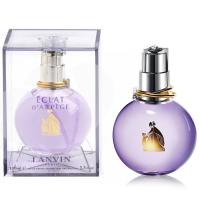
Lanvin Eclat DArpege Eau De Perfume For Women 100ml
$35.20$200.00
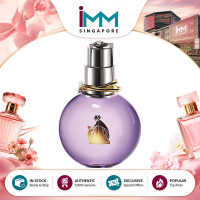
【Hot selling】 Lanvin Éclat dArpège Eau de Parfum 100 ml
$72.25$120.00
![Lanvin Eclat DArpege Pour Homme Eau De Toilette Spray 100ml [TESTER PACKAGING] - Eclat Parfum](https://sg-live.slatic.net/p/6c13d7e2d533a2d45363553914cf96f5.jpg_200x200q80.jpg)
Lanvin Eclat DArpege Pour Homme Eau De Toilette Spray 100ml [TESTER PACKAGING] - Eclat Parfum
$45.90$210.00
![Lanvin Modern Princess Eau De Parfum Spray 90ml [TESTER PACKAGING] - Eclat Parfum](https://sg-live.slatic.net/p/9e515eb9aa85616cce058471fbdfa0c4.jpg_200x200q80.jpg)
Lanvin Modern Princess Eau De Parfum Spray 90ml [TESTER PACKAGING] - Eclat Parfum
$45.00$126.00
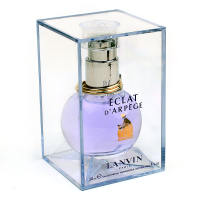
LANVIN ECLAT DARPEGE EDP FOR WOMEN 100ML - BEAUTY LANGUAGE
$48.41$145.00
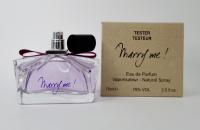
Lanvin Marry Me Eau De Parfum Sp 75ml without cap TESTER Packaging
$40.00$138.00
About Lanvin
Lanvin is a historic French luxury fashion house established by Jeanne Lanvin in Paris in 1889. Recognised as one of the oldest continuously operating French fashion maisons, it evolved from a millinery business into a comprehensive couture and lifestyle brand encompassing womenswear, menswear, childrenswear, accessories, leather goods and fragrances. Today, the house integrates its extensive Parisian heritage with contemporary design under the artistic direction of Peter Copping.13
The official headquarters remain associated with 22 Rue du Faubourg Saint-Honoré, a premier luxury fashion address in Paris.2
Basic information
| Name | Lanvin |
| Founded | 1889 |
| Founder | Jeanne Lanvin |
| Origin | Paris, France |
| Industry | Luxury fashion |
| Headquarters / historic address | 22 Rue du Faubourg Saint-Honoré, Paris |
| Main products | Womenswear, menswear, accessories, leather goods, footwear, fragrances |
| Current Artistic Director | Peter Copping |
| Parent group | Lanvin Group |
| Style | Parisian elegance, couture craftsmanship, artistic decoration, sophisticated modernity |
| Signature colour | Lanvin Blue |
| Iconic symbol | Mother-and-child emblem |
Founder: Jeanne Lanvin
The history of Lanvin is intrinsically linked to its founder, Jeanne Lanvin (1867–1946). Born in Paris on 1 January 1867, she was the eldest of eleven children in a modest family. She entered the workforce at the age of 13, earning her first wages with a milliner on Rue du Faubourg Saint-Honoré before training formally and gaining a reputation for creativity and determination.13
At the age of 22, she opened her first hat shop in 1889 at 16 Rue Boissy d’Anglas. By 1893, she had established her eponymous fashion house on the prestigious Rue du Faubourg Saint-Honoré.3 Notably, Lanvin did not originate as a traditional haute couture house but began with millinery; Jeanne Lanvin’s ability to expand into new categories became a defining characteristic of her career.
The mother-and-daughter story
A pivotal chapter in the house’s history commenced in 1897 with the birth of Jeanne’s only child, Marguerite, later known as Marie-Blanche de Polignac. Marguerite served as her mother’s muse, inspiring exceptionally elaborate garments that attracted enquiries from other mothers. This demand led Jeanne to establish a dedicated children’s clothing business, making Lanvin a pioneer in children’s fashion by 1908.1
The Lanvin logo
This maternal relationship became central to the house’s visual identity. The famous emblem depicting a mother and child reflects Jeanne’s bond with Marguerite. Created by Art Deco illustrator Paul Iribe, the image remains one of the most recognisable symbols in luxury fashion and distinguishes Lanvin from houses whose logos were designed primarily as corporate marks.1
From milliner to fashion empire
Jeanne Lanvin demonstrated remarkable diversification for her era. Following her success in millinery and childrenswear, she expanded into women’s clothing, young women’s fashion, couture, menswear, lingerie, fur, bridalwear, sportswear, perfume, accessories and interior decoration. Official histories describe her as a pioneer who continually created new departments in response to evolving societal and consumer lifestyles.3
In 1909, the house expanded into women’s fashion and joined the Chambre Syndicale de la Couture, marking Jeanne’s transition from milliner to couturière.3 In 1926, Lanvin introduced a made-to-measure men’s collection, establishing Jeanne as one of the early Parisian designers to build a significant business around both women’s and men’s fashion. Consequently, the house was conceived from an early stage as a complete luxury lifestyle business rather than solely a French women’s couture label.
Lanvin and Art Deco
The 1920s were a particularly significant period for the maison. Deeply interested in art and culture, Jeanne Lanvin associated with artists and collectors and drew influence from movements including the Nabis and Art Deco. These artistic interests directly informed the output of her ateliers.1
Lanvin became renowned for rich colours, elaborate embroidery, beading, ribbons, pearls, geometric decoration, luxurious fabrics and sculptural construction. The house’s aesthetic combined ornamentation with technical precision; garments could be highly ornate without sacrificing the underlying rigour of couture cutting. Unlike minimalist fashion philosophies, decoration is fundamental to Lanvin’s DNA.
Lanvin Blue
One of the most identifiable elements of the house is Lanvin Blue. Jeanne Lanvin developed a particular affinity for intense blue tones, influenced partly by colours encountered in art. Lanvin Group describes the signature shade as being inspired by the blue found in fifteenth-century Italian frescoes by Fra Angelico.2
During the 1920s, Lanvin frequently juxtaposed this blue with black, white, silver, gold and jewel tones, creating a sophisticated palette strongly connected to the Art Deco aesthetic.1 Lanvin Blue functions almost as a brand code, comparable to the distinctive colours associated with other major luxury houses.
Lanvin and perfume
Lanvin also established itself as a significant name in fragrance. One of its most celebrated perfumes is Arpège, launched in 1927. Jeanne created the scent as a birthday gift for her daughter Marguerite, and it subsequently became one of the house’s historic signatures.1 The name refers to the musical term arpeggio, reinforcing Jeanne Lanvin’s interest in music and the arts. Perfume was integral to her broader philosophy, as she sought to build a complete world around the Lanvin woman rather than merely designing clothing.
Jeanne Lanvin’s design philosophy
Jeanne Lanvin’s design philosophy can be summarised through several key concepts:
- Elegance: The house historically emphasised refined elegance over aggressive display.
- Femininity: Lanvin became particularly associated with graceful, sophisticated femininity.
- Colour: Colour was fundamental to Jeanne’s creative process.
- Craftsmanship: Decoration was supported by technically sophisticated couture construction.
- Art: Painting, travel, architecture, music and decorative arts all influenced the house.
- Modernity: Despite its traditional image today, Jeanne Lanvin was highly entrepreneurial and constantly expanded into new categories.
The house describes Jeanne’s ideal of elegance with the phrase “le chic ultime” (the ultimate chic), a concept that remains part of Lanvin’s contemporary identity.1
Succession after Jeanne Lanvin
Jeanne Lanvin died on 6 July 1946 at the age of 79.1 Her daughter, Marie-Blanche de Polignac, subsequently became president of the company and continued to design collections until 1950. Thereafter, a succession of designers helped maintain the house’s identity and couture tradition, facing the challenge common to many historic fashion houses of preserving the founder’s legacy while adapting to changing eras.
Important designers after Jeanne Lanvin
Lanvin has navigated numerous creative eras. Antonio del Castillo was a significant figure in the house’s postwar history. Much later, the house entered a particularly influential modern period under Alber Elbaz, who served as artistic director from 2001 to 2015. Elbaz became strongly associated with Lanvin’s romantic, sophisticated womenswear and helped restore the house’s international visibility in the 21st century.
His tenure was characterised by draping, sculptural silhouettes, romantic dresses, jewellery, feminine tailoring and a deliberately imperfect elegance. It is often considered one of the most commercially and creatively important periods in modern Lanvin history.
Lanvin in the 21st century
Following Elbaz’s departure in 2015, Lanvin underwent several creative transitions, working with designers including Bouchra Jarrar, Olivier Lapidus and Bruno Sialelli. These periods reflected the challenges of modernising a historic couture house while retaining a recognisable identity.
In 2018, Lanvin was acquired by Fosun, a Chinese investment group which became the majority shareholder.2 Fosun’s fashion business was renamed Lanvin Group in 2021, and the group later became publicly traded on the New York Stock Exchange in December 2022.2 It is important to distinguish between the two entities: Lanvin is the French fashion house, while Lanvin Group is the larger luxury fashion conglomerate that owns and manages a portfolio of brands including Lanvin.
Peter Copping era
In September 2024, Lanvin appointed British designer Peter Copping as Artistic Director for both womenswear and menswear.1 Copping previously held senior positions at Louis Vuitton, Nina Ricci, Oscar de la Renta and Balenciaga.1
His debut collection, Autumn/Winter 2025, was described by the house as a “homecoming” and a rediscovery of Jeanne Lanvin’s spirit.1 Copping’s approach emphasises the tension between historical codes and contemporary fashion, featuring elongated silhouettes, sharp tailoring, fluid draping, embroidery, romantic femininity, structured menswear, archival references and couture-level craftsmanship.
By 2026, his collections continued to develop the relationship between Lanvin’s historical identity and modern fashion. The Summer 2026 collection explored soft, sensual and precise silhouettes,4 while the Winter 2026 collection explicitly positioned itself between contemporary fashion and couture.1
Current product categories
Today, Lanvin operates as a broad luxury fashion house rather than merely a couture label. Its categories include:
Womenswear
Dresses, tops, skirts, trousers, coats, jackets, knitwear and eveningwear.
Menswear
Tailoring, coats, jackets, trousers, knitwear, shirts and casualwear.
Accessories
Handbags, shoes, jewellery, belts, hats and small leather goods.
Footwear
Lanvin has become particularly notable in contemporary footwear, including sneakers and ballet-inspired shoes. The Curb sneaker became one of its most recognisable modern products, helping connect the heritage luxury house with contemporary streetwear culture. The house continues to offer Curb variations alongside newer footwear such as the Glen and Midnight Step.1
Fragrance
Fragrance remains part of Lanvin’s historic identity, particularly through legacy names such as Arpège.
Visual identity
Lanvin’s visual language can be described as French, artistic, elegant, decorative, sophisticated and sensual. Its most important visual codes include:
- The mother-and-child logo: A direct reference to Jeanne and Marguerite.1
- Lanvin Blue: One of the house’s signature colours.2
- The name “LANVIN”: The wordmark is significant as the house relies heavily on its heritage rather than an elaborate contemporary logo.
- Couture decoration: Embroidery, beads, pearls, ribbons and elaborate surface treatments remain important.
- Draping and movement: Particularly significant in contemporary womenswear.
- Parisian architecture and interiors: The historic Faubourg Saint-Honoré location and Jeanne Lanvin’s interest in interior design remain part of the brand mythology.3
Comparison with other French luxury houses
Lanvin occupies a distinct position within the French luxury landscape.
| House | Historical identity | Strongest associations |
|---|---|---|
| Lanvin | Artistic couture & Parisian elegance | Colour, draping, embroidery, femininity |
| Chanel | Modernist French luxury | Tweed, quilting, pearls, camellia |
| Dior | Couture and architectural femininity | New Look, Bar jacket, couture |
| Saint Laurent | Parisian modernism | Tuxedo, rock, tailoring |
| Givenchy | Couture refinement | Elegant tailoring, Audrey Hepburn |
| Balenciaga | Avant-garde experimentation | Sculptural silhouettes, innovation |
| Hermès | Craftsmanship | Leather, equestrian heritage |
| Louis Vuitton | Travel and luxury goods | Trunks, monogram, leather goods |
Lanvin is particularly distinctive because its identity combines couture craftsmanship with an unusually strong decorative and artistic tradition.
Cultural significance
Lanvin’s significance extends beyond its longevity; Jeanne Lanvin was unusually innovative for her era, anticipating the modern luxury concept of a fashion lifestyle brand. She created products spanning children, women, men, perfume, interiors and accessories—a structure remarkably similar to that of contemporary luxury conglomerates.
She was also deeply engaged with the relationship between fashion, art, travel, music and interior design. Official archives note her collection of works by artists including Renoir, Degas, Fantin-Latour, Fragonard and Odilon Redon, while her travels provided ideas for fabrics, embroidery and silhouettes.1 In this sense, Jeanne Lanvin was not merely a dressmaker but an early example of the modern creative entrepreneur.
Lanvin today
As of 2026, Lanvin remains an operating Parisian luxury house within Lanvin Group, under the creative direction of Peter Copping.1 Its current strategy centres on reconnecting modern luxury with Jeanne Lanvin’s original heritage rather than simply reproducing archival clothing.
Contemporary collections continue to reference Jeanne Lanvin’s wardrobe, Lanvin Blue, couture craftsmanship, Parisian elegance, art and decoration, fluid silhouettes and historic house codes. Simultaneously, Lanvin is experimenting with modern cultural collaborations. For instance, Lanvin Lab has worked with contemporary cultural figures such as musician Future, incorporating his perspective into a unisex collection while drawing on the house’s archives.1 This reflects a strategic direction of using heritage as a foundation for contemporary culture rather than treating it as a museum piece.
Core identity
The essence of Lanvin can be distilled into five key ideas:
- Jeanne Lanvin: Everything begins with an ambitious Parisian woman who transformed a small hat business into an international fashion empire.
- Mother and child: Her relationship with Marguerite directly influenced the development of children’s fashion and the house’s iconic emblem.
- Art and colour: Lanvin’s identity has always been strongly connected to art, decoration and its distinctive blue.
- Couture craftsmanship: The house emphasises beautiful materials, construction, embroidery and sophisticated finishing over obvious logos.
- Le chic ultime: Lanvin’s ideal is ultimate chic—sophisticated, elegant and artistic without excessive ostentation.