Shop on Lazada
Lava products
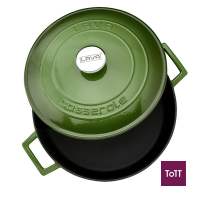
Lava Folk Cast Iron Round Low Casserole 28cm 3.4L
$377.00
Buy on Lazada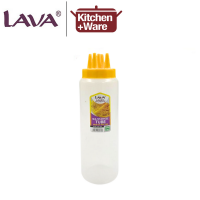
LAVA Roti Jala Multipurpose Tube 700ml / Roti Kirai Maker / Sauce Bottle / BPA-Free / Squeezer Bottle 550ml / Plastic Sauce Bottle / Condiment Dispenser / *Colours Given at Random
$4.80$5.00
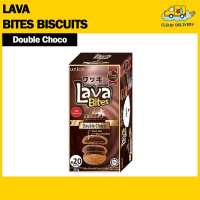
Lava Bites Biscuits (Pack of 20) - Double Chocolate
$3.95$4.50
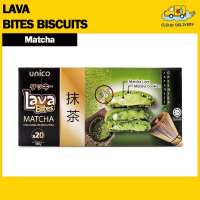
Lava Bites Biscuits (Pack of 20) - Matcha
$3.95$4.50

LAVA Laundry Brush / Multi Purpose Brush / Brush / Scrub Brush / *Colours Given at Random
$3.70$3.90
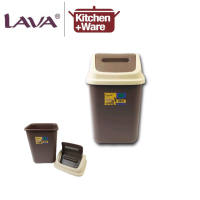
LAVA Swing Dustbin / Rubbish Bin / Multi-Purpose Dustbin / 5 liters
$8.50$8.90
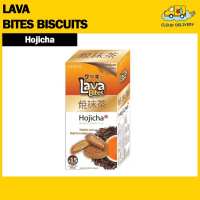
Lava Bites Biscuits (Pack of 20) - Hojicha
$3.95$4.50

Lava Multipurpose Tube Bottle / 600ml ( Malay Lace Pancake )
$6.00
Buy on LazadaAbout Lava
Lava International Limited, commonly referred to as LAVA or LAVA Mobiles, is an Indian technology and consumer electronics manufacturer best known for its mobile phones and smartphones. Headquartered in Noida, Uttar Pradesh, India, the company has established its identity around affordable mobile devices, domestic product design, and local manufacturing.1 While primarily associated with the Indian market, Lava maintains business operations and connections across several international regions, including Southeast Asia.4
Corporate overview
| Category | Information |
|---|---|
| Company | Lava International Limited |
| Brand | LAVA / LΛVΛ |
| Industry | Consumer electronics, telecommunications, mobile computing |
| Founded | 2009 |
| Headquarters | Noida, Uttar Pradesh, India |
| Founders | Hari Om Rai, Shailendra Nath Rai, Sunil Bhalla, Vishal Sehgal |
| Main products | Smartphones, feature phones, accessories and other electronics |
| Major smartphone family | AGNI |
| Other brands/businesses | XOLO, among others |
| Core market identity | Indian / “Make in India” technology brand |
| Current flagship direction | AGNI smartphones, including the AGNI 4 |
| Official website | LAVAshop.lavamobiles.com |
The company was incorporated on 27 March 2009. Its 2024 annual report lists Shailendra Nath Rai, Sunil Raina, and others among its directors, while corporate materials identify Hari Om Rai as Chairman and Managing Director.2
History
Foundation and feature phone era
Lava emerged in 2009 during a period of rapid expansion in the mobile phone market. It was established by Hari Om Rai, Shailendra Nath Rai, Sunil Bhalla, and Vishal Sehgal.1 The company initially focused on feature phones, targeting price-sensitive consumers and smaller cities with devices offering dual-SIM functionality and long battery life.3 Early models included the KKT 1, KKT 11, and KKT 12.1
A key differentiator during this period was the adaptation of hardware for local preferences. The Lava B2 and B5, introduced in 2010, featured an alphabetical keyboard layout and the Indian rupee symbol.1 During this era, Lava competed against both domestic brands such as Micromax, Karbonn, Spice, and Intex, as well as international manufacturers including Nokia, Samsung, Sony Ericsson, Motorola, and LG.
The company’s stated corporate vision is “To empower people to do more, to be more,” a philosophy that remains central to its identity.4
Expansion and diversification
Lava gradually expanded beyond basic handsets into a broader technology portfolio:
- 2011: Entered the data-card market and launched its first Android smartphone, the Lava S12. Partnered with MTV India for the Lava A16.
- 2012: Entered the tablet market and introduced the XOLO X900, an Intel-powered smartphone.
- 2017: Launched its first laptop, the Helium 14.
- 2018: Introduced the Prime X, marketed as a phone designed in India.
- 2020: Released the Pulse, a feature phone with heart-rate and blood-pressure measurement functions.1
XOLO sub-brand
In 2012, Lava introduced XOLO as a technology-focused sub-brand. Its debut product, the XOLO X900, was notable for being powered by an Intel processor.1 XOLO subsequently released various Android and Windows devices, tablets, and computing products, helping position Lava at the higher end of the technology spectrum. While LAVA has since become the primary consumer-facing brand, XOLO remains associated with the company.
“Make in India” and strategic shift
From the late 2010s onwards, Lava shifted its positioning from a low-cost alternative to a proponent of Indian design and manufacturing. The company developed in-house capabilities for industrial, mechanical, hardware, and software design under its “Design in India” initiative.4 This aligned with the government’s “Make in India” push. Campaigns such as #ProudlyIndian explicitly emphasised these origins while competing against Chinese smartphone brands like Xiaomi, OPPO, and Vivo.5
Despite early success, Lava faced significant pressure in the mid-2010s as Chinese manufacturers gained market share through aggressive pricing and superior specifications. This led to a period where Lava’s smartphone presence diminished before its strategic reboot.
AGNI smartphone series
The launch of the AGNI series in 2021 marked a turning point, signalling Lava’s return to the competitive mid-range segment with a focus on premium features and domestic manufacturing.
AGNI 5G
Launched in November 2021, the original Lava AGNI 5G was positioned as an Indian-made 5G smartphone featuring high-refresh-rate displays, AMOLED panels, MediaTek processors, and fast charging.1 It served as the foundation for Lava’s modern flagship lineage.
AGNI 2
The AGNI 2 represented a significant upgrade in hardware and software experience. Key specifications included a 6.78-inch curved AMOLED display with a 120 Hz refresh rate, MediaTek Dimensity 7050 chipset, 8 GB RAM, 256 GB storage, 50 MP main camera, and 66 W fast charging. It was marketed with a clean Android interface free of bloatware and ads.4
AGNI 3
The AGNI 3 introduced experimental hardware features, most notably a dual-display concept with a secondary AMOLED screen on the rear panel. It also included a customisable action button, distinguishing it from mainstream competitors and demonstrating a willingness to innovate beyond standard specifications.1
AGNI 4
The AGNI 4 continues this trajectory as a higher-end device. According to current product listings, it features:4
- MediaTek Dimensity 8350 processor
- 8 GB RAM plus virtual RAM
- 256 GB UFS 4.0 storage
- 6.67-inch 1.5K 120 Hz AMOLED display
- 50 MP OIS main camera and 50 MP selfie camera
- 4K/60 fps video recording
- Aluminium-alloy frame with vapour-chamber cooling
- IR blaster and customisable action key
- Vayu AI integration
- Three years of OS upgrades and four years of security updates
Product ecosystem
Beyond the AGNI series, Lava maintains a diverse product portfolio:
- Smartphones: Includes the AGNI flagship line and budget-oriented models.
- Feature phones: Devices such as the A1 Colors 21 and A7 Star continue to serve the traditional handset market.4
- Accessories: The online store offers chargers (including 66 W adapters), cases, and screen protectors.4
- Other electronics: Historically, the company has produced tablets, laptops (starting with the Helium 14 in 2017), data cards, smartwatches, and computer hardware.1
Manufacturing and R&D
Manufacturing is a core strategic pillar for Lava. The company has invested in an ecosystem covering product design and production to reduce reliance on imported components and overseas assembly.4 This strategy aligns with broader efforts to build a domestic electronics manufacturing base in India. Corporate filings also document an international structure with subsidiaries in locations such as Hong Kong and Dubai.6
Distribution and service
Lava cites its extensive physical network as a competitive advantage, particularly in the budget segment where after-sales support is critical. Corporate information indicates the network comprises approximately:4
- 1.65 lakh retailers
- Over 1,000 distributors
- Over 800 service centres
International presence
Although strongly identified with India, Lava operates internationally. The company lists business presence or operations in Thailand, Indonesia, Mexico, China, Egypt, Nepal, Bangladesh, Sri Lanka, the Middle East, Ghana, Kenya, Nigeria, and Latin America.4 This global footprint is reflected in its legal name, Lava International Limited.
Brand philosophy
Lava’s contemporary identity rests on four pillars:
- Indian identity: Emphasis on domestic ownership, design, and manufacturing.
- Value: Provision of accessible technology, now extended to mid-range segments via AGNI.
- Engineering: Increased focus on technical specifications and hardware innovation.
- Clean software: Promotion of uncluttered Android experiences, exemplified by the “No Bloatware, No Ads” marketing of the AGNI 2.4
Market position
Lava occupies a distinct niche as a national champion attempting to compete with multinational giants. Unlike brands that simply rebadge imported devices, Lava emphasises vertical integration and local R&D. However, it faces challenges including limited global scale compared to Samsung or Xiaomi, a smaller ecosystem, and the need to overcome historical perceptions as solely a budget feature-phone maker.
Major milestones
| Year | Milestone |
|---|---|
| 2009 | Lava International established; first KKT series phones launched |
| 2010 | B2/B5 introduced with localised keyboard features |
| 2011 | First Android smartphone (S12) launched |
| 2012 | XOLO brand launched; X900 Intel smartphone released; tablet expansion |
| 2014 | Iris Pro series introduced |
| 2017 | Helium 14 laptop launched |
| 2018 | Prime X promoted as designed in India |
| 2019 | Benco brand introduced |
| 2020 | Pulse feature phone with health sensors released |
| 2021 | AGNI 5G launched |
| 2023 | AGNI 2 launched |
| 2024 | AGNI 3 launched with dual-display; expansion into smartwatches |
| 2025–26 | AGNI line continues, including AGNI 4 |
Milestone data compiled from corporate materials and historical records.1
Corporate structure and leadership
The legal entity is Lava International Limited, with a registered office in Delhi and corporate headquarters in Sector 64, Noida, Uttar Pradesh. International affiliates include Lava International (HK) Ltd., Lava Technologies DMCC in Dubai, and Xolo International (H.K.) Ltd.6
Hari Om Rai serves as Chairman & Managing Director and was instrumental in founding the company. Other key figures include founders Shailendra Nath Rai, Sunil Bhalla, and Vishal Sehgal, alongside Sunil Raina, who is listed as a whole-time director in the 2024 annual report.46
Corporate social responsibility
Lava maintains a formal Corporate Social Responsibility (CSR) programme. Plans for FY2025–26 include initiatives focused on apprentice stipends, vocational education, and on-the-job training, reflecting a commitment to skills development.7
References
- Lava International
- `DRAFT RED HERRING PROSPECTUS
- Lava International launch mobile phones in Himachal – Hill Post
- About Us – Lava International Limited
- How Lava’s #ProudlyIndian campaign aims to steamroll Chinese rivals Oppo, Vivo, ETBrandEquity
- BOARD OF DIRECTOR’S
- CORPORATE SOCIAL RESPONSIBILITY (CSR) POLICY