Shop on Lazada
Leapfrog products
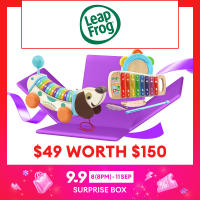
Lazada x LeapFrog Educational Toys Surprise Box
$150.00
Buy on Lazada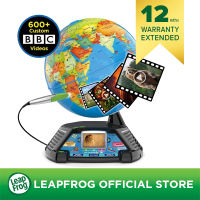
LeapFrog Magic Adventures Globe | Educational Learning Toys | 5 - 7 years old | 12 Months Local Warranty
$169.00$202.80
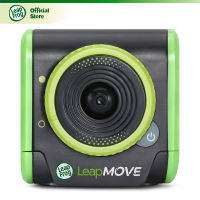
LeapFrog LeapMove | Motion Sensing Learning Console for Kids | Motion Based Educational Gaming Device | 4-7 years
$138.00$149.00
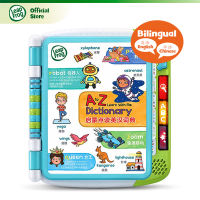
LeapFrog Learning Friends 100 Words Book Bilingual English Chinese | 100 Animals Book | A to Z Dictionary | 中英文双语学习点读书 | Educational Toy | Learning Toy | Preschool Toy
$69.90$81.50
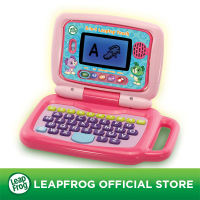
LeapFrog 2-In-1 Leaptop Touch | Laptop and Tablet Toys - Green/ Pink | Kids Learning Toys | Educational Toys | 2-5 years old | 3 months local warranty
$52.00$71.30
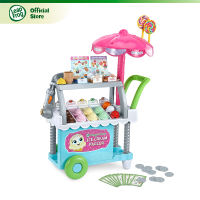
LeapFrog Scoop & Learn Ice Cream Parlor | Ice Cream Cart | Ice Cream Shop | Role Play ice Cream Toy | 3 years+
$99.00
Buy on Lazada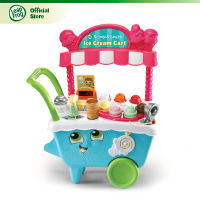
LeapFrog Scoop and Learn Ice Cream Cart | Pizza Cart | BBQ | Pretend Play Set | Role Playing | 2 - 5 Years | 3 months local warranty
$109.30$121.40
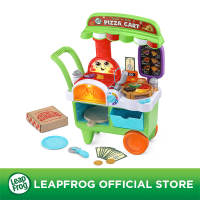
LeapFrog Build-a-Slice Pizza Cart | Pretend Play | Role Play | Learning Toys | Kitchen Play Set | 3-6 Years | 3 Months Local Warranty
$99.00$111.00
About Leapfrog
Leapfrog is an American-origin educational toy and children’s learning brand best known for combining technology, play, and early childhood education. Its product range includes interactive learning toys, reading systems, children’s tablets, educational games, activity books, and preschool materials. Founded in 1995, Leapfrog is now a subsidiary of VTech Holdings Limited, a Hong Kong-based educational electronics company.1 In Singapore, the brand is distributed by Infantree, which serves as the official distributor and provides local warranty support.16
Basic information
| Item | Details |
|---|---|
| Brand name | Leapfrog |
| Company | LeapFrog Enterprises, Inc. |
| Founded | 1995 |
| Founder | Mike Wood |
| Origin | United States |
| Headquarters | Emeryville, California, USA |
| Parent company | VTech Holdings Limited |
| Industry | Educational toys, children’s electronics, learning technology |
| Main target | Babies, toddlers, preschoolers and young children |
| Core concept | Learning through interactive play |
| Major product areas | Learning toys, tablets, reading systems, games and activity products |
| Current status | Subsidiary of VTech |
Leapfrog describes itself as a brand focused on encouraging children’s curiosity and love of learning, with products designed around specific developmental stages and educational goals.2
History
Origins: 1995
The founding of Leapfrog is closely linked to a parent seeking a practical solution to an educational challenge. Founder Mike Wood wanted to find a more effective way to help his child learn to read, believing that education was most successful when combined with play.3 In 1995, he launched Leapfrog and introduced the LeapPad, an interactive reading and learning system designed to make books more engaging. The brand’s original purpose was not only to teach skills but also to help children feel excited and confident about learning.
This approach established the brand’s foundational identity around educational content, technology, and play. Rather than positioning itself solely as a toy manufacturer, Leapfrog built its reputation on “learning toys” and technology-enabled educational experiences.
Rise of the LeapPad
The LeapPad became one of the defining product families for Leapfrog. Unlike conventional books, the LeapPad system allowed children to interact directly with educational content, establishing a philosophy of turning passive learning into active engagement. Over subsequent years, the company expanded into multiple learning platforms and toys.
Its historical portfolio has included:
- LeapPad learning tablets
- Leapster handheld learning and gaming systems
- LeapReader reading and writing systems
- Tag reading systems
- LeapTV
- Interactive books
- Phonics products
- Mathematics learning products
- Science and creativity products
- Stand-alone electronic learning toys
The company developed hundreds of interactive content titles covering subjects such as reading, writing, phonics, mathematics, science, social studies, creativity, and life skills.4
Educational philosophy
Leapfrog distinguishes itself from traditional toy brands by connecting child development with entertainment. Its products are generally designed to address three core questions:
What should the child learn?
Key learning areas include:
- Alphabet and phonics
- Vocabulary
- Reading and writing
- Counting and mathematics
- Colours and shapes
- Problem-solving
- Science and creativity
- Social and emotional skills
How can the child learn it?
Leapfrog commonly utilises various interactive methods, including:
- Touch interaction and physical manipulation
- Sound, music, and animation
- Games and storytelling
- Interactive books and digital content
- Repetition
How can learning remain fun?
The brand’s “learning through play” philosophy combines educational expertise with technology and engaging play to encourage exploration and build confidence.5
Major product categories
Today, the Leapfrog portfolio extends significantly beyond the original LeapPad.
Learning tablets
Leapfrog is particularly associated with children’s tablets. Unlike standard adult tablets adapted for younger users, these devices are designed specifically for children, emphasising age-appropriate educational content and controlled interaction.6 Current models include:
- LeapPad Academy
- LeapPad Ultimate
- LeapPad
- LeapPad Jr.
Reading and activity systems
Reading remains a core competency for the brand. Product families such as LeapStart, LeapReader, interactive books, phonics products, and alphabet-learning systems use electronic components to enhance physical books and activities. This integration ensures that while the physical toy or book remains central, technology adds a further layer of interactivity.
Interactive learning toys
The brand also offers conventional-looking toys with embedded educational functions. Examples include musical toys, counting toys, pretend-play products, activity cubes, electronic books, vocabulary toys, preschool games, and baby developmental toys. Specific products in the current portfolio include the Learning Friends 100 Words Book, 6-in-1 Snap & Learn Busy Cube, Magic Adventures Globe, and various music and pretend-play items.7
Educational gaming
Gaming has historically been a significant part of the Leapfrog offering. Earlier products like Leapster and LeapTV aimed to combine video game engagement with educational objectives, operating on the premise that if children want to play games, the games themselves should be educational. This approach addressed the shift in children’s entertainment towards digital and interactive experiences.
Notable product families
Several product lines are strongly associated with the Leapfrog brand:
- LeapPad: Arguably the most recognisable family, instrumental in establishing the brand in children’s learning technology.
- LeapStart: An interactive system combining physical activity books with electronic feedback.
- LeapReader: A system designed to support literacy skill development.
- Leapster: A family of handheld educational gaming devices.
- My Pal Scout: Character-based interactive developmental toys.
- Learning Friends: Products focused on early vocabulary and language development.
- LeapMove: A motion-sensing learning console that incorporates physical movement into interactive play.8
Acquisition by VTech
A pivotal moment in the company’s history occurred in 2016, when Hong Kong-based VTech Holdings Limited announced an agreement to acquire Leapfrog. The transaction valued the company at approximately US$72 million, with VTech offering US$1.00 per share.9 The acquisition was completed on 4 April 2016, making Leapfrog an indirect wholly owned subsidiary of VTech.1011
Since the acquisition, VTech has continued to develop and market Leapfrog products rather than absorbing them entirely. As of 2026, VTech continues to describe Leapfrog as a subsidiary and has introduced new learning toys and product line expansions under the brand.2
Current status
As of 2026, Leapfrog remains focused primarily on early childhood learning and educational toys. Its product catalogue includes families such as LeapMove, LeapPad Academy, LeapPad Ultimate, LeapStart, LeapStart 3D, RockIt Twist, Magic Adventures Globe, and LeapPad Jr..12 The brand continues to introduce new products, with VTech highlighting line expansions at Toy Fair 2026.2
Target audience and age range
Leapfrog serves a three-way market comprising children (the end users), parents (the purchasers seeking educational value), and educators (teachers and early childhood professionals). This creates a distinct consumer model where the child desires the product for its entertainment value, while the parent purchases it for its educational benefits.
The brand primarily serves infants through early school-age children, spanning babies, toddlers, preschoolers, and early elementary students.13 Specific products are tailored to these different developmental stages, ranging from baby developmental toys to tablet-based systems for older children.
Brand positioning
Leapfrog occupies a hybrid position across several industries:
| Category | Relationship |
|---|---|
| Traditional toys | Educational alternative |
| Consumer electronics | Child-focused technology |
| EdTech | Learning through interactive products |
| Children’s entertainment | Play and games |
| Publishing | Interactive books and reading |
| Early childhood education | Developmental learning tools |
This positioning distinguishes Leapfrog from both pure toy companies and pure technology firms. It is best described as a children’s educational entertainment brand that uses technology and play to support early learning.
Key differentiators
Education as a core concept
Unlike many toy companies where education is a secondary selling point, for Leapfrog, it is central to the product’s existence. The brand’s origins are specifically tied to helping a child learn to read, and literacy remains a major component of its portfolio.14
Physical and digital integration
Products frequently combine physical toys or books with electronics and software, rather than relying exclusively on screens or traditional materials.
Age-based development
Designs are based on specific developmental stages rather than being scaled-down versions of adult products.
Proprietary ecosystems
Product families such as LeapPad, LeapStart, LeapReader, and Leapster allow the brand to offer interconnected experiences rather than isolated toys.
Global reach
Leapfrog has developed a significant international presence, with products reaching more than 150 million children in over 16 countries.15 In Asian markets, including Singapore, the brand maintains a dedicated distribution network. In Singapore, Infantree acts as the official distributor, providing local warranty support and retail access.16
Brand personality
The brand personality is characterised as curious, playful, educational, encouraging, innovative, and child-friendly. Leapfrog avoids presenting education as rigid or overly academic; instead, it promotes the message that children learn best when they are interested, engaged, and having fun. This philosophy has remained consistent from the original LeapPad concept to current interactive devices.17
Evolution timeline
- 1995: Founded by Mike Wood to help his child learn to read.18
- Late 1990s–2000s: Expansion into interactive reading systems, learning toys, and electronic educational products.
- 2000s: The LeapPad and Leapster era establishes the brand in electronic learning and handheld gaming.
- 2010s: Expansion into children’s tablets, digital content, and connected learning platforms.
- 2016: Acquired by VTech on 4 April, becoming an indirect wholly owned subsidiary.19
- 2020s: Continuation of integrated educational toy portfolio including tablets, reading systems, and interactive toys.
- 2026: Continued expansion under VTech with new interactive and motion-based learning products.2
Industry context and challenges
Leapfrog is considered a pioneer in the educational electronics and learning toy category, helping to popularise the combination of toys, books, computers, games, and teaching elements in a single experience during the 1990s and 2000s.
However, the brand operates in a competitive market. Challenges include competition from general-purpose tablets and smartphones, major toy brands like LEGO and Mattel, and rapid technological obsolescence. Additionally, parents’ concerns regarding screen time require Leapfrog to balance digital engagement with healthy developmental play. The abundance of free digital content on platforms like YouTube also places pressure on dedicated educational device brands.
Despite these challenges, Leapfrog benefits from strong brand recognition, a proprietary ecosystem, and the backing of VTech, a major international player in electronic learning products.20
References
- Overview
- LeapFrog Debuts New Learning Toys and Line Expansions at Toy Fair 2026
- Reading is where our story began
- SEC
- SEC
- Products | LeapFrog
- Kids Learning Games | Educational Toys & Kids Tablets | LeapFrog
- Products – LeapFrog Singapore
- VTech to Acquire US based LeapFrog Enterprises
- VTech to Acquire US based LeapFrog Enterprises
- VTech Completes Acquisition of LeapFrog
- About LeapFrog – LeapFrog Singapore
- LeapFrog Singapore
- CMA provisionally clears merger of toy companies – GOV.UK
- VTech / LeapFrog merger inquiry – GOV.UK
- 伟易达完成收购LeapFrog
- sec.gov
- sec.gov
- sec.gov
- 伟易达将收购美国公司LeapFrog Enterprises