Shop on Lazada
LEIFHEIT products
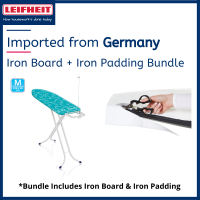
Leifheit Lightweight AirBoard Compact Ironing Board with Iron Rest (High Quality)
$220.10$353.00
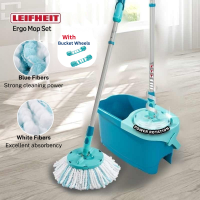
Leifheit Clean Twist Compact Ergo Mop Set (Spin/Spinning/Spinnable Mop) (Microfibre/Microfiber) Compact
$185.00$286.00
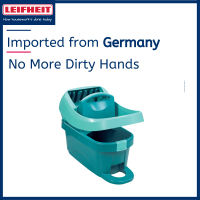
Leifheit Profi System High Quality Press Mop W/Bucket Set L55076 (Microfibre/Microfiber)
$349.00$638.00
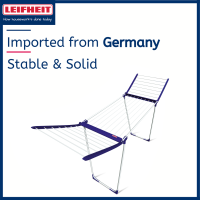
Leifheit High Quality Solid & Stable Pegasus 160 Clothes Dryer L81711 (Laundry Dryer) Drying Rack (Indoor/Outdoor)
$129.00$268.00
![Leifheit Ironing Board Cover Thermo Reflect [3mm thickness cotton padding iron board cover]](https://sg-live.slatic.net/p/c6f2481df31a47b5efca74ea76c792b1.png_200x200q80.jpg)
Leifheit Ironing Board Cover Thermo Reflect [3mm thickness cotton padding iron board cover]
$85.60$107.00
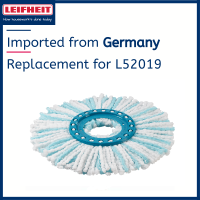
Leifheit Clean Twist Mop Replacement (Spin/Spinning/Spinnable Mop) L52019/L52101 (Microfibre/Microfiber) Replacement Head L52095
$48.00
Buy on Lazada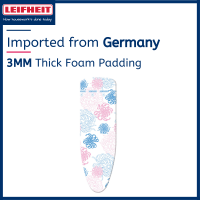
LEIFHEIT COTTON CLASSIC IRONING BOARD COVER (3mm thickness foam padding iron board cover)
$74.40$93.00
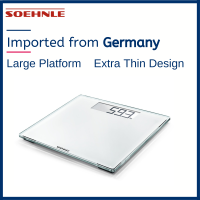
Leifheit x Soehnle Classic Household/Home Digital Personal Weighing Scale
$53.10$128.00
About LEIFHEIT
LEIFHEIT is a German household-products brand best known for practical, functional items designed for cleaning, laundry care, ironing and kitchen use. It serves as the principal consumer brand of Leifheit AG, a publicly listed company headquartered in Nassau, Rhineland-Palatinate. Founded in 1959 by Günter and Ingeborg Leifheit, the business has evolved from a small domestic manufacturer into one of Europe’s established household-product brands 1.
The brand’s philosophy centres on making everyday household tasks easier, faster, more practical and less physically demanding. Its most recognisable product families include Linomatic rotary clothes dryers, Pegasus clothes airers, CLEAN TWIST mopping systems, Profi floor-cleaning systems, window-cleaning tools, ironing accessories and kitchen utensils 2.
Quick facts
| Item | Information |
|---|---|
| Brand | LEIFHEIT |
| Country of origin | Germany |
| Founded | 1959 |
| Founders | Günter Leifheit and Ingeborg Leifheit |
| Parent company | Leifheit AG |
| Headquarters | Nassau, Rhineland-Palatinate, Germany |
| Main industry | Household products |
| Core categories | Cleaning, laundry care, kitchen, ironing |
| Other Group brand | Soehnle |
| Current corporate structure | Leifheit AG / Leifheit Group |
| 2025 Group turnover | €232.6 million |
| 2025 Group employees | About 1,000 |
| Production locations | Germany, Czech Republic, France |
| Main market | Europe |
| Positioning | Functional, durable, design-oriented household products |
In 2025, the Group reported turnover of €232.6 million, a decrease from €259.2 million in 2024, with 61.2% of revenue generated outside Germany. The average workforce for the year comprised approximately 1,002 employees 1.
Brand identity and product focus
LEIFHEIT is essentially a German specialist in mechanical household helpers. Unlike manufacturers focused on large electrical appliances such as washing machines or vacuum cleaners, LEIFHEIT traditionally concentrates on mechanical and relatively simple household products.
Products are typically engineered to solve specific everyday problems, such as drying laundry in limited spaces, wringing out mops without bending, cleaning floors efficiently, drying clothes indoors, simplifying ironing, facilitating kitchen preparation and removing dust with minimal effort. The current brand philosophy summarises this approach as “ideas that make your life easier”, with products designed around real everyday situations rather than idealised routines 2. This practical orientation has remained consistent since the company’s foundation.
History
Foundation and early success
LEIFHEIT was founded in 1959 by entrepreneur Günter Leifheit and his wife Ingeborg. The founding concept, “Mehr Freizeit mit Leifheit” (More free time with LEIFHEIT), was based on the idea that household products should save time and effort, thereby creating more leisure time. This concept became the foundation of the brand’s identity 1.
One of the company’s earliest successes was the Regulus carpet sweeper. Rather than reproducing existing designs, LEIFHEIT sought to improve the product. In 1960, approximately 100 units were sold on the first day of demonstration in a department store. Within the following decade, the company produced around two million carpet sweepers, becoming a European market leader in the category. This established a recurring pattern in the company’s history: identifying an ordinary household task, redesigning the tool and simplifying the task.
Expansion and ownership changes
Following the Regulus, LEIFHEIT expanded into other household tasks. Historically significant products included the Telegant, described as the company’s first wall-mounted drying rack, which offered a foldable solution for space-saving drying. Over subsequent decades, the portfolio grew to encompass floor cleaning, laundry drying, ironing, kitchen preparation, storage, window cleaning and dust removal.
A major corporate change occurred in 1972 when LEIFHEIT was acquired by ITT, an American multinational corporation, marking the transition from a founder-led business to a larger corporate structure. Despite this change, the brand maintained its focus on household products. Leifheit AG subsequently went public in 1984, with shares traded on the German stock market including the Frankfurt Stock Exchange’s regulated market 1.
The Linomatic and acquisitions
The Linomatic rotary clothes dryer represents one of the brand’s most recognisable innovations. Featuring an integrated mechanism that retracts drying lines into the arms when closed, it keeps lines cleaner and improves compactness. In 2024, LEIFHEIT marked 40 years of Linomatic production, highlighting the product family’s enduring importance.
In 2001, the Group acquired Soehnle, a brand dating back to 1868 that specialises in scales and wellbeing products. Consequently, the modern Leifheit Group comprises two distinct consumer brands: LEIFHEIT for household products and Soehnle for weighing and health-related items. Both are managed separately within the same corporate group.
The company’s history also includes other acquisitions and divestments, such as Spirella and Kleine Wolke (bathroom furnishings), Birambeau and Herby (French kitchen products), and the subsequent sale of non-core businesses like the bathroom division in 2010. These adjustments have resulted in a more focused modern Group.
Product portfolio
Laundry care
Laundry care is one of the brand’s strongest categories, representing the type of mechanical, low-energy household task in which LEIFHEIT specialises. Products include rotary clothes dryers, standing clothes airers, wall-mounted racks, clothes lines and related accessories. Key product families include:
- Linomatic: Rotary clothes dryers designed primarily for outdoor use.
- Pegasus: A range of freestanding clothes airers.
- Telegant: Wall-mounted drying solutions.
The company’s sustainability reporting highlights rotary and standing dryers as alternatives to electricity-consuming tumble dryers.
Cleaning products
Cleaning constitutes another major pillar, with ranges covering floor mops, buckets, wringing systems, wipers, dusters, window-cleaning tools and microfibre products. Notable families include:
- CLEAN TWIST: Mop-and-bucket systems featuring a mechanical spinning mechanism for wringing.
- Profi: Floor-cleaning systems intended for larger areas and intensive cleaning.
- POWER CLEAN: A newer cleaning-system family.
- Nemo: Window vacuums and associated window-cleaning tools.
The SUPERDUSTER family represents a recent innovation contributing to growth in the dust-market segment during 2025, illustrating the strategy of modernising core categories through new product designs.
Kitchen and ironing
The kitchen range includes utensils, food preparation tools, storage products and measuring tools, marketed under areas such as Smart Kitchen alongside cleaning and laundry care. Ironing products comprise boards, covers and accessories, focusing on ergonomics, stability and mechanical functionality rather than sophisticated electronics.
Design philosophy and market positioning
LEIFHEIT combines German engineering with practical design and relatively simple technology. The emphasis lies on intuitive operation, durability, ergonomic handling, efficient space use, mechanical ingenuity and reliable everyday performance. Products are often deceptively simple in appearance, with competitive advantage derived from mechanical details rather than complexity.
Historically associated with German quality and engineering, the brand occupies the medium to upper price segment. It is positioned above basic commodity household goods but remains more accessible than luxury or highly specialist equipment brands. The value proposition focuses on high consumer benefit and long-term reliability rather than lowest cost 1.
Manufacturing and headquarters
LEIFHEIT maintains its own manufacturing capabilities rather than relying solely on third-party outsourcing. As of 2025, the Group operates three principal production locations:
- Nassau, Germany
- Blatná, Czech Republic
- La Loupe, France
Approximately 65% of Group turnover in 2025 came from products manufactured using the Group’s own capacities. The Blatná plant is particularly important for injection moulding, metal production and powder coating, with ongoing consolidation efforts aimed at manufacturing efficiency.
The headquarters remain in Nassau, Rhineland-Palatinate, Germany, which also houses technical development and manufacturing facilities. The official investor-relations address is Leifheitstraße 1, 56377 Nassau, Germany.
International presence
Although strongly associated with Germany, LEIFHEIT is fundamentally a European brand. In 2025, Germany accounted for approximately 38.8% of Group turnover, while foreign markets represented 61.2%. Regional breakdowns for 2025 include:
- Central Europe: Approximately €105.7 million
- Eastern Europe: Approximately €32.9 million
- Non-European markets: Approximately €3.8 million
This distribution indicates a significantly international footprint beyond its home market.
Corporate structure and performance
It is useful to distinguish between the consumer brand and the corporate entity:
- LEIFHEIT: The consumer brand covering cleaning, laundry care, ironing and kitchen products.
- Leifheit AG: The publicly traded German company owning and operating the brand.
- Leifheit Group: The wider corporate group including LEIFHEIT, Soehnle, Private Label businesses and French subsidiaries such as Birambeau and Herby.
The Group divides activities into three reporting segments: Household, Wellbeing and Private Label. Financial performance in recent years is as follows:
| Year | Group turnover |
|---|---|
| 2021 | €288.3m |
| 2022 | €251.5m |
| 2023 | €258.3m |
| 2024 | €259.2m |
| 2025 | €232.6m |
In 2025, Group EBIT was €10.0 million, or €11.6 million before special items associated with production optimisation. The decline was attributed largely to weak consumer sentiment, reduced non-food spending and strategic portfolio adjustments 1.
Strategy and sustainability
As of 2026, LEIFHEIT is pursuing a strategic refresh involving a brand relaunch, new product innovations in core categories, manufacturing efficiency improvements and a focus on profitability. The ambition is to become a leading European branded specialist in mechanical cleaning and drying, with strong emphasis on consumer satisfaction and sustainability.
Sustainability is increasingly central to the strategy, linked directly to the non-electrical nature of many products. Rotary dryers, standing airers, mechanical mops and dusters perform functions without consuming electricity, offering resource-efficient alternatives to powered appliances. Current initiatives focus on increasing recycled materials, circular-economy practices, climate targets, product longevity and sustainable packaging.
Historical acknowledgement
Leifheit AG acknowledges in its corporate history that recently uncovered information concerning founder Günter Leifheit’s relationship to Germany’s National Socialist past has led the company to emphasise transparent historical investigation. This issue is addressed explicitly in current corporate communications as part of a comprehensive presentation of the company’s history.
Major product families
| Product family | Main purpose |
|---|---|
| Linomatic | Rotary outdoor clothes dryers |
| Pegasus | Standing clothes airers |
| Telegant | Wall-mounted drying |
| CLEAN TWIST | Spin-wringing floor-mopping systems |
| Profi | Floor-cleaning systems |
| POWER CLEAN | Cleaning systems |
| Nemo | Window vacuum |
| SUPERDUSTER | Dust removal |
| AirBoard / ironing range | Ironing |
| Kitchen range | Food preparation and kitchen organisation |