Shop on Lazada
Lenovo ThinkPad products
![[Brand New] Lenovo ThinkPad T14 Gen 6 Laptop|14″FHD+|Ultra 7 258V|32GB+512GB|Win11Pro Pro|3Yrs Warranty](https://sg-live.slatic.net/p/83289d9e822522269756a7546f7191a2.jpg_200x200q80.jpg)
[Brand New] Lenovo ThinkPad T14 Gen 6 Laptop|14″FHD+|Ultra 7 258V|32GB+512GB|Win11Pro Pro|3Yrs Warranty
$2,499.00$2,999.00
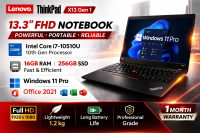
Lenovo ThinkPad T14 Business Laptop 14″ Full HD Screen AMD Ryzen 5 Pro 4650U Processor 16GB RAM 512GB SSD Backlit Keyboard Wi-Fi 6 HDMI Windows 11 Professional Office 2021 free wireless mouse
$499.00$1,300.00
![[Copilot+ PC] Lenovo ThinkPad E14 Gen 7 Laptop|14″ FHD|U5-226V/U7-258V|16GB/32GGB|512GB SSD|Win11 Pro|3Yrs Onsite](https://sg-live.slatic.net/p/4bb5c32232b0e4956dea1f63d27171b6.jpg_200x200q80.jpg)
[Copilot+ PC] Lenovo ThinkPad E14 Gen 7 Laptop|14″ FHD|U5-226V/U7-258V|16GB/32GGB|512GB SSD|Win11 Pro|3Yrs Onsite
$2,299.00$2,399.00
![[Preloved ]Lenovo ThinkPad T480 / T490 Laptop i5 / i7 8th Gen 8GB/16GB DDR4 Ram 256GB /512GB SSD Windows 11Pro refurbished 3 months warranty](https://sg-live.slatic.net/p/aa3e149928ed032c412d09c8ec8b1a40.jpg_200x200q80.jpg)
[Preloved ]Lenovo ThinkPad T480 / T490 Laptop i5 / i7 8th Gen 8GB/16GB DDR4 Ram 256GB /512GB SSD Windows 11Pro refurbished 3 months warranty
$429.00
Buy on Lazada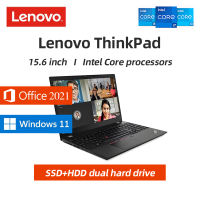
【Lenovo Laptop】Lenovo ThinkPad,15.6 inch,Intel Core processor,Intel HD Graphics
$935.96$950.01
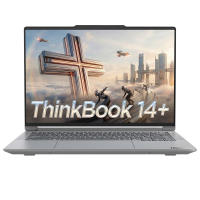
2026 Lenovo ThinkBook 16+ Laptop/ThinkBook 14+ Laptop/Intel Core Ultra X7 358H/16inch 3.2K 165Hz IPS Screen Notebook/Lenovo ThinkPad AI Laptop
$2,599.00$3,099.00
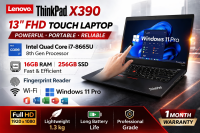
Lenovo ThinkPad X390 Laptop 13″ FHD Intel Quad Core i7-8665U 16GB RAM 256GB SSD Fingerprint Reader Wi-Fi Windows 11 Pro Free wireless Mouse Refurbished Laptop Options
$369.00$850.00
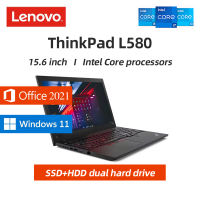
【Lenovo Laptop】Lenovo ThinkPad L580、15.6 inch、Intel Core processor 、Intel HD Graphics
$899.86$959.05
About Lenovo ThinkPad
Lenovo ThinkPad is a premium family of business-oriented laptop computers and mobile workstations developed and marketed by Lenovo. Originally created by IBM (International Business Machines) in 1992, the ThinkPad brand became part of Lenovo following its acquisition of IBM’s Personal Computing Division in 2005. Since then, ThinkPad has remained one of the world’s most recognisable and respected laptop brands, distinguished by its durability, reliability, security features, and professional-focused design.
Overview
ThinkPad laptops are designed primarily for:
- Business professionals
- Enterprise organisations
- Engineers
- Software developers
- Researchers
- Government agencies
- Educational institutions
Unlike consumer laptops, ThinkPads prioritise functionality, keyboard quality, durability, security, and long-term reliability over flashy aesthetics.
History
IBM Era (1992–2005)
The first ThinkPad, the ThinkPad 700C, was introduced in October 1992 by IBM. It featured a then-groundbreaking colour TFT display and introduced the iconic red TrackPoint pointing stick located in the centre of the keyboard. The design was inspired by a traditional Japanese black lacquered bento box, giving ThinkPads their minimalist black appearance.
Throughout the 1990s and early 2000s, IBM introduced many innovations through the ThinkPad line, including:
- Built-in CD-ROM drives
- Integrated Wi-Fi
- Fingerprint readers
- Advanced power management
- Magnesium alloy frames
- Spill-resistant keyboards
Many of these features later became standard across the laptop industry.1
Lenovo Era (2005–Present)
In 2005, Lenovo acquired IBM’s PC division, including the ThinkPad brand. Although ownership changed, Lenovo retained much of the original engineering philosophy and continued development at the former IBM Yamato design centre in Japan.2
Modern ThinkPads have evolved with:
- Intel Core Ultra and AMD Ryzen Pro processors
- OLED and high-resolution displays
- Thunderbolt and USB4 connectivity
- AI-enhanced productivity features
- Windows 11 Pro and Linux support
- Improved battery efficiency
- Advanced enterprise security
Despite these upgrades, ThinkPads still retain many of their iconic design elements.
Design Philosophy
ThinkPads are famous for their understated appearance. Typical characteristics include:
- Matte black chassis
- Box-shaped design
- Minimal branding
- Red TrackPoint
- Comfortable full-size keyboard
- Durable hinges
- Practical port selection
Rather than focusing on ultra-thin aesthetics, ThinkPads are engineered for reliability and productivity.
Durability
One of ThinkPad’s defining features is its durability. Many models undergo testing based on military-inspired environmental standards, including exposure to:
- Extreme temperatures
- High humidity
- Dust
- Vibration
- Mechanical shock
- Altitude
- Accidental spills
Business users often choose ThinkPads because of their reputation for surviving demanding work environments.
Signature Features
TrackPoint
The small red pointing stick between the G, H, and B keys is perhaps the ThinkPad’s most recognisable feature. Advantages include:
- Cursor control without moving hands away from the keyboard
- Precision editing
- Faster workflow for experienced users
Many longtime ThinkPad owners consider it indispensable.
Keyboard
ThinkPad keyboards are widely regarded among the best laptop keyboards available. Features typically include:
- Deep key travel
- Excellent tactile feedback
- Comfortable layout
- Dedicated function keys
- Spill resistance
Developers, writers, and programmers frequently praise ThinkPad keyboards for extended typing sessions.
Security
Enterprise-grade security options may include:
- Fingerprint reader
- Facial recognition (IR camera)
- Smart card reader
- TPM (Trusted Platform Module)
- Self-encrypting SSD support
- BIOS security features
- Webcam privacy shutter
These features make ThinkPads popular in corporate and government environments.
Major ThinkPad Series
X Series
Ultra-portable premium laptops. Best for:
- Business travellers
- Executives
- Students
Examples:
- X13
- X1 Nano
X1 Series
Lenovo’s flagship premium ThinkPad family. Popular models include:
- X1 Carbon
- X1 Yoga
- X1 2-in-1
Known for:
- Lightweight construction
- Premium materials
- High-resolution displays
- Long battery life
T Series
The most iconic ThinkPad lineup. Designed for:
- Business professionals
- IT departments
- Enterprise deployments
Strengths:
- Balanced performance
- Excellent reliability
- Easy maintenance
- Long lifecycle
P Series
Professional mobile workstations. Designed for:
- Engineers
- Architects
- CAD professionals
- Video editors
- 3D artists
Often equipped with:
- Professional GPUs
- High-core-count CPUs
- Large memory capacities
L Series
Business laptops offering a balance between affordability and enterprise features.
E Series
Entry-level ThinkPads aimed at:
- Small businesses
- Students
- Budget-conscious professionals
Operating Systems
ThinkPads support:
- Windows
- Linux (Ubuntu, Fedora, Debian, Arch, and others)
- Enterprise Linux distributions
Many developers choose ThinkPads because of their excellent Linux compatibility.
Innovation
Over the years, ThinkPads introduced numerous innovations, including:
- Colour TFT notebook displays
- Built-in fingerprint authentication
- Active Protection System for hard drives
- Integrated wireless networking
- Foldable PC concepts
- AI-enabled business PCs
The ThinkPad line has consistently served as a platform for new technologies aimed at professional users.
Space Exploration
ThinkPads have been used aboard spacecraft and on missions associated with NASA and the International Space Station (ISS) because of their reliability. Earlier IBM ThinkPads flew in space during the 1990s, and later Lenovo ThinkPads continued that legacy.
Popularity
ThinkPads are especially popular among:
- Software developers
- IT professionals
- Cybersecurity specialists
- Engineers
- Data scientists
- University researchers
- Corporate employees
Their reputation stems from a combination of build quality, keyboard comfort, serviceability, and dependable performance.
Advantages
- Exceptional keyboard
- Durable construction
- Excellent Linux compatibility
- Strong enterprise security
- Reliable performance
- Wide range of business models
- Good repairability on many models
- Extensive global support
Disadvantages
- Conservative design compared with many consumer laptops
- Premium models can be expensive
- Some recent generations offer fewer upgradeable components
- Gaming performance is generally not a primary focus (except workstation models with dedicated GPUs)
Legacy
ThinkPad is widely regarded as one of the most influential laptop brands in computing history. Since its debut in 1992, it has become synonymous with professional mobile computing, and Lenovo has continued to build on IBM’s original vision while modernising the lineup for today’s enterprise and professional users. ThinkPad remains one of Lenovo’s flagship product families and is recognised globally for its focus on productivity, durability, and engineering excellence.