Shop on Lazada
LocknLock products
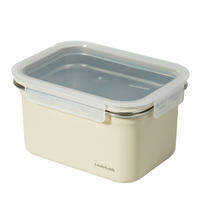
LocknLock | 316 Stainless Steel multi-size Sealed Food Storage Box
$28.84$44.19
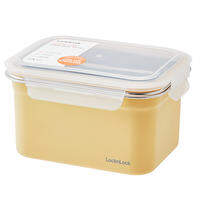
LocknLock | Stainless Steel Food Storage Box 304
$20.95$39.81
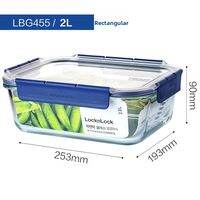
LocknLock | Vacuum Sealed Glass Food Storage Container Airtight Fridge Organizer Heat Resistant Up to 400C Dishwasher Safe Multi Size Set 300ml-2000ml BPA Free Blue Square Design
$54.71$68.21
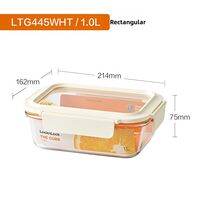
LocknLock | Microwave-Safe Glass Food Storage Box Airtight Container Set 5 Sizes High Borosilicate Glass Square Meal Prep Container for Fridge Lunch Box
$23.75$25.60
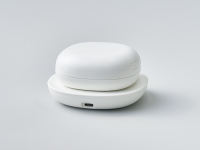
LocknLock Fresh Maestro Vacuum Container Square and Rectangular -- Glass Food Container Vacuum Device
$61.36$65.90
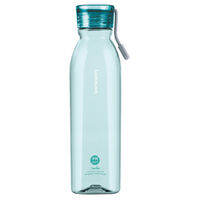
LocknLock | Portable Sport Cup
$27.42$29.10
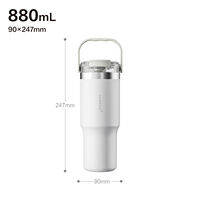
LocknLock | Large Capacity Ceramic Coated Vacuum Insulated Tumbler 600mL 880mL Portable Thermal Flask with Handle for Hot Cold Drinks Stainless Steel Water Bottle
$67.25$79.28
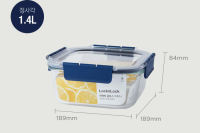
LocknLock Top Class Glass Food Containers with Tritan Lid Square and Rectangle
$25.73$32.90
About LocknLock
Overview
LocknLock (Korean: 락앤락; historically styled Lock&Lock) is a South Korean consumer-goods company best known for its airtight food-storage containers. The firm has since expanded into a broad range of kitchen, dining, beverageware, cookware and home-lifestyle products. Founded in 1978, the company grew from a domestic household-goods business into a global lifestyle brand with exports to more than 120 countries. Key markets include South Korea, China, Vietnam, the United States, Europe and Southeast Asia.1
The company’s positioning has evolved from being primarily an airtight-container manufacturer to a “global lifestyle and culture creator” that emphasises healthier and more convenient everyday living.2
| Field | Information |
|---|---|
| Brand | LocknLock |
| Korean name | 락앤락 |
| Country of origin | South Korea |
| Founded | 1978 |
| Original company | Kukjin Retail Co. |
| Headquarters | Seoul, South Korea |
| Main business | Kitchenware, food containers, beverageware, cookware, small appliances and home/lifestyle goods |
| Signature product | Four-sided airtight food-storage container |
| Global reach | 120+ countries |
| Key markets | South Korea, China, Vietnam, United States, Europe, Southeast Asia and others |
| Vietnam presence | Since 2008 |
| Current CEO | Lee Young-sang |
| Brand positioning | Premium / design-oriented lifestyle and housewares |
| Official website | LocknLock Global |
Corporate history
Although the company traces its origins to 1978, the LocknLock container brand itself was launched two decades later. The firm was originally established in November 1978 as Kukjin Retail Co. It subsequently became Hana Mart Co. in 1987 and Hanacobi Co. in 1994.3
A significant turning point occurred in 1998 when the company launched its distinctive four-sided airtight locking container under the LocknLock name. This product established the foundation of the brand’s international identity.4 The corporate name was changed to LocknLock Co., Ltd. in 2003, and in 2007 the company completed a merger involving Hanacobi and LocknLock.5
The company’s development can be understood in three distinct eras:
- 1978–1997: A traditional Korean household-goods business operating before the LocknLock brand existed.
- 1998–2000s: The launch of the four-sided locking container, which became the defining product and drove international expansion.
- 2010s–present: Transformation into a global lifestyle company with an expanded portfolio covering tumblers, cookware, lunch boxes, kitchenware, appliances and home-lifestyle products, supported by international subsidiaries and manufacturing infrastructure.
Products and technology
Four-sided locking system
LocknLock’s breakthrough product was its airtight food-storage container featuring a four-sided locking mechanism. Unlike traditional containers that relied on simple snap-on lids, this design utilised multiple locking points to create a tight seal. Launched in October 1998, this system became the brand’s defining visual and functional characteristic.6 The product addressed key consumer needs including food freshness, leak prevention, stackability, reusability and aesthetic appeal.
Product categories
While initially known for plastic storage and kitchen organisation, the company now offers a diversified portfolio organised around several core categories:7
Food containers
Food storage remains the category most strongly associated with the brand and represents its core technological heritage.8 Products include airtight storage containers, refrigerator organisers, modular systems, glass and plastic containers, freezer-safe options, lunch boxes and meal-preparation sets.
Beverageware
Drinkware has become a major growth category, particularly in Asian markets. The range includes tumblers, vacuum-insulated bottles, thermal flasks, water bottles, mugs and travel cups. Specific lines such as the Metro series have been promoted internationally.9
Cookware
The cookware category comprises frying pans, saucepans, pots, cooking sets, induction-compatible items and kitchen utensils. These products are positioned to emphasise usability, design and materials suitable for everyday cooking.10
Kitchen appliances
The brand has expanded into small electrical appliances including air fryers, steam air fryers, rice cookers and specialised air purifiers. Notable launches include a steam air fryer in 2020 and Kitchen Puri, a kitchen-specific air purifier, in 2021.11 In 2020, LocknLock also acquired Jenniferoom, a small-kitchen-appliance brand, to support this expansion.12
Brand philosophy and sustainability
LocknLock describes itself as a global lifestyle creator focused on healthier and more convenient living. Its philosophy centres on convenience, consumer-centred design, health and safety, and sustainability.13
Sustainability has become increasingly integral to corporate strategy. Initiatives include the “Love for Planet” resource-recycling campaign, which encourages consumers to replace disposable products with reusable alternatives.16 In 2021, the company introduced a tote bag made from recycled polypropylene (PP), described as an industry first.14 The following year, it published its inaugural ESG Sustainability Management Report.15
International expansion
LocknLock’s internationalisation accelerated in the 2000s, establishing physical operations in key markets rather than relying solely on exports.
Asia
The company entered mainland China in 2004, beginning with Shanghai; China subsequently became both a major market and manufacturing base.17 Vietnam is similarly strategic, serving as both a production hub and a key consumer market. Operations there include a flagship store opened in 2008, trading companies established in Hanoi (2009) and Ho Chi Minh City (2010), and manufacturing facilities for heat-resistant glass (2011) and cookware (2012).18 More recently, an India subsidiary was established in 2025 to develop the local premium lifestyle market with adapted products.
Western markets
In the United States, LocknLock USA was established in 2016, expanding through retailers such as QVC, Target, Macy’s, Costco and Amazon. In Europe, the company established a German trading company in 2010 and reports presence in more than 14,000 sales channels across the continent.19
Global footprint
Products currently reach consumers in 120 countries. The corporate network includes operations in South Korea, China, Vietnam, the United States, Germany, Thailand, Indonesia and India, with North America, Europe and Southeast Asia highlighted alongside the core Asian markets. This trajectory distinguishes LocknLock as a Korean consumer brand that has internationalised through physical household products rather than entertainment or technology.
Market focus: Vietnam
Vietnam represents one of LocknLock’s most significant markets commercially and operationally. Since entering in 2008, the country has developed into both a primary consumer market and a manufacturing base, with facilities in the Vũng Tàu area producing heat-resistant glass and cookware. The Vietnamese subsidiary, LOCK & LOCK HCM CO., LTD., maintains its Ho Chi Minh City office at 77 Hoàng Văn Thái.
The brand is positioned as a premium household and lifestyle label in Vietnam rather than a low-cost alternative. In January 2026, LocknLock announced it had been named among Vietnam’s Top 50 Most Trusted Brands 2025, ranking within the Top 10 for the 14th consecutive year.20
Corporate governance and ownership
LocknLock was listed on the KOSPI in 2010.22 In August 2017, the company was acquired by private-equity firm Affinity Equity Partners.23 The operating entity is LocknLock Co., Ltd., headquartered in Seoul, with Lee Young-sang serving as CEO.24
The name “LocknLock” is a branding expression derived from the concept of secure closure, directly communicating the airtight benefit of the original container. While historically styled as Lock&Lock, current English branding typically uses LocknLock.
Competitive positioning
LocknLock occupies a position between mass-market and luxury segments, often described as accessible premium. It combines Korean design aesthetics with practical functionality and perceived quality. Key competitive advantages include strong brand recognition linked to airtight technology, decades of expertise in food-storage materials, a broad multi-category portfolio, established international distribution networks, local manufacturing capabilities in Vietnam and China, and an increasing emphasis on design differentiation through dedicated design centres in Korea, China and Vietnam established in 2019.25
The business architecture spans four layers: food storage, kitchen and dining, beverage, and home lifestyle. This structure supports the company’s self-identification as a lifestyle enterprise rather than merely a container manufacturer.26
Strategic direction
The current strategic direction involves transitioning from an “airtight container specialist” to a comprehensive global lifestyle and housewares brand. Recent developments illustrating this shift include expansion into beverageware, cookware and small appliances; the acquisition of Jenniferoom; establishment of global design centres; and entry into emerging markets like India with locally adapted products rather than standardised global exports.2728
This approach reflects a strategy of maintaining a global brand identity while adapting to local consumer preferences. The company’s fundamental achievement lies in transforming a single functional innovation—the four-sided airtight container—into a recognisable global household brand, with the ongoing strategic challenge being to establish LocknLock as a complete kitchen, beverage and lifestyle brand beyond its original product category.29
Milestones
| Year | Milestone |
|---|---|
| 1978 | Kukjin Retail established in South Korea |
| 1987 | Hana Mart established |
| 1994 | Company renamed Hanacobi |
| 1998 | Four-sided LocknLock airtight container launched |
| 2002 | LocknLock online mall launched |
| 2003 | Company renamed LocknLock Co., Ltd. |
| 2004 | Shanghai trading company established |
| 2007 | Hanacobi and LocknLock merged |
| 2008 | First Vietnam flagship store |
| 2009 | Hanoi trading company established |
| 2010 | Ho Chi Minh trading company and Vietnam production company established; KOSPI listing |
| 2011 | Vũng Tàu glass plant completed |
| 2012 | Vũng Tàu cookware plant completed |
| 2016 | LocknLock USA established |
| 2017 | Acquired by Affinity Equity Partners |
| 2019 | Global design centres established; brand identity renewed |
| 2020 | Jenniferoom acquired; steam air fryer launched |
| 2021 | Recycled-PP tote bag and Kitchen Puri introduced |
| 2022 | First ESG Sustainability Management Report |
| 2025 | India subsidiary established |
| 2026 | Continued expansion as a global lifestyle brand |
These milestones are based primarily on LocknLock’s published corporate history.21
References
- About | LocknLock
- Global Network | LocknLock
- History – About | LocknLock
- History – About | LocknLock
- LocknLock
- Product Catalog – E-catlog | LocknLock
- LocknLock | Healthy kitchen life together with LocknLock
- LocknLock
- LocknLock
- LocknLock
- Sites-locknlock-vn-Site
- LocknLock Pays 180 Billion Won Dividend After Delisting… Affinity Accelerates Exit
- locknlock.com
- locknlock.com
- locknlock.com
- locknlock.com
- locknlock.com
- Tổng Quan Về Thương Hiệu LocknLock – LOCKNLOCK VIỆT NAM
- locknlock.com
- LocknLock Global History 20’s Anniversary
- LocknLock
- About | 락앤락
- About | LocknLock
- Global Network | LocknLock
- LocknLock | Healthy kitchen life together with LocknLock
- Brand – About | LocknLock
- 경영공고 – 경영정보 | 락앤락
- Brand – About | 락앤락
- Brand – About | 락앤락