Shop on Lazada
Longchamp products
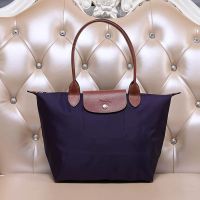
New France Original Long~champ Le Pliage Classic Womens Bags handbags Shopping Bag
$68.00$106.00
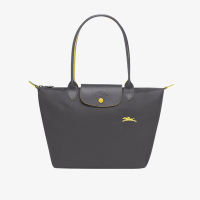
New original France Long~champ Le Pliage 70th anniversary limited edition bags Womens bag Fashionable bags
$72.00$122.00
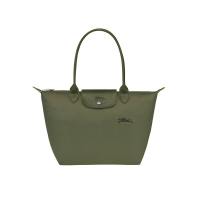
Official Store Authentic Original for women Bag Le Pliage women bag shopping bag handbag 1899/2605
$62.09$120.00
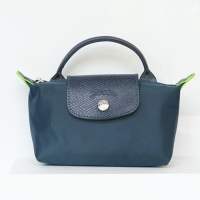
New Original France Long-Champ Women’s bag Mini Bags Shoulder Bags Cosmetic Bag Comes with a Shoulder Strap
$75.00$116.00
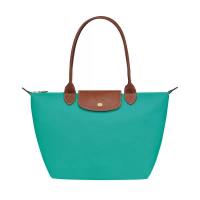
Official Store Authentic Original for Women Bag Le Pliage Original Series Shopping Bag Handbag 1899/2605
$62.09$120.00
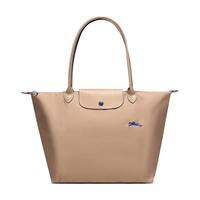
Official Store Authentic Original for women Bag 70th Anniversary Edition Shopping Bag Tote Bag 1899/2605
$62.09$190.32
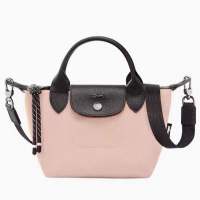
New France Long~champ 1515 1512 women bag hand bag shopping bag Shoulder bag
$92.00$138.00
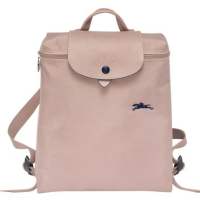
New France Original Long-champ 70th anniversary limited edition womens backpack 1699Series
$69.00$110.00
About Longchamp
Longchamp is a French luxury fashion and leather goods house best known for its handbags, travel accessories, small leather goods and, particularly, the iconic Le Pliage bag. Founded in Paris in 1948 by Jean Cassegrain, the company began as a maker of luxury leather-covered smoking pipes before evolving into an internationally recognised Parisian fashion house. Over more than seven decades, it has maintained its status as a family-owned and independent business.1
Longchamp describes itself as a Parisian Maison with a global presence, placing craftsmanship and product longevity at the centre of its identity.1
Basic information
| Category | Details |
|---|---|
| Brand | Longchamp |
| Founded | 1948 |
| Founder | Jean Cassegrain |
| Origin | Paris, France |
| Headquarters | Paris, France |
| Industry | Luxury fashion / leather goods |
| Ownership | Family-owned, independent |
| Known for | Handbags, leather goods, travel bags, Le Pliage |
| Iconic symbol | Galloping horse and jockey |
| Signature aesthetic | French, practical, elegant, understated |
| Major product categories | Handbags, luggage, small leather goods, shoes, ready-to-wear, accessories |
Origins and history
The history of Longchamp is rooted in the Cassegrain family’s earlier ventures. Before establishing the brand, the family operated Au Sultan, a Parisian luxury tobacco shop founded by Jean Cassegrain’s parents in 1926. Upon taking over the business, Jean Cassegrain developed a successful line of luxury smoking pipes covered in leather.1
On 1 February 1948, he established the enterprise that would become Longchamp. Early products utilised high-quality leathers, including exotic skins, and were positioned as refined luxury accessories. The company’s first major presentation occurred at the Paris Fair on 1 May 1948, where Cassegrain showcased leather goods crafted from materials such as crocodile and lizard skin.1
Etymology of the name
The name Longchamp connects Parisian geography with the Cassegrain family heritage. Jean Cassegrain frequently passed the Longchamp racecourse, located near one of Paris’s remaining historic mills. His surname, Cassegrain, is etymologically linked to milling, roughly translating to “breaking grain” or “crushing grain”. He combined this association with the nearby racecourse and the equestrian world to select Longchamp as the brand name.1 This dual inspiration also informed the creation of the company’s logo.
Logo and visual identity
The Longchamp emblem depicts a horse and rider in motion. Designed by artist Turenne Chevallereau at the commission of Jean Cassegrain, the image synthesises several core concepts:1
- Parisian horse-racing culture
- Elegance and movement
- Equestrian and saddlery traditions
- The link between the Longchamp racecourse and the founder’s inspiration
The galloping horse serves as a symbol of elegance in motion rather than a purely decorative fashion motif, directly reflecting the circumstances of the brand’s creation.1
Evolution from smoking accessories to leather goods
During the 1950s, Longchamp gradually expanded beyond smoking-related products. The company began producing cigarette cases, wallets, passport covers, toiletry cases, other small leather goods and travel accessories. This shift marked a significant transformation, moving the business away from tobacco paraphernalia towards leather craftsmanship and accessories.2 This expertise in leather accessories eventually became the foundation for the brand’s modern identity, despite Longchamp not originally being conceived as a handbag company.
Second generation and nylon innovation
Jean Cassegrain’s son, Philippe Cassegrain, played a central role in the company’s development. Born just before the company was founded in 1948, he grew up around the workshops and helped transform Longchamp from a small leather goods business into an international fashion house.1 Under the family’s leadership, the brand developed a reputation for combining French craftsmanship with practical design and innovation.
A pivotal development in the company’s history was the adoption of nylon. Rather than restricting itself to traditional leather, Longchamp experimented with lightweight materials for travel goods, allowing for bags and luggage that were significantly lighter and more practical than conventional alternatives.2 This innovation established a defining philosophy: luxury need not be heavy, formal or impractical. A Longchamp product could be elegant while remaining lightweight, foldable, functional and suitable for everyday life.
Le Pliage
Introduced in 1993, Le Pliage is the product most closely associated with Longchamp. It features a simple construction comprising a lightweight body, leather handles and a flap, designed to fold flat. The name derives from the French word for folding.1
Its design was notably democratic for a luxury brand, functioning variously as a handbag, work bag, school bag, travel bag, shopping bag or everyday tote. This accessible positioning helped introduce Longchamp to consumers who might not typically purchase traditional luxury handbags. Its success stems from solving the practical problem of carrying items while retaining recognisable French fashion codes, combining lightweight utility with durability and accessibility.
Market positioning and design philosophy
Longchamp occupies a distinct position within the fashion industry. While associated with luxury and French heritage, it differs from conventional ultra-luxury houses by emphasising functionality and everyday usability over exclusivity. Compared to brands such as Hermès or Chanel, Longchamp prioritises practical application.1
| Brand characteristic | Longchamp |
|---|---|
| French heritage | ★★★★★ |
| Craftsmanship | ★★★★★ |
| Everyday practicality | ★★★★★ |
| Formal luxury | ★★★ |
| Accessibility | ★★★★ |
| Trend dependence | ★★ |
| Recognition | ★★★★★ |
| Travel orientation | ★★★★★ |
The brand’s philosophy is characterised as “luxury for everyday life”. Its aesthetic is Parisian yet not excessively formal, guided by principles of functionality, lightweight design, simplicity, French elegance and movement. Products typically feature restrained silhouettes without reliance on large logos or elaborate ornamentation.3
In the broader luxury market hierarchy, Longchamp is generally categorised as accessible or contemporary luxury, sitting alongside brands like Coach, Furla and Tory Burch, below ultra-high luxury houses like Hermès and Chanel, and above premium fashion labels. Its value proposition centres on owning a genuine French luxury product that remains practical for daily use.
Product categories
While Le Pliage remains iconic, Longchamp’s range extends across multiple categories:3
- Handbags: Includes Le Pliage, leather handbags, shoulder bags, crossbody bags, tote bags, top-handle bags and seasonal collections.
- Small leather goods: Wallets, card holders, purses, pouches and passport holders.
- Travel: Travel bags, luggage, weekend bags, folding bags and travel accessories.
- Shoes: Footwear ranging from casual styles to fashion-oriented collections.
- Ready-to-wear: Clothing and broader fashion collections, although bags and leather goods remain central to the brand’s identity.
Craftsmanship and manufacturing
Despite its global reach, French craftsmanship remains integral to Longchamp’s identity. The company operates six production sites in western France, spanning Mayenne, Vendée, Maine-et-Loire and Orne, employing more than 800 people across 25 workshops. Additionally, it maintains production facilities in Tunisia and Mauritius.1
For Longchamp, “Made in France” represents a tangible manufacturing infrastructure rather than solely a marketing narrative. The company emphasises the intergenerational transmission of leatherworking expertise, identifying craftsmanship as a central component of its heritage.1
Family ownership and management
Longchamp remains a family-owned, independent company, distinguishing it from many major fashion houses owned by luxury conglomerates. The third generation of the Cassegrain family continues to hold key roles:1
- Jean Cassegrain: CEO
- Sophie Delafontaine: Artistic/Creative Director
- Olivier Cassegrain: Development of the American business
This structure ensures the brand remains closely connected to its founding family both culturally and operationally.
Global expansion
Longchamp began its international expansion relatively early. By the late 20th century, the company had established a presence in markets including Southeast Asia, Japan and Hong Kong.2 Today, it operates internationally through boutiques, department stores, travel retail and online channels. The brand exports a concept combining Parisian style, practical design and craftsmanship, rather than relying exclusively on notions of French luxury.
Sustainability initiatives
Sustainability has become an increasingly important strategic focus. Longchamp frames its approach around product longevity, responsible material choices, reducing environmental impact, circularity, craftsmanship and lowering carbon emissions. Notable initiatives include the introduction of Le Pliage Green, which utilises recycled nylon.1
The sustainability strategy is organised into two pillars:
- Made by Longchamp: Focusing on craftsmanship and planetary responsibility.
- Longchamp Family: Focusing on people and social responsibility.1
Sustainability is treated as an ongoing area of development within manufacturing and materials strategy rather than a static claim.
Key milestones
| Year | Milestone |
|---|---|
| 1926 | Cassegrain family establishes Au Sultan tobacco shop |
| 1948 | Jean Cassegrain establishes Longchamp |
| 1948 | First leather-covered pipes presented at Paris Fair |
| 1950s | Expansion into leather accessories and small leather goods |
| 1955 | Development of the iconic horse/rider identity |
| 1960s–70s | Expansion of travel and lightweight products |
| 1970s | Nylon becomes an important part of product innovation |
| Late 1970s | International expansion in Asia |
| 1993 | Le Pliage launches |
| 2000s onward | Expansion into broader fashion categories and global retail |
| 2010s–2020s | Increased focus on digital, sustainability and recycled materials |
Current status
As of 2026, Longchamp remains an independent, family-owned Parisian Maison with a global presence. Its identity continues to rest on French craftsmanship, innovation, functionality and family heritage. According to its 2024 CSR report, the company employs 4,217 people and cites longevity, sincerity, optimism, energy and creative curiosity among its guiding values.1
The brand has expanded beyond the classic image of a nylon handbag to present itself as a comprehensive fashion and lifestyle house encompassing leather goods, travel, shoes and ready-to-wear, maintaining a philosophy defined by French elegance, practicality, craftsmanship and movement.1