Shop on Lazada
Mango products
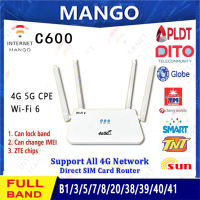
4G 5G C600 modem WiFi 6 router mobile signal SIM card insertion capability Tybe-C interface supports full band modems
$37.62$88.00
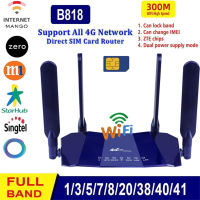
R8C 4g wireless router home router uboot supports openwrt to change IMEI lock frequency band SIM card modem
$32.39$90.20
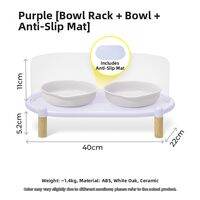
Mango | Dining Table Single Bubble Ceramic Pet Bowl Elevation Stand
$40.32$70.13
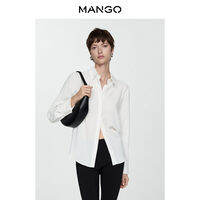
Mango | Easy-care French Style Chiffon Blouse
$65.02
Buy on Lazada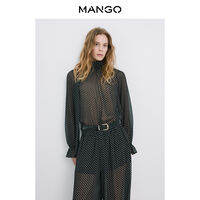
Mango | Women Blouse Polka Dot Scarf Collar
$55.67$93.84
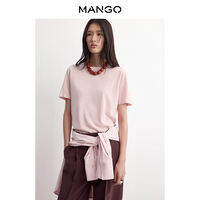
Mango | Fall New Arrivals Thin Knitted Sweater
$36.15$74.31
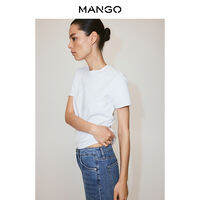
Mango | New Fall Basic Casual Cotton T-Shirt
$43.74
Buy on Lazada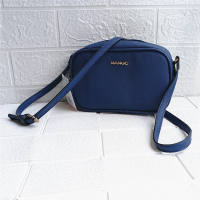
Mango Mini Cross Body Sling Bag (Black Camel Red Blue Off White Gold Champagne)
$14.80
Buy on LazadaAbout Mango
Mango is a Spanish fashion and lifestyle company headquartered in the Barcelona metropolitan area of Catalonia, Spain. Established in 1984 by Isak Andic, the brand has expanded from a single store in Barcelona into one of Europe’s leading international fashion groups, retailing clothing, accessories, and lifestyle products through an extensive network of physical stores and digital platforms.1
Overview
| Information | |
|---|---|
| Brand | Mango |
| Company | Punto Fa, S.L. |
| Founded | 1984 |
| Founder | Isak Andic |
| Origin | Barcelona, Spain |
| Industry | Fashion / retail / lifestyle |
| Headquarters | Barcelona metropolitan area, Catalonia, Spain |
| CEO & Chairman | Toni Ruiz |
| Ownership | Primarily the Andic family; Toni Ruiz holds 5% |
| Markets | 120+ |
| Points of sale | 2,900+ |
| 2025 revenue | €3.8 billion |
| International sales | 78% of sales |
| Main categories | Women, men, kids, home, accessories |
Recent corporate data indicates that Mango operates more than 2,900 points of sale across over 120 markets, with approximately 900,000 m² of total selling space. In 2025, the group generated revenue of roughly €3.8 billion, representing a 13% year-on-year increase.2
History
Foundation
Mango was established in Barcelona in 1984 by Isak Andic, an entrepreneur born in Turkey who had relocated to Barcelona as a teenager and gained experience in the fashion trade prior to launching the brand. The first store opened on Passeig de Gràcia, one of the city’s premier shopping avenues.3
From its inception, the company was designed with international ambitions rather than functioning solely as a domestic Spanish retailer. The objective was to build a recognisable fashion brand capable of being replicated across multiple countries. Within eight years of founding, Mango had established approximately 100 stores throughout Spain.4
International expansion
The brand commenced its international expansion in 1992 with the opening of two stores in Portugal. Subsequent growth occurred rapidly:
- 1992: Portugal
- 1995: Singapore and Taiwan
- 1997: International business exceeded the Spanish market for the first time
- 2000: Launch of proprietary e-commerce operations
- 2002: Presence extended to all five continents
- 2006: Expansion into the United States
- 2022: Flagship store opened on Fifth Avenue, New York5
Mango’s early adoption of digital retail was significant within the European fashion sector. The company launched its own online store in 2000, positioning it as a pioneer in developing substantial e-commerce capabilities among European fashion retailers.6
Founder: Isak Andic
Isak Andic was the central figure in the creation and development of Mango. Born in Istanbul in 1953, he moved to Barcelona with his family at the age of fourteen. He entered the fashion industry through wholesale and retail before establishing Mango in 1984.7
Andic remained closely associated with the company for four decades, overseeing its evolution from a local Barcelona retailer into a multinational fashion group. He died in December 2024 at the age of 71 following a hiking accident near Barcelona.8
Following his passing, Mango continued its transition towards formalised corporate governance while remaining largely under the control of the Andic family.
Management
Toni Ruiz serves as Mango’s current Chairman of the Board and CEO. Having joined the company in 2015 as Chief Financial Officer, he became General Manager in 2018 and CEO in 2020. In January 2025, he was additionally appointed Chairman of the Board.9
His leadership has been characterised by accelerated growth, including strengthened profitability, physical store expansion, enhanced premium positioning, technological investment, omnichannel retail development, professionalised corporate governance, and international expansion. In 2023, Ruiz was granted a 5% ownership stake in the company.10
Product lines
While frequently perceived primarily as a women’s fashion brand, Mango has developed into a broader fashion and lifestyle ecosystem.
Mango Woman
This division remains the brand’s core category. Offerings include dresses, tops, shirts, trousers, jeans, skirts, knitwear, coats, jackets, tailoring, shoes, handbags, jewellery, and accessories. The women’s collections are generally positioned around contemporary European design rather than purely trend-driven fast fashion.
Mango Man
Mango entered the menswear market in 2008 with a division that subsequently became known as Mango Man.11 The range encompasses tailoring, shirts, T-shirts, knitwear, trousers, denim, outerwear, footwear, and accessories.
Mango Kids
The children’s fashion line, Mango Kids, was launched in 2013.12
Mango Home
Extending beyond apparel, Mango Home comprises interior living and home decoration products, forming part of the company’s wider lifestyle strategy. Development of this concept intensified from 2021 onwards.13
Brand identity
Mango defines itself as a company with creativity and design at the centre of its business model.14 Its identity is broadly characterised as Mediterranean, contemporary, urban, sophisticated, and accessible. Compared to some fast-fashion competitors, Mango has historically emphasised a more polished, understated, and European aesthetic.
Collections frequently feature neutral and earthy colour palettes, minimalist silhouettes, tailoring, contemporary basics, sophisticated evening wear, leather and leather-look products, modern workwear, and seasonal trend pieces. This positioning places Mango between traditional high-street fashion and premium contemporary brands.
Positioning relative to fast fashion
Mango is often categorised alongside fast-fashion retailers such as Zara and H&M. While the business model shares characteristics with fast fashion—including frequent collection launches, rapid response to trends, vertically coordinated design and distribution, global retail networks, accessible pricing, and strong online sales—the label is not entirely comprehensive.
The company increasingly emphasises design, quality, brand identity, sustainability, and longer-term wardrobe pieces. Mango describes its approach as centred on creativity, design, technology, innovation, and sustainability rather than competing solely on speed.15
Business model
Mango operates an omnichannel model integrating physical stores with e-commerce. Its distribution system comprises company-operated stores, franchised stores, online retail, and wholesale or other commercial partnerships. This structure enables global presence without exclusive reliance on company-owned locations.
In 2025, the company opened more than 260 new locations, bringing its total network to over 2,900 points of sale across more than 120 markets.16 Online commerce has become particularly significant, with approximately one-third of total business derived from digital channels in 2025.17
Global presence
Mango is now an extensively international business. Key metrics include:
- Over 120 markets
- More than 2,900 points of sale
- Approximately 900,000 m² of selling space
- 78% of sales generated internationally18
Major international markets span Europe, North America, Latin America, Asia, the Middle East, Africa, and Oceania. Although Spain remains historically important, the majority of sales are now generated outside the domestic market.
Flagship stores
Mango has invested significantly in large, visually distinctive stores in major fashion capitals. Notable locations include Passeig de Gràcia in Barcelona, Oxford Street in London, Haussmann in Paris, Serrano in Madrid, Galleria del Corso in Milan, Kurfürstendamm in Berlin, and Fifth Avenue in New York.
The 2022 opening on Fifth Avenue in New York was particularly symbolic, representing an effort to strengthen the brand’s position in one of the world’s most significant fashion markets.19
Digital strategy
Mango has historically been advanced in digital retail, having launched its own e-commerce operation in 2000.20 The current digital strategy integrates online and physical channels to ensure synergy rather than operating them in isolation.
Key elements include online ordering, digital customer accounts, store-based fulfilment, omnichannel inventory management, personalised recommendations, loyalty programmes, and digital marketing. In 2019, the company introduced the “Mango likes you” loyalty programme, designed to enhance customer personalisation and engagement.21
Sustainability
Sustainability has become an increasingly integral component of Mango’s corporate strategy. A dedicated sustainability department was established in 2002, followed by the development of a broader 2030 sustainability strategy. In 2022, Mango became the first major Spanish fashion company to publish a list covering manufacturers and suppliers for fabrics, accessories, and part of its yarn supply chain.22
Efforts encompass materials, supply-chain transparency, environmental impact, energy efficiency, circularity, product longevity, and social responsibility. However, as with most large-scale apparel companies, these initiatives exist alongside the inherent environmental and social challenges associated with global fashion production.
Financial performance
Mango has experienced robust financial growth in recent years.
2023
Turnover surpassed €3.1 billion, a result described by the company as a record.23
2024
The company marked its 40th anniversary and introduced the 4E Strategic Plan for 2024–2026, which included an ambitious expansion programme.24
2025
Reported figures included:
- €3.8 billion in revenue
- 13% revenue growth
- €722 million EBITDA
- €242 million net profit
- Nearly €225 million in investment
- Over 260 new store openings
- More than 2,900 points of sale
- Presence in over 120 markets25
These results indicate that Mango has evolved from a Spanish high-street chain into a major global fashion business.
Ownership
Unlike publicly traded fashion corporations such as Inditex, Mango is a privately held company. Following the death of Isak Andic, the Andic family remains the principal owner. Toni Ruiz holds a 5% stake, granted during the company’s transition towards professionalised management.26 This family ownership structure distinguishes Mango from many other major global fashion groups.
Comparison with Zara
Mango is frequently compared to Inditex’s Zara, as both originated in Spain and became major international retailers.
| Mango | Zara | |
|---|---|---|
| Country | Spain | Spain |
| Founded | 1984 | 1975 |
| Origin | Barcelona | Galicia |
| Parent | Mango / Punto Fa | Inditex |
| Core identity | Contemporary, Mediterranean, sophisticated | Trend-focused, rapid-fashion |
| Women’s fashion | Major | Major |
| Men’s fashion | Mango Man | Zara Man |
| Kids | Mango Kids | Zara Kids |
| Home | Mango Home | Zara Home |
| Ownership | Primarily Andic family | Public company |
| E-commerce | Important | Important |
| Global scale | 120+ markets | Much larger global group |
While the brands compete for overlapping customers, their positioning differs. Mango tends to emphasise a more polished and aspirational European aesthetic, whereas Zara is noted for rapid trend adoption and significantly larger global scale.
Marketing and collaborations
Mango has frequently featured internationally recognised models, actors, and public figures in advertising campaigns. A notable example includes Kate Moss, who became a prominent face of the brand beginning in 2012. Collaborations with other high-profile personalities have helped position Mango as an aspirational brand rather than merely a low-cost retailer.
Significance in the fashion industry
Mango’s importance stems from several factors:
- Major Spanish export: The company transformed a Barcelona-based retailer into a brand operating in over 120 markets.27
- Distinctive market position: It offers designer-inspired styling and contemporary design without luxury price points.
- Early internationalisation: International sales exceeded domestic sales as early as 1997, only 13 years after founding.28
- Digital pioneering: Proprietary e-commerce began in 2000, providing extensive experience in digital retail.29
- Category diversification: The brand successfully expanded from women’s fashion into a broader ecosystem covering men, children, accessories, and home goods.
Current status
As of 2026, Mango is in a significant expansion phase. Results from 2025 showed €3.8 billion in revenue and a network exceeding 2,900 points of sale across more than 120 markets.30 Continued investment areas include international store expansion, flagship locations, digital commerce, technology, Mango Man, Mango Kids, Mango Home, sustainability, and Barcelona-based design and corporate infrastructure.
Corporate records also note further expansion during 2026, including new flagship stores and continued development across product divisions.31
Key timeline
- 1984: Founded in Barcelona
- 1992: International expansion begins in Portugal
- 1995: Enters Asia
- 1997: International business surpasses Spain
- 2000: Launches e-commerce
- 2002: Reaches five continents
- 2006: Enters U.S. market
- 2008: Mango Man launched
- 2013: Mango Kids launched
- 2021: Mango Home expands
- 2022: Fifth Avenue flagship opens; new 2030 sustainability strategy
- 2023: Revenue exceeds €3.1 billion
- 2024: 40th anniversary; new strategic plan
- 2025: Toni Ruiz becomes Chairman; revenue reaches €3.8 billion
- 2026: 2,900+ points of sale across 120+ markets
References
- Our history – Mango Fashion Group
- Mango Fashion Group
- Mango Fashion Group
- Mango Fashion Group – MANGO reports sales of 3.8bn euros, up 13%, driving record investment in its business model
- Isak Andic, Founder of Mango
- Mango Fashion Group
- Mango commemorates 40 years with a forecast of record sales, a new expansion plan and an improved corporate governance – Mango Fashion Group
- Mango Fashion Group
- Mango Fashion Group
- Mango Fashion Group
- Who Owns Mango? The Family Behind the Fashion Brand – LegalClarity
- Mango’s 2025 Blueprint: Expanding Supplier Horizon, Boosting European Presence | Modaes Global
- Mango Fashion Group – MANGO factura un 13% más hasta alcanzar cerca de 3.800 millones de euros en 2025, en su año récord de ventas
- Mango Fashion Group
- Mango crece a doble dígito en el primer semestre de 2025 consolidando su crecimiento de los últimos años – Mango Fashion Group
- Mango accelerates its growth and achieves a turnover in excess of 3.3 billion euros in 2024 – Mango Fashion Group
- Mango Fashion Group
- Mango Fashion Group
- Mango Fashion Group
- Emotional Farewell to Isak Andic at the Mango Campus in Barcelona – Mango Fashion Group
- Mango Fashion Group – The entire Mango family mourns the passing of our founder Isak Andic
- The entire Mango family mourns the passing of our founder Isak Andic – Mango Fashion Group
- Mango clothing chain founder Isak Andic dies in mountain accident | Business and Economy News | Al Jazeera
- Mango Fashion Group
- Mango Fashion Group
- Mango Man celebrates its 15th anniversary and doubles its turnover in the last three years – Mango Fashion Group
- Mango Fashion Group
- Mango Fashion Group
- Isak Andic, Fundador de Mango
- #lifeatmango #mango #corporate #results2025 | MANGO | 18 comments
- MANGO | LinkedIn