Shop on Lazada
Mark Fairwhale products
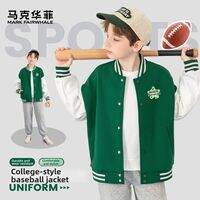
Mark Fairwhale | Baseball Style Boys Jacket
$35.18
Buy on Lazada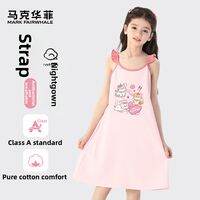
Mark Fairwhale | Cotton A-Class Sleeveless Nightdress For Girls Pink
$14.50
Buy on Lazada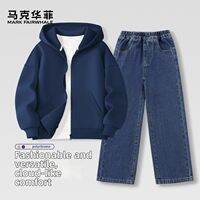
Mark Fairwhale | Hooded Casual Childrens Sweatshirt
$56.86
Buy on Lazada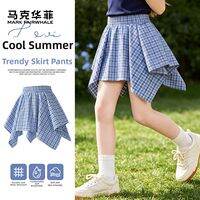
Mark Fairwhale | Trendy Lightweight Skirted Trousers Girls
$22.80
Buy on Lazada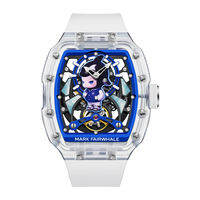
Mark Fairwhale | Fully automatic skeleton mechanical wristwatch
$397.51
Buy on Lazada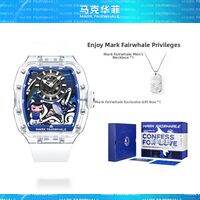
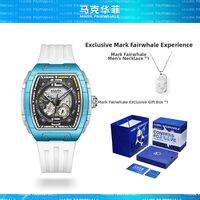
Mark Fairwhale | Automatic Hollow Mechanical Mens Watch
$400.79$400.99
Mark Fairwhale | Automatic Mechanical Water Resistant Luminous mens watch
$150.42$150.80
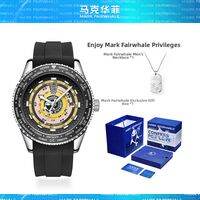
Mark Fairwhale | Automatic Waterproof Mens Watch
$105.66
Buy on LazadaAbout Mark Fairwhale
Overview
Mark Fairwhale (Chinese: 马克华菲; pinyin: Mǎkè Huáfēi) is a Chinese fashion and apparel brand established around 2000–2001 and headquartered in Shanghai. Conceived as an original Chinese designer-fashion label, it initially focused on fashionable urban menswear before expanding into denim, casualwear, women’s fashion and related lifestyle categories 1. The brand is particularly associated with art-driven design, contemporary styling and youth-oriented street fashion culture 14.
| Field | Information |
|---|---|
| Chinese name | 马克华菲 |
| English name | Mark Fairwhale |
| Industry | Fashion / Apparel |
| Country of origin | China |
| Established | 2000–2001 |
| Early founder / entrepreneur | Yang Kuntian (杨坤田) |
| Associated designer | Mark Cheung (张肇达) |
| Headquarters / corporate base | Shanghai, China |
| Main categories | Menswear, casualwear, denim, accessories and related fashion products |
| Brand positioning | Original Chinese fashion / urban fashion |
| Official website | Mark Fairwhale official website |
Sources differ on the precise founding date: company histories commonly distinguish 2000 as the conceptual birth of the brand and 2001 as the commercial launch of its first major product line 10.
History
Origins: 2000–2001
Mark Fairwhale emerged in Shanghai at the turn of the millennium, during a period when China’s domestic fashion industry was shifting from conventional business and formal menswear towards more differentiated, designer-oriented lifestyle fashion. Entrepreneur Yang Kuntian (杨坤田) has described the motivation behind the project as creating an original Chinese fashion brand rather than simply reproducing foreign trends, aiming to develop a Chinese-origin label with an international outlook 16.
Fashion designer Mark Cheung (张肇达) became an important creative figure in the brand’s formative identity and is frequently characterised as its principal artistic influence during this early period 15. In 2001, the first MARK FAIRWHALE menswear line was introduced commercially and exhibited at CHIC (China International Clothing & Accessories Fair). Brand histories state that it subsequently established roughly 40 franchise stores in major Chinese cities during its initial expansion phase 10.
Expansion in the 2000s
The 2000s marked the company’s primary period of growth and diversification:
- 2002: The company introduced its second product direction, Fairwhale Sports, and began moving toward a more formal corporate operating structure 10.
- 2003: Shanghai Mark Fairwhale Enterprise Development Co., Ltd. was established, and the company’s core values were formalised 2.
- 2004: The original business-casual menswear line shifted toward international fashion menswear, while Fairwhale Sports evolved into Fairwhale Jeans. A women’s product line was also launched 3.
- 2005–2006: A divisional management structure was introduced and brand marketing activities expanded, with communications increasingly emphasising fashion, art and social responsibility 10.
- 2007: Initiatives included the “Paper Airplane” children’s care programme and a green/environmental project associated with the Pompidou concept 5.
- 2008: The company expanded into e-commerce, repositioned its women’s fashion line, established the Mark Fashion Academy and grew its direct-sales network 6.
Meaning of the Name
The Chinese name 马克华菲 corresponds phonetically to Mark Fairwhale. Brand storytelling has connected “Fair” with ideas such as beauty, elegance and refinement, while “Whale” evokes the deep-ocean whale. One account by founder Yang Kuntian describes the name as symbolising an ambitious fashion enterprise comparable to a deep-sea blue whale—large, distinctive and capable of moving through a vast environment 16. Consequently, the whale became an important conceptual element in the brand’s identity.
The literal English expression “fair whale” should not be understood as a conventional English phrase; it functions primarily as a deliberately constructed fashion-brand name.
Brand Philosophy
Mark Fairwhale’s original philosophy centred on Chinese originality combined with international fashion aesthetics. Historical material identifies a core value system established in 2003: “Excellence, leading trends, sharing achievements” (卓越、引领潮流、共享成就) 2.
A defining characteristic of the brand has been its use of art as a source of fashion inspiration. Rather than treating clothing purely as functional apparel, Mark Fairwhale has historically presented fashion as a form of cross-disciplinary artistic expression, drawing inspiration from painting, sculpture, architecture, music, dance, literature, theatre, film and visual culture 20. This art-fashion relationship remains one of the most recognisable aspects of the brand’s identity 11.
Design Identity
Mark Fairwhale is generally positioned between contemporary casualwear, fashion menswear and youth-oriented street fashion, rather than as a traditional formalwear label. Its historical design language has incorporated several key elements:
- Urban fashion: Clothing designed around contemporary city lifestyles.
- Artistic graphics: Prints, patterns and visual motifs frequently used as major design elements.
- Denim: Denim has played an important role in the brand’s development, particularly through its Fairwhale Jeans/FJ-related product lines 9.
- Cross-cultural influences: The brand has historically combined Western fashion references with Chinese cultural and aesthetic elements.
- Fashion experimentation: Collections have often emphasised unusual graphics, construction, decorative techniques and cross-disciplinary concepts rather than relying exclusively on classic menswear conventions 21.
Shanghai Fashion Week has described the brand’s approach as pursuing the integration of art and innovation from a contemporary perspective, while drawing inspiration from multicultural influences around the world 11.
Product Lines
Mark Fairwhale did not remain a single menswear label. During its expansion, the company developed several different brands and product directions.
MARK FAIRWHALE
The original line was oriented toward fashionable urban menswear. It initially occupied the space between business-casual clothing and fashion apparel, subsequently becoming increasingly fashion-oriented 17.
FAIRWHALE SPORTS
A sports-casual menswear line appeared in 2002 and was subsequently developed into the FAIRWHALE JEANS concept 10.
FAIRWHALE JEANS / FJ
Fairwhale Jeans became one of the company’s best-known extensions, concentrating more heavily on denim, casualwear and younger consumers. The line eventually became an important part of the company’s fashion portfolio and helped move the overall brand image away from conventional business-casual menswear 9.
Women’s Fashion
A FAIRWHALE JEANS women’s line was introduced in 2004. In 2008, it was renamed and repositioned as Creative Urban Women’s Wear (FCU) 3.
Other Concepts
Historical descriptions of the wider Mark Fairwhale portfolio have included concepts such as Mark Fairwhale New Gentleman, Fairwhale Jeans / FJ, Creative Urban, Fairwhale Shake / Reshake, M-Idea Forever and MF ART+. The exact portfolio has changed over time, so these should be understood as historical brand or product concepts rather than necessarily all being current active lines 18.
Art and Cultural Marketing
One of Mark Fairwhale’s distinguishing strategies has been the use of artistic and cultural collaboration as part of fashion marketing. Rather than relying exclusively on conventional clothing advertising, the company has historically connected its brand to contemporary art, music, film, performance, design, celebrity culture, exhibitions and creative competitions 20. This approach was particularly significant during the 2000s, when Chinese fashion brands were increasingly attempting to develop identities beyond simply selling clothing.
The company’s historical materials explicitly describe a philosophy of “loving fashion, loving art, and caring about public welfare” 5.
Celebrity Partnerships
Mark Fairwhale has used celebrity partnerships to reinforce its fashion positioning. A notable example occurred in 2016, when Song Joong-ki (宋仲基) was associated with Fairwhale Jeans as its chief fashion officer and brand fashion representative during the brand’s sixth-generation image campaign 15. The brand has also developed collaborations involving Chinese entertainment figures and musicians, reflecting its strategy of connecting fashion with contemporary youth culture.
E-commerce and Retail
Online Commerce
Mark Fairwhale was an early participant in the transition of Chinese fashion retail toward online commerce, establishing a direct e-commerce operation in the late 2000s. Historical brand profiles subsequently described its online menswear business as being among the stronger performers on Tmall (天猫) during the 2010s 6. This was strategically important because the company was simultaneously maintaining physical retail stores and developing online channels—a model that became increasingly standard among Chinese fashion brands.
Physical Retail Network
During its expansion phase, Mark Fairwhale developed a substantial physical retail network across China. A historical company profile reported approximately 1,300 physical stores by the end of 2014, together with significant online sales; these figures are historical and should not be interpreted as the company’s current store count 12. The brand’s retail strategy historically combined franchise stores, directly operated stores, department-store channels, shopping malls, e-commerce platforms and online flagship stores 19.
Corporate Structure
The brand is operated through companies including Mark Fairwhale (Shanghai) Commercial Co., Ltd. (马克华菲(上海)商业有限公司). Trademark records show the Shanghai company as the owner of numerous MARK FAIRWHALE and FAIRWHALE-related marks in China 22. There is also a Mark Fairwhale (Fujian) Garment Industrial Co., Ltd. (马克华菲(福建)服装实业有限公司), which appears in more recent trademark records 18.
Relationship with Septwolves
Historical industry documentation describes Mark Fairwhale Enterprise Development as a wholly owned subsidiary of Septwolves (七匹狼) 7. However, because corporate ownership structures can change and some online sources repeat older descriptions, the statement that Mark Fairwhale is currently a wholly owned subsidiary of Septwolves should not be treated as an unequivocally current fact without confirmation from recent corporate filings. What is clear is that Mark Fairwhale has historically been closely associated with the Chinese fashion and retail ecosystem surrounding Septwolves, and current brand and trademark records continue to identify Mark Fairwhale’s own Shanghai and Fujian corporate entities 22.
Market Positioning
Mark Fairwhale is generally described in Chinese fashion-market sources as a mid-to-high-end casual fashion brand rather than a luxury house. Its positioning can be summarised as follows:
| Dimension | Positioning |
|---|---|
| Market | China / Chinese fashion market |
| Price level | Mid-to-upper / mid-high |
| Core audience | Urban, fashion-conscious consumers |
| Historical core | Men’s fashion |
| Style | Contemporary, artistic, casual, youthful |
| Key aesthetic | Art + fashion + urban culture |
| Major strength | Design identity and fashion branding |
| Luxury status | Not generally considered a traditional luxury brand |
Recent Chinese fashion-brand rankings continue to classify Mark Fairwhale among recognisable domestic apparel brands. For example, 2026 industry ranking material places it among notable Chinese casualwear brands 4, while 2025 rankings similarly list it among major men’s outerwear and casualwear brands 8.
Luxury Status
Mark Fairwhale is better described as a Chinese fashion and lifestyle brand in the mid-to-upper market rather than a luxury brand comparable to Louis Vuitton, Gucci, Prada or Dior. Its appeal is more closely related to fashion-conscious design, distinctive graphics, contemporary styling, denim and casualwear, urban youth culture, Chinese fashion identity and relatively accessible pricing compared with international luxury labels. Describing it as “designer-inspired” or “premium fashion” is generally more accurate than classifying it as a luxury house 13.
Products
Historically, the Mark Fairwhale portfolio has extended beyond basic menswear.
Clothing
- T-shirts
- Shirts
- Polo shirts
- Jackets
- Coats
- Sweaters
- Hoodies
- Trousers
- Jeans
- Casual pants
- Denim
- Fashion outerwear
Accessories
- Bags
- Belts
- Wallets
- Hats
- Scarves
- Other fashion accessories
Trademark records indicate that the Mark Fairwhale name has been registered across multiple product classes, including clothing and leather/accessory categories 3.
Relationship with Denim
Denim is particularly important to Mark Fairwhale’s history. The development of Fairwhale Jeans in the early 2000s represented a major move toward younger, more casual consumers and helped the company compete in the growing Chinese market for fashion denim and casual menswear 9. The continued appearance of Mark Fairwhale in contemporary Chinese denim-brand rankings indicates that denim remains part of its recognisable market identity 8.
International Presence
Although Mark Fairwhale is fundamentally a Chinese-origin brand, it has sought an international fashion image from the beginning. Its brand narrative repeatedly emphasises international design, multicultural inspiration and global fashion. The company has also registered MARK FAIRWHALE trademarks in overseas jurisdictions; for example, Canadian intellectual-property records list Mark Fairwhale (Shanghai) Commercial Co., Ltd. as the registered owner of a MARK FAIRWHALE trademark covering categories including clothing, footwear, bags and related goods 3.
Nevertheless, it would be misleading to characterise Mark Fairwhale as a global luxury house on the scale of European or American multinational fashion groups. Its strongest historical market identity remains Chinese fashion.
Brand Significance
Mark Fairwhale occupies a notable place in the history of Chinese fashion as part of a generation of companies that attempted to answer whether a Chinese fashion company could create its own recognisable design identity instead of simply adapting Western brands. Its founding concept explicitly emphasised original Chinese design, while its design language incorporated international fashion and artistic influences 16. In this sense, Mark Fairwhale can be viewed as part of the development of China’s domestic designer-oriented and fashion-conscious apparel sector during the 2000s and 2010s.
Timeline
| Year | Event |
|---|---|
| 2000 | Mark Fairwhale concept/brand established |
| 2001 | First MARK FAIRWHALE menswear line launched; participated in CHIC |
| 2002 | Fairwhale Sports introduced |
| 2003 | Shanghai corporate structure established; core values formalised |
| 2004 | Menswear repositioned toward international fashion; Fairwhale Jeans developed; women’s line launched |
| 2005 | Divisional management system introduced |
| 2006 | Art, fashion and public-welfare activities expanded |
| 2007 | “Paper Airplane” children’s programme and environmental initiatives launched |
| 2008 | E-commerce expansion began; women’s line repositioned |
| 2009 | Art/design competitions and celebrity-related marketing expanded |
| 2016 | Song Joong-ki became associated with Fairwhale Jeans as chief fashion officer |
| 2017 | Mark Fairwhale received Shanghai brand/civic recognitions reported in company histories |
| 2021 | Brand presented at Shanghai Fashion Week |
| 2020s | Continued operation as a Chinese fashion brand, with apparel, denim and related lifestyle products |
References
- Mark Fairwhale
- 马克华菲海淘商城入口_MARK FAIRWHALE是什么牌子
- Canadian Trademarks Details: MARK FAIRWHALE — 2147746 — Canadian Trademarks Database – Intellectual property and copyright – Canadian Intellectual Property Office – Innovation, Science and Economic Development Canada
- 2026休闲装十大品牌排行榜_休闲装品牌前十名-中国品牌网
- 马克华菲_www.markfairwhale.com
- 〖马克华菲服饰〗品牌介绍→马克华菲男装_马克华菲女装-买购APP
- 冲浪裤十大品牌排行榜-中国品牌网
- 2025年冬装男士外套十大品牌排行榜-排行榜123网
- 马克华菲-尊龙凯时手机版
- 马克华菲MARK FAIRWHALE品牌简介_LOGO_创始人_服务电话_优惠券_马克华菲MARK FAIRWHALE是哪个国家的牌子? – 云品牌网
- 马克华菲-作品发布-上海时装周
- efef.com.cn
- 秋装十大品牌排行榜-中国品牌网
- markfairwhale.com
- 莫凡案例-马克华菲
- 马克·华菲 – 知乎
- Mark Fairwhale
- 马克华菲 | PLM客户案例 | 服装PLM | 时尚PLM | 赛趋科
- 〖马克华菲2015校园招聘〗马克华菲前程无忧官方校园招聘网
- 马克华菲 官网 – 数英
- 马克华菲 2011秋冬季 官网 – 数英
- 马克华菲(上海)商业有限公司 – 雷竞技网