Shop on Lazada
Marukan products
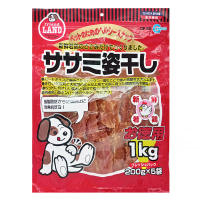
Marukan Dried Sasami 1Kg
$51.00$60.00
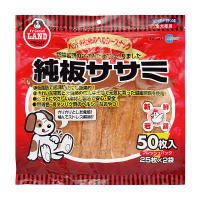
Marukan Dried Sasami Flat 50pcs
$20.56$25.70
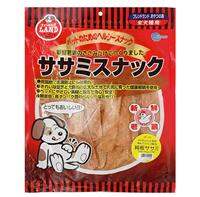
Marukan Dried Chicken Jerky
$30.99
Buy on Lazada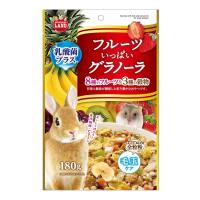
Marukan Granola Mix treats for Small Animals/Rabbit/Guinea Pig/Hamster 180g (3 Flavours)
$11.90
Buy on Lazada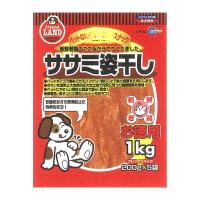
Marukan Dried Sasami Chicken Jerky 1kg
$51.99
Buy on Lazada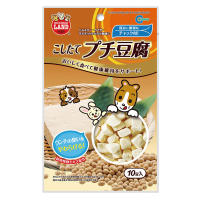
Marukan Freeze Drying Tofu For Small Animals 10g
$5.10$6.20
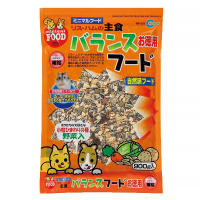
Marukan Hamster Balance Mixed Food 900g
$11.40$13.90
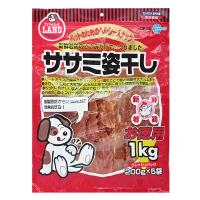
Marukan Dog Dried Sasami Jerky Treats -Chicken
$51.20
Buy on LazadaAbout Marukan
Marukan (マルカン酢) is a long-established Japanese food manufacturer and vinegar brand headquartered in Kobe, Japan. The company traces its origins to 1649, when Okada Hanzaemon Yasutsugu began producing refined vinegar in Owari Province, now part of Aichi Prefecture. With a history spanning more than 370 years, Marukan is among Japan’s oldest vinegar producers and has built its reputation on traditional fermentation methods, product quality, and deep ties to Japanese culinary culture 1.
Note: This article concerns Marukan Vinegar (マルカン酢株式会社), the Japanese vinegar manufacturer. Other unrelated businesses also use the Marukan name, including a Japanese pet products company.
Overview
| Category | Information |
|---|---|
| Brand | Marukan / Marukan Vinegar (マルカン酢) |
| Japanese company name | マルカン酢株式会社 |
| Founded | 1649 |
| Origin | Owari, Japan |
| Headquarters | Kobe, Hyogo, Japan |
| Industry | Food & beverages |
| Core business | Vinegar manufacturing and related food products |
| Major products | Rice vinegar, seasoned vinegar, fruit vinegar, drinking vinegar, ponzu and related products |
| International presence | Japan and the United States, among other markets |
| U.S. subsidiary | Marukan Vinegar (U.S.A.) Inc. |
| Current president/chairman | Takashi Sasada |
| History | 370+ years |
The company’s core business is the manufacture and sale of vinegar and related food ingredients. Its current headquarters are located on Rokko Island in Kobe’s Higashinada Ward 2.
Origins and founding
Marukan’s history dates to 1649 (Keian 2) during the Edo period, when founder Okada Hanzaemon Yasutsugu began brewing refined vinegar in Owari. In 1675, his eldest son, Okada Kanzaburo Yasuhisa, relocated the business to Fushimi-cho in Nagoya, where the family’s vinegar enterprise expanded 3.
The brand name derives from Kanzaburo’s personal name. He marked his vinegar barrels with a stylised version of the character kan (勘) from his name, which evolved into the distinctive “Marukan” (丸勘) mark. During the Tokugawa period, the saying “Masamune for sake, Marukan for vinegar” reflected the brand’s standing as a benchmark of quality in its category, much as renowned sake brands defined excellence in theirs 4.
The Marukan trademark
The Marukan mark is central to the brand’s identity. Originally applied to vinegar barrels to identify the producer, it was widely copied before modern trademark protection existed. This changed in the Meiji era when, in 1885, the Marukan trademark was officially registered under Japan’s newly introduced trademark system, securing it as the property of the Sasada family 5. This registration links the company’s present visual identity directly to a mark used by its founders over three centuries ago.
Development during the Edo and Meiji periods
During the eighteenth century, the business became associated with the Sasada family, who played a central role in its development. A significant milestone occurred in 1893 with the establishment of a new factory in the Aoki area of present-day Kobe, expanding production capacity and strengthening Marukan’s position in western Japan 6. In 1908, Marukan became an approved supplier to the Imperial Household Agency, a designation that carried considerable prestige at the time, although the formal goyōtashi system no longer exists today 7.
Corporate development
The modern corporate structure took shape gradually throughout the twentieth century. Key milestones include:
- 1914: Sasada Shoten established as a limited partnership.
- 1941: Tokyo factory established in Akabane.
- 1945: Company facilities destroyed during World War II.
- 1949: Reorganised as Sasada Shoten Co., Ltd.
- 1953: New Nagoya factory established.
- 1961: Renamed Marukan Vinegar Co., Ltd.
- 1974: Los Angeles branch opened.
- 1975: Marukan Vinegar (U.S.A.) Inc. established 8.
The 1961 name change was particularly significant, marking the point at which “Marukan Vinegar” became the formal corporate identity.
Expansion into the United States
A defining chapter in Marukan’s modern history is its expansion into the United States. The company established a Los Angeles branch in 1974 and incorporated Marukan Vinegar (U.S.A.) Inc. in 1975, making it one of the earliest Japanese vinegar producers to build a substantial presence in the American market. Production capabilities were subsequently developed locally:
- 1986: U.S. bottling facilities completed.
- 1988: U.S. brewing facilities completed.
- 2017: Second U.S. brewery opened in Griffin, Georgia.
- 2024: Marukan Vinegar U.S.A. marked its 50th anniversary 9.
This international growth paralleled the rising popularity of Japanese cuisine, sushi, and rice vinegar in North America. Rather than relying solely on exports from Japan, Marukan manufactures vinegar locally in the United States to serve the American market directly 10.
Manufacturing philosophy
Marukan distinguishes itself through its commitment to slow fermentation and traditional vinegar-making techniques. The company states that it has preserved the traditional static fermentation method (静置発酵法) for more than 370 years. Rather than treating vinegar purely as an industrial commodity, Marukan regards fermentation time and careful production as essential to flavour and quality 11. Its approach prioritises sufficient time and craftsmanship over efficiency-driven shortcuts, encapsulated in the philosophy: time + fermentation + craftsmanship + quality 12.
Product portfolio
While vinegar remains the core of the brand, Marukan’s modern portfolio extends well beyond traditional plain vinegar.
Rice and grain vinegars
Traditional Japanese vinegars intended for everyday cooking, seasoning, and sushi rice.
Seasoned vinegars
Vinegars blended with additional ingredients or seasonings for convenient cooking and dressings.
Sushi vinegar
One of the products most closely associated with Japanese food culture, particularly outside Japan.
Fruit-based vinegars
Products incorporating fruits and fruit flavours, including apple-vinegar-based offerings.
Drinking vinegars
Marukan has expanded into the beverage and wellness category with products such as drinking black vinegar and fruit-vinegar drinks. A drinking black vinegar series launched in 2022, followed by an apple-vinegar-based drinking vinegar in 2026 13.
Ponzu and other sauces
Leveraging its vinegar expertise, Marukan produces condiments such as ponzu, extending the brand into broader Japanese seasonings 14.
Through this diversification, Marukan has evolved from a specialist vinegar producer into a comprehensive Japanese seasoning and vinegar-based food brand.
Brand positioning
Marukan’s brand positioning combines ancient heritage, traditional craftsmanship, and contemporary product development. While emphasising its 370-plus-year history, the company does not present itself as static. Its corporate philosophy stresses maintaining an entrepreneurial spirit and exploring new possibilities for vinegar and related products 15. This philosophy is expressed as W2V3 — “Waku Waku Vinegar Venture Victory”, reflecting a stated goal of investigating the potential of vinegar and acetic-acid bacteria while developing products that consumers enjoy. Marukan thus positions itself as a traditional Japanese vinegar house adapting a centuries-old craft to modern food culture.
Production facilities
Marukan’s Japanese manufacturing network was substantially reorganised in the late twentieth century. In 1988, the company relocated its headquarters and main factory to Rokko Island in Kobe. In 1994, it established its Kanto factory in Ibaraki Prefecture, replacing the older Tokyo facility. These two factories serve as the company’s principal eastern and western production bases in Japan. Internationally, Marukan operates production infrastructure in the United States through Marukan Vinegar (U.S.A.).
Quality and certifications
Alongside its traditional production methods, Marukan has implemented formal quality-management and certification systems. Documented milestones include:
- 2001: Japanese organic JAS certification for the main factory.
- 2007: ISO 9001 certification for headquarters, sales operations, and main factory.
- 2008: ISO 9001 certification for the Kanto factory.
- In the U.S., relevant operations and products have obtained Kosher, organic, NON-GMO Project verification, and vegan certifications.
These credentials reflect a strategy of combining traditional Japanese production with modern food-safety and quality-management standards.
International identity
Marukan’s international history extends beyond export. By establishing local manufacturing in the United States from the 1970s onwards, the company integrated itself into the American food market rather than remaining exclusively an imported Japanese brand. This local production capability has become a defining element of Marukan’s international identity.
Major historical timeline
| Year | Event |
|---|---|
| 1649 | Okada Hanzaemon Yasutsugu begins vinegar production in Owari |
| 1675 | Kanzaburo Yasuhisa moves the business to Nagoya |
| 1743 | Sasada family becomes involved in the business |
| 1885 | Marukan trademark officially registered |
| 1893 | New factory established in Kobe |
| 1908 | Becomes an Imperial Household supplier |
| 1914 | Sasada Shoten established |
| 1945 | Facilities destroyed during World War II |
| 1953 | New Nagoya factory built |
| 1961 | Company renamed Marukan Vinegar Co., Ltd. |
| 1974 | Los Angeles branch established |
| 1975 | Marukan Vinegar U.S.A. established |
| 1988 | Kobe headquarters/factory and U.S. brewing facilities completed |
| 1994 | Kanto factory established |
| 2001 | Japanese organic JAS certification |
| 2007–08 | ISO 9001 certifications |
| 2017 | Second U.S. brewery opened in Griffin, Georgia |
| 2019 | 370th anniversary |
| 2022 | Drinking black vinegar series launched |
| 2024 | U.S. subsidiary celebrates 50 years |
| 2026 | New apple-vinegar drinking product launched |
Distinctive characteristics
Several factors distinguish Marukan from a brand-history perspective. First, its age: origins dating to 1649 give the company more than three and a half centuries of continuous development. Second, the continuity of its trademark: the modern Marukan mark can be traced directly to the founder’s identification mark on vinegar barrels. Third, its emphasis on traditional fermentation: Marukan deliberately associates its products with slow, careful production rather than presenting vinegar merely as an industrial ingredient. Fourth, its early international expansion: establishing a U.S. presence in the 1970s was a significant step for a Japanese vinegar maker and helped build international recognition. Finally, its willingness to innovate: contemporary Marukan has expanded beyond conventional vinegar into ponzu, fruit vinegar, drinking vinegar, and other categories while retaining vinegar as the core of its identity.
In summary, Marukan is a 370-plus-year-old Japanese vinegar house that combines Edo-period fermentation heritage and a centuries-old trademark with modern food manufacturing, international production, and contemporary vinegar-based products. It stands as one of Japan’s enduring examples of a traditional food craft transformed into a modern international brand.
References
- 沿革〖マルカン酢株式会社 Marukan Vinegar 伝統の品質を守り続けたマルカン酢の三世紀半〗
- 会社概要|マルカン酢公式オンラインショップ
- Our Heritage – Marukan
- 企業情報〖マルカン酢株式会社 Marukan Vinegar 伝統の品質を守り続けたマルカン酢の三世紀半〗
- マルカン酢370年の歴史 〖マルカン酢株式会社 Marukan Vinegar 伝統の品質を守り続けたマルカン酢の三世紀半〗
- 「マルカン酢」というお酢屋のこと | お酢屋がつくった こだわりぽん酢 | マルカン酢株式会社 Marukan Vinegar | 伝統の品質を守り続けたマルカン酢の三世紀半
- マルカン酢株式会社 Marukan Vinegar 伝統の品質を守り続けたマルカン酢の三世紀半
- 企業情報 会社のメッセージ 〖マルカン酢株式会社 Marukan Vinegar 伝統の品質を守り続けたマルカン酢の三世紀半〗
- 神戸まるかんを知る – 株式会社神戸まるかん
- 創業370余年の老舗お酢屋|マルカン酢公式オンラインショップ
- 企業情報〖マルカン酢株式会社 Marukan Vinegar 伝統の品質を守り続けたマルカン酢の三世紀半〗
- 沿革|会社案内|マルカングループ
- Marukan – Premium Rice Vinegar – Home
- Our Locations – Marukan USA
- Marukan – Premium Rice Vinegar – Home