Shop on Lazada
Mistral products
![[LAZADA EXCLUSIVE] Mistral 16” Stand Fan MSF1605](https://sg-live.slatic.net/p/bc38867628dc4efef54f798c92c4b5f7.jpg_200x200q80.jpg)
[LAZADA EXCLUSIVE] Mistral 16” Stand Fan MSF1605
$35.00$89.00
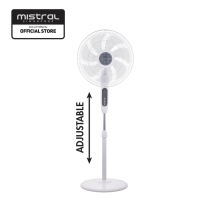
Mistral 16” Stand Fan with Remote MSF1637R
$59.00$89.00
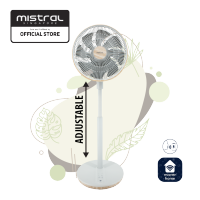
Greenleaf III - 14” DC High Velocity Stand Fan with WIFI & Remote MHV1424DRW-G
$169.00$399.00
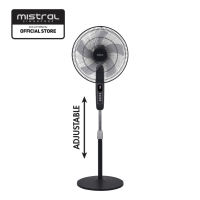
Mistral 16 Inch BLDC Stand Fan with Remote MSF1666DR - Black
$75.90$139.90
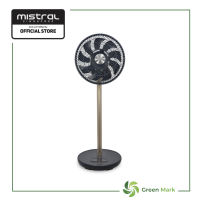
Mimica by Mistral 12 High Velocity Stand Fan with Remote Control MHV912R - White / Midnight Blue
$99.00$299.00
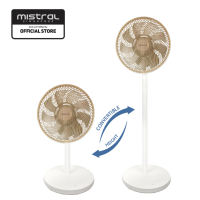
Greenleaf by Mistral 12” DC High Velocity Stand Fan MHV1412R-G
$149.00$299.00
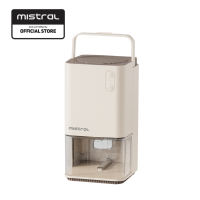
Mistral 1.2L Tabletop Dehumidifier MDH012-BG Beige
$89.00$169.00
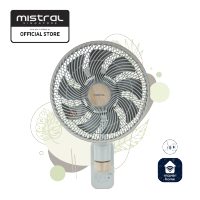
Greenleaf III - 12” DC High Velocity Wall Fan with WIFI & Remote MWF1212DRW-G
$119.00$229.00
About Mistral
Mistral, officially Mistral AI, is a French artificial intelligence company specialising in frontier AI models, AI assistants, developer tools and AI infrastructure. Established in Paris in April 2023, it has emerged as one of Europe’s most prominent AI firms, positioning itself as an alternative to predominantly US-based giants such as OpenAI, Google DeepMind, Anthropic and Meta.1
The company’s defining philosophy combines high-performance AI with openness, customisation, efficiency and user control. Mistral initially gained recognition for releasing powerful, relatively compact language models under open or permissive licences, but has since expanded into a comprehensive full-stack AI provider.1
Basic information
| Field | Information |
|---|---|
| Name | Mistral AI |
| Founded | April 2023 |
| Headquarters | Paris, France |
| Industry | Artificial intelligence |
| Main focus | Foundation models, generative AI, AI agents, developer tools, AI infrastructure |
| CEO | Arthur Mensch |
| Co-founders | Arthur Mensch, Guillaume Lample, Timothée Lacroix |
| Primary market | Global |
| Business model | AI models/APIs, enterprise solutions, subscriptions, infrastructure and custom AI |
| Official site | mistral.ai |
Mistral maintains its registered office in Paris and is legally structured as a French société par actions simplifiée.1
Corporate scope and ecosystem
A key distinction in understanding Mistral is that it operates beyond the scope of a conventional AI chatbot provider. While users may encounter the company through its conversational assistant, its corporate ecosystem encompasses a broader range of technologies and services.
Mistral describes its current ecosystem as comprising:
- Foundation AI models
- Vibe, a unified AI agent for productivity and coding
- Studio, a developer platform and API
- Forge, a platform for customised model development
- Compute, proprietary AI computing infrastructure
- Document understanding and OCR technology
- Speech and audio models
- Enterprise AI deployments
- Self-hosted and private-cloud AI systems1
Consequently, Mistral functions as a hybrid entity combining an AI research laboratory, a model provider and an enterprise AI platform.1
Founding and leadership
Mistral was established in April 2023 by three French AI researchers and engineers who believed the industry was becoming increasingly closed. They sought to create a European company that combined frontier-level research with openness, transparency, efficiency and user control.1
Arthur Mensch
As co-founder and CEO, Mensch leads the company and serves as its principal business and strategic figure.1
Guillaume Lample
A co-founder and prominent machine learning researcher, Lample brings extensive background in large language models and AI research.
Timothée Lacroix
As co-founder, Lacroix oversees major technical aspects of Mistral’s engineering and AI infrastructure.
This founding philosophy of balancing advanced performance with accessibility remains a defining characteristic of the company.1
Strategic rationale
Upon its emergence in 2023, the generative AI sector was dominated by major technology companies including OpenAI, Google, Microsoft, Anthropic and Meta, with access to leading models typically restricted to APIs or proprietary applications. Mistral adopted a different approach to demonstrate that a smaller European firm could build competitive frontier AI while granting developers greater freedom to inspect, customise, deploy and integrate its models.
The company’s founding strategy emphasised three core pillars:
- Frontier performance: Developing highly capable AI models.
- Openness: Enhancing the accessibility and customisability of models and technology.
- European technological sovereignty: Providing European organisations with an alternative source of advanced AI technology.1
The third pillar has become increasingly central to Mistral’s corporate identity.
Model portfolio and technical philosophy
Mistral has historically prioritised model efficiency over sheer parameter count. Its portfolio includes various sizes and architectures tailored to specific use cases, including Mistral 7B, Mixtral, Mistral Large, Mistral Small, Codestral, Pixtral, Ministral, Voxtral and Mistral OCR. Current documentation lists models such as Mistral Medium 3.5, Mistral Small 4, Voxtral Mini Transcribe Realtime, Voxtral TTS and OCR 4.2
Mistral 7B
Released on 27 September 2023, Mistral 7B was a language model with approximately seven billion parameters.1 It demonstrated that compact models could deliver strong performance on modest hardware, challenging the assumption that larger models are universally superior. This release highlighted the utility of efficient models for scenarios involving cost sensitivity, latency, privacy, local deployment and customisation.
Mixtral and Mixture-of-Experts
Mistral helped popularise the Mixture-of-Experts (MoE) architecture through its Mixtral models. Unlike dense models where every parameter participates in every computation, MoE architectures contain multiple “experts” and selectively activate subsets for specific inputs. This approach enables large total model capacity alongside relatively efficient computation, establishing Mistral’s reputation for high performance relative to computational requirements.
Mistral Large
Introduced in February 2024, Mistral Large marked the company’s entry into the frontier-model market.1 Designed for demanding tasks such as reasoning, multilingual understanding, text generation and coding, it was initially distributed via Azure. This signalled Mistral’s transition from a startup known for compact open models to a competitor in the high-end AI segment.
Product ecosystem
Mistral’s evolution into a full-stack AI company is reflected in its diversified product lineup.
Vibe
Formerly known as Le Chat, Vibe is Mistral’s unified AI agent for productivity and coding.3 Following a rebranding in June 2026, Vibe succeeded Le Chat as the primary consumer and professional interface, retaining existing accounts and plans.3 It operates in three modes:
- Vibe Work: For productivity and multi-step tasks
- Vibe Code: For software development
- Vibe Chat: For conversational interaction1
Capabilities include web research, document analysis, image generation, writing assistance and automation, with coding functions accessible via terminals, IDEs and web environments.1
Studio
Studio serves as Mistral’s developer platform, providing API access, model experimentation, Playground, API keys, agent development tools, evaluations, deployment options and usage monitoring. It is the primary environment for building applications on Mistral models.1
Forge
Forge targets organisations seeking to develop or customise models for specific needs. Introduced in March 2026, it represents a shift towards enabling clients to build AI systems around their own data and requirements as part of Mistral’s enterprise stack.1
Compute
Mistral Compute provides infrastructure for training and inference, including dedicated GPU environments.1 By developing proprietary infrastructure, Mistral aims to secure greater capacity, reduce costs, improve model-development control and decrease dependence on external providers.
Mistral OCR
Moving beyond text generation, Mistral offers OCR technology designed to understand document structure and layout. The latest service, OCR 4, provides paragraph-level bounding boxes and structural information,2 supporting enterprise applications involving invoices, contracts, financial documents, scanned forms, scientific papers and archives.
Voxtral and speech AI
The Voxtral model family addresses speech-related applications, including transcription and text-to-speech.2 This expansion illustrates Mistral’s strategy to evolve from a text-focused LLM company into a general-purpose AI platform spanning text, vision, documents, speech and agents.
Licensing and open model strategy
Mistral is frequently associated with open models, yet it is not strictly an open-source company. Its portfolio includes models distributed under varying licensing arrangements alongside proprietary services and enterprise offerings. It is more accurate to characterise Mistral as an open-model-oriented AI company rather than one where all outputs are open source. This distinction is significant for understanding its commercial strategy, which balances community accessibility with proprietary revenue streams.
European technological sovereignty
Mistral has become a symbol of European AI sovereignty in a sector historically dominated by US and Chinese firms. While the US hosts OpenAI, Google, Anthropic and Meta, and China has Baidu, Alibaba, Tencent and DeepSeek, Mistral represents Europe’s most visible attempt to build an internationally competitive frontier AI laboratory.
For governments and enterprises, concerns often extend beyond model performance to data residency, control, private deployment capabilities and supply chain independence. Mistral addresses these through cloud deployment, private cloud options, on-premises deployment, self-hosting, customised models and European data residency. Its hosted Mistral Cloud infrastructure is located within the EU, and the company actively promotes self-hosted deployments for organisations requiring greater autonomy.1
Enterprise and government strategy
Mistral has increasingly focused on enterprise and government sectors, targeting finance, manufacturing, energy, defence, government, transportation and technology. Listed partners and customers include Stellantis, IBM, BNP Paribas, SAP, CMA CGM, ASML, Orange, AXA, Cisco and TotalEnergies.1
Defence and government
Mistral supplies AI technology to the French military and advocates for European advanced AI capabilities in defence.4 The company’s leadership has taken a pragmatic stance on European defence AI, arguing that Europe cannot rely entirely on foreign technology for critical security applications.4 This position places Mistral at the centre of debates regarding the use of frontier AI in military intelligence, defence planning, autonomous systems and cybersecurity.
Funding and valuation
Mistral has attracted significant investor interest since its inception. Key funding milestones include a seed round in June 2023, Series A in December 2023 and Series B in June 2024.1 In 2025, the company reached a reported valuation of €11.7 billion.4
By July 2026, Reuters reported that Samsung was in discussions to invest approximately €1 billion, potentially as part of a financing round valuing Mistral at around €20 billion. This was reported as an ongoing fundraising discussion rather than a completed transaction.4
Partnerships and distribution
Mistral leverages partnerships to address the challenge of distribution. Mistral Large was made available through Microsoft Azure, allowing enterprise customers to access the model within existing infrastructure.1 The platform is also accessible through multiple other cloud providers, enabling clients to purchase AI services through ecosystems they already utilise, such as AWS, Google Cloud, IBM and SAP.1
Business model
Mistral operates a diversified business model comprising six distinct revenue streams:
- Model/API business: Developers pay for API access to Mistral models.
- Consumer AI: Vibe offers free and paid tiers for AI assistant and agent experiences.
- Enterprise AI: Organisations pay for customised deployments and enterprise functionality.
- Self-hosted AI: Clients deploy Mistral technology within their own environments.
- Custom models: Bespoke AI systems tailored for specific organisations and industries.
- AI infrastructure: Mistral Compute provides training and inference infrastructure.
This diversification distinguishes Mistral from companies reliant solely on consumer chatbot revenue.
Competitive landscape
Comparison with OpenAI
| Feature | Mistral | OpenAI |
|---|---|---|
| Origin | France/Europe | United States |
| Founded | 2023 | 2015 |
| Famous product | Vibe / Mistral models | ChatGPT |
| Core strength | Efficient/open-oriented models + enterprise control | Frontier models + consumer ecosystem |
| Open models | Important part of strategy | More limited |
| Self-hosting | Major strategic focus | More limited |
| Enterprise | Major focus | Major focus |
| AI infrastructure | Increasingly important | Major focus |
| European sovereignty | Central theme | Not central to identity |
Mistral differentiates itself through control, deployment flexibility, efficiency and European positioning rather than attempting to directly replace OpenAI.
Comparison with other peers
- Google: Mistral is significantly smaller but emphasises independence and European identity over massive infrastructure scale.
- Anthropic: Both compete in high-end enterprise AI, but Mistral places greater emphasis on open/permissively licensed models and self-hosting.
- Meta: Mistral competes in the open model space against Meta’s Llama but operates on a much smaller scale.
- DeepSeek: Both demonstrate that highly capable models do not necessarily require US-giant-scale resources, though their technical approaches and geopolitical positions differ.
Brand identity
The name Mistral references the strong regional wind in southern France, reflecting a distinctly European identity rather than a generic Silicon Valley aesthetic. The company’s visual identity features an abstract pixel cat as its mascot, representing the unexpected but significant role of cats in early internet culture and machine learning development.1 This distinctive branding provides recognisable personality within a highly technical industry.
Major milestones
- April 2023: Mistral AI founded.1
- June 2023: First employee hired; seed financing secured.1
- September 2023: Mistral 7B released.1
- December 2023: Series A financing completed.1
- February 2024: Mistral Large launched.1
- June 2024: Series B financing completed.1
- January 2025: Mistral Small 3 released.1
- February 2025: Major new version of Le Chat launched.1
- March 2025: Mistral OCR introduced.1
- June 2025: Mistral Code and Mistral Compute introduced.1
- July 2025: Voxtral introduced.1
- 2025: Reported valuation reached €11.7 billion.4
- March 2026: Forge introduced.1
- June 2026: Le Chat renamed and reorganised as Vibe.3
- June 2026: Mistral OCR 4 introduced.2
- July 2026: Robostral Navigate announced as first embodied navigation model.1
- July 2026: Reuters reported discussions regarding potential Samsung investment at €20 billion valuation.4
Strategic evolution
Mistral’s strategic direction has evolved significantly since its founding:
- 2023: Positioned as a small European AI laboratory building efficient open models.
- 2024: Demonstrated capability to compete with frontier AI companies.
- 2025: Expanded into models, assistants, enterprise AI and infrastructure.
- 2026: Aims to provide the complete AI stack, from models and agents to development platforms, customised models and computing infrastructure.
The company currently describes itself as helping organisations build tailored AI systems, with products spanning agents, development, custom models and infrastructure.1
Strengths and challenges
Strengths
- European identity: One of the most significant European frontier-AI companies.
- Openness: Historically provided developers with unusually accessible models.
- Efficiency: Built early reputation on strong performance with efficient models.
- Enterprise control: Private, self-hosted and customised deployments are central to strategy.
- Multilingual capability: Strong focus on European languages and multilingual applications.
- Research team: Founders and researchers possess substantial modern machine learning backgrounds.
- Full-stack ambitions: Covers models, applications, agents, APIs, customisation and infrastructure.
Challenges
- Scale: Competitors like OpenAI, Google and Meta possess vastly greater financial and computing resources.
- Compute costs: Frontier AI requires enormous quantities of GPUs and electricity.
- Distribution: Success requires securing developers, enterprise customers and consumer users beyond model quality.
- Model competition: Technical advantages can disappear rapidly between generations.
- Open-model economics: Monetising accessible models can be more difficult than selling proprietary systems.
- Geopolitical complexity: Navigating European regulation, US infrastructure and global competition creates unique strategic challenges.
Significance
Mistral represents an alternative model for building a major AI company, summarised by its philosophy of combining frontier AI, openness, efficiency, customisation and European sovereignty. It has demonstrated that a European startup can rapidly become a serious participant in frontier AI while pursuing ambitions extending far beyond language models.
The company now competes across the entire AI stack, from models and APIs to AI agents, applications, enterprise customisation, private deployment and compute infrastructure. This comprehensive approach makes Mistral a significant entity in the global AI landscape regardless of individual consumer product adoption.1