Shop on Lazada
MIUI products

MIUI 1000W 4-in-1 Hand Blender Baby Food Mixer Powerful Immersion Multi-Function Baby-Food MixerJuicer Blender Food Processor Meat Grinder Creamer Egg Beater
$30.90$69.00
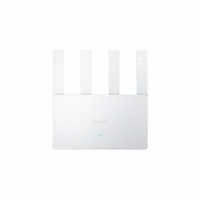
MIUI | Home 2.5G Version Gigabit High Speed Wall Penetrating WiFi7 Full Coverage Router
$83.77$292.34

Miui | Mi Air Purifier Filter Compatibility 1/2/2S/3/4/Pro/HF Models
$34.17
Buy on Lazada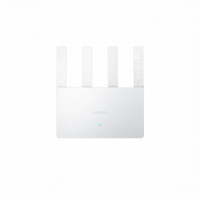
MIUI | Dual Band Wi-Fi 7 Mesh Supported Router
$90.71$169.82
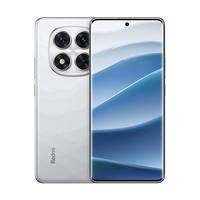
MIUI | 5G Student Gaming Camera Phone Redmi Note 14 Pro
$741.32
Buy on Lazada
Miui | Body Fat Scale 8-Electrode Design Precision Weight Loss
$145.48$218.50
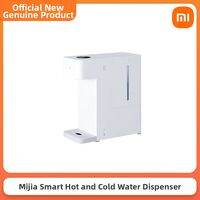
Miui | Smart Hot and Cold Water Dispenser
$256.15$373.41
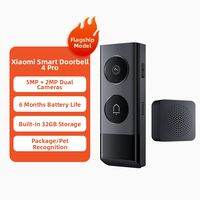
Miui | Wireless Ultra-clear Dual Camera Doorbell with Long-lasting Battery
$233.08
Buy on LazadaAbout MIUI
MIUI (pronounced “Me You I”), formerly known as Mi User Interface, is a custom Android-based operating system and user interface developed by Xiaomi Corporation for smartphones, tablets, and other smart devices. First released on August 16, 2010, MIUI became one of the most widely used Android custom interfaces globally, serving hundreds of millions of users across Xiaomi, Redmi, and POCO devices before being succeeded by Xiaomi HyperOS in 2023.1
Overview
| Category | Information |
|---|---|
| Name | MIUI (Mi User Interface) |
| Developer | Xiaomi Corporation |
| Initial Release | August 16, 2010 |
| Based On | Android Open Source Project (AOSP) |
| Programming Language | Java, Kotlin, C/C++, XML |
| Supported Devices | Xiaomi, Redmi, POCO smartphones and tablets |
| License | Proprietary |
| Succeeded By | Xiaomi HyperOS (2023) |
| Latest Major Version | MIUI 14 |
History
Foundation (2010)
Prior to releasing its first smartphone, Xiaomi introduced MIUI as a custom Android firmware. Development was heavily influenced by user feedback and community contributions, with early versions available for third-party devices from manufacturers such as Samsung and HTC. The first public release occurred on August 16, 2010, several months before the launch of the Xiaomi Mi 1 smartphone.1
Early Growth (2011–2013)
MIUI gained rapid popularity due to its iOS-inspired interface, extensive customisation options, weekly software updates, and active community forums. Unlike stock Android, it focused heavily on personalisation and integrated utilities. Features such as built-in applications replacing third-party theme engines and deep system customisation were available in MIUI years before becoming common elsewhere. Although Xiaomi has since transitioned to HyperOS, MIUI remains a significant milestone in both Android’s evolution and Xiaomi’s growth regarding Google apps in China.
Global Expansion (2014–2018)
As Xiaomi expanded internationally, MIUI was localised into dozens of languages and adapted for various regional markets. Key features introduced during this period included Second Space, Dual Apps, Game Turbo, App Lock, Security Center, Themes Store, battery optimisation, and floating windows. During its early community ROM phase, MIUI also supported numerous non-Xiaomi devices.
Mature Era (2019–2023)
Major releases during this era included MIUI 11, MIUI 12, MIUI 12.5, MIUI 13, and MIUI 14. These versions brought new animations, Super Wallpapers, a privacy dashboard, memory optimisation, improved multitasking, Material You support, and enhanced battery management. At its peak, MIUI powered hundreds of millions of active devices worldwide.1
Design Philosophy
MIUI prioritised speed, simplicity, deep customisation, rich animations, integrated system applications, and responsiveness to user community feedback. A distinctive aspect of its development was Xiaomi’s practice of releasing frequent beta builds that incorporated direct suggestions from users.
Key Features
Themes
MIUI featured one of the largest theme ecosystems on Android, allowing users to customise icons, fonts, wallpapers, lock screens, boot animations, notification styles, and Always-On Display elements.
Security App
The integrated Security application consolidated numerous maintenance tools, including virus scanning, app permission management, battery management, storage cleaning, data usage monitoring, and performance optimisation.
Second Space
This feature enabled users to create a completely separate environment on the same device, with distinct apps, files, passwords, and Google accounts.
Dual Apps
Users could clone applications such as WhatsApp, Facebook, Messenger, and Telegram to operate multiple accounts simultaneously on a single device.
Floating Windows
Applications could run in resizable floating windows to facilitate improved multitasking.
Game Turbo
Game Turbo optimised gaming performance by allocating additional CPU and GPU resources, blocking notifications, enhancing touch response, and enabling gameplay recording.
Super Wallpapers
Animated wallpapers provided smooth transitions between the lock screen, home screen, and Always-On Display. Popular themes included Earth, Mars, Saturn, and Geometry.
Privacy Features
Privacy enhancements included granular permission management, clipboard protection, location controls, hidden albums, hidden apps, and privacy watermarks.
MIUI Versions
| Version | Release Year |
|---|---|
| MIUI V1 | 2010 |
| MIUI V2 | 2011 |
| MIUI V3 | 2011 |
| MIUI V4 | 2012 |
| MIUI V5 | 2013 |
| MIUI 6 | 2014 |
| MIUI 7 | 2015 |
| MIUI 8 | 2016 |
| MIUI 9 | 2017 |
| MIUI 10 | 2018 |
| MIUI 11 | 2019 |
| MIUI 12 | 2020 |
| MIUI 12.5 | 2021 |
| MIUI 13 | 2021 |
| MIUI 14 | 2022 |
Supported Brands
MIUI powered devices under Xiaomi’s smartphone brands, including Xiaomi, Redmi, and most POCO models prior to the transition to HyperOS.
Community
MIUI fostered one of the largest enthusiast communities in the Android ecosystem. Official and community resources included the Xiaomi Community, Mi Pilot Program, Beta Tester Program, and Weekly Developer ROMs (later discontinued). Custom ROM communities such as xiaomi.eu also developed modified MIUI versions based on official Chinese releases.
Strengths
- Rich customisation options
- Extensive theme support
- Comprehensive feature set
- Frequent software updates
- Strong ecosystem integration
- Effective battery management
- Powerful built-in utilities
Criticism
MIUI faced criticism regarding pre-installed bloatware, advertisements in certain system apps (particularly in specific regions), aggressive background app management, inconsistent update schedules across devices, and occasional software bugs in early releases. The prevalence of these issues varied by region, device model, and MIUI version.
Transition to Xiaomi HyperOS
In October 2023, Xiaomi officially announced Xiaomi HyperOS, ending the MIUI branding after approximately 13 years. HyperOS is designed as a unified operating system for smartphones, tablets, wearables, smart-home devices, and Xiaomi vehicles, whilst retaining many familiar design elements from MIUI.1
Legacy
MIUI is widely regarded as one of the most influential Android custom interfaces. It helped establish Xiaomi’s reputation through a software-first strategy before the company entered the smartphone hardware market. Many features that later became standard across Android—such as app cloning, advanced theme engines, and extensive system customisation—were available in MIUI years earlier. Although Xiaomi has moved to HyperOS, MIUI remains an important milestone in Android’s evolution and in Xiaomi’s growth into a global technology company.