Shop on Lazada
Molnlycke products
![[mobileaid] Molnlycke Mepilex Ag 12.5cm x 12.5cm/ 17.5cm x 17.5cm 5s [LOCAL SG DELIVERY]](https://sg-test-11.slatic.net/p/dd15d9d675edf73376771c30275eb694.png_200x200q80.jpg)
[mobileaid] Molnlycke Mepilex Ag 12.5cm x 12.5cm/ 17.5cm x 17.5cm 5s [LOCAL SG DELIVERY]
$161.14
Buy on Lazada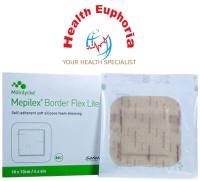
Mepilex Border Flex Lite (4cm | 7.5cm | 10cm)
$54.45$55.00
![Mepilex Up Soft Silicone Foam Dressing 20 X 20cm (5 Pieces per Box) [NUHS Pharmacy]](https://sg-live.slatic.net/p/98e5116e06ff94bde1e8b33bbfa97c97.jpg_200x200q80.jpg)
Mepilex Up Soft Silicone Foam Dressing 20 X 20cm (5 Pieces per Box) [NUHS Pharmacy]
$162.50
Buy on Lazada![Mepilex Up Soft Silicone Foam Dressing 10 X 10cm (5 Pieces per Box) [NUHS Pharmacy]](https://sg-live.slatic.net/p/48d8ba418c394a3cc819b83aab19188f.jpg_200x200q80.jpg)
Mepilex Up Soft Silicone Foam Dressing 10 X 10cm (5 Pieces per Box) [NUHS Pharmacy]
$43.55
Buy on Lazada![Mepilex Border Flex (7.5cm| 10cm) [5 Pieces] SG Seller Authentic](https://sg-live.slatic.net/p/384e295ca6f85a78085ba4a307ba30bc.jpg_200x200q80.jpg)
Mepilex Border Flex (7.5cm| 10cm) [5 Pieces] SG Seller Authentic
$63.36$64.00
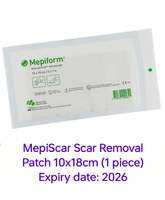
SCAR CARE DRESSING Mepiform Self-adherent dressing for scar management with Safetac® with long expiration
$31.50$40.00
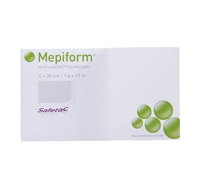
MOLNLYCKE Mepiform 4 x 30 cm 5s
$201.20
Buy on Lazada![Mepilex Up (10x10cm | 20x20cm) [5pc/box]](https://sg-live.slatic.net/p/fe11a3f2390234290bbf9eb9ddc8d003.jpg_200x200q80.jpg)
Mepilex Up (10x10cm | 20x20cm) [5pc/box]
$178.20$180.00
About Molnlycke
Mölnlycke Health Care AB, commonly referred to as Mölnlycke, is a Swedish multinational medical technology (MedTech) company specialising in products and solutions for wound care, operating rooms, surgical gloves and antiseptics. Established in 1849, the organisation has evolved from a domestic textile manufacturer into one of the world’s leading specialist healthcare product companies. Its global headquarters are located in Gothenburg, Sweden, and its products and solutions are utilised in more than 100 countries.1
Quick facts
| Item | Information |
|---|---|
| Full name | Mölnlycke Health Care AB |
| Brand | Mölnlycke® |
| Founded | 1849 |
| Origin | Sweden |
| Headquarters | Gothenburg, Sweden |
| Industry | Medical technology / healthcare |
| Main focus | Wound care and surgical procedures |
| Business areas | Wound Care; Operating Room Solutions; Gloves; Antiseptics |
| Owner | Patricia Industries, part of Investor AB |
| Ownership structure | 99% Patricia Industries; 1% employees and board members |
| CEO | Guillaume Joucla (interim CEO as of 2026) |
| 2025 net sales | €2.104 billion |
| 2025 EBITDA | €596 million |
| 2025 employees | 8,557 |
| Geographic reach | Products/solutions used in 100+ countries |
| Corporate headquarters | GoCo Health Innovation City, Gothenburg |
Financial and employee figures are derived from Mölnlycke’s 2025 reporting.2
Corporate overview
Mölnlycke operates fundamentally as a business-to-business (B2B) healthcare provider, although patients encounter its products directly in hospitals, clinics and home-care settings. Rather than functioning as a general pharmaceutical company, it concentrates on medical devices, wound-management technologies, surgical products and healthcare consumables.
The company’s central business areas are:
- Wound Care
- Operating Room Solutions
- Gloves
- Antiseptics
Mölnlycke describes its corporate purpose as “revolutionise care for people and planet”, an objective that combines improved patient and caregiver outcomes with efforts to reduce the environmental footprint of healthcare delivery.3 A defining characteristic of the organisation is its positioning as a provider of clinical solutions and healthcare ecosystems—encompassing products, procedures, knowledge and workflow solutions designed around specific clinical problems—rather than solely as a manufacturer of individual medical items.
History
Origins and early development
Mölnlycke was founded in 1849 as a textile business in Sweden. This early history is significant, as the company’s modern expertise in wound care can be traced directly back to textile manufacturing. By the beginning of the 20th century, Mölnlycke had become a major supplier of gauze to Swedish hospitals,4 creating the foundation for its subsequent development into medical dressings and surgical products.
Historically, hospitals relied on reusable textiles and manually prepared wound-care materials. During the 20th century, Mölnlycke transitioned towards the industrial production of pre-packed, ready-to-use medical products. In the 1950s, the company pioneered the industrial manufacturing of swabs and wound dressings in Sweden. Throughout the 1960s, it increasingly promoted single-use dressings, surgical drapes and gowns as alternatives to multi-use textiles, partly to help reduce bacterial transmission.5
Key milestones
- 1975: Mölnlycke was acquired by SCA, the Swedish forest-products and hygiene-products group.
- 1980s: Thomas Fabo invented Safetac® technology, which became a major technological foundation for the company’s wound-care portfolio.
- 1989: The company launched Mepitel®, the first product utilising Safetac technology. Mepitel is a wound-contact layer designed to minimise trauma and pain during dressing changes.6
- 1990: Surgical and Wound Care were established as two distinct business areas. Products such as Mepitel, Mepiform and Mepilex became integral parts of the wound-care portfolio.
- 1999: Mölnlycke introduced ProcedurePak®, a customised procedure-tray concept allowing hospitals to receive required surgical components packaged together for specific procedures.
- 2000s: The surgical portfolio expanded to include BARRIER® surgical drapes and gowns. Mepilex Border was introduced in 2001 and became a significant product in chronic-wound care.7
- 2007: Investor AB acquired Mölnlycke. Today, the company is primarily owned through Patricia Industries, Investor AB’s wholly owned investment arm.8
- 2010s: The company expanded its focus from treating wounds towards preventing them, particularly pressure injuries, developing a prevention business around prophylactic dressings.9
- 2020s: Portfolio expansion continued with products such as Mepilex Border Flex and Granulox oxygen therapy.
- 2024: Mölnlycke celebrated 175 years of operation.10
Ownership and governance
Mölnlycke is not a publicly traded company in its own right. It is owned by Investor AB, a major Swedish investment company associated with the Wallenberg ownership sphere. The ownership structure is as follows:
- 99% owned by Patricia Industries AB
- 1% owned by Mölnlycke employees and board members
Investor AB acquired Mölnlycke in 2007, and it remains the largest wholly owned subsidiary within Patricia Industries.11 This structure allows Mölnlycke to operate as a privately owned global MedTech company without the short-term reporting pressures typically associated with separately listed public entities.
As of 2026, the company is undergoing a leadership transition. Zlatko Rihter, who served as CEO from 2020, announced his resignation in March 2026. The board appointed Guillaume Joucla, previously the CFO, as interim CEO while searching for a permanent successor.13
Headquarters and facilities
Mölnlycke’s global headquarters are situated in Gothenburg, Sweden. In 2025, the company relocated to a new facility at GoCo Health Innovation City, a life-sciences cluster in the Gothenburg region. These premises were designed to foster collaboration among healthcare companies, researchers, providers and other life-science organisations, while also significantly expanding the company’s R&D capacity.12
Consequently, Gothenburg serves as more than an administrative centre; it is a primary hub for Mölnlycke’s research, development, innovation and corporate activities.8
Business areas
Wound Care
Wound Care is Mölnlycke’s largest business area, representing approximately 60% of total sales in 2025.15 This division is most strongly associated with the Mölnlycke brand and covers a comprehensive portfolio including foam dressings, antimicrobial dressings, alginate and fibre dressings, wound-contact layers, incision dressings, negative-pressure wound therapy, wound cleansing, wound-bed preparation, scar management, skin care, compression and fixation, pressure-injury prevention, superabsorbent dressings and topical oxygen therapy.9
Key brands in this segment include:
- Mepilex®: A major family of foam dressings.
- Mepitel®: A wound-contact layer associated with Safetac technology.
- Mepiform®: Used in scar management.
- Exufiber®: A gelling fibre dressing.
- Mepore®: A range of conventional dressings.
- Mepitac®: A soft silicone fixation tape.
- Granulox®: A topical oxygen therapy product.
The breadth of this portfolio demonstrates that the company operates across multiple stages of wound management, from cleansing and preparation to treatment, fixation, prevention and scar management.10
Safetac® technology
Safetac is a proprietary soft silicone adhesive technology designed to enable dressings to adhere to surrounding skin while minimising unwanted adhesion to the moist wound bed. Intended clinical advantages include reduced trauma and pain during dressing removal, protection of newly formed tissue, less damage to surrounding skin and easier dressing changes. Introduced in 1989 with Mepitel, Safetac has become a key technological differentiator incorporated into numerous Mölnlycke products.6
Operating Room Solutions
This business area focuses on enabling hospitals and surgical teams to perform procedures efficiently and safely. The portfolio includes universal, specialty and procedure-specific surgical drapes, as well as drapes for cardiovascular, orthopaedic, ophthalmic, gynaecological, obstetric, urology, ENT and neurosurgical procedures. Surgical instruments offered include trocars, suction and irrigation instruments, monopolar instruments, pulsed lavage systems and endoretrieval pouches.
A notable component of this division is ProcedurePak®, a customised surgical-tray solution that standardises the packaging of components required for specific procedures. Mölnlycke reports that its factories process more than 800,000 components per day, supporting over 16,000 customised procedure trays.16
Gloves
Mölnlycke maintains a substantial surgical glove business comprising both natural rubber latex and synthetic options. The Biogel® brand is designed for surgical performance, fit, comfort and protection. Some glove systems incorporate indicator technology to make breaches in an outer glove easier to identify during double-gloving.12 The company states it manufactures approximately 400 pairs of Biogel gloves every minute.17
Antiseptics
The Antiseptics division focuses on reducing infection risks throughout the patient journey. Products in this portfolio address skin antisepsis, surgical preparation, infection prevention and patient cleansing. This business complements the wound-care and operating-room divisions by targeting infection prevention rather than solely wound treatment.
Major brands
Mölnlycke has developed an extensive portfolio of registered trademarks. Notable brands include:
| Brand | General role |
|---|---|
| Mepilex® | Foam wound dressings |
| Mepitel® | Wound-contact layer |
| Mepiform® | Scar management |
| Mepore® | Conventional dressings |
| Mepitac® | Silicone fixation tape |
| Exufiber® | Gelling fibre dressings |
| Safetac® | Soft-silicone adhesive technology |
| Biogel® | Surgical gloves |
| BARRIER® | Surgical drapes/gowns |
| ProcedurePak® | Customised procedure trays |
| Granulox® | Topical oxygen therapy |
| Mesorb® | Absorbent wound dressings |
| Tubigrip® | Tubular support/compression |
| Epaderm® | Emollient/skin-care products |
Global presence and manufacturing
Mölnlycke operates internationally, with products and solutions used in more than 100 countries.19 Its manufacturing footprint spans Europe, Asia and North America. In 2025, the workforce totalled 8,557 employees, with significant populations in Malaysia, the Czech Republic, Thailand, other European nations and the Americas. Malaysia was the largest individual employment location with 2,286 staff, followed by the Czech Republic (969) and Thailand (909).20
Recent expansion
The company continues to invest in manufacturing capacity and geographic localisation:
- China: In 2025, Mölnlycke began establishing its first wound-care manufacturing site in Changshu. Covering approximately 10,000 m², the facility is expected to commence production in late 2026 or early 2027, aiming to manufacture products closer to Chinese customers and strengthen supply-chain resilience.14
- United States: A major expansion of the wound-care manufacturing facility in Brunswick, Maine, was announced with an investment of approximately US$135 million, significantly increasing U.S. production capacity.22
These investments reflect a broader strategy of localising production closer to major markets rather than relying entirely on a centralised manufacturing network.
Financial performance
According to its 2025 results, Mölnlycke reported net sales of €2.104 billion, representing 4% growth versus 2024. EBITDA reached €596 million, with a margin of 28%. Growth was reported across all four business areas.21 This financial scale places Mölnlycke among the substantial global specialist companies in medical technology.18
Sustainability
Sustainability is integral to Mölnlycke’s corporate strategy, linking healthcare improvement with environmental impact reduction. Key focus areas include reducing greenhouse gas emissions, sustainable materials, waste reduction, efficient healthcare workflows, supply-chain sustainability, product environmental impact, and circularity. In 2025, the company’s long-term net-zero greenhouse gas reduction targets were validated by the Science Based Targets initiative (SBTi).23
This focus is particularly relevant to medical devices, as healthcare generates significant single-use waste. Mölnlycke seeks to balance infection control and patient safety—which often necessitate disposable products—with environmental responsibility.
Competitive position and business model
Mölnlycke operates in highly competitive healthcare markets alongside companies such as Convatec, Smith+Nephew, Coloplast, Essity, 3M / Solventum, Cardinal Health, B. Braun and Hartmann. Its strongest identity lies in advanced wound care, particularly products using soft-silicone technologies and foam dressings.
Competitive advantages include:
- Long heritage: Over 175 years of development in healthcare-related textiles and wound care.24
- Specialist brands: Strong recognition for Mepilex, Mepitel, Safetac and Biogel within professional healthcare.
- Clinical orientation: Emphasis on clinical evidence and patient outcomes over commodity sales.
- Broad hospital presence: Interaction across multiple parts of the patient journey via wound care, surgical solutions, gloves and antiseptics.
- Global manufacturing: International infrastructure enabling service to global markets.
The business model is primarily B2B and institutional, serving hospitals, health systems, professionals, distributors, clinics, procurement organisations and home-healthcare providers. Consequently, clinical evidence, professional preference, hospital protocols, reimbursement structures and regulatory approvals are critical success factors.25
Unlike consumer healthcare brands that rely on mass-market advertising, Mölnlycke’s reputation is built on professional trust and clinical efficacy. For example, while a patient may be unaware of Safetac technology, a wound-care nurse or surgeon will specifically understand its application and rationale. Thus, professional reputation generally outweighs mass-market brand awareness.26
References
- Our Story – We’re still innovating today
- This is Mölnlycke – About us
- Mölnlycke®Modern
- Investor Relations – Mölnlycke Health Care
- Mölnlycke®
- Our Owner
- Press release – Mölnlycke Health Care unveils new headquarters at GoCo Health Innovation City, marking a new era of collaboration and innovation
- Mölnlycke Health Care inaugurates new global headquarters at GoCo Health Innovation City
- Wound care solutions
- Products
- Wound management | Mölnlycke
- Biogel gloves
- Mölnlycke Health Care AB: CEO, Zlatko Rihter, announces resignation, Guillaume Joucla appointed interim CEO
- Mölnlycke establishes first wound care manufacturing site in China
- About
- About
- Annual report 2025 frontcover – Mölnlycke
- Mölnlycke Health Care annual report 2025 highlights sustainable growth and strategic transformation – Mölnlycke
- Products
- Products
- About Us | Mölnlycke New Zealand
- Mölnlycke Health Care makes record investment to increase global manufacturing capacity with expansion in Maine, USA
- About us
- Mölnlycke Health Care secures USD 400 Million in financing from SEK to support global expansion strategy
- Annual report 2024 front page – Mölnlycke
- Mölnlycke Health Care publishes Annual report for 2024 – Mölnlycke