Shop on Lazada
Moschino products
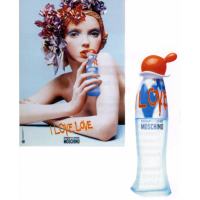
Moschino Cheap & Chic I Love Love edt sp 100ml TESTER packaging
$45.00$130.00
![Moschino Toy Boy eau de parfum sp 100ml TESTER Packaging [WITHOUT CAP]](https://sg-live.slatic.net/p/d94d6ce0a05c891a66d465dc8c1ee16c.jpg_200x200q80.jpg)
Moschino Toy Boy eau de parfum sp 100ml TESTER Packaging [WITHOUT CAP]
$55.00$129.00
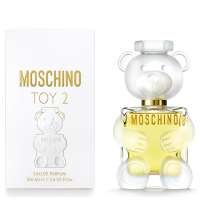
Moschino Toy 2 Eau de Parfum sp 100ml
$72.00$140.00
![Moschino Toy Boy Eau De Parfum Spray 100ml [TESTER PACKAGING WITH CAP] - Eclat Parfum](https://sg-live.slatic.net/p/164c7dd2592869b73d50e125882e8762.jpg_200x200q80.jpg)
Moschino Toy Boy Eau De Parfum Spray 100ml [TESTER PACKAGING WITH CAP] - Eclat Parfum
$59.90$140.00
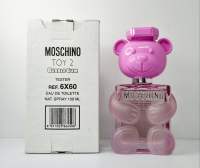
Moschino Toy 2 Bubble Gum eau de toilette spray 100ml TESTER packaging
$58.00$130.00
![[PERFUME ALLEY] Moschino Toy Boy EDP 100ml](https://sg-live.slatic.net/p/822e4e22ddc98164073ef2561dffe62f.jpg_200x200q80.jpg)
[PERFUME ALLEY] Moschino Toy Boy EDP 100ml
$69.00$140.00
![Moschino Toy 2 Pearl EDP for Women (100ml) [Brand New 100% Authentic Perfume FragranceCart] Eau de Parfum Woman Hologram Teddy Bear Rainbow](https://sg-live.slatic.net/p/01e9bcc399813e5468245f3b8404b4d3.jpg_200x200q80.jpg)
Moschino Toy 2 Pearl EDP for Women (100ml) [Brand New 100% Authentic Perfume FragranceCart] Eau de Parfum Woman Hologram Teddy Bear Rainbow
$97.00$160.00
MOSCHINO TOY 2 EDP 100ML - BEAUTY LANGUAGE
$67.81$150.00
About Moschino
Moschino is an Italian luxury fashion house established in Milan in 1983 by designer Franco Moschino. The brand is distinguished by its use of irony, humour, pop-culture references, exaggerated silhouettes, provocative graphics and deliberate parody of traditional luxury fashion conventions. Rather than treating fashion as solemn or untouchable, Moschino has historically utilised clothing as a form of satire and visual commentary.1
Moschino currently operates under the Italian fashion group Aeffe S.p.A., producing ready-to-wear collections for women, men and children, alongside accessories, eyewear and other fashion products. As of August 2026, creative direction is led by the design duo Loris Messina and Simone Rizzo, who assumed the role in June 2026 and are scheduled to present their inaugural Moschino collection during Milan Fashion Week in September 2026.2
Basic information
| Category | Information |
|---|---|
| Brand | Moschino |
| Founded | 1983 |
| Founder | Franco Moschino |
| Founded in | Milan, Italy |
| Industry | Luxury fashion |
| Parent company | Aeffe S.p.A. |
| Headquarters | Milan, Italy |
| Main products | Ready-to-wear, handbags, shoes, accessories, eyewear, children’s fashion |
| Creative directors (2026) | Loris Messina & Simone Rizzo |
| Previous major creative directors | Franco Moschino, Rossella Jardini, Jeremy Scott, Davide Renne, Adrian Appiolaza |
| Design identity | Irreverent, humorous, colourful, surreal, pop, provocative |
| Official website | Moschino official website |
The founder: Franco Moschino
Franco Moschino (1950–1994) was the designer who established the philosophy that continues to define the house. Born in Abbiategrasso, near Milan, Moschino initially aspired to become a painter. He studied at the Brera Academy of Fine Arts in Milan and supported himself partly through freelance fashion illustration, an artistic background that profoundly influenced his later approach to clothing design.3
In the early 1970s, he worked as an illustrator and designer for Gianni Versace before becoming a designer for the Italian label Cadette. In 1983, he founded his own company and launched his eponymous fashion house.4
Moschino distinguished himself by rejecting the conventional notion that luxury fashion must be serious, elegant and prestigious. Instead, he posed questions such as why expensive clothing should necessarily look expensive, why designers could not mock fashion itself, why everyday objects could not become fashion items, why advertising and clothing could not critique consumerism, and why classic fashion rules should be followed at all. This attitude became the foundation of the Moschino identity.
The birth of Moschino in the 1980s
The first Moschino women’s collection was presented in 1983, and the brand quickly developed a reputation for unconventional design. Aeffe began producing and distributing the Moschino line from the outset, establishing a relationship that eventually evolved into Aeffe’s ownership of the house.4
The brand expanded rapidly:
- 1983 — First Moschino women’s collection
- 1985 — First men’s collection
- 1986 — Moschino Jeans
- 1987 — First Moschino fragrance
- 1988 — Moschino Cheap & Chic
- 1989 — First Moschino boutique in Milan5
This represented unusually rapid expansion for a relatively young fashion house. However, the most significant development was not the proliferation of product lines but the distinctive visual language Moschino created.
Revolutionary design approach
Moschino effectively transformed fashion into a joke without rendering the clothes themselves worthless. This distinction is crucial; garments were often technically sophisticated and carefully constructed, even when their decoration or presentation appeared absurd.
Franco Moschino famously experimented with price tags, logos, slogans, safety pins, plastic objects, food imagery, household objects, exaggerated gold decoration, fake advertising, parody versions of classic fashion, deliberately “cheap” materials and deliberately excessive luxury. One notable example featured the phrase “Expensive Jacket”, whilst other designs incorporated objects such as bottle caps, cutlery or tape measures. He even created designs that mocked the conventions surrounding Chanel-style tailoring.6
This established one of Moschino’s central contradictions: luxury fashion that makes fun of luxury fashion. This contradiction remains essentially the brand’s DNA.
Design philosophy
Moschino’s aesthetic can be understood through five core concepts.
Irony
Moschino does not simply present an object as beautiful; it often invites the viewer to laugh at the conventions surrounding beauty and luxury. Where a conventional luxury brand might place its logo on a handbag to communicate status, Moschino might exaggerate the logo until it becomes the joke itself.
Pop culture
The brand has consistently borrowed imagery from popular culture, including fast food, cartoons, toys, advertisements, consumer packaging, household products, television, street culture, celebrities and everyday objects. This makes the brand immediately recognisable.
Surrealism
Moschino frequently transforms ordinary objects into extraordinary fashion items. A handbag may resemble something from a supermarket, a jacket may look like packaging, or a dress may imitate an everyday product. The objective is not merely strangeness but prompting the viewer to question why such objects have suddenly become fashion.
Parody
Moschino is among the fashion houses most comfortable with making fun of fashion itself. Classic luxury codes—including tailoring, gold hardware, logos, evening wear, expensive fabrics and prestigious branding—frequently serve as material for satire. This connects Franco Moschino with earlier artistic traditions such as Dadaism, Surrealism and Pop Art.6
Fun
Perhaps the simplest description of Moschino is that fashion should be fun. This explains why Moschino can simultaneously appear luxurious, ridiculous, sophisticated, childish and provocative.
Franco Moschino’s legacy
Franco Moschino died in 1994, only eleven years after founding his label. His creative legacy was subsequently carried forward by his longtime collaborator Rossella Jardini, who became the brand’s creative director.7
Jardini’s tenure was significant because she protected the original Moschino language rather than completely reinventing it. The house continued to emphasise humour, colourful graphics, social commentary, unusual materials, exaggerated accessories, parody and Italian craftsmanship. This helped ensure that “Moschino” became more than simply the founder’s name; it evolved into a recognisable design philosophy.
Aeffe and corporate development
Moschino has maintained a longstanding relationship with Aeffe, an Italian fashion company founded by Alberta Ferretti that specialises in the production and distribution of fashion brands. Aeffe initially worked with Franco Moschino in the 1980s. In 1999, Aeffe acquired Moschino, and in 2021 it acquired the remaining stake to obtain full ownership of the brand.8
Moschino remains one of Aeffe’s principal brands alongside labels including Alberta Ferretti and Pollini.9 A notable corporate development occurred in 2024, when Aeffe sold its Moschino cosmetics and fragrance business to Euroitalia for €98 million. Euroitalia had already been producing Moschino fragrances under licence since 1987.10
Jeremy Scott era: 2013–2023
A pivotal chapter in modern Moschino history began in 2013, when American designer Jeremy Scott became creative director. Scott was arguably an ideal match for Moschino, as his own design philosophy already revolved around pop culture, humour, exaggeration, kitsch, celebrity culture, cartoons, consumer products and irony.
Under Scott, Moschino’s original philosophy became even more extreme. He transformed the runway into a world of recognisable cultural references, with collections famously playing with references to McDonald’s, Barbie, cigarettes, fast food, construction workers, cleaning products, SpongeBob SquarePants, cowboys, motor culture, American pop culture and luxury logos.
This made Moschino particularly visible on social media and among celebrities. Scott’s Moschino was less about quiet luxury and more about instant visual recognition. His tenure lasted roughly a decade, making him one of the longest-serving creative directors in the brand’s history.
Davide Renne
Following Jeremy Scott’s departure in 2023, Italian designer Davide Renne, a longtime Gucci designer, was appointed creative director. However, his tenure was extraordinarily brief. Renne died suddenly only days after taking the position, before he could present a Moschino collection.11
This created an unusual moment in the house’s history, requiring Moschino to seek another creative leader almost immediately.
Adrian Appiolaza: 2024–2026
In January 2024, Argentine designer Adrian Appiolaza became Moschino’s creative director. He had previously worked at fashion houses including Loewe, Chloé, Louis Vuitton, Miu Miu and Alexander McQueen.12
Appiolaza approached Moschino differently from Jeremy Scott. Rather than attempting to make the brand louder, he looked backwards at the Franco Moschino archive and sought to reinterpret its original ideas for contemporary fashion. His approach emphasised vintage Moschino references, tailoring, Italian fashion heritage, surrealism, archival research, wearable ready-to-wear and the original spirit of Franco Moschino. Vogue described his approach as combining Moschino’s Italian identity with a contemporary perspective and surrealism.13
Appiolaza left the house in June 2026, after approximately two and a half years.14
Current era: Loris Messina & Simone Rizzo
As of August 2026, Moschino is entering another new chapter. On 21 June 2026, Aeffe announced that Loris Messina and Simone Rizzo had been appointed joint creative directors of Moschino with immediate effect.15
The pair are best known as the founders and former creative directors of the Milan-based label Sunnei. Their appointment is significant because they are not simply being asked to reproduce the Jeremy Scott formula. Their stated intention is to engage with Franco Moschino’s original idea of using pop culture and creativity to challenge conventions, whilst translating that philosophy into a contemporary context.16
Their first Moschino collection is scheduled for September 2026 during Milan Fashion Week.17
The simplified timeline of creative leadership is:
Franco Moschino → Rossella Jardini → Jeremy Scott → Davide Renne → Adrian Appiolaza → Loris Messina & Simone Rizzo
Major product categories
Moschino has expanded far beyond its original women’s ready-to-wear collection. Current categories include:
Clothing
- Women’s ready-to-wear
- Men’s ready-to-wear
- Children’s clothing
- Outerwear
- Dresses
- Knitwear
- Tailoring
- Denim
Accessories
- Handbags
- Shoes
- Belts
- Wallets
- Jewellery
- Hats
- Scarves
- Small leather goods
Other categories
- Eyewear
- Fragrances
- Beauty-related products
- Children’s products
Aeffe describes Moschino’s current offering as including women’s, men’s and children’s ready-to-wear, accessories, eyewear and fragrances, although the fragrance and cosmetics business was transferred to Euroitalia in 2024.18
Sub-labels
Throughout its history, Moschino has operated several different lines.
Moschino Couture!
The original high-end fashion line launched with Franco Moschino in 1983.
Moschino
The principal contemporary luxury fashion label.
Moschino Cheap & Chic
Introduced in 1988, this line was designed to provide a more accessible interpretation of the Moschino aesthetic whilst retaining the house’s humour and visual identity.19 The name itself—“Cheap & Chic”—demonstrates the Moschino philosophy by deliberately placing two seemingly contradictory concepts together.
Moschino Jeans
Introduced in the 1980s as a more casual-oriented line.
Love Moschino
A more accessible and youthful expression of the brand, particularly important in accessories and casual fashion.
Visual identity
Several characteristics immediately identify Moschino’s visual language.
Colour
Moschino frequently uses strong, high-impact colours including red, yellow, pink, blue, black, white and gold. However, colour is typically employed as part of a larger graphic concept.
Typography
Words themselves are often treated as design elements. A slogan can become a print, a logo, a handbag, a dress, a jacket or a joke.
Logos
Moschino frequently exaggerates branding rather than concealing it.
Objects
The transformation of ordinary objects into luxury products is perhaps one of the house’s strongest signatures.
Humour
Even when a Moschino garment is technically elaborate, there is often a visual punchline.
Comparison with conventional luxury fashion
A useful way to understand Moschino is to compare its philosophy with that of a traditional luxury house.
| Traditional luxury approach | Moschino approach |
|---|---|
| Heritage | Heritage + parody |
| Discretion | Exaggeration |
| Minimal branding | Deliberate branding |
| Seriousness | Humour |
| Exclusivity | Pop culture |
| Classic elegance | Surreal elegance |
| Luxury materials | Luxury + everyday objects |
| Timelessness | Cultural commentary |
| Prestige | Prestige questioned |
| Quiet presentation | Visual spectacle |
Consequently, describing Moschino simply as a “luxury brand” does not fully capture its nature. Moschino is a luxury brand that frequently critiques the idea of luxury itself.
Significance in fashion history
Moschino’s importance extends beyond its colourful clothing. Franco Moschino helped establish the idea that fashion could function as visual criticism. He demonstrated that a designer could participate in the luxury system, become commercially successful within that system, and simultaneously make fun of the system.
His work also helped establish a tradition in which fashion designers could freely mix art, advertising, popular culture, politics, consumerism and humour. The Camera Nazionale della Moda Italiana describes Moschino as a dissident voice within the Italian fashion system and highlights his role in making fashion more socially conscious.20
Social and environmental consciousness
Franco Moschino’s irreverence was not purely about entertainment. He was also interested in social issues, including peace, AIDS awareness and environmental concerns. In the early 1990s, he developed socially conscious advertising campaigns and explored environmentally friendly fashion.21
This is essential to understanding his work: the jokes often had a critical purpose. When Moschino made a garment look absurd, the absurdity could be aimed at consumerism, excessive luxury, fashion’s obsession with status, advertising, celebrity culture or social conventions.
Celebrity culture
Moschino’s theatrical aesthetic makes it particularly attractive to celebrities. Its designs have appeared on major entertainers and public figures, especially performers whose public images are already associated with spectacle and fashion experimentation.
The brand’s relationship with celebrity culture became especially strong during the Jeremy Scott era, when runway collections were frequently designed to produce immediately recognisable, highly shareable images. This made Moschino particularly compatible with the modern Instagram-era fashion ecosystem.
Position in the luxury market
Moschino occupies a distinctive position within luxury fashion. It is not primarily a “quiet luxury” house. Instead, its competitive advantage is its distinctive visual identity.
A consumer purchasing Moschino is often buying more than a well-made luxury garment; they are also buying a recognisable attitude. That attitude is playful, rebellious, ironic, glamorous and absurd. This explains why Moschino has maintained a recognisable identity despite changes in creative leadership.
The Moschino aesthetic
The entire brand can be summarised thus: Moschino turns luxury fashion into pop art, then uses humour and irony to question why luxury fashion takes itself so seriously.
This essentially connects Franco Moschino’s original philosophy with later interpretations by designers such as Jeremy Scott, Adrian Appiolaza, and now Loris Messina and Simone Rizzo.
Evolution of the brand
The brand’s history can be viewed through distinct eras:
1983–1994 — Franco Moschino
🎨 The revolutionary foundation
Irony, parody, Pop Art, social criticism, anti-fashion.
↓
1994–2013 — Rossella Jardini and transitional leadership
🧵 Preservation of the legacy
Maintaining Franco’s vocabulary and commercial development.
↓
2013–2023 — Jeremy Scott
🍔 Pop-culture explosion
Celebrity culture, cartoons, consumer products, extreme kitsch, social-media visibility.
↓
2023 — Davide Renne
⚫ Extremely brief transition
Appointed but died before presenting a collection.
↓
2024–June 2026 — Adrian Appiolaza
🏛️ Archive and reinterpretation
A return towards Franco Moschino’s historical vocabulary with contemporary tailoring.
↓
June 2026–present — Loris Messina & Simone Rizzo
🔮 Next generation
Contemporary cultural perspective whilst attempting to preserve Moschino’s tradition of challenging conventions. Their first collection is due in September 2026.22
Defining characteristics
Ultimately, the brand is not defined by a particular colour, logo, handbag shape or silhouette. Its deepest identity is a method of designing: take something familiar, exaggerate it, make it beautiful, make it ridiculous, and make the audience think about why it works.
This explains why a Moschino collection can contain a couture-like evening dress next to something inspired by a supermarket product, cartoon character or household object—and still feel cohesive. The brand’s enduring principle is essentially “serious fashion, unserious attitude”.
Franco Moschino remains a vital figure in modern Italian fashion because he did not simply create a successful label; he turned irony itself into a luxury-fashion language.23
References
- Moschino – Aeffe Spa
- LA STORIA DELLA MODA ITALIANA: MOSCHINO • Camera Nazionale della Moda Italiana
- comunicato stampa – nuova direzione creativa Moschino 21 06 26 ITA
- Moschino, Franco, 1950-1994 (1950-1994) | ArchivesSpace Public Interface
- Moschino, Franco – Enciclopedia – Treccani
- Franco Moschino | Istituto Marangoni
- Franco Moschino; Creator of Irreverent Fashion Designs – Los Angeles Times
- Franco Moschino at 1stDibs
- Moschino, Franco su Enciclopedia | Sapere.it
- Aeffe
- Meet Adrian Appiolaza, the new creative director of Moschino | Vogue
- Moschino News, Collections, Fashion Shows, Fashion Week Reviews, and More | Vogue
- Adrian Appiolaza Is Bringing Moschino Forward—And Riffing On Its Legendarily Mischievous Past | Vogue
- Adrian Appiolaza lascia Moschino dopo due anni e mezzo come direttore creativo | Vogue Italia
- THE HISTORY OF ITALIAN FASHION: MOSCHINO • Camera Nazionale della Moda Italiana
- Moschino | TheFashionDB
- Franco Moschino – Wikidata
- Moschino, alla direzione creativa arrivano gli ex Sunnei, Loris Messina e Simone Rizzo | Vanity Fair Italia
- Aeffe, Messina e Rizzo nuovi direttori creativi di Moschino – Borsa Italiana
- Sunnei’s Loris Messina and Simone Rizzo Are Moschino’s New Creative Directors
- Messina e Rizzo nuovi direttori creativi di Moschino – Moda – Ansa.it
- Messina e Rizzo nuovi direttori creativi di Moschino – Moda – Ansa.it
- Loris Messina e Simone Rizzo sono i nuovi direttori creativi di Moschino | Vogue Italia