Shop on Lazada
MUJI products
![[Bundle of 2] MUJI PP Storage width 34 x depth 44 series](https://sg-live.slatic.net/p/2a87571e1dcc259d87b5e185cf4fa88b.jpg_200x200q80.jpg)
[Bundle of 2] MUJI PP Storage width 34 x depth 44 series
$69.80
Buy on Lazada![[Bundle of 2] MUJI PP Storage Width 55 x Depth 44 series](https://sg-live.slatic.net/p/bb21e157f6c711ef2e0629f3fc5d4978.jpg_200x200q80.jpg)
[Bundle of 2] MUJI PP Storage Width 55 x Depth 44 series
$99.80
Buy on Lazada![[Bundle of 2] MUJI PP Storage Width 44 x Depth 55 series](https://sg-live.slatic.net/p/b65a0fec989f82f194fd3ff107a03c1a.jpg_200x200q80.jpg)
[Bundle of 2] MUJI PP Storage Width 44 x Depth 55 series
$79.80
Buy on Lazada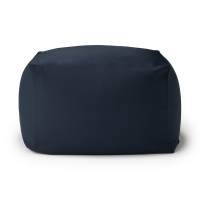
MUJI Beads Sofa with Cover Set
$218.00
Buy on Lazada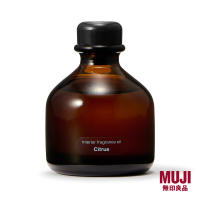
MUJI Interior Fragrance Oil
$32.90
Buy on Lazada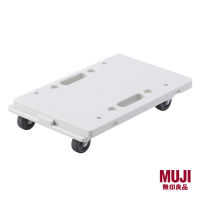
MUJI Polypropylene Wheeled Platform/Horizontally&Vertically Connectable
$29.90
Buy on Lazada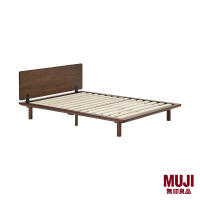
MUJI Acacia Bed Frame
$399.90$799.00
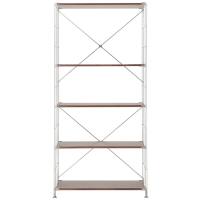
MUJI Stainless Unit Shelf Set Wide W86XD41cm
$649.00
Buy on LazadaAbout MUJI
MUJI (Japanese: 無印良品, Mujirushi Ryōhin, literally “no-brand quality goods”) is a Japanese lifestyle retail brand operated by Ryohin Keikaku Co., Ltd. It is recognised for its understated design, practical everyday products, limited branding, natural or muted materials and colours, and an approach to consumption centred on function, simplicity, reasonable pricing and the avoidance of unnecessary decoration.1
Founded in Japan in 1980, MUJI began as a small private-label line within the supermarket company Seiyu, comprising just 40 products. More than four decades later, it has developed into a global lifestyle business encompassing apparel, furniture, household goods, stationery, food, restaurants, hotels, houses and other services. As of 31 August 2025, the Ryohin Keikaku group reported 1,474 stores worldwide, including 717 in Japan and 757 overseas.2
Basic information
| Category | Information |
|---|---|
| Brand name | MUJI / 無印良品 |
| Japanese name | Mujirushi Ryōhin |
| Meaning | “No-brand quality goods” |
| Founded | 1980 |
| Country of origin | Japan |
| Original parent | Seiyu |
| Current operator | Ryohin Keikaku Co., Ltd. |
| Headquarters of operator | Tokyo, Japan |
| Industry | Retail / lifestyle / consumer goods |
| Main categories | Apparel, household goods, furniture, stationery, food, cosmetics, travel goods, etc. |
| Global presence | 28 regions; 1,474 group stores as of Aug 2025 |
| Core philosophy | Simplicity, functionality, rational production and restrained consumption |
Ryohin Keikaku itself was established in 1989, and MUJI’s business was transferred from Seiyu to Ryohin Keikaku in 1990.
Meaning of the name
The Japanese name 無印良品 (Mujirushi Ryōhin) consists roughly of:
- 無印 (mujirushi) — “without a mark/brand”
- 良品 (ryōhin) — “quality goods”
Thus, MUJI deliberately presents itself as a “no-brand” brand. This apparent contradiction is central to the company’s identity. Although MUJI is clearly recognisable as a brand, it seeks to make the product rather than the logo the focus of attention. Instead of using prominent logos, elaborate decoration or conspicuous status symbols, MUJI generally emphasises material, usability, construction and everyday usefulness.3
This concept was particularly distinctive when MUJI appeared in Japan in 1980, during a period of increasing mass consumption and product differentiation.
Origins
MUJI originated within Seiyu, a major Japanese retail company. In 1980, Seiyu introduced MUJI as a private brand containing 40 products: nine household products and 31 food products. The concept was intentionally different from conventional branded merchandise.3
The underlying premise was that if consumers required an ordinary product, they should not have to pay for unnecessary branding, decoration and packaging. MUJI therefore attempted to reconsider products from the manufacturing process upwards. Its original philosophy was based on three principles:
- Selection of materials
- Streamlining of manufacturing processes
- Simplification of packaging
These three principles remain fundamental to MUJI’s product development philosophy today.4
Use of unbleached paper
MUJI has historically used unbleached paper whose natural light-beige colour remains visible. Rather than treating that colour as a defect requiring additional processing, MUJI used the material in its natural state for products, labels and packaging. This illustrates the principle of not adding elements merely because conventional marketing dictates their presence.
Early development
MUJI expanded rapidly during its first decade:
- 1980: MUJI launched with 40 products.
- 1981: Apparel was introduced.
- 1982: Wholesale operations began.
- 1983: MUJI opened its first directly managed store, MUJI Aoyama, in Tokyo.17
- 1986: The company began overseas production and procurement.
- 1988: MUJI began developing materials on a global scale.
- 1989: Ryohin Keikaku Co., Ltd. was established.18
- 1990: MUJI’s business was transferred from Seiyu to Ryohin Keikaku.19
- 1991: MUJI opened its first overseas store in the United Kingdom.5
The transition from a supermarket private label to an independent retail business was crucial. MUJI evolved from a collection of products sold through another retailer into a complete retail concept.
Design philosophy
MUJI’s design is often described as minimalist, but the company distinguishes its approach from purely aesthetic minimalism. Instead, MUJI describes its products as being akin to “empty vessels”—objects whose restrained appearance allows them to fit into different people’s lives rather than demanding attention for themselves.6
Characteristic features include:
- Simple forms: Products generally avoid decorative elements that do not contribute to function.
- Neutral colours: White, off-white, beige, grey, black, natural wood and other subdued tones are common.
- Limited logos: The MUJI name is normally much less visually dominant than the logos of conventional lifestyle brands.
- Functional construction: Handles, containers, storage systems, furniture and stationery are designed around practical everyday use.
- Modular thinking: Many products are designed to work with other MUJI items, particularly storage and organisational products.
- Timelessness: Rather than following fashion trends aggressively, MUJI favours designs that remain acceptable for many years.
“This will do”
A key tenet of MUJI’s philosophy is the expression “This will do”, contrasted with the consumer response “This is what I really want”. The former emphasises rational satisfaction rather than emotional attachment or status. MUJI’s goal is not necessarily to create the most exciting product in the store, but to create something that feels appropriate, useful and sufficient.24
Whereas a conventional lifestyle brand might encourage purchase as a means of self-expression, MUJI’s philosophy suggests that if an object works well and fits one’s life, that is sufficient. This perspective became one of the foundations of MUJI’s global identity.
Anti-brand branding
MUJI is an unusual example of anti-brand branding. Its products are recognisable precisely because they tend not to look heavily branded. The brand’s visual identity is communicated through typography, packaging, material choices, store architecture, colour, photography, product proportions, consistent merchandising and restrained communication, rather than through large logos.
Consequently, MUJI’s “brand” is less about a particular symbol and more about a system of design and values. This approach has made MUJI particularly influential in design, retail and branding discussions.
Product categories
Although MUJI originally began with household products and food, its range has expanded significantly.
Apparel
MUJI sells everyday clothing emphasising comfort, natural or practical materials, simple cuts, neutral colours, layering and seasonality. The objective is generally dependable everyday clothing rather than high-fashion statement dressing.
Furniture
Furniture is one of MUJI’s most recognisable categories. Typical characteristics include simple geometry, natural wood, neutral finishes, compact proportions, modularity and compatibility with small living spaces. This philosophy aligns well with urban living environments where space efficiency is important.
Storage and household goods
Storage is one of MUJI’s strongest product areas. Examples include acrylic organisers, polypropylene boxes, drawers, baskets, shelving, kitchen storage and cleaning tools. The products are deliberately designed to be visually quiet, allowing them to organise a room without becoming its main visual feature.
Stationery
MUJI stationery has become internationally recognisable. Products include notebooks, pens, pencils, folders, binders, planners, desk organisers and paper products. The emphasis remains on usability rather than decorative branding.
Beauty and personal care
MUJI sells skincare, cleansing products, lotions, toiletries, travel containers and personal-care accessories.
Food
Food remains part of MUJI’s original identity. The company sells a broad range of food products, including prepared foods, snacks, seasonings and regional products.
Beyond physical products
An important development in MUJI’s history is its gradual expansion beyond selling physical products. Today the broader MUJI ecosystem includes retail stores, e-commerce, restaurants, cafés, hotels, houses, interior and spatial design, travel-related products, community-oriented activities and locally developed products.
Ryohin Keikaku explicitly describes MUJI’s business as centred on product development and retail, while its broader corporate purpose extends to products, services, stores and community activities.7 MUJI is therefore better understood as a lifestyle platform than simply a furniture or household-goods company.
Store environment
The MUJI store itself is part of the brand experience. A typical store tends to use exposed or natural-looking materials, wood, neutral colours, simple signage, large open displays, cardboard or paper packaging, organised product groupings, and restrained lighting and decoration.
The store is designed to feel more like a calm living environment than a conventional fashion boutique. Rather than placing enormous emphasis on promotional imagery, MUJI often lets the products themselves create the visual environment.
Global expansion
MUJI began international expansion relatively early. Its first overseas store opened in London in 1991, followed by expansion into other European and Asian markets. The company subsequently entered markets including France, Singapore, South Korea, Taiwan, China, Thailand, the United States and many others.8
Key milestones include:
- 1991: United Kingdom20
- 1995: Singapore
- 1998: France
- 2003: South Korea
- 2004: Taiwan and several European markets
- 2005: China
- 2007: United States
- 2012: Malaysia
- 2013: Middle East
- 2016: India9
By August 2025, MUJI had 1,474 stores across Japan and overseas, with 729 MUJI stores outside Japan plus other group businesses such as Café&Meal MUJI.11 Its overseas business is particularly significant in East Asia, Southeast Asia and Oceania, while the company continues to develop its European and North American presence.
Presence in China
China has become one of MUJI’s most important international markets. The company has developed major flagship stores in cities such as Shanghai and Chengdu, and mainland China accounted for 422 MUJI stores as of August 2025.10
MUJI’s Chinese expansion is notable because the brand does not simply export Japanese products; it increasingly develops products and services according to local lifestyles and consumer needs. This reflects a broader shift in MUJI’s international strategy towards combining a global philosophy with local adaptation.
Presence in Southeast Asia
Southeast Asia has also become an important growth region. As of August 2025, MUJI reported stores in Singapore, Malaysia, Thailand, India, Australia, the Philippines, Vietnam and Gulf markets. Vietnam, for example, had 17 MUJI stores as of August 2025.11
The company has increasingly emphasised locally developed products and services designed around regional lifestyles rather than treating every market identically. Its 2025 integrated report describes this as part of building a locally rooted business model.13
Sustainability
Sustainability is closely connected with MUJI’s original philosophy, although it is important not to reduce MUJI simply to an “eco brand”. The company’s original production philosophy already emphasised reducing unnecessary materials, simplifying packaging, rationalising production, using materials efficiently and avoiding unnecessary processing.
MUJI now places these ideas within a broader ESG and sustainability strategy. Ryohin Keikaku publishes an annual MUJI REPORT covering its financial, environmental, social and governance activities.12 Its current corporate purpose is framed around contributing to a “truthful and sustainable life and society”.13
Packaging philosophy
Packaging is one of the clearest manifestations of the company’s philosophy. Traditional consumer brands frequently use packaging to communicate novelty, excitement or luxury. MUJI tends to use packaging to communicate only what the product is, suggesting that nothing more is necessary.
This does not mean MUJI uses no design; the design of its packaging is extremely deliberate. The paradox is that MUJI’s apparently “undesigned” appearance is itself highly designed, and the absence of decoration becomes a recognisable aesthetic.
Relationship to Japanese aesthetics
MUJI is frequently associated with Japanese design principles such as restraint, simplicity, natural materials, appreciation of ordinary objects, functionality, order, subtlety, impermanence and avoidance of excess. However, MUJI should not simply be described as “traditional Japanese design”.
It is a modern commercial interpretation of Japanese sensibilities, created within the context of late-20th-century consumer society. Its design language combines Japanese ideas with modern industrial design, global manufacturing and contemporary retail.
The MUJI lifestyle
Over time, MUJI has moved from selling individual objects to selling an idea of how everyday life can be organised. A typical MUJI environment suggests a lifestyle characterised by less visual noise, fewer unnecessary possessions, better organisation and greater focus on everyday life.
This explains why MUJI sells seemingly unrelated products—pens, socks, beds, storage boxes, food, shampoo and furniture—which collectively create a coherent lifestyle. The brand essentially posits that everyday objects do not have to compete for one’s attention.
Business model
MUJI operates as a specialty retailer with substantial involvement in product planning and development. Ryohin Keikaku describes its main business as covering product planning, development, manufacturing, wholesale and retail.6
This vertical integration gives MUJI considerable control over product specifications, materials, packaging, suppliers, pricing, store presentation and customer experience. Rather than purchasing many famous brands and assembling them in a department store, MUJI builds a large ecosystem of products under one unified philosophy.
Pricing strategy
MUJI is not fundamentally positioned as a luxury brand. Its philosophy is closer to good quality at a rational price. The company historically used the idea of “lower price for a reason”: prices can be reduced not by lowering quality, but by eliminating unnecessary elements from materials, production and packaging.14
MUJI’s proposition is not that it offers the cheapest product available, but rather a reasonable product at a reasonable price, without unnecessary costs.
Influence on design
MUJI has had an unusually large influence relative to its original scale. Its approach helped popularise a commercial design language based on anonymous products, minimal visual identity, neutral colours, natural materials, modularity, functional simplicity and restrained packaging. Many contemporary lifestyle brands now use visual strategies that resemble MUJI.
This creates an interesting irony: a brand founded on the idea of being “no-brand” became one of the most recognisable lifestyle brands in the world.
Criticisms and contradictions
MUJI’s philosophy contains several inherent tensions.
Anti-branding as branding
Although MUJI minimises logos, its aesthetic is extremely recognisable. A beige notebook, acrylic organiser or wooden shelf can immediately look “MUJI”. Thus, anti-branding itself becomes branding.
Cost of minimalism
MUJI’s products are not always the cheapest alternatives. Consumers may pay a premium for the design, consistency and retail experience.
Complexity of sustainability
MUJI promotes resource efficiency and sustainable living, but it remains a large-scale global retailer producing and transporting millions of consumer products. Therefore, its sustainability philosophy should be understood as an ongoing objective rather than proof that every MUJI product is inherently environmentally superior.
Production complexity
A plain-looking object may require considerable industrial design, engineering, supply-chain management and quality control. MUJI’s apparent simplicity is therefore often the result of complex behind-the-scenes design decisions.
Hospitality and housing
MUJI HOTEL
MUJI has extended its philosophy into hospitality. The concept involves creating a physical environment where the same principles used for products—simplicity, comfort, functionality and restraint—are applied to architecture and hospitality. The first MUJI HOTEL opened in Shenzhen, China, in 2018.15 This illustrates how MUJI gradually evolved from product to store to home to lifestyle to environment.
Housing and spatial design
MUJI also operates in housing and spatial design. The company’s philosophy treats a home not as a collection of fashionable objects but as a flexible environment in which residents can create their own lives. This connects directly to its idea of products as “empty vessels”: the design provides a framework, while the individual supplies the personality.
Major milestones
- 1980: MUJI launches in Japan with 40 products.16
- 1983: First directly managed MUJI store opens in Aoyama, Tokyo.17
- 1989: Ryohin Keikaku Co., Ltd. is established.18
- 1990: MUJI business transfers from Seiyu to Ryohin Keikaku.19
- 1991: First overseas MUJI store opens in London.20
- 2007: MUJI enters the United States with its first store in New York.
- 2016: MUJI enters India.9
- 2018: MUJI HOTEL SHENZHEN opens in China.21
- 2025: The group reaches 1,474 stores, including 717 in Japan and 757 overseas.22
- 2026: Ryohin Keikaku continues expanding its global network, with current corporate materials describing operations across 28 regions and more than 1,400 stores.23
Current status
Today, MUJI is no longer simply the small “no-brand” private label that emerged from a Japanese supermarket in 1980. It has become a global lifestyle company with a large retail network and a broad ecosystem of products and services. As of August 2025, Ryohin Keikaku reported 1,474 stores in total, including 683 MUJI stores in Japan and 729 MUJI stores overseas, alongside Café&Meal MUJI and IDÉE locations. Its consolidated operating revenue for the fiscal year ending August 2025 was approximately ¥784.6 billion.22
Yet the company continues to describe its identity through the same basic principles established at its birth: select good materials, rationalise processes and simplify packaging.22 This continuity is arguably the most remarkable aspect of MUJI. It began by asking what could be removed from a product, and eventually applied the same question to design, retail, architecture, branding and lifestyle itself.
References
- About MUJI | Ryohin Keikaku Co., Ltd.
- About MUJI | Ryohin Keikaku Co., Ltd.
- About MUJI | MUJI
- 1980年 デビューの40アイテム 1980年の品揃えから | くらしの良品研究所 | 無印良品
- What is MUJI?
- MUJI Businesses | Product Development and Retail | Ryohin Keikaku Co., Ltd.
- MUJI | COMPANY
- RYOHIN KEIKAKU CO., LTD.
- MUJI REPORT (Integrated Report) | Ryohin Keikaku Co., Ltd.
- Ryohin Keikaku (Muji) (TSE 7453) — Company History | Strategic Histories of Japanese Companies
- MUJI Releases English Version of Integrated Report, “MUJI REPORT 2025” | News | Ryohin Keikaku Co., Ltd.
- Group companies | Ryohin Keikaku Co., Ltd.
- MUJI to Open Flagship Stores in France, Thailand, and Vietnam | News | Ryohin Keikaku Co., Ltd.
- MUJI Releases English Version of Integrated Report, “MUJI REPORT 2024” | News Releases Archive | Ryohin Keikaku Co., Ltd.
- 「MUJI REPORT 2024」を発行 | ニュースリリース | 株式会社良品計画
- MUJI – AXHUM EN
- MUJI Releases English Version of Integrated Report, “MUJI REPORT 2023” | News Releases Archive | Ryohin Keikaku Co., Ltd.
- MUJI Published Integrated Report, “MUJI REPORT 2022” | News Releases Archive | Ryohin Keikaku Co., Ltd.
- Message from MUJI – “Pleasant, somehow” | News Releases Archive | Ryohin Keikaku Co., Ltd.
- The Chairman of Ryohin Keikaku on Charting Muji’s Global Expansion
- Ryohin Keikaku Co., Ltd.
- Store opening data | Ryohin Keikaku Co., Ltd.
- News Releases | Ryohin Keikaku Co., Ltd.
- What is MUJI? | MUJI