Shop on Lazada
Nescafé products
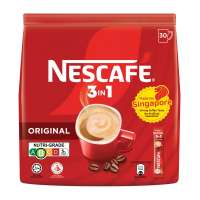
Nescafe Original 3In1 Instant Coffee - 30 Sachets
$7.05
Buy on Lazada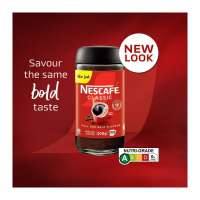
Nescafe Classic Jar Instant Soluble Coffee 200G
$13.35$13.65
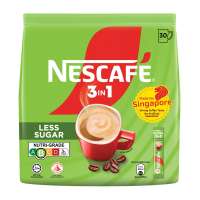
Nescafe 25% Less Sugar 3In1 Instant Coffee - 30 Sachets
$7.05
Buy on Lazada![[FREE 4 CANS] Nescafe Milk Coffee Can Original (20 + 4 FREE) 240ML - Case](https://sg-test-11.slatic.net/p/230824fb5fbab851317fc1cc81dca2db.jpg_200x200q80.jpg)
[FREE 4 CANS] Nescafe Milk Coffee Can Original (20 + 4 FREE) 240ML - Case
$26.03
Buy on Lazada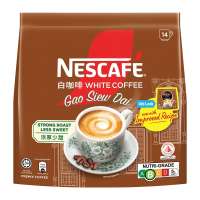
Nescafe White Coffee Gao Siew Dai Less Sugar - 14 Sachets
$8.45
Buy on Lazada![[Carton] NESCAFE Original 3in1 Coffee (30 x 16.5g)](https://sg-live.slatic.net/p/ef6b91be3cd3290aa6765238c0986b00.png_200x200q80.jpg)
[Carton] NESCAFE Original 3in1 Coffee (30 x 16.5g)
$137.40$169.20
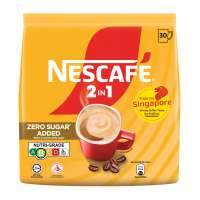
Nescafe Zero Sugar Added 2In1 Instant Coffee - 30 Sachets
$7.05
Buy on Lazada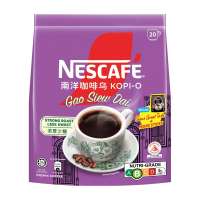
Nescafe Kopi O Gao Siew Dai Less Sugar Coffee - 20 Sachets
$6.95
Buy on LazadaAbout Nescafé
Overview
Nescafé is the world’s leading instant coffee brand, owned and marketed by Nestlé. Launched in Switzerland on 1 April 1938, it has grown into one of the most recognisable coffee brands globally and is currently sold in more than 180 countries. The brand offers an extensive range of products, including instant coffee, roast and ground coffee, capsules, ready-to-drink beverages, and coffee mixes.1
Brand name
The name Nescafé is a portmanteau derived from “NES”, representing Nestlé, and “CAFÉ”, the French word for coffee. This combination reflects the company’s original objective to create a convenient coffee product that retains authentic flavour.2
History
The origins of Nescafé trace back to 1929, when Brazil faced a significant surplus of coffee beans following a global economic downturn. The Brazilian government approached Nestlé to develop a method for preserving excess coffee without compromising quality. Swiss chemist Max Morgenthaler led a research team that spent seven years formulating a soluble coffee powder capable of retaining the natural aroma and taste of coffee.
The resulting product, Nescafé, was officially launched in Switzerland in 1938. During World War II, the brand gained widespread popularity after being included in the emergency rations of United States soldiers. Following the war, its international recognition expanded rapidly, establishing it as one of the world’s best-known coffee brands.3
Products
Nescafé produces a broad portfolio of coffee products, including:
- Instant coffee (Nescafé Classic)
- Premium instant coffee (Nescafé Gold)
- 3-in-1 coffee mixes
- Coffee capsules
- Roast and ground coffee
- Ready-to-drink canned and bottled coffee
- Specialty coffee beverages
Product availability varies by market. In the Philippines, for example, popular variants include Nescafé Classic, Original, Creamy White, Creamy Latte, and Gold.4
Global presence
Nescafé is sold in over 180 countries and is considered one of the largest coffee brands worldwide. The brand serves millions of cups daily through supermarkets, convenience stores, cafés, offices, hotels, restaurants, and vending solutions.5
Sustainability
Nescafé has invested significantly in sustainable coffee production through initiatives focused on responsible sourcing, farmer training, and improved agricultural techniques. The brand promotes regenerative agriculture, aims to reduce greenhouse gas emissions, and works towards improving recyclable and sustainable packaging. Nestlé has stated long-term goals to increase the share of responsibly sourced coffee and expand regenerative farming practices across its supply chain.
Marketing
Nescafé’s advertising has traditionally centred on themes of social connection, morning routines, friendship, and productivity. The brand’s global slogan has evolved over time, with the current international tagline being “Make Your World”.6
Key facts
- Introduced: 1938
- Country of origin: Switzerland
- Parent company: Nestlé
- Product category: Instant coffee and coffee beverages
- Availability: More than 180 countries
- Origin: Developed after Brazil sought a solution for excess coffee production
- Status: One of the world’s best-selling coffee brands
Timeline
| Year | Milestone |
|---|---|
| 1929 | Brazil asks Nestlé to develop a way to preserve surplus coffee beans. |
| 1938 | Nescafé officially launches in Switzerland. |
| 1940 | Sold in more than 30 countries. |
| 1940s | Included in U.S. military rations during World War II. |
| 1965 | Introduction of Nescafé Gold in Europe. |
| 2005 | Launch of sustainability initiatives including certified coffee programmes. |
| Today | Available worldwide with numerous coffee formats and regional product lines. |
Summary
Nescafé is a pioneering brand that transformed coffee consumption by making it fast, convenient, and widely accessible. Since its launch in 1938, it has expanded from a single instant coffee product into a global portfolio of beverages enjoyed by consumers around the world. Continued investment in innovation, sustainability, and quality has helped maintain its position as one of the most recognised and influential coffee brands globally.7