Shop on Lazada
Ninja products
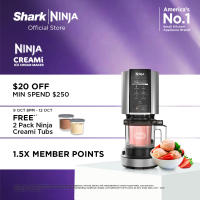
Ninja CREAMi Ice Cream Maker & Frozen Dessert Maker with 3 Tubs 7 Programs Makes Ice Cream Gelato Sorbet Smoothie Bowl Milkshakes and more Black/Silver Makes 1.4L of Ice Cream Ninja NC300
$289.00$408.00
![[NEW ARRIVAL] Ninja Crispi Portable Air Fryer - FN101](https://sg-live.slatic.net/p/844c2cf3bc2a351f62062dd1f407bfe1.jpg_200x200q80.jpg)
[NEW ARRIVAL] Ninja Crispi Portable Air Fryer - FN101
$299.00
Buy on Lazada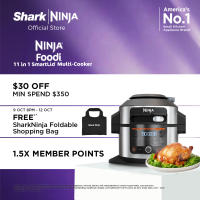
Ninja Foodi 11 in 1 SmartLid Multi cooker in one pot Electric Pressure cooker Bake Roast Dehydrate Slow Cooker Air Fryer Grill Sear/Saute Steam Sous Vide Yogurt maker & More with 6L Capacity and Recipe Book - Ninja OL550
$535.00$608.00
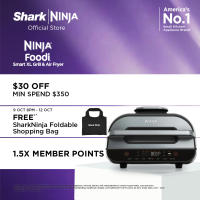
Ninja Foodi Smart XL Grill & Air Fryer with Digital Probe Indoor Ninja Grill with Air Fry Roast Bake Broil Dehydrate & Reheat - Ninja AG551
$379.00$508.00
![[NEW ARRIVAL] Ninja Crispi Pro Glass Air Fryer - AS101](https://sg-live.slatic.net/p/1039be23fd4290359206d27a86663fee.jpg_200x200q80.jpg)
[NEW ARRIVAL] Ninja Crispi Pro Glass Air Fryer - AS101
$499.00
Buy on Lazada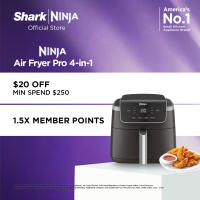
Ninja Air Fryer Pro 4.7L AIRCRISP Technology 4 programmable settings Air Fry Roast Re-heat Dehydrate Non-stick cooking Crisper Plate Chef-Inspired Recipe Book AF141
$132.00$169.00
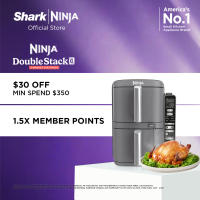
Ninja DoubleStack XL 9.5L Air Fryer / Dual Basket to cook up to 4 Foods at one time - SL400/SL451
$350.00$399.00
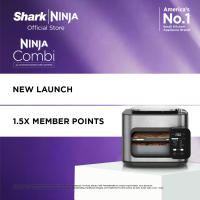
Ninja Combi 14-in-1 Multi-Cooker Oven & Air Fryer
$699.00
Buy on LazadaAbout Ninja
Ninja is a major consumer appliance brand owned by SharkNinja, Inc., an American global product design and technology company headquartered in Needham, Massachusetts. The brand is best known for kitchen appliances—particularly blenders, air fryers, multi-cookers, ice cream makers, coffee machines, and frozen drink machines—but has expanded into cookware, outdoor cooking, cooling, home environment, and other household categories.1
Ninja is a brand rather than a standalone company. It operates alongside Shark, the other principal brand of SharkNinja. In 2025, Ninja accounted for approximately $3.37 billion, or 52.6%, of SharkNinja’s total net sales, making it the larger of the company’s two brands by revenue.2
Quick facts
| Field | Information |
|---|---|
| Brand | Ninja |
| Owner | SharkNinja, Inc. |
| Industry | Consumer electronics / household appliances |
| Primary focus | Kitchen and lifestyle appliances |
| Origin | United States |
| Founded / launched | 2009 |
| First major product | Ninja Master Prep blender |
| Parent company headquarters | Needham, Massachusetts, USA |
| Parent company | SharkNinja, Inc. |
| Major markets | United States, Canada, United Kingdom, Europe, Australia and other international markets |
| Public parent | SharkNinja, Inc. (NYSE: SN) |
| Main sister brand | Shark |
| Current positioning | Innovative, feature-rich household appliances at accessible-to-premium price points |
History
Origins
The history of Ninja is closely connected to that of Euro-Pro, the company that later became SharkNinja.
The company’s roots date back to 1994, when it began as a developer of small cleaning appliances. Over time, it developed the Shark brand for cleaning products and subsequently expanded into kitchen appliances.3
The Ninja brand was launched in 2009. According to SharkNinja’s corporate history, the first Ninja product was the Ninja Master Prep blender, which helped establish the brand in the kitchen appliance market.4
Rather than competing purely as a traditional appliance manufacturer, Ninja built its reputation around products that attempted to combine several functions, simplify complicated cooking processes, and introduce new appliance concepts.
Expansion under Euro-Pro
During the late 2000s and 2010s, Ninja expanded rapidly from blending and food preparation into broader kitchen categories.
Important areas of expansion included:
- Blenders and food processors
- Multi-cookers
- Air fryers
- Countertop ovens
- Grills
- Coffee machines
- Ice cream makers
- Juicers
- Cookware
- Frozen drink appliances
This strategy eventually transformed Ninja from primarily a blender and food preparation brand into a broad kitchen appliance platform.2
2015: Euro-Pro becomes SharkNinja
A major corporate milestone occurred in 2015, when Euro-Pro officially changed its corporate name to SharkNinja.
The company stated that the new name reflected its two major consumer brands, Shark and Ninja, and was intended to build a unified corporate identity around the two portfolios.5
This distinction remains important today:
Ninja = consumer brand
SharkNinja = company that owns and operates the brand
From kitchen brand to lifestyle brand
Ninja’s original identity was strongly associated with blenders and food preparation.
Its strategy subsequently changed from selling individual kitchen appliances to creating a broader ecosystem of products for different stages of everyday life.
Today, the brand covers categories including:
Food preparation
- Blenders
- Food processors
- Immersion blenders
- Juicers
- Ice cream makers
- Frozen drink machines
Cooking
- Air fryers
- Multi-cookers
- Countertop ovens
- Indoor grills
- Outdoor ovens
- Outdoor grills
- Cookware
- Toasters
- Kettles
Coffee and beverages
- Espresso machines
- Coffee makers
- Carbonation systems
- Frozen beverage machines
- Drinkware
Outdoor
- Outdoor grills
- Outdoor ovens
- Fire pits
- Coolers
Home environment
Ninja has also moved beyond the traditional kitchen into products such as:
- Fans
- Air purifiers
- Other home environment products
SharkNinja’s current portfolio places these products across four broad areas: Cleaning Appliances; Cooking and Beverage Appliances; Food Preparation Appliances; and Beauty and Home Environment Appliances.2
Major Ninja product families
Some of Ninja’s best-known product families have become brands in their own right.
Ninja CREAMi
Ninja CREAMi is an ice cream and frozen dessert appliance that became one of Ninja’s most recognizable products.
The concept differs from a conventional ice cream maker: users prepare and freeze a base before processing it in the machine to create ice cream, sorbet, milkshakes, and other frozen desserts.
The CREAMi line has subsequently expanded into numerous versions, including models with different capacities and preset programs.1
Ninja Foodi
Ninja Foodi became particularly important to the company’s cooking strategy.
The Foodi family encompasses products designed around multifunctional cooking, including pressure cooking, air frying, and other techniques.
Its underlying philosophy reflects one of Ninja’s characteristic product strategies: combine multiple cooking functions into a single appliance rather than requiring several separate machines.
Ninja Air Fryers
Ninja has become particularly prominent in the air fryer category.
The company sells conventional basket-style air fryers as well as multifunctional cooking systems and newer products that combine air frying with other technologies.
Ninja Blenders
Blending remains one of Ninja’s foundational categories.
The company’s original Master Prep helped establish the brand, while later product families expanded into personal blenders, full-size blending systems, food processors, and multifunctional kitchen systems. SharkNinja states that Ninja has been America’s No. 1 blending and processing kitchen system brand for four consecutive years, based on Circana data cited by the company.2
Ninja Luxe Café
The Ninja Luxe Café represents the brand’s move further into premium home coffee.
Current models combine functions such as espresso, drip coffee, and cold brew, with integrated grinders and automated assistance.1
Ninja SLUSHi
Ninja SLUSHi is a newer product family focused on frozen beverages.
It illustrates Ninja’s broader strategy of creating dedicated appliances around specific consumer experiences rather than simply traditional appliance categories. Current models are designed for making multiple servings of frozen drinks.1
Brand philosophy
One of the defining characteristics of Ninja is its emphasis on consumer-oriented product innovation.
SharkNinja describes its approach as using consumer insights, engineering, and product development to identify everyday problems and develop solutions around them. The company says that in 2024 it interacted with more than 275,000 consumers during product development.1
Several characteristics repeatedly appear in Ninja products.
Multifunctionality
Ninja frequently combines multiple functions in one machine.
For example, a single appliance may be designed to:
- Blend
- Chop
- Process
- Cook
- Air fry
- Bake
- Roast
- Dehydrate
This approach gives Ninja products a distinctive “many appliances in one” proposition.
Technology-driven features
Ninja products tend to emphasize branded technologies and proprietary features rather than simply presenting themselves as generic appliances.
Examples include technology associated with:
- Air frying
- Temperature control
- Automated cooking
- Blending systems
- Frozen food processing
- Coffee extraction
- Beverage preparation
Convenience
Another central theme is reducing the effort required for complicated household tasks.
Instead of expecting consumers to master professional cooking equipment, Ninja often tries to automate or simplify part of the process.
Accessibility
Ninja generally occupies a position between inexpensive mass-market appliances and high-end professional equipment.
The brand’s proposition can therefore be summarized as:
Professional-style results + consumer-friendly operation + multifunctionality.
Business model
Ninja does not primarily operate as a manufacturer that owns enormous factories.
SharkNinja describes itself as a product design and technology company, with manufacturing carried out through third-party original equipment manufacturers (OEMs). Its supplier network includes manufacturers in China and Southeast Asia, including Vietnam, Malaysia, Thailand, Cambodia, and Indonesia.3
The company sells products through several channels:
- Large physical retailers
- Online retailers
- Direct-to-consumer websites
- Distributors
- International retail partners
This allows Ninja to concentrate heavily on product development, engineering, branding, marketing, and distribution while using an external manufacturing network.2
Marketing strategy
Ninja has become particularly notable for its aggressive product marketing.
Instead of simply marketing products according to technical specifications, the company often markets them around specific consumer problems or experiences.
For example:
- “Make restaurant-style food at home”
- “Make ice cream at home”
- “Make coffee like a café”
- “Cook multiple foods simultaneously”
- “Make frozen drinks”
- “Replace several appliances with one”
This makes Ninja’s products relatively easy for consumers to understand.
SharkNinja describes its marketing approach as an “always-on” media strategy, using television, digital advertising, print, and social media to communicate product technologies and performance.2
Relationship with Shark
A common source of confusion is the relationship between Ninja and Shark.
They are not the same brand, although both belong to the same company.
Ninja
Primarily associated with:
- Kitchen
- Cooking
- Food preparation
- Coffee
- Beverages
- Outdoor cooking
- Some home environment products
Shark
Primarily associated with:
- Vacuum cleaners
- Floor care
- Carpet cleaning
- Air purification
- Fans
- Hair styling
- Other home products
The two brands share SharkNinja’s underlying engineering, product development, and marketing infrastructure while maintaining distinct consumer identities.1
Corporate structure
The current corporate structure can be simplified as:
SharkNinja, Inc.
↳ Ninja
↳ Shark
SharkNinja became an independent publicly traded company in July 2023, when it was spun off from JS Global Lifestyle Company Limited and began trading on the New York Stock Exchange under the ticker SN.16
Ninja and Shark are registered trademarks of SharkNinja, Inc.1
Financial importance of Ninja
Ninja is not merely a secondary brand within SharkNinja—it is one of the company’s principal economic engines.
For 2025, SharkNinja reported:
| Brand | 2025 net sales | Share |
|---|---|---|
| Ninja | $3.367 billion | 52.6% |
| Shark | $3.032 billion | 47.4% |
| Total | $6.399 billion | 100% |
Ninja’s sales increased from approximately $2.896 billion in 2024 to $3.367 billion in 2025, an increase of roughly 16.2%.2
The 2025 filing also describes Ninja as the best-selling small kitchen appliance brand in the United States, according to Circana data cited by SharkNinja.2
Importantly, SharkNinja does not report a complete Ninja-only profit-and-loss statement; its financial reporting is primarily consolidated at the company level. Therefore, Ninja’s revenue can be identified, but its standalone profit should not be inferred from the published figures.
Global presence
Although Ninja originated in the United States and North America remains its largest market, the brand has increasingly become international.
SharkNinja reported operating in 38 markets in its 2025 annual report, with international sales growing faster than domestic sales in 2025.2
The company’s 2024 ESG report reported 28 offices around the world and more than 3,600 employees, while emphasizing continued expansion into Europe, the Middle East, and Africa.3
The international strategy is significant because Ninja’s product concepts—air fryers, coffee machines, blenders, frozen drink machines, and other small appliances—can be adapted to different household markets relatively easily.
Product development strategy
Ninja’s growth has largely followed a recognizable pattern:
1. Identify a consumer problem
↓
2. Develop a new appliance around that problem
↓
3. Give it a distinctive technology/product identity
↓
4. Market the appliance heavily
↓
5. Expand it into a product family
↓
6. Enter adjacent categories
This explains why Ninja has repeatedly moved from one category into another.
For example:
Blenders → food processors → cooking → air frying → frozen desserts → coffee → beverages → outdoor cooking → home environment
SharkNinja says its overall portfolio now spans 36 household sub-categories, illustrating how far the company has moved beyond its original product categories.2
Manufacturing
Ninja is an American brand, but “American brand” does not mean that all Ninja products are manufactured in the United States.
SharkNinja uses a global third-party manufacturing network. Its ESG reporting identifies suppliers across China and Southeast Asia, including Vietnam, Malaysia, Thailand, Cambodia, and Indonesia.3
This is typical of the modern small appliance industry, where brand owners frequently control:
- Industrial design
- Engineering
- Product specifications
- Software/technology
- Branding
- Marketing
- Quality requirements
- Distribution
while specialized manufacturers produce the hardware.
Intellectual property and innovation
Innovation is a major component of SharkNinja’s competitive strategy.
As of its 2024 ESG report, SharkNinja reported a portfolio of more than 5,200 patents across various jurisdictions.3
The company’s strategy is not necessarily to invent an entirely new type of appliance every time. Instead, it often seeks to rethink an established category.
For example:
Instead of merely selling another blender, create a blending system with different containers, programs, and use cases.
Instead of merely selling another ice cream maker, create a system around preparing frozen desserts from pre-frozen ingredients.
Instead of merely selling another coffee machine, combine brewing, grinding, dosing, and milk preparation.
This “reinvent an existing category” approach is one of the strongest characteristics of Ninja’s product development philosophy.
Competitive position
Ninja competes with a very broad range of companies because its portfolio spans many appliance categories.
Depending on the product, competitors can include brands such as:
- Vitamix
- Breville
- KitchenAid
- Cuisinart
- Instant
- Cosori
- Philips
- Nespresso
- De’Longhi
- Nutribullet
- Hamilton Beach
- Black+Decker
- Various private-label appliance brands
However, there is no single company that competes with Ninja across its entire portfolio.
For example:
Blenders: Ninja vs. Vitamix, Nutribullet, KitchenAid
Coffee: Ninja vs. Breville, De’Longhi, Nespresso
Air fryers: Ninja vs. Cosori, Instant and numerous other brands
Ice cream makers: Ninja CREAMi vs. traditional ice cream makers and emerging frozen dessert appliances
This makes Ninja’s competitive strategy different from a specialist brand: it attempts to build brand recognition across many adjacent household categories.
Sustainability and product life
SharkNinja has also developed programmes relating to product longevity, refurbishment, and repairability.
The company reports that since 2019 it has refurbished 4.4 million units, giving more than 85% of returned products a second life. It also says it is introducing repairability requirements into product development.1
The company describes its broader approach around:
- Material efficiency
- Multifunctional products
- Product durability
- Repairability
- Refurbishment
- Recycling
These initiatives apply to SharkNinja as a company rather than exclusively to Ninja-branded products.1
What makes Ninja distinctive?
Several characteristics distinguish Ninja from a conventional appliance brand.
1. It constantly enters adjacent categories
Ninja does not remain confined to one type of appliance.
2. It focuses heavily on multifunctionality
A recurring selling point is doing several things with one machine.
3. It creates recognizable sub-brands
Examples include Foodi, CREAMi, SLUSHi, and Luxe Café.
4. It combines engineering with aggressive marketing
Technology is often given a distinctive name and then incorporated into consumer-facing storytelling.
5. It targets the mainstream consumer
Ninja often tries to make capabilities traditionally associated with restaurants, cafés, or specialized equipment accessible in a home appliance.
6. It has become a major brand in its own right
Ninja is no longer simply “the kitchen brand of SharkNinja.” Based on 2025 revenue, it represented more than half of SharkNinja’s consolidated sales.2
Brand identity
The name “Ninja” gives the brand an identity associated with speed, precision, power, and capability.
Its visual identity typically uses a black-and-white colour scheme, with strong typography and product designs that emphasize a modern, technical appearance.
The branding is deliberately more energetic than the traditional image of household appliances. Instead of presenting appliances simply as kitchen equipment, Ninja tends to position them as high-performance tools.
This positioning is particularly visible in names such as:
- Ninja Foodi
- Ninja CREAMi
- Ninja SLUSHi
- Ninja Luxe Café
- Ninja Woodfire
The recurring “Ninja” name creates a unified brand architecture while allowing individual product families to develop their own identities.
Ninja today
As of 2026, Ninja has evolved from a blender-focused brand launched in 2009 into a large global lifestyle appliance brand.
Its current portfolio extends from traditional kitchen appliances into:
Food preparation → cooking → beverages → coffee → frozen desserts → outdoor cooking → cooling → home environment → selected lifestyle products.
SharkNinja’s latest product catalogue includes products such as the Ninja CREAMi Scoop & Swirl, Ninja Crispi, Ninja Luxe Café, Ninja SLUSHi, Ninja Woodfire, coolers, and other newer categories.1
The company’s 2025 results demonstrate the scale of that expansion: SharkNinja generated $6.399 billion in total revenue, with Ninja contributing $3.367 billion.2
References
- SharkNinja | Kitchen Appliances, Vacuums & Beauty
- sharkninja-20251231
- SharkNinja 2024 ESG Report
- Innovative Home Appliances and Technologies at SharkNinja
- Euro-Pro Cleans Up with New SharkNinja Identity, Blending Successful Billion Dollar Product Portfolios | SharkNinja
- SharkNinja – Investor Relations