Shop on Lazada
Nitori products
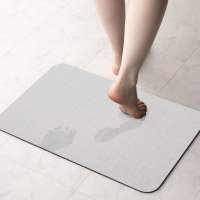
Soft Diatomite Kaiteki Bathmat 38X59 Lgy
$27.90
Buy on Lazada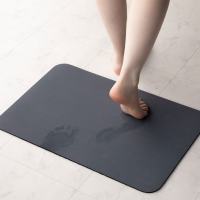
Soft Bathmat With Diatomite 38X59 Gy
$27.90
Buy on Lazada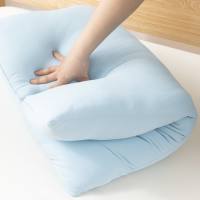
Fluffy Pillow N-Cool Big P2402
$24.90
Buy on Lazada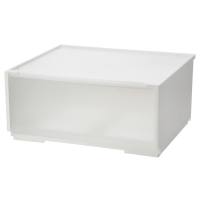
NITORI STORAGEBOX NS5224
$46.90
Buy on Lazada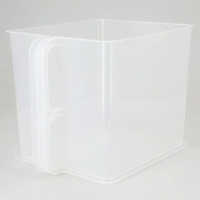
STORAGE CONTAINER FOR WALL CABINET M CL
$6.90
Buy on Lazada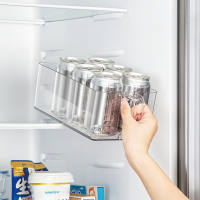
NITORI Refrigerator Storage Case Handle W14.5xH10
$7.90
Buy on Lazada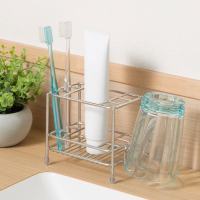
Stainless Wire Tooth Brush Holder Square
$9.90
Buy on Lazada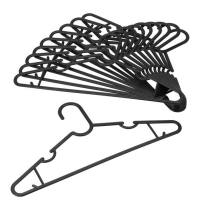
NITORI Hanger NW-BK 10P (9.3 x 0.5 x 19cm)
$2.90
Buy on LazadaAbout Nitori
Overview
Nitori Holdings Co., Ltd., commonly known as Nitori, is a prominent Japanese retailer specialising in home furnishings and furniture. Headquartered in both Tokyo and Sapporo, the company offers an extensive range of products including furniture, bedding, kitchenware, household goods, and interior décor. These items are designed to enable customers to coordinate their entire living spaces at relatively affordable prices.1
Established as a small furniture business in Sapporo, Hokkaido, in 1967, Nitori has grown into one of Japan’s largest home-furnishing chains. The group has since expanded significantly throughout Asia, with operations in Taiwan, China, Malaysia, Singapore, Thailand, Hong Kong, South Korea, Vietnam, Indonesia, the Philippines, and India.2
As of 24 July 2026, the Nitori Group reported 1,086 stores worldwide. This network comprises 600 NITORI stores in Japan and 486 overseas outlets or stores under other group formats. At that date, there were 13 NITORI stores in Thailand.3
Corporate profile
| Item | Information |
|---|---|
| Japanese name | 株式会社ニトリ / ニトリ |
| English name | Nitori Co., Ltd. / Nitori Holdings Co., Ltd. |
| Industry | Home furnishings, furniture, retail |
| Founded | December 1967 |
| Incorporated | March 1972 |
| Founder | Akio Nitori |
| Origin | Sapporo, Hokkaido, Japan |
| Headquarters | Tokyo and Sapporo, Japan |
| Parent/group company | Nitori Holdings Co., Ltd. |
| Chairman & CEO | Akio Nitori |
| President & COO | Toshiyuki Shirai |
| FY2026 consolidated revenue | ¥912.248 billion |
| Employees | 18,170 full-time + 19,920 part-time (average) |
| Global stores | 1,086 as of 24 July 2026 |
| Stock exchanges | Tokyo Stock Exchange Prime; Sapporo Securities Exchange |
Business concept
Nitori operates as a large-scale, affordable home-furnishing retailer. Its concept extends beyond traditional furniture sales, with typical stores stocking products for nearly every area of the home:
- Sofas and chairs
- Beds and mattresses
- Dining tables and chairs
- Desks and storage furniture
- Curtains and blinds
- Bedding
- Towels
- Kitchenware
- Tableware
- Bathroom products
- Lighting
- Rugs and carpets
- Household storage
- Cleaning products
- Decorative accessories
- Small appliances
- Seasonal household products
A distinctive feature of Nitori’s approach is that products are designed to be coordinated with one another. This allows customers to furnish a room or an entire home without combining items from multiple retailers. The company describes its business as providing furniture and interior goods that can be “perfectly coordinated” at accessible price points.5
While often compared to a combination of IKEA and a general home-goods store due to its scale and affordability, Nitori’s product design, merchandising, and business model remain distinctly Japanese.
History and development
Origins
The company’s history began when Akio Nitori established the first Nitori Furniture Store in Sapporo in December 1967. Initially, it operated as a conventional furniture retailer rather than the comprehensive home-furnishing group seen today.6
A pivotal moment occurred in 1972 when Akio Nitori visited the United States. He was impressed by American home-furnishing retailers, noting their comparatively low prices, customer-centric product design, coordinated colours and styles, large-scale chain formats, and retail systems that enhanced daily convenience. This experience inspired his ambition to create a similar model in Japan and is regarded as the foundation of the company’s modern business philosophy.7 Consequently, the company aimed not merely to sell inexpensive furniture, but to transform how ordinary Japanese consumers furnished their homes.
Expansion milestones
Throughout the 1970s and 1980s, Nitori expanded beyond its original Sapporo market. Key milestones included:
- 1975: Opening of the Nango Store in Sapporo, which utilised Japan’s first air-dome structure for a furniture store, demonstrating a willingness to experiment with retail formats.8
- 1981: Opening of the Tomakomai Store in Hokkaido, marking the first expansion outside Sapporo.
- 1986: Commencement of direct overseas importing on a larger scale. Controlling sourcing and imports became a cornerstone of the company’s low-price strategy.9
- 1993: Opening of the first store in Honshu (Ibaraki Prefecture).
- 2002: Listing on the Tokyo Stock Exchange.
- 2003: Reaching 100 stores and achieving ¥100 billion in sales.
These developments marked Nitori’s evolution from a regional Hokkaido retailer into a national chain.10
Business model
Nitori combines relatively low prices with a broad product range through a vertically integrated model that covers multiple stages of the business:
Product planning → Sourcing/manufacturing → Logistics → Stores → Customers
This integration provides greater control over product design, specifications, sourcing, manufacturing, transportation, warehousing, store operations, and retail presentation. The direct-import strategy initiated in 1986, combined with significant investment in automated warehouses and logistics infrastructure, has been central to this expansion.11 This approach enables Nitori to operate at a scale distinct from traditional furniture retailers.
Product philosophy
Nitori’s value proposition centres on good design, practical functionality, affordable pricing, and coordinated products. Rather than positioning itself as a luxury brand, it targets mass-market consumers seeking comfortable and attractive homes without excessive expenditure.
This aligns with the corporate mission: “Enrich the everyday lives of people all over the world.”12 The broader objective is to provide the foundation for a comfortable and prosperous home life, rather than simply selling individual items.
Success factors in Japan
Several factors have contributed to Nitori’s growth in its domestic market:
Affordable prices
Pricing is central to Nitori’s positioning. The company has frequently employed price reductions as a competitive strategy, notably introducing its “Price Cut Declaration” in 2008 and reducing prices on numerous occasions thereafter.13
One-stop shopping
Customers can purchase sofas, curtains, bedding, kitchenware, and other household essentials from a single location, eliminating the need to visit multiple specialist retailers.
Coordinated design
Products are frequently developed to work together visually, offering a convenient solution for consumers seeking a coherent interior without professional design services.
Logistics capabilities
Recognising that furniture is costly to transport, Nitori invested heavily in distribution centres and automated warehousing, making logistics a strategic driver of expansion.14
Market adaptation
Unlike retailers that simply import Western concepts, Nitori develops products specifically for Japanese living conditions, accounting for compact housing sizes, specific storage needs, and evolving household lifestyles.
Corporate restructuring
In 2010, Nitori adopted a holding-company structure to separate sales and logistics operations. The group became Nitori Holdings Co., Ltd., while Nitori Co., Ltd. continued the retail business and Home Logistics Co., Ltd. managed logistics.15
Today, Nitori Holdings oversees a collection of businesses in Japan and overseas. Subsidiaries include Nitori, Shimachu, Home Logistics, N Plus, Home Deco, and various international entities.16
International expansion
Nitori’s international growth accelerated in the 2000s, with a particular focus on Asian markets.
Key markets
- Taiwan: In 2007, Nitori opened its first overseas store at Kaohsiung Dream Mall, marking its entry into international retailing.17
- United States: In 2013, Aki-Home stores opened in California, representing the company’s first US retail operation.18
- China: Expansion into mainland China began with a store in Wuhan in 2014.
Southeast and East Asia
The company has increasingly focused on the Asian region, with the following milestones:
- 2022: First store in Malaysia
- 2022: First store in Singapore
- 2023: First store in Thailand
- 2023: First store in Hong Kong
- 2023: First store in South Korea
- 2023: First store in Vietnam
- 2024: First store in the Philippines
- 2024: First store in Indonesia
- 2024: First store in India19
Southeast and East Asia now form a critical component of Nitori’s international strategy.
Nitori in Thailand
Nitori entered the Thai market in August 2023 with its first store at centralwOrld in Bangkok.20 Thailand has since become one of the company’s larger overseas markets, with 13 stores reported as of 24 July 2026.21
This expansion is strategically significant given Thailand’s status as a major regional retail hub and its potential as a base for broader Southeast Asian growth. The Thai business is operated through NITORI RETAIL (THAILAND) CO., LTD., which is listed among Nitori Holdings’ overseas group companies.22
Brands and formats
The Nitori Group operates several distinct business formats beyond the standard NITORI store:
NITORI
The flagship format focusing on furniture, interiors, and household products. This is the primary brand associated with the company.
DECO HOME
A smaller-format concept concentrating on interior accessories and household goods. It is suited to shopping centres and urban locations where a large furniture showroom may not be feasible.
N+
Launched in 2019, N Plus represents Nitori’s apparel-related business.23
SHIMACHU
In 2021, Nitori Holdings acquired Shimachu, a Japanese home-improvement and furniture retailer, as a wholly owned subsidiary.24 This acquisition strengthened the group’s presence in the home-improvement sector.
Comparison with IKEA
Nitori is frequently compared to IKEA, though the two retailers differ in key aspects:
| Feature | Nitori | IKEA |
|---|---|---|
| Origin | Japan | Sweden |
| Core market historically | Japan | Europe/global |
| Main proposition | Affordable coordinated home living | Affordable Scandinavian-style home furnishing |
| Furniture | Major category | Major category |
| Household goods | Very broad range | Very broad range |
| Japanese-market adaptation | Very strong | More standardised globally |
| Assembly | Varies by product | Central to the business model |
| Retail style | Japanese home-furnishing retailer | Large destination furniture store |
| International strategy | Increasingly Asia-focused | Highly global |
Essentially, while IKEA popularised affordable Scandinavian-oriented home furnishing globally, Nitori developed a similarly broad affordable-home concept from a Japanese perspective.
Scale and financial performance
Nitori has achieved significant long-term growth:
- 2003: 100 stores
- 2009: 200 stores
- 2012: 300 stores
- 2017: 500 stores
- 2022: 1,000 stores
- 2024: 1,000 stores worldwide achieved
- 2026: More than 1,080 stores worldwide25
For the fiscal year ended March 2026, the group recorded consolidated revenue of ¥912.248 billion. The workforce comprised 18,170 full-time employees and an average of 19,920 part-time employees.26
Looking ahead, Nitori has set a long-term target of 3,000 stores and ¥3 trillion in sales by 2032.27
Leadership
Akio Nitori, born in 1944, founded the company in 1972 and remains Chairman and CEO.28 His influence on the organisation is profound, as the business philosophy he developed after observing American retail continues to underpin Nitori’s strategy today.30
Toshiyuki Shirai serves as the group’s President and COO.29
Corporate philosophy
Nitori’s corporate philosophy encompasses three core elements:
Mission
“Enrich the everyday lives of people all over the world.”
Vision
To expand its retail network globally while transforming lifestyles through affordable home furnishings.
Long-term target
3,000 stores and ¥3 trillion in sales by 2032.
These goals reflect an ambition to evolve beyond a Japanese furniture store into a global home-living company.
Distinctive characteristics
Key attributes that define the Nitori brand include:
- Japanese roots: Built around Japanese consumers and living environments.
- Affordable home living: Making attractive, comfortable interiors accessible to mass-market consumers.
- Vertical integration: Close connection between product development, sourcing, logistics, and retail.
- One-stop home shopping: Enabling customers to furnish much of a home within a single ecosystem.
- Coordinated design: Products designed to work together aesthetically and functionally.
- Logistics expertise: Large-scale warehousing and distribution as fundamental business pillars.
- Asian expansion: Current international growth concentrated across Asia.
- Long-term scale ambition: Targeting 3,000 stores and ¥3 trillion in sales by 2032.
Current status
Today, Nitori functions as a large integrated home-and-lifestyle retail group. Its evolution spans from a small Sapporo furniture shop in 1967, through Hokkaido expansion and direct importing in the 1970s–1980s, national expansion in the 1990s, and rapid growth with e-commerce and overseas entry in the 2000s. Following the adoption of a holding-company structure and major international expansion in the 2010s, the 2020s have seen rapid growth across Asia. As of 2026, the group operates more than 1,080 stores worldwide, with markets such as Thailand, Taiwan, China, and Singapore becoming increasingly important.
The company aims to provide the “foundation of prosperous home living” to people around the world.
References
- Company Profile|Company Information|Nitori Holdings Co., Ltd.
- Group Companies|About NITORI Group|NITORI Holdings Co., Ltd.
- History|Company Information|NITORI Holdings Co., Ltd.
- Nitori Holdings Co., Ltd.
- Directors|Corporate Governance|Investor Relations|NITORI Holdings Co., Ltd.
- Message from Management|Company Information |NITORI Holdings Co., Ltd.
- Corporate Philosophy|Company Information|NITORI Co. Ltd. Official Website
- Nitori Holdings Co., Ltd.
- ประวัติความเป็นมาของนิโทริ
- NITORI’s Philosophy
- About Us
- Company Information|NITORI Holdings Co., Ltd.
- 沿革|会社情報|ニトリホールディングス
- IR News|Investor Relations|NITORI Holdings Co., Ltd.
- NITORI in Facts and Figures|About NITORI Group|NITORI Holdings Co., Ltd.
- Site Map|NITORI Holdings Co., Ltd.
- 企業理念|会社情報|ニトリ公式企業サイト
- グループ理念|「君の夢は、君を創る。」株式会社ニトリ 新卒採用サイト
- NITORI Co. Ltd. Official Website
- NITORI Co. Ltd. Official Website
- NITORI Co. Ltd. Official Website
- Vol.1 NITORI’s “Wanpaku-gumi” School Bag Series|The Story Behind “Offering the Unexpected”|Behind the Scenes at NITORI!|NITORI Co. Ltd. Official Website
- NITORI Co. Ltd. Official Website
- ニトリ公式企業サイト
- ニトリ公式企業サイト
- NITORI Co. Ltd. Official Website
- NITORI Co. Ltd. Official Website
- NITORI’s History
- History of NITORI
- History of NITORI | About NITORI Group