Shop on Lazada
papo products
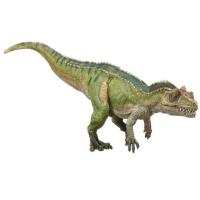
PAPO Ceratosaurus (Dinosaur Figurines) 3y+ PA55061
$43.90
Buy on Lazada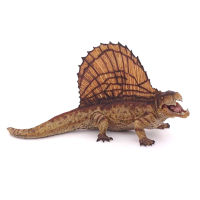
PAPO Dimetrodon (Dinosaur Figurines) 3y+ PA55033
$35.90
Buy on Lazada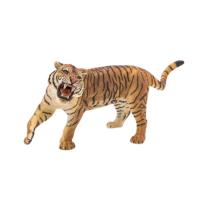
PAPO Roaring Tiger (Wild Animal Figurines) 3y+ PA50182
$19.90
Buy on Lazada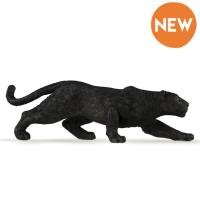
PAPO Black Panther (Wild Animal Figurines) 3y+ PA50026
$18.90
Buy on Lazada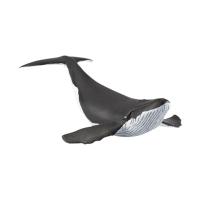
PAPO Whale Calf (Marine Figurines) 3y+ PA56035
$16.90
Buy on Lazada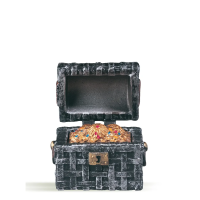
PAPO Treasure Chest (Pirate Fantasy Figurines) 3y+ PA039412
$16.90
Buy on Lazada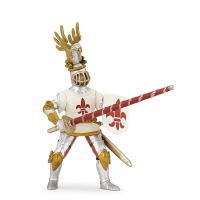
PAPO White Knight Fleur De Lys (Medieval and Fantasy Figurines) 3y+ PA039790
$16.90
Buy on Lazada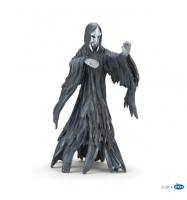
PAPO Spectre (Medieval and Fantasy Figurines) 3y+ PA036018
$15.90
Buy on LazadaAbout papo
Papo is a French toy and figurine brand best known for its highly detailed, hand-painted animal, dinosaur, fantasy, medieval and historical figures. The brand has developed a strong following among both children and adult collectors due to the realism, sculpting quality and breadth of its miniature worlds.1
Overview
| Details | |
|---|---|
| Brand | Papo |
| Origin | France |
| Founded | 1983 |
| Industry | Toys, figurines, educational play |
| Best known for | Animal, dinosaur, fantasy and medieval figurines |
| Design | France |
| Production | China, Portugal and other locations depending on product |
| Typical materials | PVC; natural rubber for selected Papo Baby products |
| Target audience | Children, families and collectors |
| Distinguishing feature | Highly detailed, hand-painted figures |
History
Papo was founded in 1983 in France. Its earliest products concentrated on imaginative themes, particularly fantasy, medieval characters and cowboys. The company later expanded into animal figures, which became one of its defining product categories.2
A major turning point came in 1994, when Papo began producing animal figurines. This broadened the brand considerably and helped it establish an international presence, particularly in European and American markets.2
Over subsequent decades, Papo expanded from individual figures into complete miniature environments and playsets. Today its catalogue covers animals, dinosaurs, marine life, fantasy creatures, knights, pirates, historical characters and other imaginative worlds. The official catalogue also includes farms, castles, ships and other accessories intended to create larger play environments.1
What Papo is known for
Realistic animal figures
The strongest identity of Papo is its realistic animal figurines. Its catalogue includes wildlife, farm animals, marine animals, horses, dogs, cats and many other species.
The figures are designed with considerable attention to anatomy, posture, facial features, textures and colouration. Papo describes its figures as highly detailed and realistic, while distributors similarly emphasise the brand’s sculpting and hand-painting quality.3
This realism has made Papo appealing to two overlapping audiences:
- Children, who use the figures for imaginative and educational play.
- Adult collectors, who appreciate them as miniature representations of animals and fictional characters.
Dinosaurs and prehistoric animals
Another major part of the brand is its dinosaur and prehistoric-life collection.
Papo produces figures representing numerous prehistoric animals, including dinosaurs and other extinct creatures. Its current catalogue continues to introduce new prehistoric subjects; for example, the official store currently highlights Yangchuanosaurus as one of its newer dinosaur products.1
The prehistoric range is particularly popular because it combines Papo’s realistic sculpting style with subjects that naturally appeal to children and collectors.
Fantasy and medieval worlds
Papo’s original identity has never disappeared. Alongside realistic animals, the company produces figures inspired by:
- Knights
- Kings and queens
- Princesses and princes
- Dragons
- Elves
- Wizards and other fantasy characters
- Medieval creatures
- Pirates and corsairs
- Historical characters
The brand itself traces its origins to these imaginative themes, describing its early creations as princesses, princes, dragons and knights.1
This gives Papo a distinctive position: it is simultaneously an animal-figurine brand and an imaginative fantasy and toy brand.
Main product categories
Papo’s modern catalogue is divided into numerous miniature “worlds”. The official store currently lists categories including:1
- Wildlife
- Farmyard Friends
- Marine World
- Garden Animals
- Dinosaurs
- Dogs & Cats
- Horses, Foals & Ponies
- Fantasy
- Medieval
- Enchanted World
- Pirates and Corsairs
- Historical
- Mini Papo
- Large Figurines
- Papo Baby
- Foam sets
The range therefore extends well beyond conventional animal toys.
Design and manufacturing
One of Papo’s important selling points is that its figures are designed and created in France. Manufacturing, however, takes place in different countries depending on the product. Papo’s own FAQ states that its figurines can be manufactured in China or Portugal, while maintaining the company’s design and quality requirements.1
The figures are generally made from PVC, with Papo stating that its PVC is phthalate-free and compliant with applicable European and American standards. The company’s Papo Baby range uses natural rubber and food-grade paint for selected products.1
Hand painting
Hand painting is central to the Papo identity.
Rather than relying entirely on uniform mass-produced printing, Papo’s figurines receive hand-painted finishing. This allows relatively small details—such as eyes, skin patterns, fur colouration, scales and other textures—to vary across individual figures. Papo and its distributors explicitly highlight hand painting as a characteristic of the brand.3
Educational philosophy
Papo positions its products as more than decorative miniatures.
The company’s philosophy is based on using figurines to encourage imagination, curiosity and discovery. Children can use an animal collection to learn about different species and habitats, while fantasy and historical figures can serve as starting points for storytelling and role-playing.1
Papo’s figures can therefore function as an informal educational tool: instead of learning about animals solely through books or screens, children can physically interact with three-dimensional representations.
The company also emphasises durability and products designed to remain useful over time rather than being disposable toys.3
Papo and collectors
Although Papo is fundamentally a children’s toy company, its products have developed a significant collector dimension.
Several factors contribute to this:
- Realistic sculpting
- Hand-painted finishing
- Large number of species and characters
- Multiple scales and product sizes
- Continuing introduction of new figures
- Compatibility between figures and playsets
A collector can therefore build an entire miniature ecosystem—for example, a wildlife collection—or construct a fantasy world containing knights, castles, dragons and other characters.
This dual appeal to children and adults is one of Papo’s most notable characteristics.1
Playsets and miniature environments
Papo does not limit itself to individual figurines. It also produces environments and accessories designed to expand the storytelling possibilities.
Examples include:
- Farms
- Horse boxes and stables
- Castles
- Pirate ships
- Jungle and outpost environments
- Other themed settings
These products allow several figures to become part of a larger miniature scene rather than functioning only as standalone collectibles.1
Safety and quality
Safety is another major part of Papo’s product positioning.
The company says safety considerations begin during the design process, and its products are tested according to applicable regulations. For European-market products, Papo states that its products carry the CE marking, indicating conformity with relevant European toy-safety requirements.1
Papo also states that the paints used for its figurines comply with the applicable REACH regulatory framework and that materials are tested by accredited laboratories.1
Papo’s brand identity
Papo can essentially be understood through three interconnected ideas:
1. Realism
Animals and prehistoric creatures are represented with unusually detailed sculpting and painting.
2. Imagination
Fantasy, medieval and pirate characters allow children to construct their own stories.
3. Discovery
The animal and prehistoric collections encourage children to explore the natural world through physical play.
This combination differentiates Papo from brands that concentrate exclusively on either educational animal models or conventional action figures.
Papo compared with other figurine brands
Papo operates in a category that includes brands such as Schleich, Safari Ltd. and CollectA. Its closest competitive territory is realistic animal and dinosaur figures.
Papo’s particular identity is its combination of French design, hand-painted finishing, realistic animals and fantasy and medieval storytelling.
That means its catalogue has considerably more thematic variety than a purely zoological model-maker. Its medieval and fantasy ranges are an important part of the brand’s heritage rather than simply an extension added later.1
International presence
Papo has developed an international market, with its products distributed beyond France across Europe and North America. The brand’s international expansion accelerated alongside the development of its animal ranges in the 1990s.2
The company’s products are currently sold through its own online store as well as specialist toy and collectible retailers. In the United States, DAM LLC announced exclusive distribution of Papo figurines beginning in 2025.4
Notable characteristics
If you encounter a Papo figure, the features most strongly associated with the brand are:
- 🇫🇷 French-designed
- 🎨 Hand-painted
- 🦁 Realistic animal representations
- 🦖 Large dinosaur and prehistory range
- 🏰 Medieval and fantasy characters
- 🏴☠️ Pirates and historical themes
- 🌎 Broad international distribution
- 🧒 Designed for imaginative play
- 🧑 Strong appeal to collectors
- 🧱 Durable, detailed miniature construction
Summary
Papo is a French figurine and toy brand founded in 1983, originally associated with fantasy and medieval figures and later becoming particularly famous for highly realistic animal and dinosaur models. Its figures are designed in France, hand-painted, and produced with an emphasis on detail, safety and durability. The brand now encompasses wildlife, prehistoric animals, farm and marine life, horses, fantasy, medieval characters, pirates, historical figures and miniature play environments.1
Its most distinctive characteristic is the way it sits between toy, educational model and collectible: a Papo figure can be used by a child to create a story, by a student to explore animals, or by an adult as part of a collection.