Shop on Lazada
Patagonia products
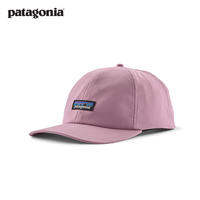
Patagonia | Sport Hat
$113.37
Buy on Lazada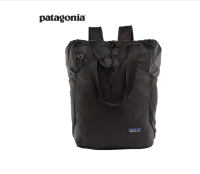
Patagonia Japanese version Bata LW Tote pack light weight handbag for commuting outdoor 22L waterproof Backpack bag
$34.63$108.56
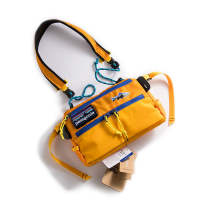
Patagonia new fishing bag men and women fashion color collision envelope bag personality crossbody bag sports leisure cell phone shoulder bag
$14.82$46.69
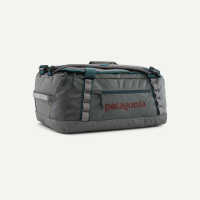
Patagonia Black Hole Duffel Bag Backpack 40L
$325.00
Buy on Lazada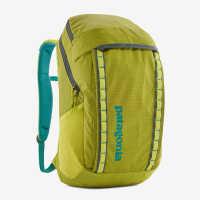
Patagonia Black Hole Bag Backpack 25L/32L
$299.00
Buy on Lazada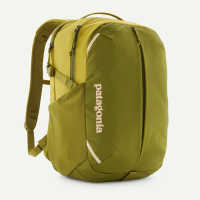
Patagonia Refugio Bag Pack 26L/30L
$199.00
Buy on Lazada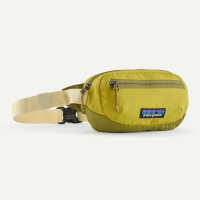
Patagonia Terravia Mini Hip Pack 1L waistpack
$60.00
Buy on Lazada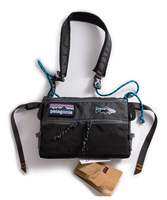
Patagonia sling bag/travelling pouch bag/outdoor school sport bag
$14.90$20.00
About Patagonia
Patagonia, Inc. is an American outdoor apparel and equipment company best known for combining technical outdoor products with a strong commitment to environmental activism. Founded by climber and entrepreneur Yvon Chouinard in 1973, the company is headquartered in Ventura, California. Patagonia sells clothing and equipment for activities such as climbing, surfing, skiing, hiking, trail running and other outdoor pursuits.1
What distinguishes Patagonia is its treatment of environmental protection not merely as a marketing programme, but as a central component of its business model, ownership structure, product philosophy and corporate purpose.
Basic information
| Category | Information |
|---|---|
| Company name | Patagonia, Inc. |
| Founded | 1973 |
| Founder | Yvon Chouinard |
| Headquarters | Ventura, California, United States |
| Industry | Outdoor apparel and equipment |
| Main markets | Outdoor clothing, sportswear, equipment and related products |
| Known for | Environmental activism, durable outdoor products, sustainability |
| Corporate status | Privately held |
| B Corp | Certified since December 2011 |
| Key ownership entities | Patagonia Purpose Trust and Holdfast Collective |
| Corporate purpose | “We’re in business to save our home planet.” |
| Major initiatives | 1% for the Planet, Worn Wear, Patagonia Action Works, environmental grants |
Patagonia has been a Certified B Corporation since December 2011 and formally became a California benefit corporation in January 2012.2
Origins and founder
Patagonia’s history begins with Yvon Chouinard, a rock climber who sought to manufacture superior climbing equipment for personal use. Rather than emerging as a conventional fashion label, Patagonia evolved from the climbing community. Chouinard’s early enterprise focused on climbing hardware, and the company’s philosophy was deeply influenced by outdoor culture: simplicity, functionality, durability and respect for nature.
In 1973, Chouinard founded Patagonia, establishing what would eventually become a globally recognised outdoor brand.1 This origin remains significant, as Patagonia’s identity has never been entirely separated from outdoor recreation. The company developed essentially from a community of climbers, surfers and outdoor enthusiasts rather than from traditional fashion retail.
Origin of the name
The name Patagonia refers to the vast geographical region at the southern tip of South America, encompassing parts of Argentina and Chile. The region is associated with dramatic mountains, glaciers, wilderness and remote landscapes. Consequently, the name aligns with the company’s broader association with exploration and the natural world. The brand is therefore positioned not merely as fashion, but with a visual and cultural identity strongly connected to wilderness and outdoor adventure.
Evolution of the company
Patagonia gradually expanded beyond its original climbing-oriented roots. Its product portfolio eventually grew to include:
- Jackets and parkas
- Fleece
- T-shirts and casual clothing
- Hiking clothing
- Climbing apparel
- Ski and snowboard clothing
- Surfing products
- Trail-running products
- Packs and bags
- Outdoor accessories
- Technical equipment
The company also developed businesses and projects outside conventional apparel. Patagonia Works has included or operated ventures involving food, media, surfboards, investments and used or upcycled clothing.1 This diversification helped transform Patagonia from a specialist climbing manufacturer into a broad outdoor lifestyle and environmental brand.
Core philosophy
Patagonia’s philosophy can be summarised through several interconnected principles.
Building durable products
Patagonia emphasises manufacturing products designed to last, rather than encouraging consumers to replace them frequently. Its stated product philosophy prioritises function, repairability and durability. B Lab describes Patagonia’s approach as placing strong emphasis on products that can last for generations or remain in circulation through repair and recycling.2 This is notable in the fashion industry, where companies typically benefit financially when customers purchase more products more frequently. Patagonia instead argues that a superior product is one that customers retain for a long time.
Reducing unnecessary environmental harm
Patagonia acknowledges that producing physical goods inevitably creates environmental impacts. The company therefore focuses on areas including materials, manufacturing, supply chains, chemicals, transportation, product durability, repair, reuse, recycling and labour conditions. Current programmes include standards and initiatives involving Fair Trade, Responsible Down, Responsible Wool, regenerative organic agriculture, material traceability, living wages and supply-chain environmental performance.3
Using business as an environmental tool
Patagonia’s philosophy extends beyond the notion that a company should simply reduce its carbon footprint. It explicitly views business as a potential mechanism for funding and supporting environmental activism. Its current purpose statement is: “We’re in business to save our home planet.” This purpose is reflected in its ownership model as well as its philanthropic and activist programmes.1
“Don’t Buy This Jacket” campaign
One of Patagonia’s most renowned marketing campaigns appeared in The New York Times on Black Friday in 2011. The advertisement famously instructed consumers: “Don’t Buy This Jacket.” The message was deliberately provocative; instead of encouraging purchases, Patagonia asked customers to consider whether they genuinely needed a new jacket.
The campaign promoted a broader philosophy: buy less, use products longer, repair them, reuse them and recycle them when necessary. This became an iconic example of Patagonia’s unconventional approach to advertising and consumption. It also demonstrated a central contradiction and strength of the brand: it sells products whilst simultaneously encouraging people to consume less.
Worn Wear
Worn Wear is one of Patagonia’s most significant initiatives. It is a programme designed to extend the useful life of Patagonia products through repair, reuse, trade-ins, resale, product care, DIY repair and recycling. The programme began in 2012 and evolved from clothing swaps and repair events into a broader repair and resale ecosystem.4
The underlying philosophy is straightforward: a garment that already exists is generally preferable to manufacturing a new one. This makes Worn Wear a vital component of Patagonia’s attempt to create a circular business model rather than a purely linear one.
1% for the Planet
Patagonia has played a pivotal role in the 1% for the Planet movement. In 1985, Patagonia began committing 1% of its sales to environmental causes. In 2002, Yvon Chouinard and fly-fishing entrepreneur Craig Mathews formally established 1% for the Planet as an organisation encouraging other businesses to make similar commitments.3
The distinction between sales and profit is critical. Because the commitment is based on sales, the contribution is made regardless of whether profit margins are particularly high in a given year. Patagonia’s own materials report that its contributions through 1% for the Planet have reached hundreds of millions of dollars.3
Environmental activism
Patagonia is unusual among major consumer brands for its open participation in environmental activism. Its campaigns have addressed issues such as climate change, public lands, oceans, biodiversity, environmental justice, indigenous and local communities, fossil fuels and conservation. Through Patagonia Action Works, the company connects customers and supporters with environmental organisations, petitions, events, donations and volunteer opportunities.3 This fosters a broader relationship between the company and its customers, who are treated not solely as shoppers but also as potential participants in environmental campaigns.
Sustainability approach
Sustainability is perhaps the most recognisable characteristic of the Patagonia brand. However, its approach extends beyond simply using eco-friendly materials. The company attempts to address sustainability throughout the product lifecycle: raw materials, manufacturing, distribution, use, repair, reuse and recycling. It has developed programmes involving recycled materials, organic materials, responsible down and wool, Fair Trade production, traceability and other environmental and social standards.3
Patagonia openly acknowledges that it is not a perfect company and that producing clothing still creates environmental impacts. Its current reporting describes sustainability work as an ongoing process rather than a completed achievement.1 This admission is a fundamental part of its brand positioning.
B Corporation status
Patagonia became a Certified B Corporation in December 2011. B Corp certification evaluates a company’s social and environmental performance rather than focusing exclusively on financial metrics. Patagonia’s evaluation encompasses areas such as operations, supply chain, community impact, employee benefits, charitable activities and business model.2 Subsequently, Patagonia became a benefit corporation under California law in 2012.3 This legal and organisational structure established a framework in which environmental and social considerations could be incorporated into corporate decision-making.
2022 ownership transformation
A defining chapter in Patagonia’s corporate history occurred in September 2022. Yvon Chouinard and his family decided neither to sell Patagonia nor to take the company public. Instead, they transferred ownership to two entities.1
Patagonia Purpose Trust
The Patagonia Purpose Trust owns 2% of the company’s stock but holds 100% of the voting stock. Its role is to protect Patagonia’s mission and ensure that the company’s purpose remains embedded in its governance.1
Holdfast Collective
The Holdfast Collective owns 98% of Patagonia’s stock, consisting of non-voting shares. It receives Patagonia’s excess profits—the funds remaining after the company reinvests what is necessary into the business—and uses those funds to address environmental and related social issues.1
Patagonia described this transformation with the statement: “Earth is now our only shareholder.” It represents one of the most unusual ownership structures ever adopted by a major consumer company.1
Ownership structure mechanics
The structure separates economic ownership from voting control. The Patagonia business generates revenue, from which money needed to operate and grow the company is reinvested. Excess profits flow to the Holdfast Collective for distribution to environmental and social causes. Meanwhile, the Patagonia Purpose Trust controls voting stock to protect the mission and corporate purpose.
Chouinard did not simply donate the company to a conventional charity. Instead, this structure allows Patagonia to continue operating as a for-profit company whilst its excess profits support environmental causes.3
Product identity
Patagonia products are strongly associated with several characteristics:
- Durability: Products are designed for demanding outdoor use and long-term ownership.
- Technical performance: Many items are engineered around specific outdoor activities and environmental conditions.
- Simplicity: The brand generally avoids excessive visual complexity, emphasising functional design.
- Repairability: Repair is treated as part of the product lifecycle rather than an afterthought.
- Timelessness: Many products are designed to remain useful across multiple seasons rather than following rapidly changing fashion trends.
These characteristics explain why Patagonia has developed a reputation extending beyond environmentalism: the products themselves are central to the brand’s credibility.
Brand image
Patagonia’s brand image is defined by five major associations:
| Association | Meaning |
|---|---|
| Outdoor adventure | Climbing, surfing, skiing, hiking and wilderness |
| Quality | Durable, technically capable products |
| Environmentalism | Conservation and climate activism |
| Anti-consumerism | Buy less, repair more, reuse |
| Purpose-driven business | Profit used as a means toward environmental goals |
This combination differentiates Patagonia from conventional sportswear companies. Whilst brands like Nike or Adidas may use athletes and sports performance as central identity markers, Patagonia combines outdoor performance, environmental values, activism and responsible consumption.
Business paradox
A defining aspect of Patagonia is its inherent contradiction. It is a company that manufactures and sells consumer goods whilst simultaneously advocating that people should consume less. Patagonia has turned this tension into part of its competitive identity. Its argument is essentially that if people purchase outdoor clothing, the products should be high quality and long-lasting, repair and reuse should be encouraged, and the resulting business activity should support environmental protection. This creates a distinct relationship between commerce and sustainability.
Marketing strategy
Patagonia’s marketing is noted for being values-driven. Instead of relying primarily on conventional aspirational advertising, it frequently utilises environmental campaigns, documentary films, activism, educational content, outdoor storytelling, customer communities, partnerships with environmental organisations, product stories and repair programmes. The company also operates media and storytelling activities through Patagonia Media, including books, films and multimedia projects.1 Consequently, Patagonia markets not only products but also a worldview.
Cultural significance
Patagonia has transcended its status as an outdoor clothing label. For many consumers, wearing Patagonia communicates a specific set of values: love of nature, outdoor recreation, environmental awareness, anti-waste attitudes, social responsibility and a preference for quality over fast fashion. This imbues the brand with strong symbolic value. A Patagonia jacket can function simultaneously as outdoor equipment, clothing, an environmental statement and a marker of cultural identity.
Criticism and controversies
Despite its reputation for sustainability, Patagonia faces criticism. The fundamental critique is that Patagonia remains an apparel manufacturer. Producing clothing requires raw materials, energy, water, chemicals, transportation, factories and packaging. Even environmentally preferable materials do not eliminate all impacts.
Patagonia recognises this issue; its public reporting emphasises that the company is not perfect and continues working to reduce its environmental and social impacts.1 Objectively, Patagonia should not be understood as a zero-impact company. Rather, it is a company attempting to reduce the negative impacts of its business whilst using the business itself as a mechanism for environmental action.
Current status
As of 2026, Patagonia remains headquartered in Ventura, California, and continues to operate as a privately held outdoor company under the ownership structure established in 2022.1 The company continues to emphasise outdoor apparel and equipment, environmental activism, product durability, repair and reuse, Worn Wear, responsible materials, grassroots environmental organisations, climate and conservation campaigns, and its “Earth is our only shareholder” ownership philosophy.
In March 2026, Patagonia announced changes to its board, with Claire Chouinard, Yvon Chouinard’s daughter, becoming board chair alongside the appointment of two new board members.1
Broader business ecosystem
Patagonia is not limited to branded clothing. The wider Patagonia Works ecosystem has included businesses and initiatives involving:
- Patagonia, Inc.: Apparel and equipment
- Patagonia Provisions: Food
- Patagonia Media: Books, films and multimedia
- Fletcher Chouinard Designs: Surfboards
- Tin Shed Ventures: Investments
- Worn Wear: Used and upcycled apparel
- Other related operations and investments
The shared philosophy is based on quality, environmentalism, transparency and challenging conventional business practices.1
Key milestones
- 1950s–1960s: Yvon Chouinard develops his career as a climber and begins making climbing equipment.
- 1973: Patagonia is founded by Yvon Chouinard.1
- 1985: Patagonia begins committing 1% of sales to environmental preservation and restoration.3
- 2002: Yvon Chouinard and Craig Mathews establish 1% for the Planet.3
- 2011: Patagonia becomes a Certified B Corporation2 and runs the “Don’t Buy This Jacket” campaign.
- 2012: Patagonia becomes a California benefit corporation and launches the early form of Worn Wear.4
- 2022: The Chouinard family transfers Patagonia ownership to the Patagonia Purpose Trust and Holdfast Collective.1
- 2023: Patagonia celebrates its 50th anniversary.1
- 2026: Patagonia continues operating under its purpose-driven ownership structure, with Claire Chouinard becoming board chair.1
Significance
Patagonia is significant not merely because it sells outdoor clothing, but because it has challenged conventional business assumptions. The traditional model dictates that businesses exist to maximise shareholder returns by selling more products. Patagonia’s model posits that a business should make useful products, remain financially healthy, protect its purpose and direct excess profits towards environmental protection.
Its most important contribution may be conceptual: Patagonia serves as a prominent real-world experiment in whether a for-profit company can place environmental purpose at the centre of its governance and business strategy.2