Shop on Lazada
Peak Design products
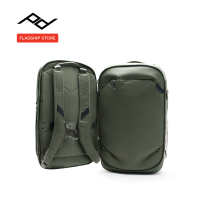
Peak Design Travel Backpack 2-in-1 40L
$599.00
Buy on Lazada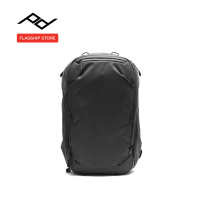
Peak Design Travel Backpack 45L
$449.00
Buy on Lazada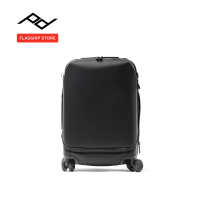
Peak Design Roller Pro Carry-on Camera Luggage Bag
$899.00
Buy on Lazada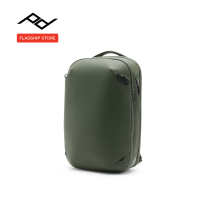
Peak Design Travel Backpack 20L
$299.00
Buy on Lazada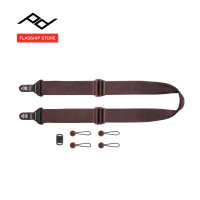
Peak Design Slide Camera Strap
$119.00
Buy on Lazada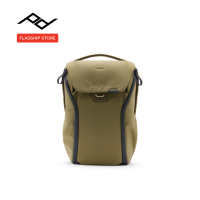
Peak Design Everyday Camera Backpack 20L
$419.00
Buy on Lazada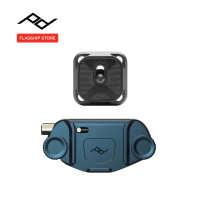
Peak Design Capture Camera Clip v3
$119.00
Buy on Lazada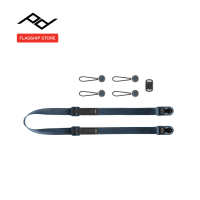
Peak Design Leash Camera Strap
$75.00
Buy on LazadaAbout Peak Design
Peak Design is an American design and manufacturing company best known for its premium camera gear, bags, travel equipment, mobile accessories and outdoor carry products. Founded by Peter Dering in the San Francisco Bay Area, the company distinguished itself early on by integrating Kickstarter and other crowdfunding campaigns into its core product-development model rather than relying on conventional venture capital investment 1. Today, Peak Design positions itself less as a traditional camera-accessory manufacturer and more broadly as a creator of products that help people “create, commute, and explore” 2.
Basic information
| Category | Information |
|---|---|
| Brand | Peak Design |
| Founded | 2010 |
| Founder | Peter Dering |
| Origin | San Francisco, California, United States |
| Industry | Consumer products / industrial design |
| Core markets | Photography, travel, outdoor recreation, everyday carry, mobile |
| Best known for | Capture Camera Clip, Everyday bags, Travel Tripod, camera straps, travel gear |
| Business model | Direct-to-consumer + retail + crowdfunding |
| Notable characteristic | Historically investor-free |
| Corporate philosophy | Product design, customer participation, sustainability |
| Official site | peakdesign.com |
The company’s own brand materials describe its output as products for people who create, commute and explore 3.
History
Origins: the camera problem
The origins of Peak Design trace back to 2010, when founder Peter Dering embarked on an extended trip around the world. As a photographer, he found carrying a large camera while travelling to be cumbersome. Rather than accepting this inconvenience, he began designing a superior carrying system, eventually leaving his job to develop a mechanical solution 4. The result was the Capture Camera Clip, a device that allowed a camera to be securely attached to a backpack strap or belt while remaining quickly accessible, replacing the need for a loose-hanging conventional strap. Dering spent months developing prototypes, ultimately collaborating with machinist Dave Stoltz to produce a functional metal version 5.
The Kickstarter revolution
A defining moment in the company’s early history was the decision to launch the Capture Camera Clip via Kickstarter. In 2011, the initial campaign set a modest target of US$10,000 but ultimately raised approximately US$364,698 from 5,258 backers 6. This success established a fundamental operational pattern for Peak Design: design, prototype, present to customers, crowdfund, manufacture and improve. Instead of raising capital from venture investors and designing for mass-market retailers, the company could validate products directly with end users. Numerous subsequent products were launched through this crowdfunding model 7.
Major early Kickstarter campaigns
| Year | Product | Backers | Amount raised |
|---|---|---|---|
| 2011 | Capture v1 | 5,258 | US$364,698 |
| 2012 | Leash & Cuff | 3,108 | US$215,721 |
| 2013 | Capture v2 | 8,090 | US$819,108 |
| 2014 | Slide & Clutch | 9,455 | US$861,164 |
| 2015 | Everyday Messenger | 17,029 | US$4,869,472 |
| 2016 | Everyday Line | 26,359 | US$6,565,782 |
| 2017 | Capture v3 / Straps v2 | 12,196 | US$1,330,583 |
| 2018 | Travel Line | 14,752 | US$5,206,611 |
| 2019 | Travel Tripod | 27,168 | US$12,143,435 |
| 2020 | Mobile | 14,169 | US$2,000,497 |
Figures are derived from Peak Design brand materials; campaign totals may vary slightly between historical records and updated reporting 8.
The Everyday Messenger turning point
Launched via Kickstarter in 2015, the Everyday Messenger proved to be one of the company’s most significant products, raising nearly US$4.87 million from 17,029 backers 9. More importantly, it marked a philosophical shift. Unlike previous items designed exclusively for photographers, this bag accommodated laptops, tablets, daily electronics, clothing and personal items alongside camera equipment. This embodied a key concept for the brand: photography gear that does not look like photography gear. Rather than producing conventional camera bags with obvious technical aesthetics, Peak Design aimed to create products that transitioned seamlessly between photography, work, travel and daily life. This approach eventually evolved into the Everyday Line 10.
Expansion beyond photography
Over time, Peak Design has expanded well beyond camera accessories. Its current ecosystem encompasses several major categories:
Camera Gear
- Capture camera clips
- Camera straps
- Hand straps
- Tripods
- Camera plates
- Camera accessories
Everyday Bags
- Everyday Backpack
- Everyday Backpack Zip
- Everyday Messenger
- Everyday Sling
- Tote and other everyday carry products
Travel
- Travel Backpack
- Travel Duffel
- Packing Cubes
- Wash Pouch
- Travel accessories
- Roller Pro
Outdoor
- Outdoor Backpack
- Outdoor Sling
- Outdoor accessories
Mobile
- Phone cases
- Mobile Tripod
- Car mounts
- Charging accessories
- Wallets
- Phone straps
Motorcycle
- Motorcycle phone mounts
- Motorcycle charging and mounting accessories
The current catalogue includes hundreds of products and accessories across these categories 11.
Design philosophy
Design is central to the company’s identity. Peak Design outlines its approach through several guiding principles: solving genuine problems, ensuring intuitive use, avoiding unnecessary complexity, achieving aesthetic appeal, ensuring durability and versatility, considering how products age and minimising environmental impact. Internally, this is sometimes summarised as “selfish design”: because the designers are themselves photographers, travellers and gear enthusiasts, they create products they personally wish to use 12. Consequently, the brand rarely competes on price alone; instead, it aims to justify premium pricing through engineering, organisation, material quality and user experience.
Distinctive design characteristics
Several features recur across the product range:
- Modular organisation: Bags frequently utilise configurable internal systems, such as the FlexFold divider in Everyday bags, allowing users to customise interiors for cameras, drones, laptops or clothing rather than relying on fixed compartments 13.
- Quick access: Many products prioritise rapid retrieval of essential items, a critical feature for photographers needing instant access to lenses or bodies.
- Mechanical hardware: Buckles, clips and adjustment systems are treated as integral design elements rather than afterthoughts. Proprietary mechanisms like MagLatch, Capture, Anchor Link, FlexFold and Cord Hook form part of the brand’s visual and functional identity.
- Minimalist appearance: Despite internal technical complexity, exteriors remain clean, facilitating the brand’s evolution from specialist camera gear to premium lifestyle equipment.
Key products
Capture Camera Clip
The Capture Clip remains a signature product. Essentially a quick-release mounting system, it allows compatible cameras to attach securely to backpack straps, belts or other stable surfaces. Its development established the formula the company would repeat: identify a frustrating problem, engineer an elegant mechanical solution, refine the aesthetics and validate with real users. The original 2011 Kickstarter campaign raised roughly US$365,000, with later versions also crowdfunded 14.
Travel Tripod
Launched in 2019, the Travel Tripod addressed the inefficiency of traditional tripod designs, where legs, centre columns and heads often result in bulky folded dimensions. Peak Design re-engineered the architecture to create a full-featured yet compact tripod. The Kickstarter campaign raised over US$12.1 million from more than 27,000 backers, becoming one of the company’s most successful crowdfunding efforts 15. It exemplifies the brand’s philosophy of redesigning underlying architecture rather than merely adding features to existing formats.
Pro Tripod
Building on the Travel Tripod concept, the Pro Tripod targets professional photography and videography with greater stability, higher load capacity, carbon-fibre construction and modular accessories. Developed in collaboration with photographer and filmmaker Jimmy Chin 16, it was launched via crowdfunding in 2025, raising more than US$4.6 million from 5,533 backers according to the company’s mission page 17.
Travel products and Roller Pro
The travel category has become a major pillar of the business. The Travel Backpack applies principles originally developed for camera bags—such as large openings, modular packing, laptop storage and expandable capacity—to general travel. Illustrating the brand’s evolution from a camera company to a broader travel and lifestyle brand, Peak Design also entered the rolling luggage market with the Roller Pro. Featuring a hybrid construction of rigid polycarbonate, recycled fabric and a carbon-fibre trolley system, it represents an attempt to rethink conventional suitcase design 18. Its 2025 Kickstarter campaign raised approximately US$13.4 million from 24,219 backers, ranking among the company’s largest crowdfunding successes 19.
Sustainability and materials
Sustainability is deeply embedded in Peak Design’s corporate identity. The company’s six stated mission principles are: make the best things; succeed at the expense of nobody; treat customers as peers; offset environmental impact; use its voice to inspire positive change; and seek happiness over growth 20. Peak Design is a Certified B Corporation and participates in both 1% for the Planet and Climate Neutral initiatives 21. According to its impact reporting, the company has donated more than US$5.8 million through its 1% for the Planet commitment to date 22.
Products increasingly incorporate lower-impact materials. Everyday bags, for example, utilise recycled post-consumer materials, solution-dyed fabrics, bluesign-approved textiles and durable recycled nylon. The company has also set future targets for recycled content and supply chain improvements, operating under the philosophy that products should not only last but also minimise the environmental cost of their production 23.
Manufacturing and business model
Peak Design is primarily a design-led company rather than a vertically integrated manufacturer. It works with manufacturing partners, particularly in Asia, maintaining significant relationships in Vietnam and China and emphasising close factory collaboration. Its sustainability programme includes social and environmental audits of Tier 1 factories, focusing on improving conditions rather than simply abandoning underperforming suppliers 24.
Unusually, crowdfunding remains integral to long-term operations rather than serving merely as a startup launchpad. The company states it has remained investor-free since inception, using crowdfunding to launch products on its own terms 25. This model offers several advantages: customer validation before large production runs, early cash flow to finance manufacturing, direct feedback during development, reduced dependence on venture capital expectations and integrated marketing. Peak Design describes crowdfunding as being “baked into” its DNA 26.
Market positioning and customers
Peak Design occupies a distinctive niche between several industries. Unlike traditional camera brands such as Canon, Nikon, Sony or Fujifilm, it focuses on the ecosystem around the camera rather than imaging devices themselves. While it competes with luggage and carry brands like Bellroy, Aer, Tumi, Patagonia, Osprey and Nomatic, it differentiates itself through photography integration and mechanical design. Compared to outdoor brands, its aesthetic tends to be more urban and technology-oriented, targeting premium technical products for people moving between photography, work, travel and outdoor activities.
Brand research characterises customers as generally higher-income, tech-savvy early adopters who value thoughtful features, durability and aesthetics 27. While photographers formed the historical core audience, the company has deliberately expanded to include travellers, creators, commuters, digital professionals, outdoor enthusiasts, cyclists, motorcyclists and everyday-carry enthusiasts. This broadening is strategically significant given that the global camera market is considerably smaller than the wider travel, luggage and everyday-carry sectors.
Product ecosystem and warranty
A key strategic advantage is product interoperability. Items are designed to work together—for example, a camera can connect to a Capture clip, which attaches to a backpack containing a Camera Cube, while a tripod integrates with the same system. Similarly, phone cases connect to wallets, car mounts, motorcycle mounts and tripods. This ecosystem encourages incremental adoption without requiring users to learn new systems.
Reflecting its emphasis on longevity over disposability, many major products carry a lifetime guarantee 28. This supports the premium positioning, helping justify price points of US$250–350 for backpacks by assuring customers of multi-year durability.
Current direction and cultural significance
As of 2026, Peak Design operates as a broad premium carry, creator and travel brand spanning camera gear, everyday bags, travel, outdoor, mobile, wallets and motorcycle products 29. Recent expansions include the Outdoor Line in 2024 and major launches such as Roller Pro and Pro Tripod in 2025 30, indicating a strategy of extending the brand’s design language into increasingly diverse categories.
Beyond individual products, Peak Design is culturally significant as an example of an alternative consumer-product company. It demonstrated that a hardware brand could combine industrial design, direct-to-consumer sales, crowdfunding, community engagement, sustainability and premium branding without following the traditional Silicon Valley startup model. Its Kickstarter campaigns helped popularise the concept of customer participation in product development before official release.
Timeline
- 2010: Peter Dering develops the idea that becomes Peak Design.
- 2011: Capture launches on Kickstarter, raising about US$365,000 31.
- 2012–2014: Expansion into straps and improved camera-carrying systems 32.
- 2015: Everyday Messenger achieves major Kickstarter success 33.
- 2016: Everyday Line expands the company beyond traditional camera accessories; Peak Design joins 1% for the Planet 34.
- 2017: Capture v3 and updated straps continue the ecosystem approach 35.
- 2018: Travel Line launches.
- 2019: Travel Tripod becomes one of the company’s largest Kickstarter campaigns, raising over US$12 million 36.
- 2020: Mobile ecosystem launches; Peak Design becomes a Certified B Corporation around this period 37.
- 2023: Micro Clutch launches.
- 2024: Outdoor Line and Motorcycle products expand the company’s scope 38.
- 2025: Roller Pro and Pro Tripod represent major expansion into luggage and professional creator equipment 39.
- 2026: Peak Design operates as a broad premium carry/creator/travel brand spanning camera gear, everyday bags, travel, outdoor, mobile, wallets and motorcycle products 40.
References
- Our Mission | Peak Design Official Site
- Peak Design and building a company on the Kickstarter platform | TechCrunch
- Peak Design Brand Book
- BackerKit | Success Stories | Peak Design
- How Peak Design Used Crowdfunding To Kickstart Its Business Model
- Everday Line | Peak Design Official Site
- All Products | Peak Design Official Site
- Peak Design | Peak Design Official Site
- Pro Tripod | Peak Design Official Site
- Our Mission | Peak Design Official Site
- Roller Pro Carry-On | Peak Design Official Site
- Look Mom, We’re a B Corp – Field Notes
- Advocacy
- Peak Design Annual Impact Report
- Road to Responsibility – Field Notes
- Peak Design | Peak Design Official Site
- ピークデザイン(Peak Design) | 〖公式〗ブランドサイト
- Tariffs and Doughnuts – Field Notes
- Enough is Enough – Field Notes
- Sticker Shock – Field Notes
- Peak Design: A Crowdfunded Company – Uncommon Path – An REI Co-op Publication
- Love Thy Crowd – Field Notes
- Track The Everyday Messenger: A Bag For Cameras & Essential Carry on BackerTracker
- LP – Rich Roll | Peak Design Official Site
- Everday Line | Peak Design Official Site
- Factories
- Peak Design Marketplace | Peak Design Official Site
- Collaboration | Peak Design Official Site
- Camera Gear | Peak Design Official Site
- Warranty | Peak Design Official Site
- Camera Gear | Peak Design Official Site
- Warranty | Peak Design Official Site
- Pro Tripod | Peak Design Official Site
- Pro Tripod | Peak Design Official Site
- Pro Tripod | Peak Design Official Site
- Pro Tripod | Peak Design Official Site
- Pro Tripod | Peak Design Official Site
- Tripods & Accessories | Peak Design Official Site
- Pro Tripod | Peak Design Official Site
- Pro Tripod | Peak Design Official Site